Introduction to E-Learning App and Website Development 2026
Education is no longer confined to four walls and whiteboards – it’s now powered by technology, personalization, and global accessibility. The rise of e-learning app development has completely reshaped how students, professionals, and institutions approach learning.
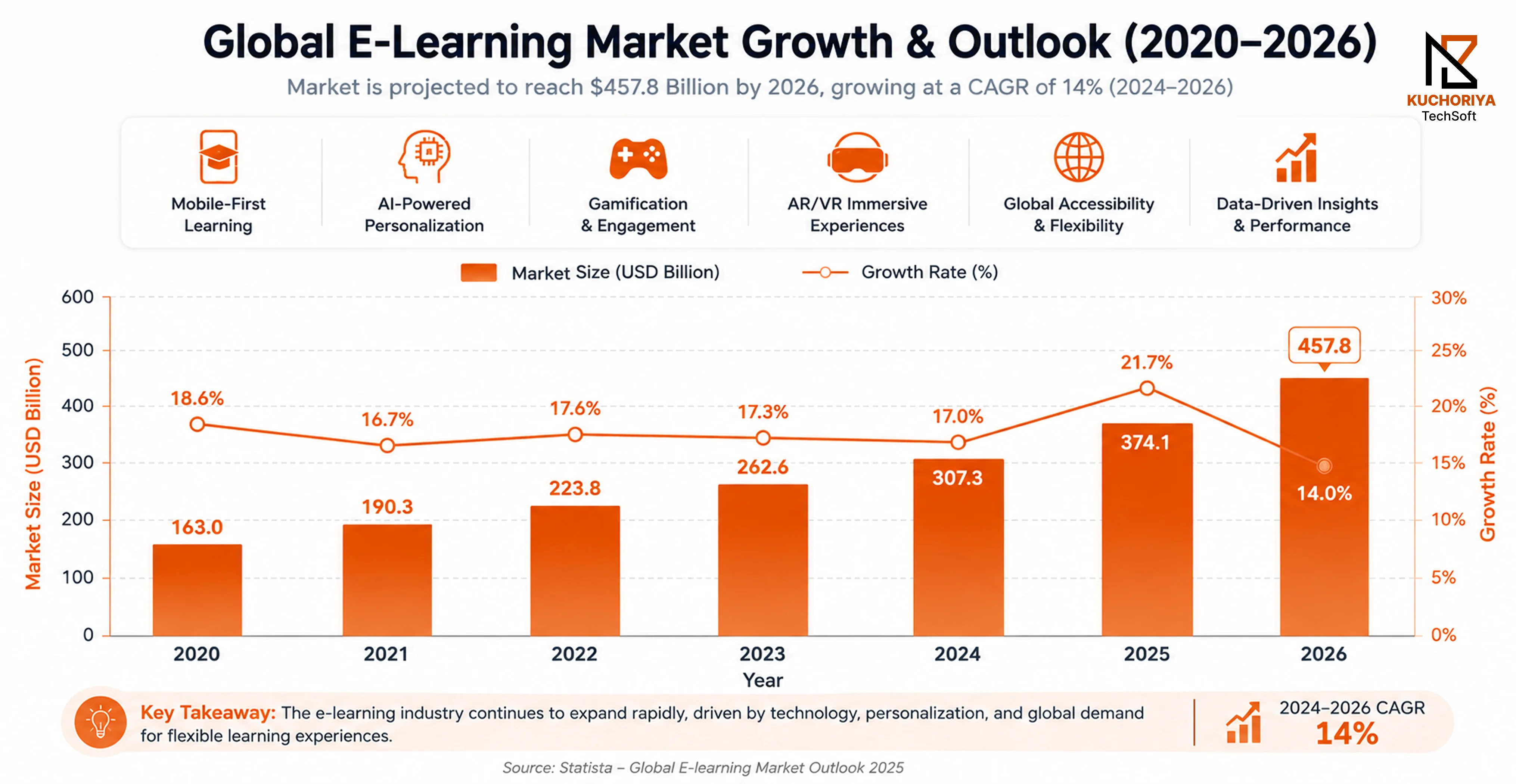
According to Statista, the global e-learning market size is expected to reach $457.8 billion by 2026, growing at a CAGR of 14% (2024–2026).
This exponential rise is driven by increasing demand for flexible and accessible online learning platform development solutions, mobile-first technologies, and AI-powered personalization. Learners today want interactive, immersive, and measurable experiences – not static video lectures.
That’s where a leading EdTech development company helps businesses and institutions build an e-learning app or website that delivers engagement, performance, and scalability. From custom e-learning solutions to AI-based learning platforms, we empower educators, startups, and enterprises to create educational apps that bridge the gap between learning and innovation.
In 2026, e-learning website development is about more than content – it’s about experience. Institutions are embracing mobile learning app development, gamification in education apps, and SCORM-compliant platforms to deliver adaptive, student-centric experiences.
Meanwhile, the integration of AR/VR in education apps and AI-powered personalized learning is revolutionizing the EdTech ecosystem – enabling platforms that analyze performance, recommend content, and support immersive virtual classrooms.
Whether you’re launching a Coursera clone app development project, building a niche LMS development solution, or integrating virtual CTO services, the future of education technology is bright – and we stand ready to help you lead the transformation.
Education Industry Challenges and Solutions (2026 and Beyond)
The education sector has entered a transformative phase – blending innovation, accessibility, and digital inclusion. Yet, despite the rapid rise of e-learning platform development, institutions and startups face critical challenges that affect scalability, learner engagement, and digital adoption. Let’s explore these challenges – and how we provide data-driven, future-ready solutions.
Challenge 1: Limited Digital Infrastructure
Many schools and universities still lack the robust infrastructure necessary to develop seamless online course platforms and deliver digital content. Poor connectivity, lack of IT support, and fragmented systems hinder the quality of learning experiences.
Solution: We offer cloud-based learning solutions and cross-platform education apps that ensure high-speed performance even in low-bandwidth environments. These platforms leverage mobile-first education apps and secure content management systems for education to provide smooth, scalable operations across devices.
Challenge 2: Learner Engagement and Retention
With an increasing number of freemium education apps and subscription-based learning platforms, maintaining learner motivation is becoming tougher. Passive content often fails to retain users beyond the first few lessons.
Solution: Integrating gamified learning experiences, interactive learning modules, and social learning features in apps can significantly boost engagement. We develop adaptive learning technologies that personalize user journeys using AI – ensuring learners stay inspired and progress effectively.
Challenge 3: Quality Content and Personalization
Learners expect dynamic, personalized experiences similar to AI-based learning platforms like Coursera or Udemy. Static materials and one-size-fits-all approaches simply don’t work anymore.
Solution: By using AI-powered personalized learning and learning analytics dashboards, institutions can analyze behavior, recommend tailored courses, and predict learner outcomes. We’s custom e-learning solutions are built with data analytics in education apps, empowering educators to deliver smart, individualized learning paths.
Challenge 4: Data Privacy and Security
With millions of users sharing sensitive data, ensuring data privacy in education apps is a growing concern – especially with global compliance standards like GDPR and FERPA.
Solution: We employ blockchain in education credentials and user authentication in learning platforms to secure identities, assessments, and certifications. Robust encryption protocols and secure payment gateways in education apps ensure every interaction remains private and trusted.
Challenge 5: Monetization and Profitability
EdTech startups often struggle to find sustainable revenue streams in competitive markets. Many platforms depend on unstable ad models or limited course purchases.
Solution: Modern certification-based revenue models, affiliate marketing for learning platforms, and advertising in education apps provide diverse income sources. We help clients integrate these systems within e-learning SaaS solutions and white-label e-learning platforms to maximize profitability while keeping user experience at the core.
Challenge 6: Integration and Scalability
Many institutions operate multiple tools – LMS, payment systems, and CRMs – that don’t communicate effectively. This results in operational inefficiency and higher costs.
Solution: We develop scalable API integration for learning platforms that seamlessly connect with LMS development, third-party tools, and content management systems for education. With virtual CTO services, clients receive long-term architectural guidance to ensure their EdTech products grow efficiently and stay future-proof.
The Future Outlook
By 2026, AI-driven personalization, microlearning platforms, and immersive learning environments will define the global education landscape. Organizations that adapt early – with the right technology partners – will lead the shift from traditional learning to fully digital ecosystems.
And with its expertise in EdTech app development, we continue to bridge this digital divide, empowering institutions worldwide to deliver smarter, more inclusive learning experiences.
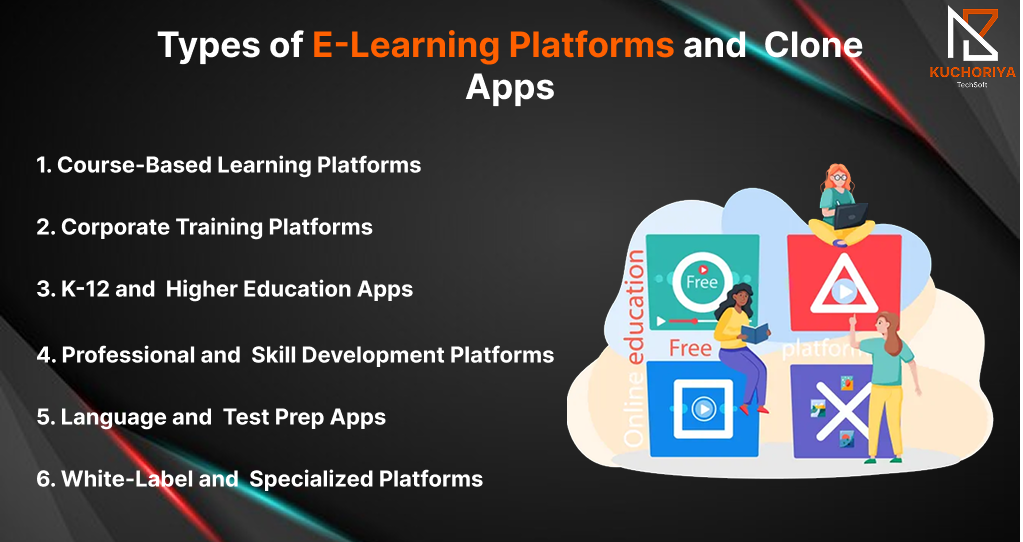
E-learning platforms have evolved to serve every learner type and business model. Understanding the key types helps you build an e-learning app or launch a learning management system clone efficiently.
1. Course-Based Learning Platforms
Platforms hosting structured courses for multiple instructors.
- Examples: Coursera, Udemy, Edx
- Clone Development: Coursera clone app development, Udemy clone app development, Edx clone app development
- Key Features: Course marketplace, student progress tracking, real-time assessments in e-learning, certificates
2. Corporate Training Platforms
Designed for employee upskilling and compliance.
- Clone Idea: Learning management system clone with analytics dashboards
- Highlights: Gamification in education apps, interactive modules, data analytics in education apps, e-commerce integration in education apps
3. K-12 and Higher Education Apps
Tailored for curriculum-based learning and adaptive content.
- Clone Solutions: Byju’s clone app development, Khan Academy clone app development, university LMS development
- Features: Offline access, AI-driven personalization, progress tracking
4. Professional and Skill Development Platforms
Focused on career growth and creative skills.
- Clone Examples: Skillshare clone app development, Teachable clone app development
- Core Features: Subscription-based models, interactive modules, live streaming for e-learning, gamified experiences
5. Language and Test Prep Apps
Target learners in exams and skill-based learning.
- Clone Ideas: Language learning app development, test preparation app development, voice-enabled learning apps
- Benefits: Personalized lessons, real-time performance analytics, adaptive learning paths
6. White-Label and Specialized Platforms
Custom-branded online learning platform clone solutions for businesses and institutions.
- Features: Secure payment gateways, SCORM-compliant platforms, AI-based personalization
- Use Cases: B2B EdTech solutions, e-learning app clone script, corporate and institutional deployments
Why Clone Development Works in 2025
Developing proven e-learning platform clones reduces time-to-market, cuts costs, and allows focus on content and engagement. Kuchoriya Techsoft specializes in custom e-learning solutions, integrating AR/VR in education apps and AI-based learning platforms for scalable, future-ready platforms.
Why Clone Development Works in 2026
Developing proven e-learning platform clones reduces time-to-market, cuts costs, and allows focus on content and engagement. We specialize in custom e-learning solutions, integrating AR/VR in education apps and AI-based learning platforms for scalable, future-ready platforms.
Must Read: How to Develop AI-Powered Expense Management Software in Toronto, Canada
Custom Education AI Software Solutions
Key Features of a Successful E-Learning App and Website
A high-performing e-learning platform must meet the needs of admins, students, teachers, and parents/guardians, each requiring unique features for smooth operation and engagement.
1. Admin Panel
- Manage users, courses, and content efficiently using LMS development and SCORM-compliant platforms.
- Track learner progress and generate reports with learning analytics dashboards.
- Secure monetization via secure payment gateways in education apps and pay-per-course platforms.
- Implement custom e-learning solutions and white-label e-learning platforms for institutional clients.
2. Student Dashboard
- Access interactive learning modules with quizzes, videos, and microlearning platforms.
- Personalized learning through AI-powered personalized learning and AI-based learning platforms.
- Participate in live streaming for e-learning sessions and gamified learning experiences.
- Learn offline with offline access for education apps and in multiple languages via multilingual support in learning apps.
3. Teacher/Instructor Panel
- Upload and manage courses with custom e-learning solutions.
- Conduct real-time assessments (real-time assessments in e-learning) and monitor performance.
- Engage students using gamification in education apps, interactive modules, and voice-enabled learning apps.
- Track adaptive learning paths through adaptive learning technologies and microlearning platforms.
4. Parent/Guardian Access
- Monitor children’s student progress tracking and course completion.
- Receive notifications for assignments, exams, and upcoming live sessions.
- Support learning continuity with offline access for education apps.
- View performance analytics via learning analytics dashboards for better guidance.
Pro Tip: Designing your e-learning platform with role-specific dashboards and these features ensures engagement, smooth management, and scalability. We specialize in education app development, online learning platform development, and custom e-learning solutions to create future-ready, immersive learning experiences.
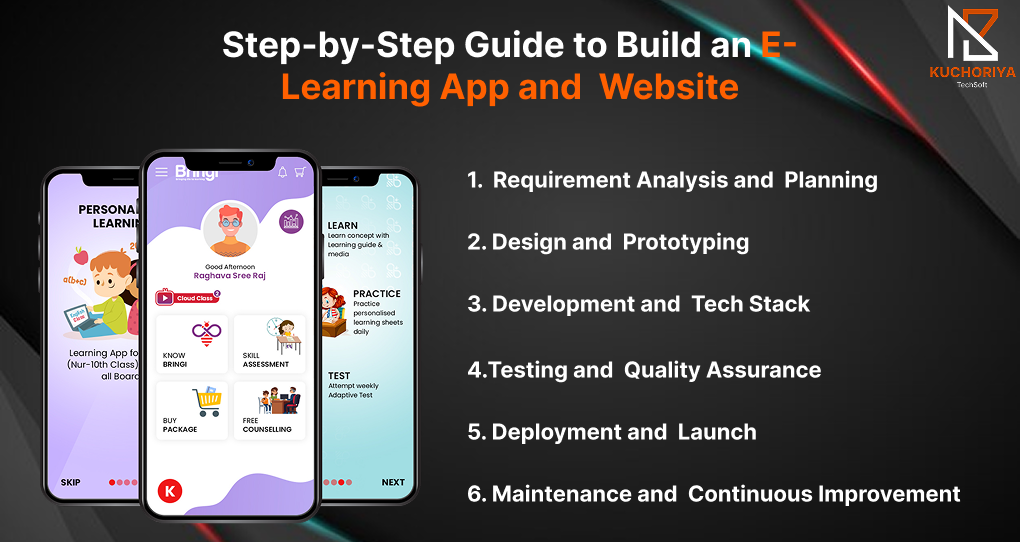
Building a profitable online learning platform requires a structured approach. Here’s a clear roadmap to create an educational app that engages users and scales effectively.
Step 1: Requirement Analysis and Planning
- Define your target audience: K-12, higher education, corporate training, or language learners.
- Decide on the platform type: Coursera clone app development, Udemy clone app development, or a custom solution.
- Outline core features: interactive learning modules, live streaming for e-learning, AI personalization, gamification, and analytics.
- Plan monetization strategies include subscription-based learning platforms, freemium education apps, and pay-per-course platforms.
Step 2: Design and Prototyping
- Create wireframes and UI/UX prototypes for all user roles: Admin, Student, teacher, Parent.
- Focus on mobile-first education apps for better accessibility.
- Ensure intuitive navigation, clear dashboards, and interactive elements.
- Include voice-enabled learning app and microlearning platform features in the design.
Step 3: Development and Tech Stack
- Choose cross-platform education apps or native development based on your audience.
- Implement API integration for learning platforms, cloud-based storage, and content management systems for education.
- Integrate AI, AR/VR modules, and adaptive learning technologies for personalization.
- Secure transactions with secure payment gateways in education apps and user authentication in learning platforms.
Step 4: Testing and Quality Assurance
- Conduct rigorous testing across devices and browsers.
- Validate real-time assessments in e-learning and interactive modules.
- Test offline accessibility, multilingual support, and gamified features.
- Ensure data privacy compliance for learners.
Step 5: Deployment and Launch
- Deploy the app on iOS, Android, and web platforms (e-learning website development, mobile learning app development).
- Monitor early usage and feedback for optimizations.
- Launch marketing campaigns: affiliate marketing for learning platforms, ads, and partnerships with institutions.
Step 6: Maintenance and Continuous Improvement
- Regularly update content and features.
- Monitor learning analytics dashboards for engagement and retention metrics.
- Add AI-powered recommendations, immersive AR/VR experiences, and new gamified modules.
- Scale for global markets with multilingual support in learning apps and offline access for education apps.
Pro Tip: Following these steps ensures a robust, scalable, and engaging e-learning app development process. We offers end-to-end solutions, including custom e-learning solutions, clone apps, AI/VR integration, and virtual CTO services for seamless execution.
Conclusion – The Future Is Digital Learning
The e-learning industry continues to evolve as educational institutions, startups, and enterprises embrace digital-first learning experiences. From online learning platform development and LMS solutions to AI-powered personalized learning and immersive virtual classrooms, modern education technology is creating new opportunities for engagement, accessibility, and growth.
Building a successful platform requires more than great content. Scalability, user experience, security, analytics, and adaptive learning capabilities all play a critical role in long-term success. Whether you're developing a course marketplace, corporate training solution, language learning platform, or custom education ecosystem, investing in the right e-learning app development strategy can help you stay ahead in a rapidly growing market.
At Kuchoriya TechSoft, we help organizations transform innovative ideas into future-ready EdTech solutions through custom e-learning solutions, advanced technology integration, LMS development expertise, and Fractional CTO Services. Ready to build your next online learning platform? Connect with our team for a free consultation or explore our Referral Partner Program to unlock new opportunities in the digital education landscape.
Frequently Asked Questions (FAQs)
Q. What is e-learning app development?
A. E-learning app development is the process of building digital learning platforms that deliver courses, training programs, assessments, certifications, and educational content through mobile apps and web-based systems.
Q. What features should an e-learning app include?
A. Essential features include user registration, course management, video streaming, quizzes, progress tracking, certificates, payment integration, push notifications, and personalized learning experiences.
Q. How much does e-learning app development cost?
A. The cost depends on factors such as platform complexity, feature requirements, LMS functionality, AI integration, third-party APIs, and the number of users the platform needs to support.
Q. How long does it take to develop an online learning platform?
A. Development timelines vary based on project scope. A basic platform can be launched within a few months, while advanced solutions with AI-powered learning, analytics, and custom integrations require additional development time.
Q. Why should businesses invest in custom e-learning solutions?
A. Custom e-learning solutions offer better scalability, branding, learner engagement, and flexibility than off-the-shelf platforms, making them ideal for educational institutions, startups, and corporate training providers.