If your vision is to launch a secure trading app development services Mississauga Ontario, Canada, you’ll need more than just a budget, precision planning is key. Estimating the stock trading app development cost is a critical step toward launching a reliable, scalable platform. Whether you're targeting a best low‑cost stock trading app or aiming for a high-tier Questrade‑style app cost development, clarity in budgeting makes all the difference.
At Kuchoriya Techsoft, our CTO service helps businesses accurately forecast costs, from the MVP through to an enterprise-ready platform. In this blog, we'll break down the main trading app cost drivers, explore regional pricing, and help you determine what it takes to build a stock trading app development comparable to Questrade or Interactive Brokers. Whether you're planning to create the best low cost trading app, a next-gen trading app development solution, or a secure stock trading app, this guide ensures you keep your budget in check while delivering a high-performing fintech product.
If you're aiming to build a stock trading app like Questrade or Interactive Brokers, you're setting the bar high in terms of both features and architecture. These platforms set market standards in stock trading app development, combining slick interfaces with powerful trading capabilities.
What Makes Them Stand Out?
- Rich Feature Set: From complex order types like bracket and stop-loss to multi-leg options and smart order routing, they offer advanced trading tools.
- Real-Time Data & Analytics: Live streaming quotes, technical charting, and market insights make them among the best stock broker apps in Canada, USA & India.
- Robust Security & Compliance: Biometric logins, bank-grade encryption, and rigorous regulatory adherence are critical.
- Blockchain Innovation: Companies like Interactive Brokers and others are evaluating blockchain in stock trading app areas like tokenized securities and instant settlement
When planning the cost of building a stock trading app, it’s essential to understand how different app types drive the stock app development cost estimate. Below are the typical categories and their budgets, based on industry benchmarks:
1. Basic Trading App (MVP)
- Cost to build app like Interactive Brokers (basic version): approximately USD 30,000–60,000
- This MVP serves minimal features: user registration, portfolio overview, simple buy/sell orders, and basic market data.
- It’s ideal for startups targeting the low-cost stock trading app segment and validating product-market fit.
2. Mid-Level Trading App
- Estimated stock trading app development cost estimate: USD 60,000–120,000, supporting more advanced functionalities
- Includes charting tools, research modules, watchlists, and moderate security enhancements.
- Serves well when adding features like real-time data and analytics without full enterprise complexity.
3. AI‑Powered or Algorithmic Trading App
Cost to build an AI-powered trading app or algorithmic trading platform often ranges from USD 90,000–160,000+
Supports AI-driven investment suggestions, smart order routing, automated algorithms, multi-asset trading, and advanced portfolio analytics.
4. Complex or Enterprise-Level Platform
- For platforms with high security, extensive compliance, multi-exchange integration, AI assistance, and scalability, the estimated cost rises to USD 130,000–250,000+
- Designed for wider markets, regulatory requirements, and performance-intensive usage.
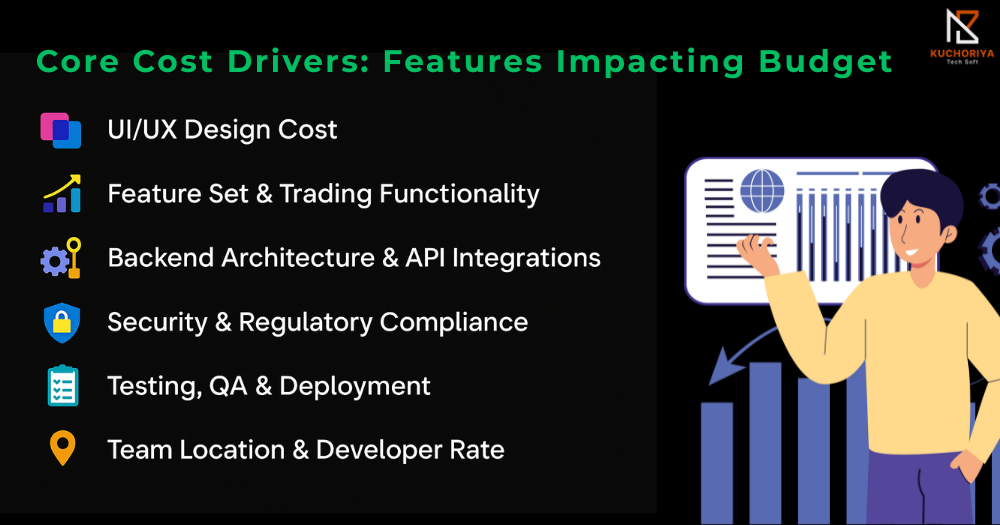
When planning to develop a stock trading app, several major trading app cost drivers directly impact your stock trading app development cost estimate. Whether you’re aiming for the best low cost trading app, a robust trading app development solution, or a feature-rich stock trading app, understanding these factors is essential for accurate budgeting and successful project execution. Knowing what contributes to the budget helps in making strategic decisions, especially if you're searching for a stock trading app development agency or vendor.
1. UI/UX Design Cost
Investing in quality design significantly enhances user trust and engagement, especially for a trading app.
- Dedicated UI/UX design cost trading app typically ranges from USD 10,000–30,000, depending on the number of screens, prototypes, and complexity of the experience.
- Better interfaces also mean higher retention and reduced support costs over time.
2. Feature Set & Trading Functionality
The breadth and sophistication of features have a primary effect on the budget:
- Basic features (account setup, portfolio view, simple order placement): USD 20K–50K
- Adding interactive charts, research modules, watchlists, and improved security: raises costs into the USD 50K–100K range.
- Integrating advanced features like algorithmic trading, AI-driven recommendations, and multi-asset support pushes estimates to USD 100K–200K+
3. Backend Architecture & API Integrations
Core infrastructure, order routing, and external services integration heavily influences scaling and reliability:
- APIs for market data, trade execution, identity verification, and payments can add USD 10K–30K+ depending on providers and licensing
- Backend development, including database design, microservices, and real-time data handling, may require USD 15K–40K+
4. Security & Regulatory Compliance
In regulated financial apps, compliance with KYC, AML, and privacy laws is non-negotiable:
- Implementing encryption, two-factor authentication, and compliance checks can cost USD 10K–25K+
- Security audits and reviews add further, unplanned cost overhead.
5. Testing, QA & Deployment
Ensuring reliability under stress and across devices is essential:
- Testing and quality assurance services (functionality, performance, security) often cost USD 5K–15K+..
- Production and initial deployment tasks add USD 3K–5K, with ongoing maintenance typically 15–25% of the initial development cost annually
6. Team Location & Developer Rates
Where your stock trading app development services are based makes a major difference:
- Agencies in North America or Canada (e.g. Mississauga, Ontario) charge USD 100–150/hr or more for fintech-grade builds
- Trusted firms in regions like India or Eastern Europe can match quality at USD 20–50/hr, significantly reducing base costs.
- Choosing an experienced stock trading app development company helps balance quality, compliance, and cost.
Estimated Cost Breakdown
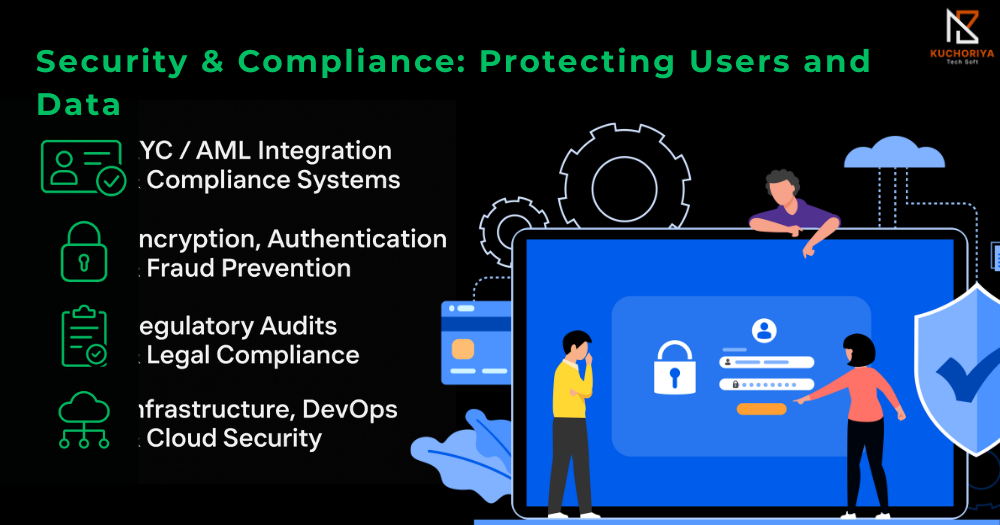 fintech, security and compliance are not optional, they’re mission-critical. As you explore fintech app development and consider stock trading application development, understanding these cost drivers is key, especially if seeking Top app developers in Mississauga, Canada, or looking for premium finance app development services.
1. KYC / AML Integration & Compliance Systems: Implementing KYC AML integration typically costs between USD 10,000 and 25,000 for basic automation via established providers.
- More advanced or custom systems, especially those leveraging AI and machine learning—can range from USD 50,000 to 150,000+, depending on customization and workflow complexity
- Automating identity verification and transaction monitoring is vital to avoid regulatory fines and operational risks.
2. Encryption, Authentication & Fraud Prevention: Essential security features, like end-to-end encryption, SSL, multi-factor authentication, and biometric login, typically cost USD 10,000 to 30,000
- For AI-enhanced fraud detection systems, costs could climb further, while penetration testing and security audits may range from USD 3,000 to 30,000 or more, subject to the depth and scope of coverage.
3. Regulatory Audits & Legal Compliance: Comprehensive third-party compliance audits, covering policies, transaction testing, and risk assessments, typically cost between USD 25,000 and 100,000, depending on audit scope and firm reputation
- Ongoing compliance management, documentation, and reporting (GDPR, PCI‑DSS, SOC, etc.) may account for 40–50% of annual operating expenses in large-scale fintech platforms
4. Infrastructure, DevOps & Cloud Security: A secure, compliant backend setup (including encrypted databases, secure DevOps pipelines, and cloud architecture) is essential. Costs will scale with user volume but often factor into the overall compliance and infrastructure budget
Integrating external services, such as trading APIs, market data feeds, and payment gateways, directly impacts your stock trading app development cost in India. Smart integration strategy, combined with CTO consulting services, ensures you can build a competitive yet cost-effective platform for beginners and experienced users alike.
1. Market Data & Trading API Integration: Reliable pricing and live-streaming data from providers like Zerodha (Kite Connect) or ProStocks form the backbone of any investment platform or trading app. Development and integration of these APIs can add USD 10,000–30,000 to your project budget.
These integrations are critical whether building a stock trading app for beginners, an investing app, or a full-scale brokerage software development.
2. Payment Gateway Integration: For apps targeting Canada or USA, development agencies such as Hire trading app development company Mississauga, Ontario, Canada may charge more for international payment partners (e.g. Stripe or PayPal) and compliance integration.
3. Integration Costs as a Budget Driver: Feature integrations, especially around market data, trading execution, and payments, often determine whether the app stays within the stock trading app development cost estimate you plan. These third-party services also come with recurring fees, licensing costs, or per-user limits, making them a key element in long-term budgeting.
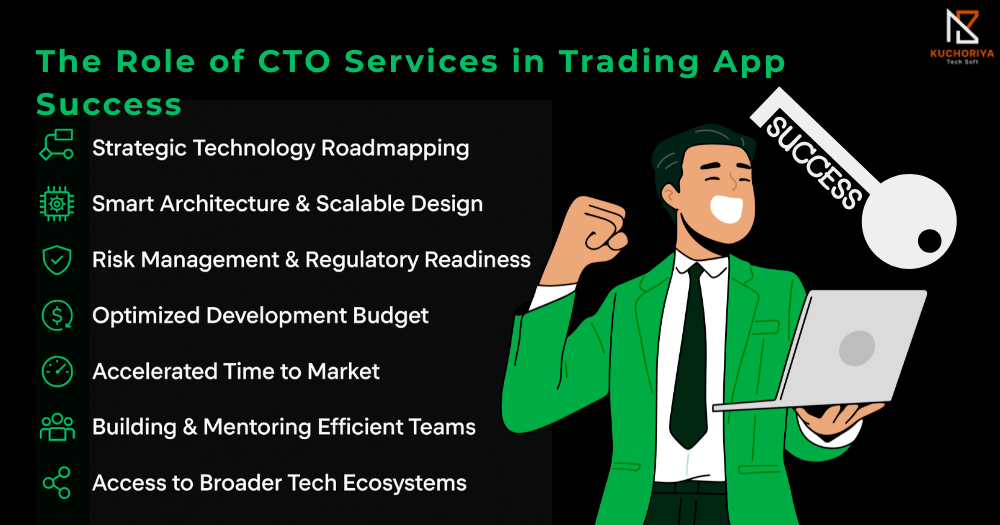
Engaging a Virtual CTO Service or CTO consulting services helps align tech strategy with business goals, reduces risk, and optimizes spend.
Key Benefits of Virtual CTO Service & CTO Consulting Services
- Strategic Technology Roadmapping: A CTO Consultant shapes a big-picture roadmap, aligning innovation like AI, blockchain, or real-time trading features with product goals in stock trading software development.
- Smart Architecture & Scalable Design: Expert CTO guidance ensures your infrastructure supports growth while reducing technical debt and cost overruns.
- Risk Management & Regulatory Readiness: CTO services help navigate financial compliance, KYC/AML, and data security, ensuring you meet industry standards early on.
- Optimized Development Budget: A Virtual CTO helps select efficient tools, rationalize feature scope, and vet vendors, key to affordable trading app development in locations like Mississauga, Ontario, Canada.
- Accelerated Time to Market: By implementing agile development methods and iterative releases, a CTO supports faster delivery, essential when building a best trading app for beginners or full investment platform.
- Building & Mentoring Efficient Teams: CTO consulting services advise on building tech teams, from hiring to performance reviews, especially useful for leaders seeking a solid foundation in stock trading application development.
- Access to Broader Tech Ecosystems: Virtual CTOs often bring networks of trusted engineers and vendors, ideal for collaborating with an affordable trading app development company in Mississauga, Ontario, Canada.
Why CTO Services Matter
A strategic CTO offers:
- Expertise in stock trading software development and deep domain knowledge
- Guidance to optimize trading platform development budgets
- Support for compliance, scalability, risk mitigation, and team operations
- Cost-effective leadership via Virtual CTO Service instead of full-time hire

Understanding how location impacts trading app cost is essential when planning your budget. Below is a detailed region-wise cost breakdown for building a stock trading app or stock trading platform like Questrade or Interactive Brokers. This highlights differences in hourly rates, regional talent availability, and how factors such as compliance affect pricing across continents for stock trading app development and trading app development projects.
Region-Wise Development Cost Estimates
Understanding the cost to develop a stock trading app, especially across different regions, lets you gauge realistic investment needs and avoid surprises. While development in Canada’s Mississauga region offers access to top-tier talent, it's typically more expensive than offshore hubs like India. Either path, onshore or offshore, can be optimized through expert governance.
Security, regulatory compliance, and API integrations consistently emerge as budget-driving considerations. Adding AI functionality or blockchain support gives your app a competitive edge, but also raises the bar for cost and complexity. That's why integrating CTO consulting services or working with a Virtual CTO Service becomes invaluable, they ensure your technology roadmap remains aligned with business goals, keeps risk in check, and maintains pace without overrun.
At Kuchoriya Techsoft, we guide you through every step, prioritizing essential features, constructing scalable architectures, and optimizing regional cost efficiencies. With our CTO expertise, you get financial discipline, and technical precision in one package.
Ready to transform your vision into a secure, cost-effective stock trading app or trading app? Partner with experts in stock trading app development and trading app development to build the best trading app that meets user expectations and regulatory standards.
Contact us today, and partner with Kuchoriya Techsoft for your next-gen investment solution.
Q. How much does a basic trading app cost?
A. A basic trading app featuring user login, portfolio tracking, simple buy/sell functionality, and basic charts typically falls in the USD 50,000–80,000 range. Simpler MVP builds, depending on region and team rates, can start as low as USD 30,000–60,000.
Q. How long does it take to build a trading app?
A. A basic trading app can take around 3–6 months. More advanced platforms featuring AI, algorithmic trading, and stringent compliance can stretch to 9–12 months or more Community developers also report timelines between 3–6 months for MVPs, with more complex features extending the build time
Q. Can you build a trading app on a limited budget?
A.Yes.Using offshore development teams or scoped MVPs lets you validate your idea without overspending before scaling
Q. What core features should a beginner-friendly trading app include?
A. A beginner-focused app should offer simple account registration, a clean portfolio overview, intuitive buy/sell buttons, basic market data, watchlists, and simple tutorials or help guides to onboard new investors.
Q. How do I make sure my trading app is secure?
A. Security starts with encrypted data storage, secure login methods (MFA or biometrics), compliance with privacy standards, and safe handling of sensitive user information like passwords, account numbers, and financial transactions.
Q. How do I choose the right technology stack for a trading app?
A. Selecting a stack depends on your priorities. For high-performance needs, consider real-time backend systems (e.g. Node.js, .NET Core), charts from libraries like tradingview.com, reliable databases like PostgreSQL or Redis, and secure mobile frameworks like React Native, Swift, or Kotlin.
Q. Should I build native mobile apps or use cross-platform frameworks?
A. Both paths have pros and cons. Native development (Swift for iOS, Kotlin for Android) offers top performance and platform-native feel. Cross-platform tools like React Native can save on development time and cost. The best choice depends on your priorities: speed-to-market vs. platform experience.