Introduction: Why Expense Management Software Is Growing in Canada
Managing expenses manually is quietly draining time and money for businesses. That’s why expense management software development in Toronto, Canada, is growing fast as companies shift toward automation and real-time financial control.
Today, nearly 68% of businesses are moving from manual processes to automated systems to reduce errors and delays (Source). At the same time, finance teams still spend 20+ hours per month on manual expense processing (Source).
This gap is pushing companies to adopt business expense management software and online expense management software that can automate workflows, speed up approvals, and improve visibility.
Even more interesting: Companies using automation report 20–30% cost savings and faster processing after adopting modern tools (Source).
With innovations like AI-powered expense management software, AI receipt scanning OCR, and a real-time expense analytics dashboard, businesses can now track spending instantly, detect fraud, and make smarter financial decisions.
This is why many organizations are now investing in custom expense management software instead of generic tools—especially when scaling operations across teams, locations, and currencies.
Companies like Kuchoriya TechSoft are helping businesses in Canada build intelligent, scalable platforms that go beyond tracking—focusing on automation, accuracy, and long-term growth.

What Is Expense Management Software & How It Works
Expense management software Canada refers to a digital solution that helps businesses automate, track, and control their financial expenses efficiently without relying on manual processes.
In today’s fintech-driven environment, companies are increasingly adopting expense management systems for businesses to improve accuracy, reduce operational delays, and gain better financial visibility.
1. Expense Capture & Data Collection
Modern employee expense tracking software automatically captures expense data from receipts, invoices, and transactions. Tools like the receipt scanning expense app and automated invoice processing software eliminate manual entry and reduce errors.
2. Smart Categorization & Processing
Expenses are automatically categorized using AI expense categorization software and machine learning expense tracking. This ensures structured financial data that is ready for analysis and reporting.
3. Approval Workflow Automation
Advanced smart approval workflows expense software manages multi-level approvals based on company policies. This helps streamline internal processes and removes approval bottlenecks.
4. Real-Time Monitoring & Insights
With data-driven expense insights and big data expense analytics, businesses get complete visibility into their spending. This enables faster, data-backed financial decisions.
5. Integration & Secure Transactions
A scalable API driven expense management software integrates seamlessly with banking systems, ERP platforms, and payment gateways. A secure fintech transactions system ensures data protection and transaction security.
A well-structured expense management system improves efficiency, reduces financial risks, and enables smarter business decisions.
Must-Have Features of Expense Management Software (2026)
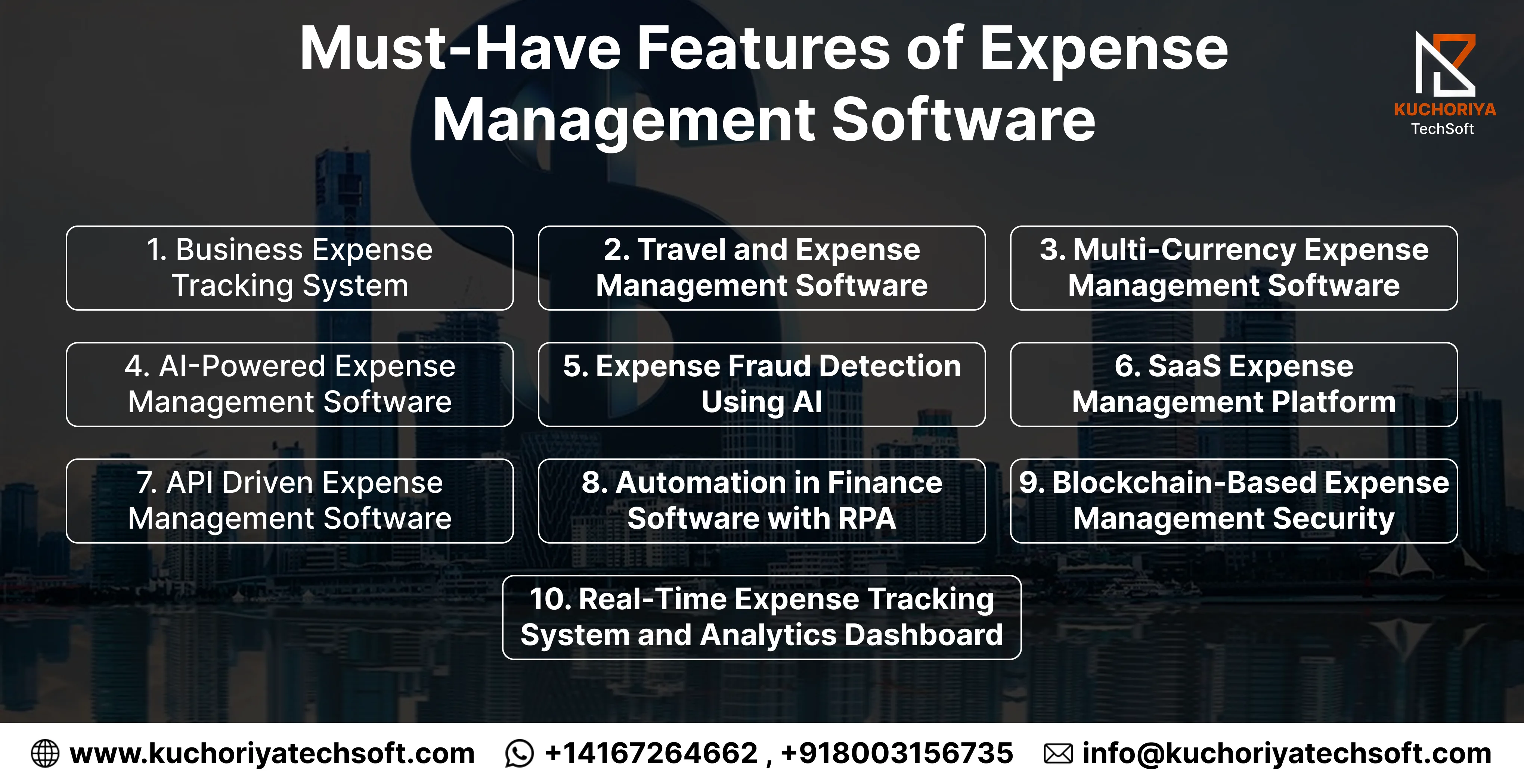
Building a scalable product requires advanced expense management software features that match modern fintech needs. Whether you’re planning expense management app development or a full SaaS solution, these features directly impact performance, automation, and growth.
1. Business Expense Tracking System
A reliable business expense tracking system helps companies monitor transactions, control spending, and maintain structured financial records across teams with better visibility and accuracy.
2. Travel and Expense Management Software
A strong travel and expense management software setup simplifies reimbursements, bookings, and compliance. With travel expense automation software, businesses can reduce delays and improve operational efficiency.
3. Multi-Currency Expense Management Software
For global operations, multi-currency expense management software ensures smooth handling of international transactions, exchange rates, and cross-border financial reporting.
4. Real-Time Expense Tracking System and Analytics Dashboard
A powerful real-time expense tracking system, combined with a real-time expense analytics dashboard, gives instant insights into spending patterns and helps businesses make faster financial decisions.
5. AI-Powered Expense Management Software
Modern platforms use AI-powered expense management software with AI receipt scanning, OCR, AI expense categorization software, and machine learning expense tracking to automate workflows and improve accuracy.
6. Expense Fraud Detection Using AI
Security-focused systems include expense fraud detection using AI and anomaly detection in expenses to identify unusual patterns and prevent financial losses.
7. SaaS Expense Management Platform
A scalable SaaS expense management platform built on a cloud native expense management system allows flexibility, performance, and multi-user management through a multi-tenant SaaS expense platform.
8. API-Driven Expense Management Software
An efficient API driven expense management software integrates with ERP tools, banking APIs, and accounting systems, ensuring seamless data flow across platforms.
9. Automation in Finance Software with RPA
Using automation in finance software and RPA in expense management, businesses can automate approvals, validations, and reporting processes to reduce manual workload.
10. Blockchain-Based Expense Management Security
Advanced solutions leverage blockchain-based expense management and a secure fintech transaction system to ensure data protection, transparency, and compliance.
Advanced features combined with AI and automation define the success of modern expense management systems.
Latest Trends & Industry Insights: Avoid Costly Development Mistakes — Hire a Fractional CTO in Dubai & Canada for Startup Success
Top Mobile App Development Companies in Canada
Top 20 Artificial Intelligence (AI) Companies in Mississauga, Ontario, Canada
AI in Expense Management Software (2026 Trends)
AI is rapidly transforming how financial systems operate. Modern platforms are no longer just tools—they are intelligent systems that automate, analyze, and optimize financial workflows in real time.
1. Generative AI & Intelligent Expense Automation
With generative AI in fintech, platforms can auto-create reports, summaries, and financial insights. Combined with intelligent expense automation and business expense automation software, this reduces manual work and speeds up approvals across organizations.
2. Big Data Expense Analytics & Data-Driven Insights
Using big data expense analytics and data-driven expense insights, businesses can analyze large financial datasets to identify trends and optimize spending. This enables smarter decision-making and better long-term planning.
3. Real-Time Analytics & Smart Financial Dashboards
A powerful real-time expense analytics dashboard provides instant visibility into company spending. Businesses can track patterns, monitor budgets, and make faster financial decisions without delays.
4. AI Chatbot, Conversational AI & Automated Processing
Modern systems integrate an AI chatbot for expense management and a conversational AI finance assistant to improve user experience. Along with automated invoice processing software, these features reduce manual intervention and streamline workflows.
5. Anomaly Detection & Secure Fintech Systems
AI-driven anomaly detection in expenses helps identify suspicious transactions, while a secure fintech transactions system ensures data protection and compliance. This combination reduces risk and strengthens financial security.
AI is shifting expense management from manual tracking to intelligent automation and predictive control.
Step-by-Step Expense Management Software Development (2026 Guide)
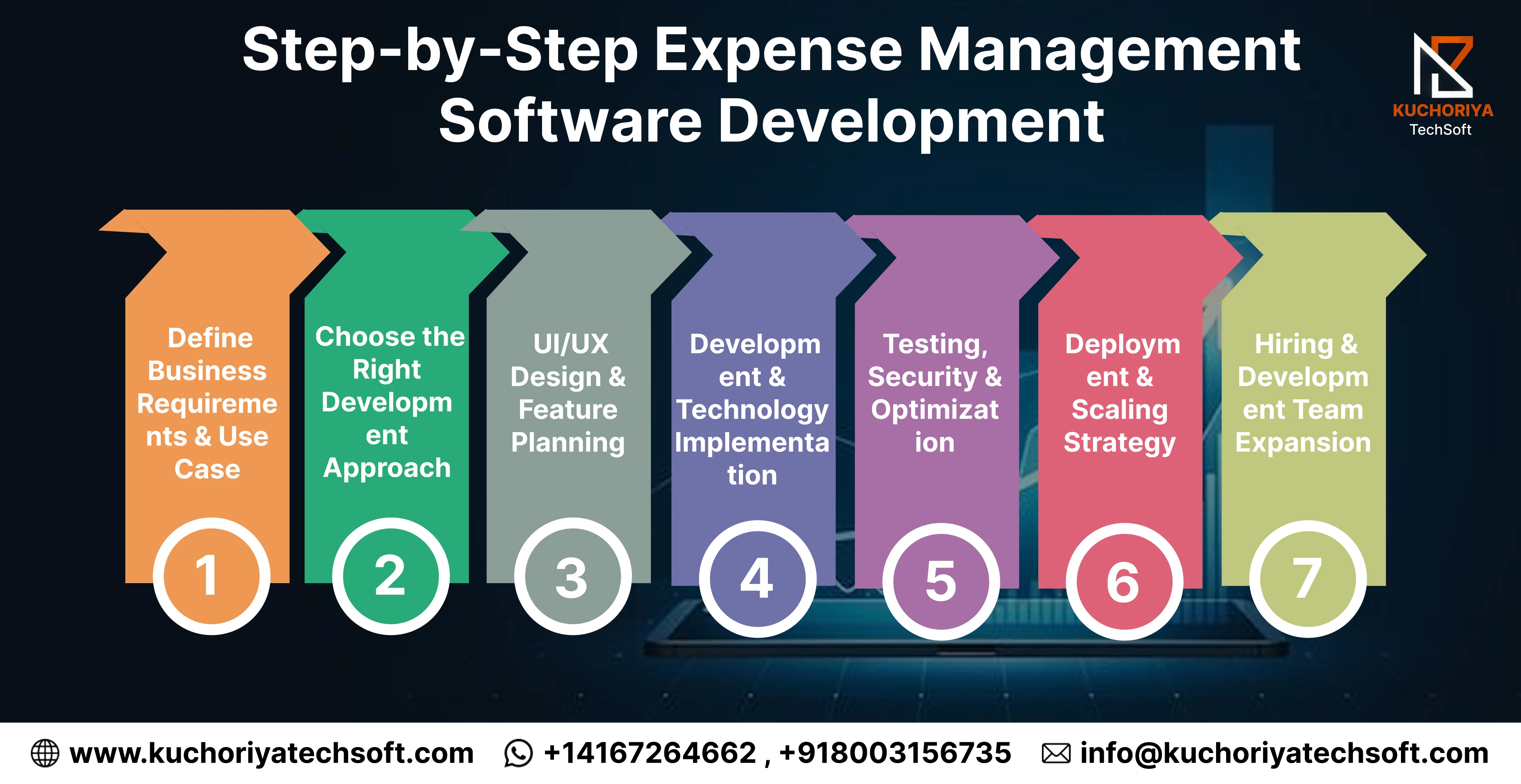
Building a scalable fintech product requires a structured approach. Whether you’re planning to build expense management software in Toronto or targeting global markets, following a step-by-step process ensures efficiency, scalability, and long-term success.
Step 1: Define Business Requirements & Use Case
Start by identifying your business needs and goals. Whether you want to build expense management system for my business or launch a SaaS product, clarity at this stage is critical. Define target users, workflows, and industry focus, like expense management software for startups, expense management software for SMEs, or enterprise-level solutions.
Step 2: Choose the Right Development Approach
Decide whether you need custom expense management software or a scalable SaaS solution. Many businesses in Canada prefer SaaS product development in Canada for flexibility and growth. Partnering with experts like Kuchoriya TechSoft ensures you get the right architecture and long-term scalability.
Step 3: UI/UX Design & Feature Planning
Plan the user experience and finalize expense tracking app features based on business needs. Focus on usability, dashboards, and workflows to ensure your expense management system for businesses delivers seamless performance.
Step 4: Development & Technology Implementation
This is where actual fintech software development in Toronto begins. Choose the right architecture and tools with help from fintech software development services and experienced teams offering custom software development in Toronto.
Step 5: Testing, Security & Optimization
Before launch, ensure complete testing, performance optimization, and security validation. This step is critical for industries like healthcare, fintech, and enterprise platforms where data accuracy and compliance matter.
Step 6: Deployment & Scaling Strategy
Launch your product and plan for scaling. Businesses often rely on Toronto startup software development experts to handle growth and infrastructure upgrades. Using Canadian fintech software solutions, you can expand across regions smoothly.
Step 7: Hiring & Development Team Expansion
To scale efficiently, companies often hire fintech developers in Toronto or hire software developers in Canada. Working with a reliable expense management software development company in Canada ensures long-term support and innovation.
A structured development process ensures faster launch, better scalability, and long-term product success.
Cost of Developing Expense Management Software in Toronto & Canada (2026)
The cost to build expense management software depends on multiple factors like features, architecture, scalability, and team expertise. Whether you’re planning a basic solution or an advanced fintech platform, understanding the cost breakdown helps you make smarter investment decisions.
Businesses looking for expense management software in Toronto, Canada, or enterprise-grade platforms often choose custom development to ensure flexibility, security, and long-term scalability.
Key Factors That Impact Development Cost
1. Software Complexity & Features
Basic tools cost less, but advanced platforms with automation, integrations, and analytics increase the software development cost in Canada significantly.
2. Platform Type (Web / Mobile / SaaS)
Building a scalable SaaS product under SaaS development in Toronto requires more investment compared to simple internal tools.
3. Development Team & Location
Hiring through software development services in Toronto or a fintech development company in Toronto impacts cost based on expertise and experience level.
4. Customization & Scalability Requirements
A fully custom software development company in Canada solution costs more but ensures better performance, flexibility, and long-term ROI.
5. Maintenance & Future Scaling
Post-launch updates, scaling, and improvements also contribute to the overall cost of expense management software development in Canada.
Estimated Cost Breakdown Table (2026)
Cost Optimization Strategy (Important for Founders)
Instead of overspending early, smart founders:
- Start with MVP
- Scale features gradually
- Use expert guidance for architecture
- Avoid rebuilding costs later
This is where companies like Kuchoriya TechSoft help businesses optimize development by choosing the right approach from day one.
If you’re planning to get an expense management software quote or want a clear estimate based on your idea, it’s always better to book a software consultation first instead of guessing costs.
Smart planning reduces development cost, but the right tech decisions multiply long-term ROI.
Expert Tips & Best Practices: Top 20 Insurance App Development Companies in Canada
How to choose a Stock Trading App Development Company in Mississauga, Ontario, Canada?
Best Tech Stack for Expense Management Software (2026)
Choosing the right technology stack is critical for building scalable and high-performance platforms. Whether you’re working on expense tracking software development in Toronto or planning global expansion, the tech stack directly impacts performance, security, and scalability.
1. Frontend Development for Expense Management App Development
For a smooth user experience in expense management app development, modern frameworks like React and Angular are used. This ensures responsive dashboards and supports expense tracking app features with real-time interaction.
2. Backend Architecture for Fintech Software Development Services
A strong backend is essential for handling financial logic in fintech software development services. Using Node.js or Python, developers can build secure and scalable systems aligned with how fintech apps manage expenses.
3. Cloud-Based Expense Management Infrastructure
A robust cloud-based expense management system ensures scalability and uptime. Cloud platforms help businesses reduce infrastructure costs while supporting growth in Canada fintech software solutions.
4. Database Systems for Financial Management Software Development
Efficient databases are critical for financial management software development. They ensure fast processing of transactions and reliable storage of financial records.
5. Microservices & Scalable SaaS Architecture
Using a microservices architecture fintech platforms can scale easily and handle multiple users. This is essential for building flexible systems under SaaS development in Toronto.
6. Development Team & Deployment Ecosystem
To build efficiently, businesses often hire developers in Toronto, Canada or work with a SaaS development company in Toronto. Partnering with the right team ensures smooth deployment and long-term scalability.
Expert Insight
Companies like Kuchoriya TechSoft help businesses choose the right technologies and build scalable platforms aligned with modern fintech standards. The right tech stack ensures performance, scalability, and long-term product success.
Common Challenges in Expense Management Software Development (and Solutions)
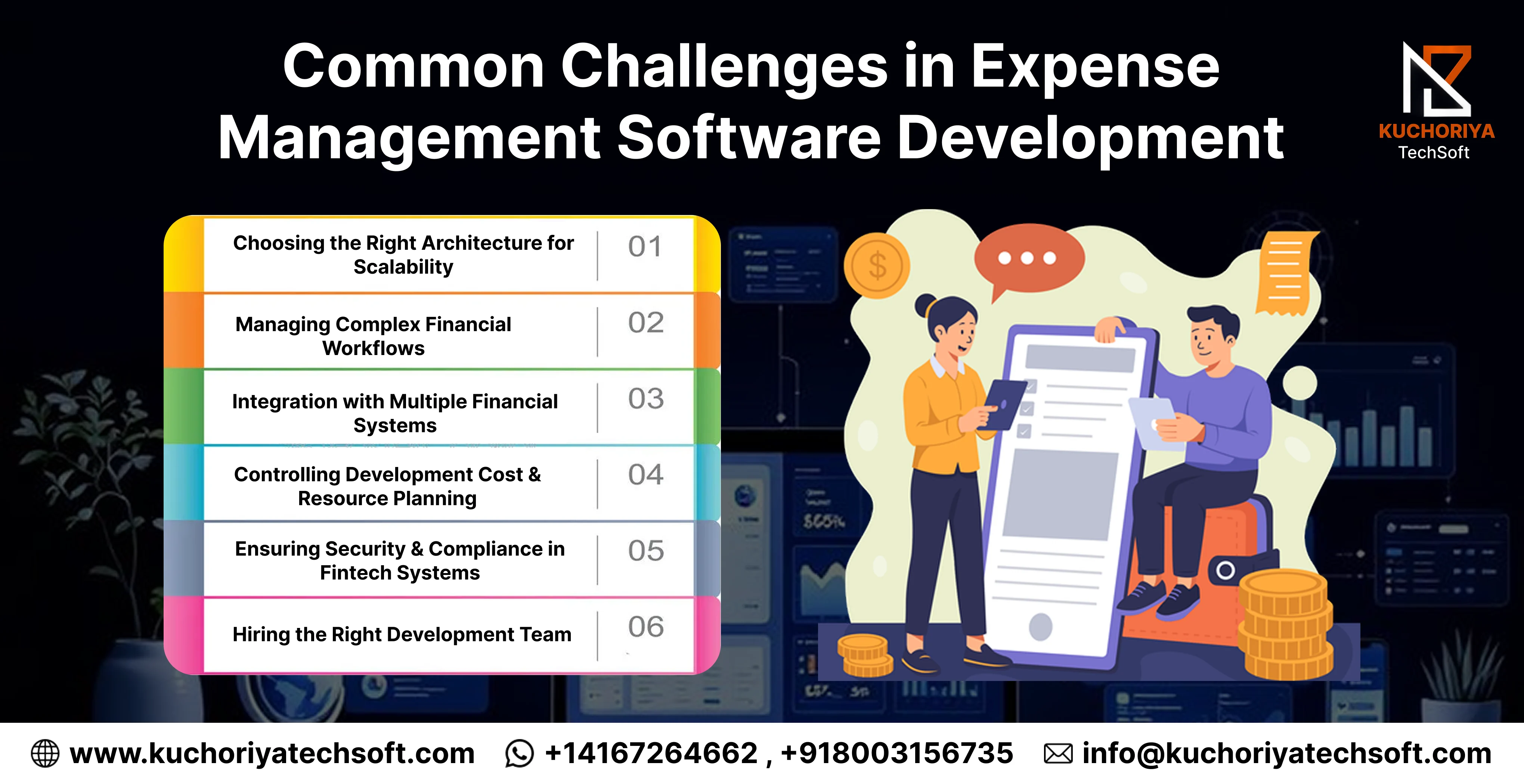
Building a scalable platform is not easy. Whether you're working on expense management software development in Toronto, Canada or global fintech products, businesses face multiple technical and operational challenges that can impact performance, cost, and growth.
1. Choosing the Right Architecture for Scalability
Many businesses struggle while planning expense management system development in Canada, especially when scaling users and transactions. Poor architecture leads to performance issues and costly rebuilds.
Solution: Adopt scalable structures, such as cloud-native expense management systems, and modular design early. This ensures flexibility and avoids future rework.
2. Managing Complex Financial Workflows
Handling reimbursements, approvals, and reporting in a corporate expense management system can become complex as teams grow. Without proper flow, systems become slow and inefficient.
Solution: Implement structured workflows and automation logic while building your expense reporting software to simplify operations and improve efficiency.
3. Integration with Multiple Financial Systems
Modern platforms require integration with banking APIs, ERP systems, and tools. This becomes a major challenge in fintech software development Toronto projects due to compatibility issues.
Solution: Use scalable integration methods through API driven expense management software to ensure seamless connectivity across systems.
4. Controlling Development Cost & Resource Planning
Many startups underestimate the cost to build expense management software, leading to budget overruns. Poor planning also significantly increases software development cost Canada significantly.
Solution: Start with MVP and scale gradually. Working with experts offering fintech software development services helps optimize costs and avoid unnecessary expenses.
5. Ensuring Security & Compliance in Fintech Systems
Security is a critical concern in financial management software development, especially when handling sensitive financial data. Weak security can lead to data breaches and trust issues.
Solution: Implement strong encryption and compliance frameworks with a secure fintech transactions system to protect data and maintain user trust.
6. Hiring the Right Development Team
Finding skilled developers for expense tracking software development in Toronto or fintech projects is a common challenge. Wrong hiring decisions slow down development and affect product quality.
Solution: Businesses should hire software developers in Canada with fintech experience or partner with a reliable fintech development company Toronto for better execution.
Expert Insight
Companies like Kuchoriya TechSoft help businesses overcome these challenges with structured planning, scalable architecture, and expert development strategies. Every challenge in fintech development has a solution—if addressed at the right stage.
Industry Use Cases of Expense Management Software
Different industries adopt expense tools in different ways. From startups to large enterprises, the demand for structured financial systems is increasing as businesses move toward automation and better cost control.
1. Expense Management Software for SMEs
Small and growing businesses rely on expense management software for SMEs to manage daily operations, reduce manual work, and improve financial visibility. These systems help businesses automate processes using business expense automation software and build a strong financial foundation without heavy infrastructure.
2. Enterprise Expense Management Systems
Large organizations implement corporate expense management system development to manage complex approval structures, multi-department expenses, and compliance workflows. These systems are built for scalability and align with the features of an expense management system for startups transitioning into enterprise-level platforms.
3. Fintech Industry Use Case
Fintech companies require advanced systems aligned with how fintech apps manage expenses and secure transaction flows. These platforms are part of broader fintech app development guide strategies, helping companies build reliable and scalable financial ecosystems.
4. SaaS-Based Expense Platforms
Businesses building SaaS products follow the SaaS expense management platform development guide approaches to create scalable solutions. With SaaS product development Canada trends rising, companies focus on flexible architectures and subscription-based financial systems.
5. Logistics, Travel & Operations Management
Industries dealing with movement and operations use solutions aligned with expense tracking app development cost in Canada planning. These platforms help track operational costs, automate reimbursements, and improve real-time expense control across distributed teams.
6. Multi-Industry Digital Transformation
Organizations across sectors adopt platforms as part of digital transformation in fintech, enabling automation, reporting, and smarter decision-making. Businesses planning to build an expense management system for my business should focus on scalable and adaptable solutions.
Real growth comes when software adapts to your industry—not the other way around.
Case Study: Expensya & Bottomline Expense Management Platforms
Real-world platforms show how modern systems are built, scaled, and optimized. If you're planning how to develop expense management software in Toronto, these case studies give clear direction on architecture, automation, and scalability.
1. Expensya – AI-Driven Expense Automation Platform
Expensya is a strong example of a modern expense management software Toronto, Canada solution focused on automation and user experience.
It leverages an AI chatbot for expense management and conversational AI finance assistant to simplify user interaction. Instead of manual entry, users can scan receipts or interact with AI.
The platform also uses automated invoice processing software and intelligent expense automation to reduce manual work and improve processing speed. With generative AI in fintech, Expensya ensures faster and more accurate expense handling.
Key takeaway: AI reduces effort, errors, and operational cost.
2. Bottomline – Enterprise Financial Infrastructure Platform
Bottomline represents a powerful Canada fintech software solutions approach built for enterprises requiring secure and scalable systems.
It incorporates blockchain-based expense management and secure fintech transactions system to ensure transparency and security. The system also uses anomaly detection in expenses to identify fraud patterns in real time.
Built on serverless fintech applications, Bottomline ensures scalability without heavy infrastructure dependency.
Key takeaway: Security + scalability = enterprise success.
3. Learnings for Building Scalable Platforms
If you want to build expense management software in Toronto, these platforms highlight what actually works in real-world scenarios.
- Focus on digital transformation in fintech instead of outdated manual systems
- Use data-driven expense insights for better decision-making
- Implement big data expense analytics for tracking and optimization
- Prioritize automation over manual workflows
- Ensure scalability from day one
These are critical when working with a fintech development company in Toronto or planning custom software development company Canada projects.
4. How Businesses Can Replicate This Success
Companies planning to build an expense management system for my business should focus on strategy, not just features.
Partnering with a SaaS development company in Toronto or using software development services in Toronto ensures structured development and scalability.
You can also hire developers Toronto Canada to build advanced fintech architectures aligned with your business model.
For startups, choosing the right Toronto startup software development partner can directly impact product success.
5. Role of CTO Services in Successful Platforms
Behind every scalable system is strong technical leadership.
Using virtual CTO services Canada, fractional CTO services Canada, or CTO consulting services Canada helps businesses avoid mistakes and build scalable systems.
Startups that hire fractional CTO Canada or leverage virtual CTO Toronto gain strategic direction without high costs.
Great products are not built by features alone—they’re built by strategy, architecture, and the right technical decisions from day one.

Benefits of AI-Powered Expense Management Systems
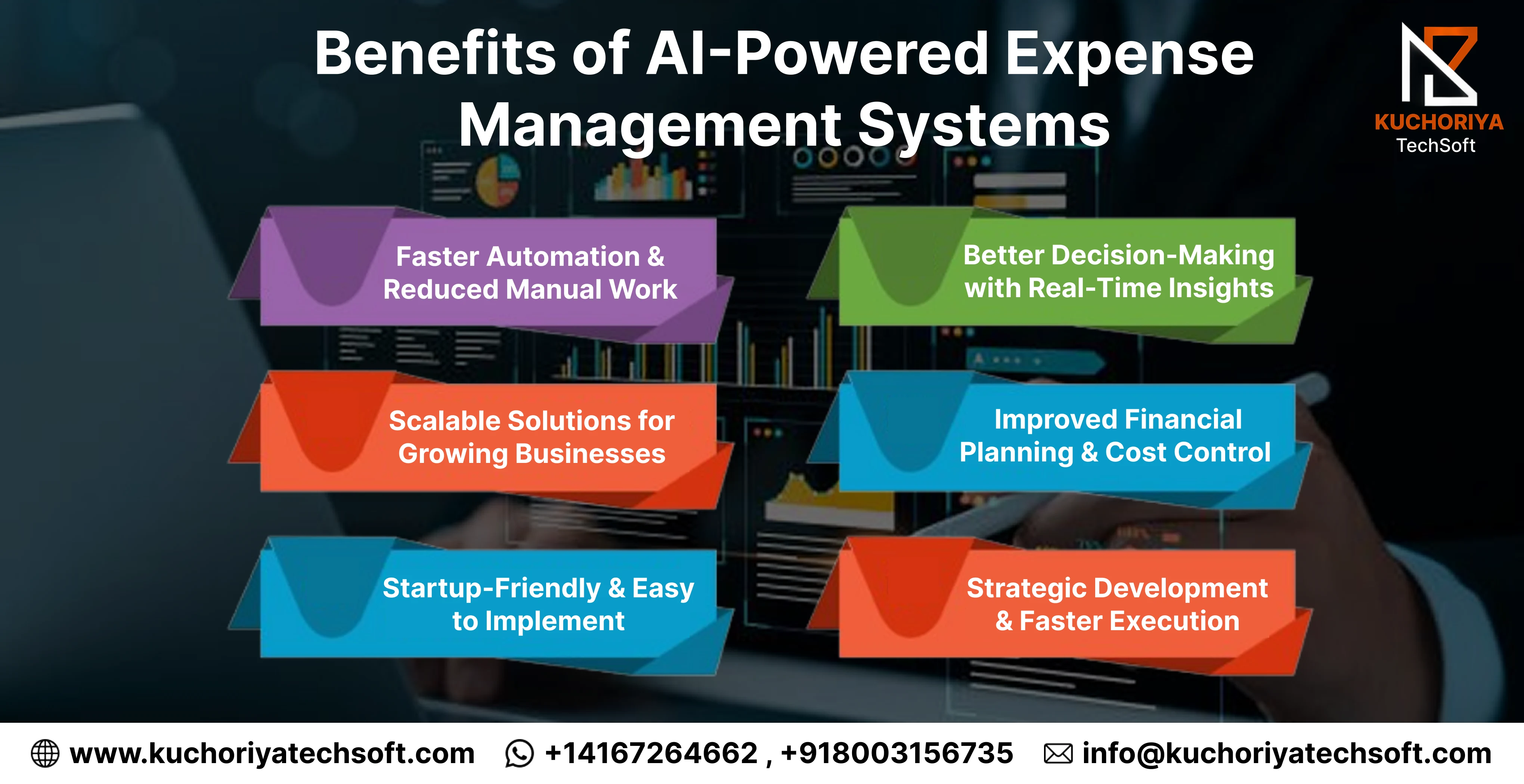
Modern businesses are rapidly shifting toward intelligent systems to improve efficiency, reduce costs, and gain real-time financial control. Investing in advanced solutions is no longer optional—it’s a competitive advantage.
1. Faster Automation & Reduced Manual Work
With business expense automation software, companies eliminate repetitive tasks like data entry and approvals. This improves productivity and allows teams to focus on strategic work instead of manual processes.
2. Better Decision-Making with Real-Time Insights
Using advanced analytics, businesses gain visibility through structured financial data. This helps companies choose the best expense management software for businesses and make smarter financial decisions based on real-time insights.
3. Scalable Solutions for Growing Businesses
Modern platforms are built using SaaS product development Canada approaches, allowing businesses to scale without infrastructure limitations. This ensures long-term growth and flexibility.
4. Improved Financial Planning & Cost Control
Understanding the cost to build expense management software and implementing the right system helps businesses optimize spending and avoid unnecessary expenses.
5. Startup-Friendly & Easy to Implement
AI-driven systems simplify onboarding with features of expense management system for startups, making it easier for early-stage companies to manage finances efficiently.
6. Strategic Development & Faster Execution
Following a fintech app development guide and structured approach like step by step expense management software development ensures faster product delivery and reduced risk.
Companies like Kuchoriya TechSoft help businesses implement intelligent systems that combine automation, scalability, and performance for long-term success.
AI-powered systems don’t just manage expenses—they transform how businesses operate.
Why Hire a Development Partner in Toronto, Canada
Building a scalable fintech product requires more than just coding. The right development partner ensures strategy, execution, and long-term success—especially in a competitive market like Canada.
1. Access to Skilled Fintech Talent
When you hire fintech developers Toronto, you get access to experienced professionals who understand financial systems, compliance, and scalable architectures. This reduces development risks and improves product quality.
2. End-to-End Fintech Development Services
Working with an expense management software development company Canada ensures complete support—from planning to deployment. Businesses benefit from structured fintech software development services tailored to their needs.
3. Custom Development for Business Needs
A reliable partner offering custom software development Toronto builds solutions aligned with your exact requirements instead of generic templates. This is critical for long-term scalability and performance.
4. Strong SaaS & Scalable Architecture Expertise
Companies specializing in SaaS development Toronto understand how to build flexible, multi-user systems that scale efficiently as your business grows.
5. Faster Time-to-Market
With professional software development services Toronto, businesses can launch products faster while maintaining quality and security standards.
6. Long-Term Support & Growth Strategy
A trusted fintech development company Toronto not only builds your product but also supports scaling, upgrades, and optimization for future growth.
Companies like Kuchoriya TechSoft provide end-to-end development support, helping businesses build scalable fintech solutions with the right strategy and execution.
The right development partner doesn’t just build your product—they build your growth.
Role of Fractional CTO & Virtual CTO in Fintech Development
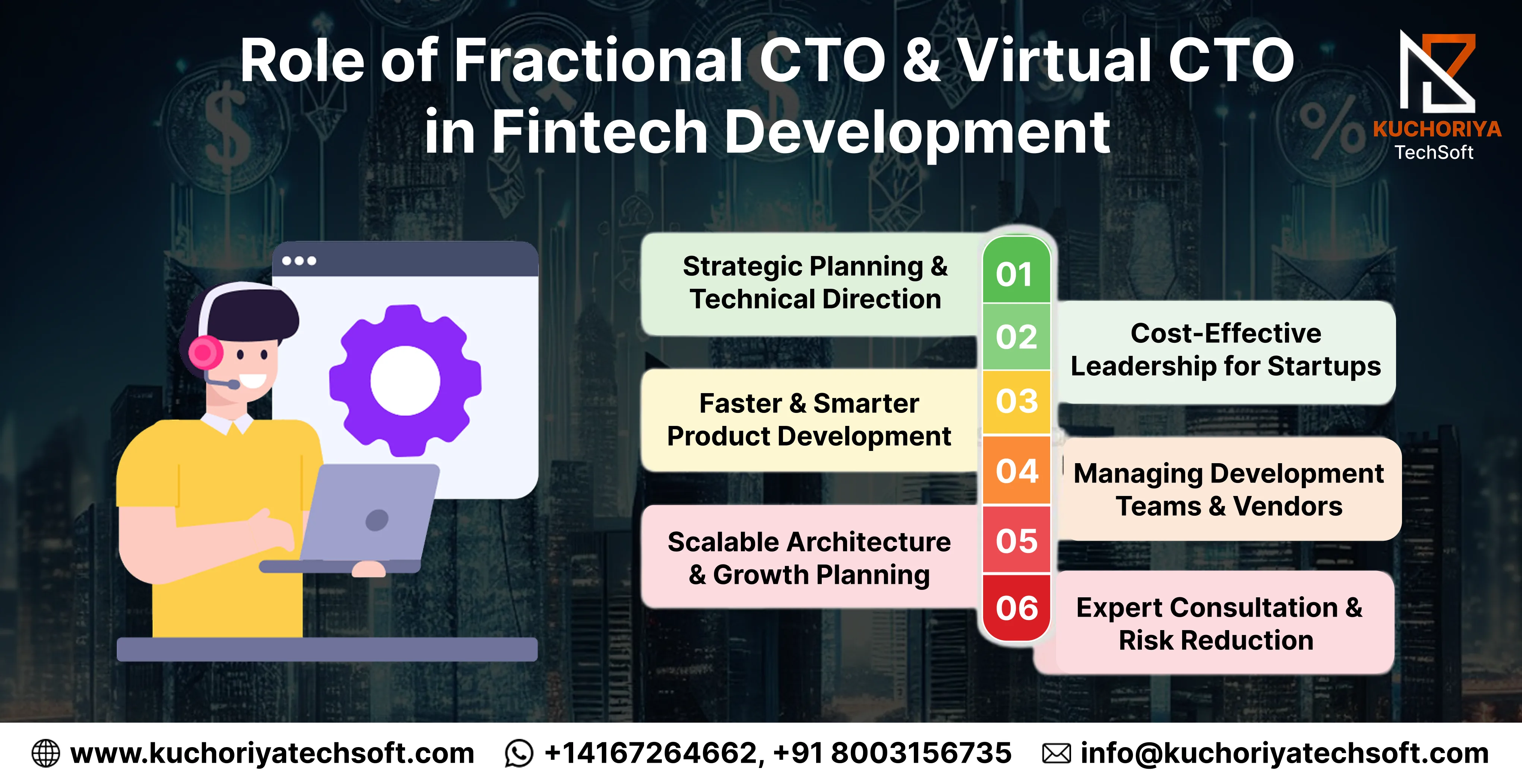
Building a fintech product is not just about development—it requires strong technical leadership, strategic planning, and the right execution approach. This is where CTO services become critical for startups and growing businesses.
1. Strategic Planning & Technical Direction
Using virtual CTO services Canada, businesses get expert guidance on architecture, technology selection, and product roadmap. This helps avoid costly mistakes during early-stage development.
2. Cost-Effective Leadership for Startups
Instead of hiring a full-time executive, companies can leverage fractional CTO Toronto to get high-level expertise at a lower cost. This is ideal for startups managing tight budgets.
3. Faster & Smarter Product Development
When you hire fractional CTO Canada, you gain access to experienced professionals who ensure efficient execution and better decision-making throughout development.
4. Managing Development Teams & Vendors
CTO experts help businesses coordinate with developers, agencies, and vendors. This improves productivity and ensures smooth delivery without delays.
5. Scalable Architecture & Growth Planning
With support from virtual CTO Toronto, businesses can design systems that scale efficiently and handle future growth without technical limitations.
6. Expert Consultation & Risk Reduction
Using CTO consulting services Canada, companies can identify risks early, optimize processes, and build secure, scalable fintech platforms. Companies like Kuchoriya TechSoft provide expert CTO support, helping businesses plan, build, and scale fintech products with confidence. Great products need great leadership—CTO guidance makes the difference.
How to Choose the Right Expense Management Software Development Company
Choosing the right partner is one of the most critical decisions when planning your fintech product. A wrong choice can increase cost, delay launch, and impact scalability.
1. Check Experience in Fintech Projects
Always choose a company with proven experience in fintech. A reliable expense management software development company in Canada understands compliance, security, and financial workflows better than generic developers.
2. Evaluate Development Approach & Process
A strong team follows a structured step-by-step expense management software development process instead of random execution. This ensures clarity, better planning, and smooth delivery.
3. Focus on Custom & Scalable Solutions
Avoid one-size-fits-all products. A good company offering custom software development company in Canada builds tailored platforms based on your business model and scalability needs.
4. Understand Cost Transparency & Planning
Before starting, always ask about the cost of expense management software development in Canada and get a clear breakdown. This helps avoid hidden charges and budget issues later.
5. Look for Consultation & Strategy Support
Top companies don’t just build—they guide. Always book a software consultation to understand your roadmap, features, and architecture before development begins.
6. Check Support, Maintenance & Scaling Capability
Choose a company that provides long-term support and scaling assistance. Businesses should also get an expense management software quote early to compare options and plan better.
Companies like Kuchoriya TechSoft focus on strategy-first development, ensuring businesses build scalable, secure, and future-ready fintech platforms. The right development partner turns your idea into a scalable business.
Conclusion: Build Scalable Expense Management Software the Right Way
Building a successful platform requires the right mix of strategy, technology, and execution. Whether you're planning how to build expense management software or exploring how to build fintech software, the focus should always be on scalability, automation, and long-term growth.
From AI-driven automation to secure financial architecture, modern solutions are transforming how businesses manage expenses. Companies investing in the right approach are not only improving efficiency but also gaining a competitive edge in the market.
If you're planning expense tracking app features, evaluating expense tracking app development cost in Canada, or looking for the right development strategy, this is the stage where expert guidance makes a real difference.
At Kuchoriya TechSoft, we help businesses design, develop, and scale powerful fintech solutions tailored to their needs. From idea validation to full-scale deployment, our team ensures your product is built for performance, security, and growth.
Ready to build your solution? Contact us today to discuss your project and get expert guidance tailored to your business goals.
We also offer a Referral Partner Program for agencies, consultants, and individuals looking to collaborate and grow together. Partner with Kuchoriya TechSoft and earn by referring businesses looking for fintech and software development solutions.
Get in touch now to get an expense management software quote and start building your product with the right team.

FAQs About Expense Management Software Development
Q. How to build expense management software for modern businesses?
A. To build expense management software in Toronto, businesses should follow a structured approach including planning, design, development, and testing. Using a fintech app development guide and understanding how to build fintech software ensures scalable and secure product development.
Q. What is the cost of developing an expense management system in Canada?
A. The cost of expense management software development in Canada depends on features, complexity, and tech stack. Businesses should also evaluate the expense tracking app development cost in Canada and the overall software development cost in Canada before starting.
Q. What features should an expense management system include?
A. Key expense tracking app features include automation, reporting, approvals, and analytics. Systems designed with features of expense management system for startups focus on simplicity, scalability, and cost-efficiency.
Q. Which company should I choose for development?
A. Choosing the right expense management software development company in Canada or a provider offering custom software development Toronto ensures better performance, scalability, and long-term support.
Q. How do businesses build scalable SaaS expense platforms?
A. Companies follow a SaaS expense management platform development guide and leverage SaaS development Toronto practices to build scalable, cloud-based solutions that support multiple users and business operations.
Q. When should I consult a CTO or development expert?
A. Businesses should book a software consultation early to plan architecture and avoid costly mistakes. You can also hire a fractional CTO Canada or use CTO consulting services Canada for expert guidance during development.