Fantasy football app development is growing rapidly as fantasy sports platforms continue to attract millions of active users worldwide. The global fantasy sports market is valued at over USD 30 billion and is projected to cross USD 55 billion within the next few years, with a steady 12–14% annual growth rate. Fantasy football alone accounts for nearly 40% of total fantasy sports participation, making it the most dominant and revenue-generating category.
User behavior clearly shows a shift toward live engagement. More than 70% of fantasy football users join contests during live matches, while nearly 60% prefer real-time fantasy football apps that deliver instant score updates, player statistics, and live rankings. These trends are pushing businesses to invest in high-performance, data-driven fantasy platforms.
To meet this demand, startups and enterprises are increasingly partnering with an experienced fantasy football app development company like Kuchoriya TechSoft to build secure, scalable, and monetization-ready solutions. With the right technology stack, APIs, and development strategy, fantasy football apps can be transformed into long-term digital assets.
This fantasy football app development guide covers everything decision-makers need to know — from development cost and timeline to features, technology, and monetization — helping businesses plan and launch with confidence.
What Is a Fantasy Football App & How Fantasy Football Apps Work
What Is a Fantasy Football App?
A fantasy football app is a digital sports platform that allows users to create virtual football teams using real players and earn points based on live match performance. Businesses use these platforms to drive high user engagement through contests, leagues, and real-time interaction. Today, most platforms are built as custom fantasy football app development solutions to support scalability, monetization, and long-term growth.
Fantasy football apps are commonly used by:
Sports startups and gaming platforms
Media and broadcasting companies
Sports communities and fan engagement brands
Entrepreneurs entering the fantasy sports market
How Fantasy Football Apps Work
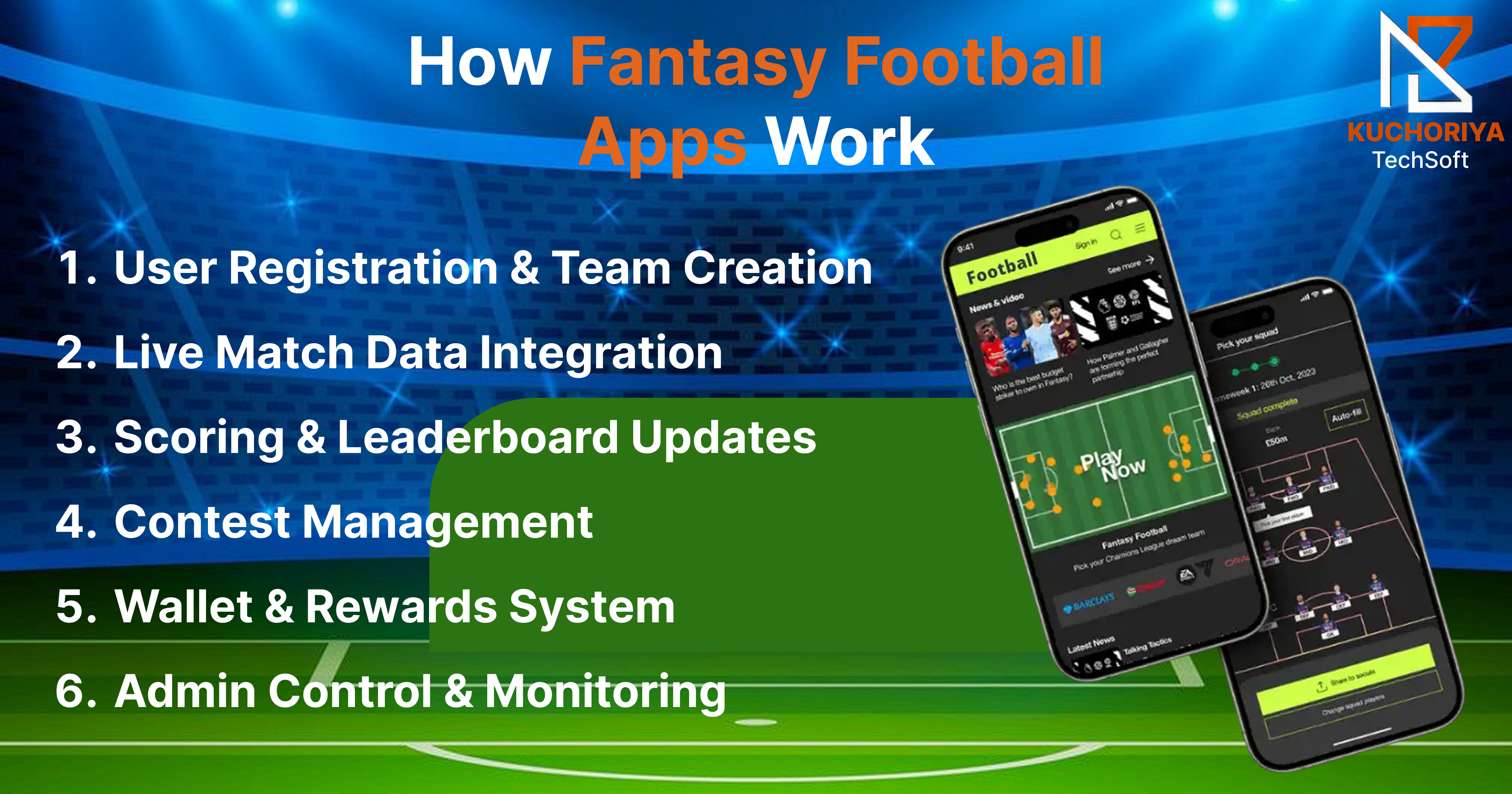
A fantasy football app operates on a real-time data-driven workflow. Below is a simplified process:
1.User Registration & Team Creation: Users sign up, select contests, and build teams within defined rules and budgets.
2. Live Match Data Integration: Real-time player statistics and match events are fetched through verified data sources to power the scoring engine.
3.Scoring & Leaderboard Updates: Points are calculated instantly based on predefined rules and updated live during matches.
4. Contest Management: Multiple contest formats run simultaneously, including free leagues and paid competitions.
5.Wallet & Rewards System: Users earn winnings, bonuses, and rewards, which increases retention and repeat participation.
6.Admin Control & Monitoring: Admin panels manage users, contests, payouts, fraud detection, and performance analytics
Why Businesses Invest in Fantasy Football Apps
High user engagement during live sports events
Multiple monetization options are built into the platform
Strong repeat usage and community-driven growth
Scalable infrastructure that supports rapid user expansion
To ensure smooth performance and long-term success, companies rely on experienced fantasy football app developers who understand real-time systems, security, and scalability.
Kuchoriya TechSoft helps businesses design and build reliable fantasy football platforms that are secure, scalable, and ready for monetization from day one.
👉 If you are planning to launch a fantasy football app, getting the architecture and execution right from the start makes all the difference.
Fantasy Football App Market Growth & Opportunities in 2026
The fantasy football ecosystem is expanding as digital sports consumption, mobile usage, and real-time engagement continue to rise globally. In 2026, the market presents strong opportunities for businesses that treat fantasy platforms as scalable digital products rather than short-term gaming apps.
Key Growth Opportunities for Businesses
1. Strong Entry Point for New Digital Sports Ventures
The fantasy football market remains highly attractive for fantasy football app for startups due to lower operational overhead compared to betting platforms. With the right feature mix and launch strategy, new entrants can acquire users quickly without massive infrastructure investment.
2. Revenue-First Product Thinking Driving Market Growth
Modern platforms are designed with a clear fantasy football app revenue model from day one. Instead of relying only on user volume, businesses focus on recurring income through premium contests, memberships, and value-added features.
3. Monetization Beyond Traditional Contest Fees
Advanced platforms now apply diversified fantasy football app monetization strategies, including in-app upgrades, sponsored leagues, branded competitions, and data-driven promotions. This approach improves lifetime value per user and stabilizes revenue during off-seasons.
4. Demand for Real-Time Sports Technology Platforms
Fantasy football growth is closely tied to real-time sports data systems, cloud scalability, and instant analytics. Businesses investing in performance-driven sports platforms gain a competitive edge by offering faster updates and smoother live experiences.
5. Expansion of Digital Fan Engagement Ecosystems
Fantasy platforms are increasingly becoming part of broader sports engagement ecosystems that include social interaction, rewards, and community-driven features. This evolution is opening new opportunities for brands looking to build long-term relationships with sports audiences.
Businesses that understand both the technology and monetization side of this market are best positioned to win in 2026. Kuchoriya TechSoft helps companies design fantasy platforms that align with real user behavior, revenue goals, and future scalability.
👉 If you’re evaluating this market seriously, clarity on business model and execution matters more than speed.
Types of Fantasy Football App Development Solutions
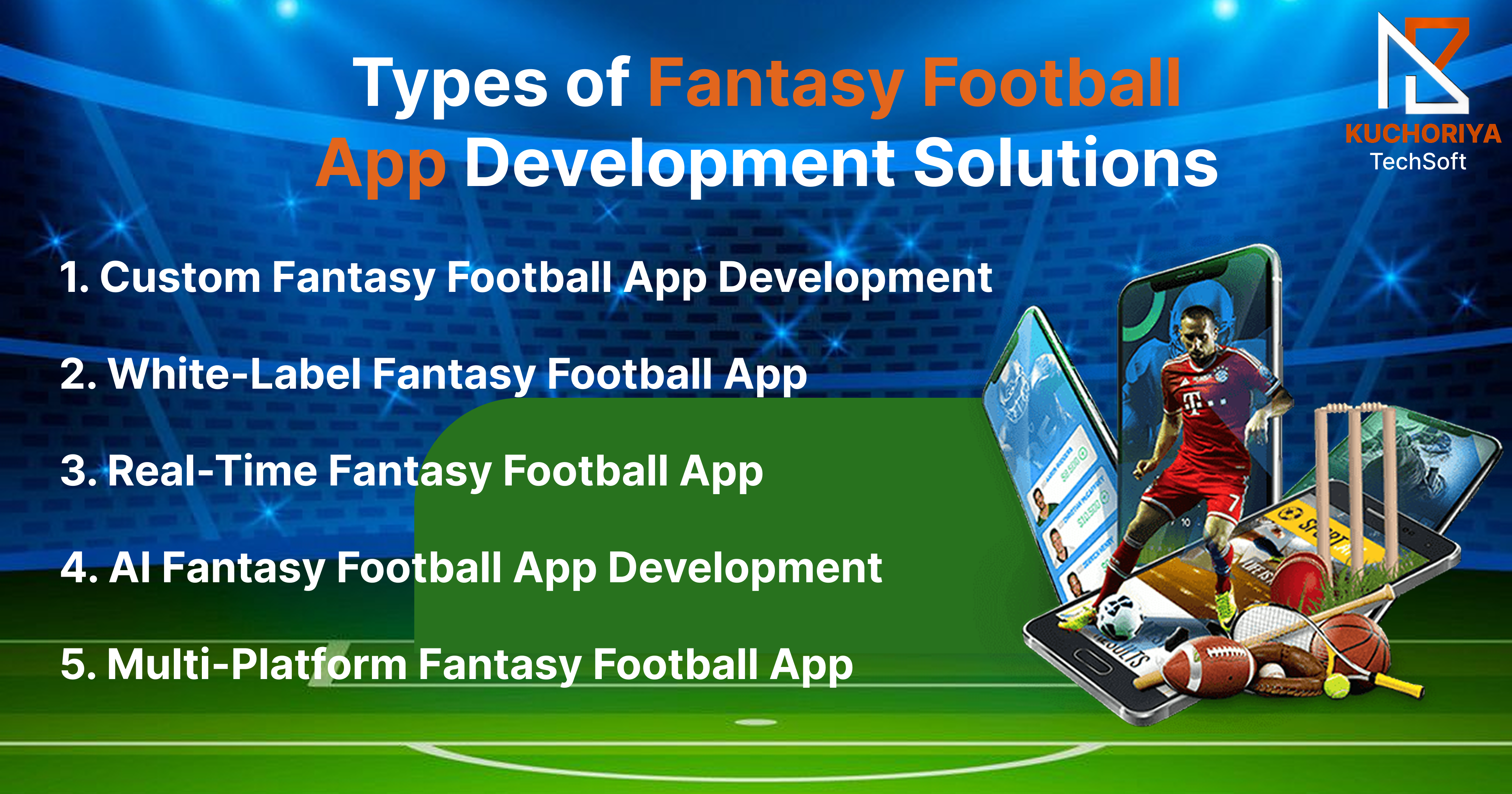
When it comes to fantasy football app development, businesses have multiple options depending on their budget, timeline, and long-term vision. Choosing the right type of app solution is crucial for scalability, user engagement, and monetization.
1. Custom Fantasy Football App Development
A custom fantasy football app development solution is tailored to the unique requirements of your business. From UX/UI design to backend architecture, every feature is built to align with your audience and revenue model.
Advantages:
Fully scalable and secure architecture
Integration with multiple APIs for real-time data
Flexible monetization options
- Compatible with AI and ML-powered analytics
This option is ideal for startups and enterprises looking to build fantasy football apps that stand out in a competitive market.
2. White-Label Fantasy Football App
A white-label fantasy football app provides a ready-made solution that can be rebranded and customized quickly. This approach reduces development time and cost while offering essential features such as:
Live score updates and match statistics
Contest management and leaderboards
Wallet and reward systems
Admin panels for monitoring and analytics
White-label solutions are perfect for businesses that want to launch a fantasy football app quickly without compromising on scalability and security.
3. AI Fantasy Football App Development
AI fantasy football app development leverages artificial intelligence and machine learning to enhance user engagement. Key capabilities include:
Predictive player performance analysis
Personalized recommendations for team creation
Smart contest suggestions based on user behavior
Advanced analytics for higher retention
Investing in AI-powered apps ensures your platform stays competitive and aligns with future fantasy football app development trends.
4. Real-Time Fantasy Football App
A real-time fantasy football app focuses on live engagement. It fetches instant updates, calculates scores dynamically, and updates leaderboards in real-time. Features include:
Live match tracking
Dynamic scoring engine
Instant push notifications
Social interaction features for fan engagement
Real-time apps are essential for businesses targeting high user retention and active participation during live sports events.
5. Multi-Platform Fantasy Football App
Multi-platform apps are developed to work seamlessly across iOS, Android, and web browsers, providing a unified experience for users. Benefits include:
Increased reach and accessibility
Consistent performance across devices
Efficient backend management for scalability
Simplified app updates and feature rollouts
This solution is suitable for businesses that want to maximize their market presence and ensure long-term growth.
Pro Tip: Choosing the right app development type depends on your budget, timeline, target audience, and revenue strategy. Companies like Kuchoriya TechSoft offer expertise across all these solutions, ensuring a secure, scalable, and monetization-ready fantasy football app.
Must-Have Features of a Fantasy Football App
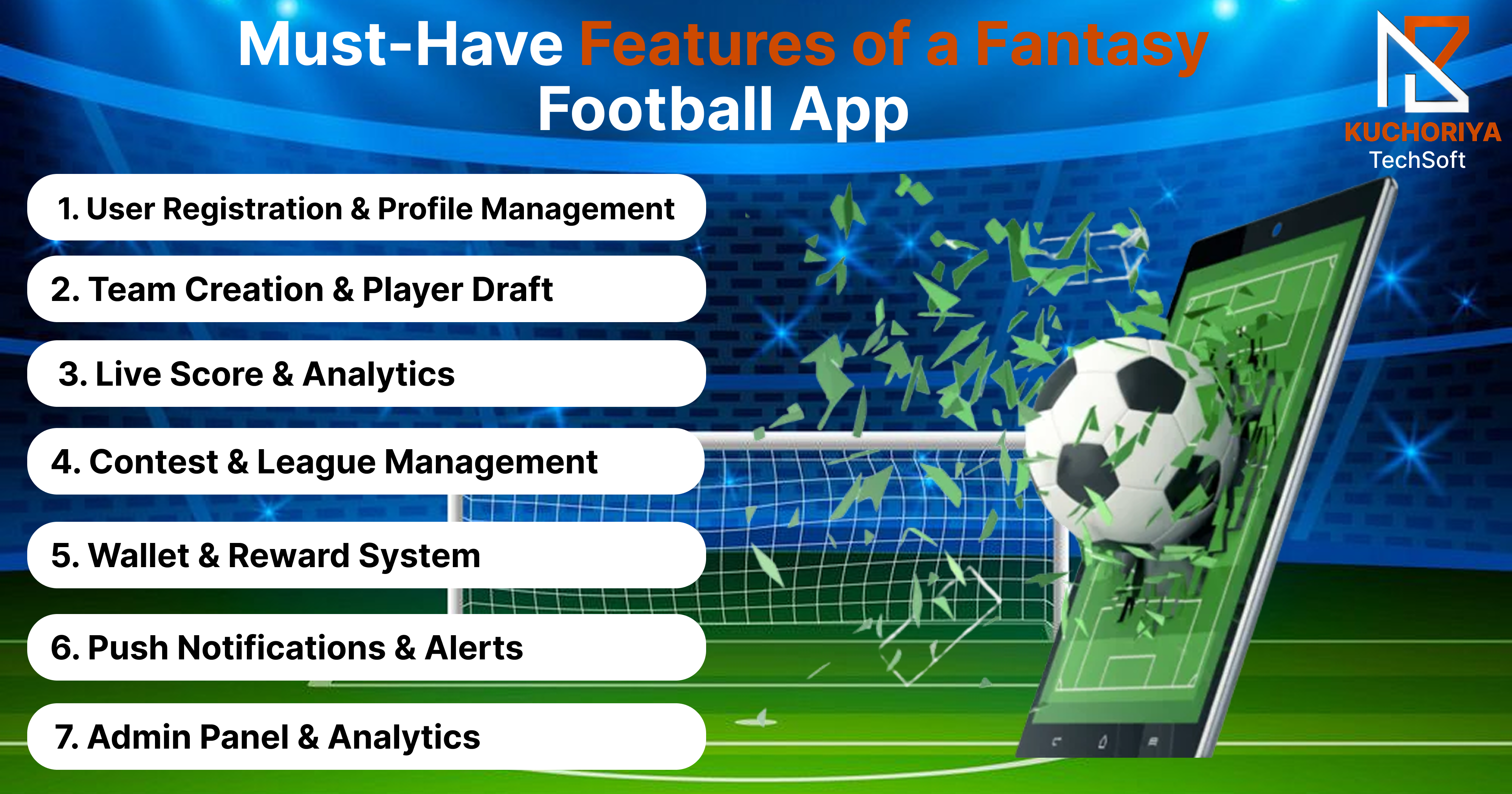
Building a fantasy football app requires features that maximize engagement, retention, and monetization. The right combination of tools ensures users remain active while businesses generate consistent revenue.
1. User Registration & Profile Management
Secure registration with email, phone, or social login. Users can manage profiles, track team performance, and view personal stats.
2. Team Creation & Player Draft
Users can create virtual teams, swap players, and manage lineups based on budgets and match schedules. This is the core engagement driver.
3. Live Score & Analytics
Integration of real-time fantasy football app APIs provides instant score updates, player stats, and leaderboard ranking during matches.
4. Contest & League Management
Multiple contest formats—free leagues, paid tournaments, and private contests—encourage participation and repeat usage.
5. Wallet & Reward System
In-app wallet supports secure transactions, rewards, winnings, and bonus points, boosting retention and monetization.
6. Push Notifications & Alerts
Instant notifications keep users informed about match events, contests, and promotions, driving engagement.
7. Admin Panel & Analytics
Admin dashboards provide insights into user behavior, contest performance, revenue, and fraud detection.
These features form the foundation of a scalable fantasy football app and support advanced monetization strategies for startups and enterprises alike.
Tech Stack for Fantasy Football App Development
Choosing the right tech stack is crucial for building a secure, scalable, and high-performance fantasy football app. The stack determines the app’s speed, reliability, real-time capabilities, and future scalability.
Frontend Technologies
Frontend development focuses on the user interface and experience. Commonly used technologies include:
React Native / Flutter: For cross-platform mobile apps
React.js / Angular: For web dashboards and portals
HTML5, CSS3, JavaScript: For responsive, interactive layouts
Backend Technologies
Backend powers the app’s core logic, data processing, and security:
Node.js / Python / Java: For server-side development
Firebase / MongoDB / PostgreSQL: For database management
AWS / Google Cloud / Azure: For scalable cloud hosting
Real-Time & APIs
Real-time features are critical for live score fantasy football apps:
WebSocket / Socket.IO: For instant score updates and notifications
Sports Data APIs: To fetch live player stats, match data, and rankings
Payment Gateway APIs: For secure in-app purchases and wallets
AI & ML Integration
For advanced analytics and user engagement:
Machine Learning algorithms for predictive player performance
AI-driven recommendations for team selection and contest suggestions
Admin & Analytics Tools
Admin dashboards: To monitor user activity, contests, and payouts
Analytics tools: Google Analytics, Mixpanel for user insights and retention
Choosing the right tech stack ensures your app is not just functional but also fast, secure, and future-ready. Kuchoriya TechSoft specializes in building apps with this optimized tech stack, providing a seamless experience for both users and admins.
Fantasy Football App Development Process – Step-by-Step Guide
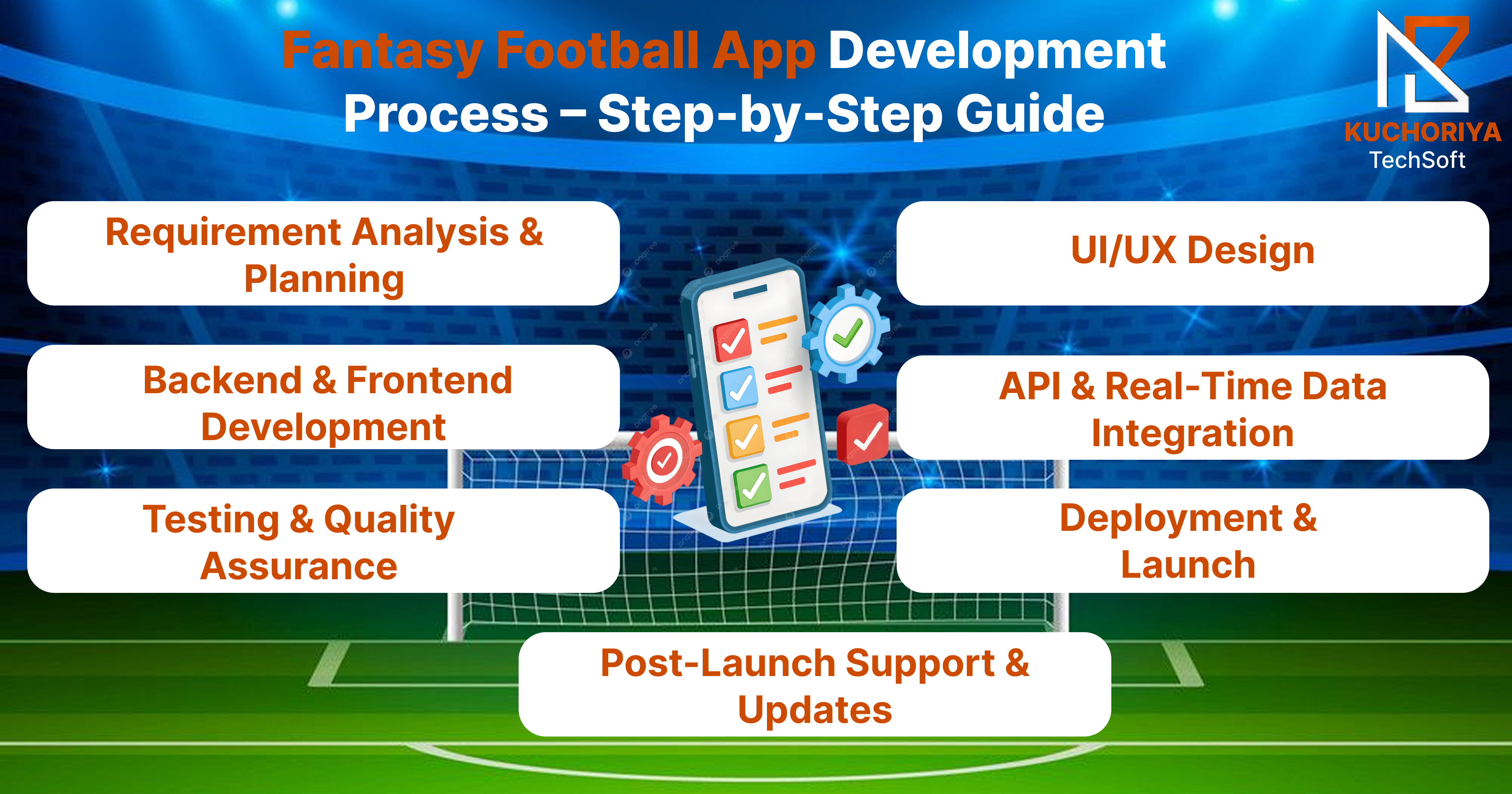
Launching a fantasy football app requires a systematic approach to ensure security, scalability, and monetization. Here’s a clear stepwise guide that engages users and highlights your expertise:
Step 1: Requirement Analysis & Planning
Define your target audience, contests, and monetization strategy
Decide on features, tech stack, and API integration
Align app goals with your fantasy football app revenue model
Why it matters: Proper planning reduces risks and ensures smooth app development.
Step 2: UI/UX Design
Create intuitive, engaging interfaces for mobile and web
Focus on team creation, leaderboard visibility, and live scores
Prioritize gamification to enhance user retention and participation
Marketing insight: A user-friendly design increases engagement, making the app appealing to potential clients.
Step 3: Backend & Frontend Development
Build a secure fantasy football app backend architecture
Develop a responsive frontend with real-time updates, wallet integration, and push notifications
Include AI/ML analytics if advanced features are required
Step 4: API & Real-Time Data Integration
Integrate sports data APIs for live player stats and match updates
Ensure instant notifications and leaderboard updates using WebSocket or Socket.IO
Step 5: Testing & Quality Assurance
Conduct functional, performance, and security testing
Validate real-time scoring accuracy and wallet transactions
Ensure scalability under heavy user traffic
Step 6: Deployment & Launch
Launch on iOS, Android, and web
Monitor app performance and gather early user feedback
Run initial marketing campaigns to attract users
Step 7: Post-Launch Support & Updates
Provide regular updates, bug fixes, and feature enhancements
Optimize user engagement and monetization using analytics
Integrate AI-driven recommendations for better team selection and contests
By following these clear steps, businesses can build a scalable, secure, and revenue-generating fantasy football app. Kuchoriya TechSoft ensures each step is executed with precision to attract users and maximize ROI.
Fantasy Football App Development Cost in 2026
The cost of developing a fantasy football app varies depending on features, platform, and complexity. Understanding this helps startups and enterprises plan budgets and choose the right solution.
For a basic fantasy football app, which includes user registration, team creation, live scores, and simple contests on a single platform (iOS or Android), the estimated cost ranges from $8,000 to $15,000. This option is ideal for startups testing the market with minimal investment.
An advanced fantasy football app includes multiple contest formats, wallet integration, push notifications, and basic analytics. Built for both iOS and Android, the estimated cost is around $20,000 to $35,000, making it suitable for businesses aiming to boost user engagement and monetize effectively.
For a full-featured, enterprise-grade fantasy football app, which supports multi-platform deployment (iOS, Android, Web), AI/ML analytics, real-time scoring, and an advanced admin dashboard, the cost can range from $40,000 to $70,000. This is perfect for large-scale enterprises or startups looking for a scalable, secure, and monetization-ready solution.
Fantasy Football App Development Cost Table (2026)
Marketing & Lead Angle: This guide clearly communicates affordable, realistic pricing, helping potential clients choose the right app type. Kuchoriya TechSoft stands out as a trusted partner delivering secure, scalable, and monetization-ready fantasy football apps on budget.
Fantasy Football App Development Timeline & Time Estimation
A clear fantasy football app development timeline helps businesses plan launches, marketing campaigns, and revenue cycles effectively. Development time varies based on platform complexity, integrations, and scalability requirements.
Key Factors Affecting Development Time
1. Feature Scope & App Complexity: A basic fantasy football app with core features like team creation, scoring rules, and leaderboards can be delivered faster. Platforms that adopt enterprise-style workflows—similar to fintech app development or healthcare app development—require more planning and execution time.
2. Platform Selection & Architecture: Single-platform apps are quicker to deploy. Multi-platform solutions with admin panels and analytics dashboards—often seen in education app development and retail app development projects—extend the overall timeline.
3. Real-Time Data & External Integrations: Live scores, third-party APIs, and payment gateways impact development speed. Apps built with real-time infrastructure, similar to media & entertainment app development or stock trading app development, demand extensive testing.
4. UI/UX Customization Level: Highly customized interfaces designed for engagement and retention take longer than template-based designs. This approach is commonly used across on-demand app development and fitness app development solutions.
5. Scalability & Global Readiness: Fantasy platforms prepared for international audiences need scalable backend planning. Companies offering services as a fantasy football app development company in the USA, Canada, or Australia often prioritize cloud scalability and performance optimization from the start.
Average Fantasy Football App Development Time
Basic fantasy football app: 6–8 weeks
Mid-level platform with live features: 10–14 weeks
Advanced, scalable fantasy ecosystem: 16–24 weeks
These timelines align closely with complex digital products such as fintech platforms, insurance apps, and logistics app development systems, where performance and reliability are critical.
Business Value of Accurate Timeline Planning
A realistic fantasy football app development timeline enables businesses to:
Launch ahead of competitive seasons
Coordinate marketing and user acquisition activities
Manage investment and operational planning
Work smoothly with global vendors, including teams operating as a fantasy football app development company in London UK, Dubai, or South Africa \r\n
Choosing an experienced fantasy football app development company ensures predictable delivery timelines, transparent execution, and long-term scalability.
Monetization Strategies for Fantasy Football Apps
A clear monetization strategy is essential to turn a fantasy football platform into a profitable business. Right revenue models help companies recover investment faster and scale confidently.
Key Revenue Models
1. Contest Entry Fees: Users pay to join contests, while the platform earns a fixed commission. This remains the most reliable and scalable revenue source.
2. Commission-Based Earnings: A percentage is charged from every prize pool, ensuring recurring income during live matches.
3. Premium Features & Subscriptions: Advanced insights, exclusive contests, and ad-free access are offered via paid plans. This model is widely used in fintech app development and video streaming platforms.
4. Advertisements & Brand Sponsorships: In-app promotions and sponsored contests generate additional revenue, similar to strategies used in media & entertainment app development and retail platforms.
5. Referral & Affiliate Programs: Reward-based referrals reduce marketing costs and drive organic growth, a proven approach in on-demand app development and food delivery apps.
Regional Monetization Approach
Businesses working with a fantasy football app development company in the USA or Canada often focus on subscriptions and premium analytics. Platforms developed for markets like Australia, London UK, Dubai, South Africa, and Brazil perform well with entry-fee contests combined with referral-driven growth.
Why Monetization Planning Matters
Well-planned fantasy football app monetization strategies help businesses:
Generate revenue from day one
Control operational risk
Attract investors and partners
An experienced fantasy football app development company helps design monetization models aligned with market demand and long-term scalability.
Market-Leading Fantasy Football Apps & Feature Scope That Drives Inquiries
Businesses planning to launch a fantasy football platform often ask two critical questions:
What do top apps offer? And what features should we build first?
This section answers both, helping decision-makers move from research to inquiry.
Top 10 Fantasy Football Apps

1. Dream11: High-volume platform built around paid contests, fast withdrawals, and strong match-day engagement.
2. FanDuel: Known for clean UX, simplified fantasy formats, and daily contest models.
3. DraftKings: Advanced fantasy ecosystem with flexible leagues and data-driven monetization.
4. ESPN Fantasy Football: Content-rich app combining fantasy leagues with expert sports insights.
5. Yahoo Fantasy Sports: Stable platform focused on season-long engagement and free leagues.
6. NFL Fantasy App: Official league app offering authentic data and trusted performance.
7. Sleeper: Social-first fantasy app emphasizing real-time chat and community leagues.
8. MyTeam11: Rapidly growing app using referral-based growth and simple onboarding.
9. Underdog Fantasy: Fast-draft and best-ball focused platform for experienced users.
10. RealFevr: Engagement-driven fantasy product integrating rewards and fan experiences.
👉 Business Insight: Top apps succeed by launching with the right feature balance—not by overbuilding.
Fantasy Football App Features – MVP Scope
MVP development is ideal for startups and businesses validating the market.
MVP Feature Set
Secure user onboarding
Team creation & contest joining
Live score calculation engine
Basic rankings & leaderboards
Wallet & transaction flow
- Admin control
This MVP-first approach is similar to how logistics app development and insurance app development products enter the market with controlled investment.
Fantasy Football App Features – Complete & Enterprise Scope
For businesses targeting scale, revenue growth, and long-term dominance.
Advanced User Features
AI-powered team suggestions
- Multiple contest formats \r\n
Real-time analytics dashboards
- Referral & loyalty systems
Business & Admin Features
- Fraud detection & fair-play logic
- Revenue & commission management
- User segmentation & reporting
This structure aligns with enterprise platforms built under banking app development, real estate app development, and automotive app development models.
Global Development Capability
Businesses targeting international audiences often partner with teams operating as a fantasy football app development company Spain or a fantasy football app development company Italy to serve European markets.
For emerging and high-growth regions, companies working with a fantasy football app development company in South Africa or a fantasy football app development company Brazil focus on scalable architecture and localized user experience.
Why Choose Kuchoriya Techsoft as Your Fantasy Football App Development Company
Choosing the right fantasy football app development company directly impacts product quality, scalability, and revenue growth. Kuchoriya Techsoft helps businesses build reliable and monetization-ready fantasy platforms.
1. Specialized Fantasy Football App Development Services
Kuchoriya Techsoft offers end-to-end fantasy football app development services, covering MVP builds, advanced platforms, and scalable fantasy ecosystems.
2. Expertise in Custom Fantasy Football App Development
Our team delivers custom fantasy football app development solutions tailored to business goals, user engagement models, and long-term scalability.
3. Scalable & Secure Fantasy Football App Architecture
We design scalable fantasy football app development frameworks with secure backend architecture, real-time data handling, and high-traffic readiness.
4. Proven Experience with Global Fantasy Sports Projects
As a trusted fantasy football app development company in Spain, Italy, South Africa, and Brazil, we support businesses targeting international fantasy sports markets.
5. Business-Driven Development & Monetization Focus
From planning fantasy football app revenue models to integrating monetization-ready features, Kuchoriya Techsoft ensures faster ROI and lead-ready products.
👉 Looking to build a fantasy football app that scales globally? Kuchoriya Techsoft is your technology partner.
Future Trends in Fantasy Football App Development (2026 & Beyond)
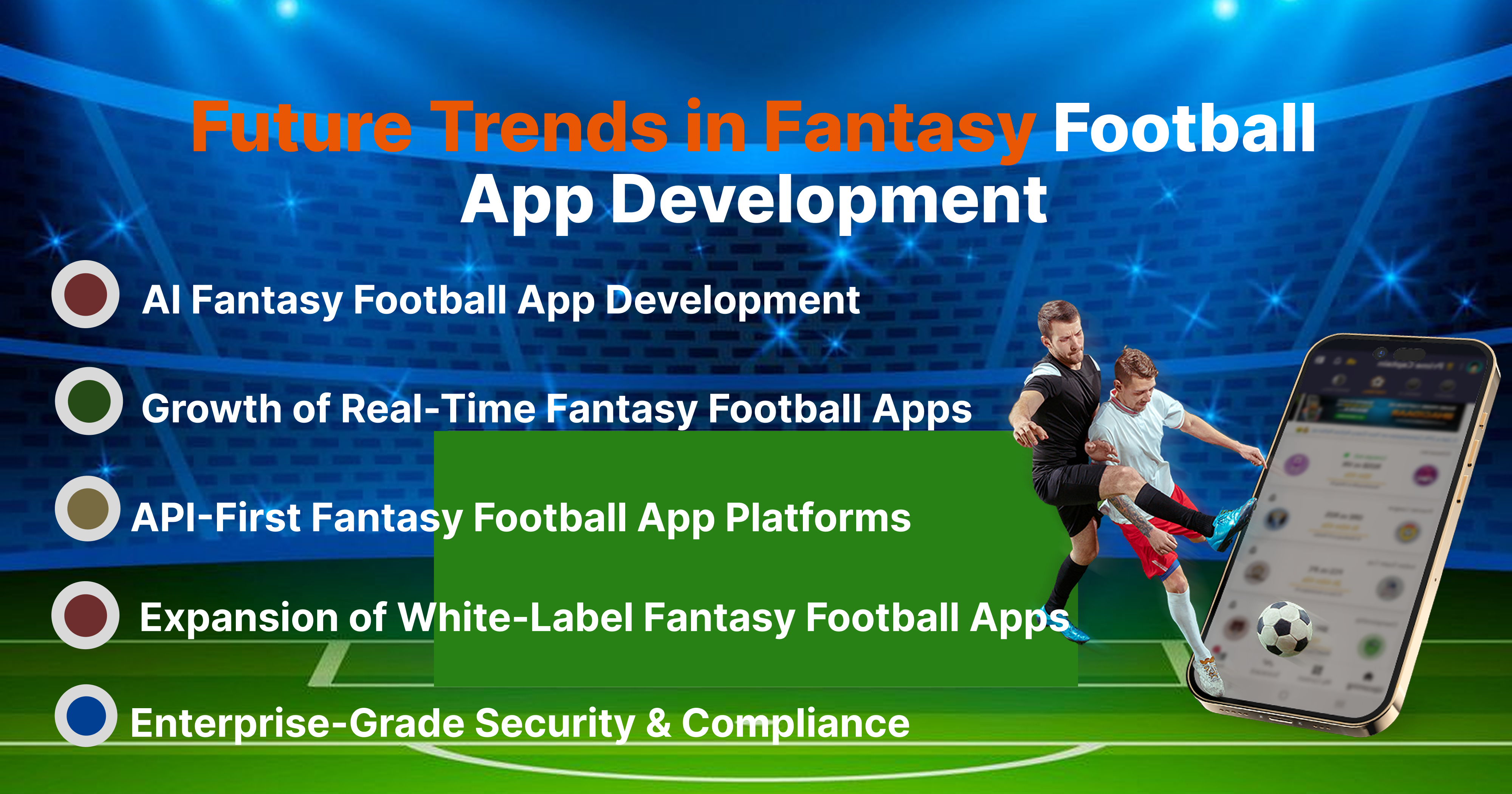
The future of fantasy football app development is driven by real-time engagement, AI-powered insights, and scalable cloud infrastructure. Businesses adopting these trends early gain a competitive edge.
1. AI Fantasy Football App Development
AI-powered recommendations, predictive analytics, and smart team suggestions will dominate fantasy football app development with AI and ML.
2. Growth of Real-Time Fantasy Football Apps
Demand for real-time fantasy football apps and live score fantasy football apps will continue to rise, increasing user retention during live matches.
3. API-First Fantasy Football App Platforms
Modern platforms rely on fantasy football apps with APIs to integrate live data feeds, payment systems, and third-party services seamlessly.
4. Expansion of White-Label Fantasy Football Apps
Businesses will increasingly adopt white-label fantasy football app solutions to reduce time-to-market and operational costs.
5. Enterprise-Grade Security & Compliance
Future-ready platforms will prioritize secure fantasy football app development to protect user data, transactions, and platform integrity.
Conclusion: Build, Scale & Earn with a Powerful Fantasy Football App
Launching a successful fantasy platform isn’t just about development—it’s about choosing a fantasy football app development company that understands growth, monetization, and long-term scalability. A well-built fantasy app with real-time features, secure architecture, and smart engagement tools can quickly turn into a profitable digital business.
At Kuchoriya Techsoft, our end-to-end fantasy football app development services are designed to help startups and enterprises confidently build a fantasy football app that performs, scales, and generates revenue. We don’t just develop apps—we create business-ready fantasy solutions backed by strategy, technology, and market insights.
Looking to collaborate instead of building alone? Join our Referral Partner Program and earn by connecting clients who need reliable fantasy app development expertise.
Contact Us today to discuss your fantasy football app idea, get expert guidance, or explore partnership opportunities with Kuchoriya Techsoft.

FAQs About Fantasy Football App Development
Q. How much does it cost to develop a fantasy football app?
A. The fantasy football app development cost ranges from $25,000 to $150,000+, depending on features, real-time data APIs, AI integration, platform (Android/iOS/Web), and scalability requirements. Advanced features, such as AI predictions, can increase investment.
Q. How long does it take to build a fantasy football app?
A. A basic MVP can be developed in 8–12 weeks, while a fully scalable, AI-powered fantasy football platform may require 4–6 months for complete development.
Q. What features are required in a fantasy football app?
A. Key features include user registration, team creation, live scoring, player statistics, contests & leagues, secure payments, admin dashboard, and real-time APIs. Advanced apps also integrate AI recommendations and analytics.
Q. Which technologies are used for fantasy football app development?
A. Popular technologies include React Native / Flutter, Node.js / Laravel, AWS or Google Cloud, real-time sports data APIs, and AI/ML for predictions, analytics, and fraud detection.
Q. How do fantasy football apps make money?
A. Revenue comes from entry fees, subscriptions, in-app purchases, advertisements, premium leagues, and brand sponsorships, creating consistent income streams.
Q. Is AI important in fantasy football app development?
A. Yes. AI-powered fantasy football apps enhance user engagement via player recommendations, predictive analytics, personalized insights, and fraud detection, boosting retention and revenue.
Q. Can I build a white-label fantasy football app?
A. Absolutely. White-label fantasy football app development allows faster launch with branding, customizable features, monetization models, and scalable architecture.
Q. How do you ensure security in a fantasy football app?
A. Security is ensured through data encryption, secure payment gateways, fraud detection systems, GDPR compliance, multi-layer authentication, and regular audits to protect user data and transactions.