Try booking a lawyer at 9 p.m. and you get a voicemail. Lawyers face the reverse problem: Clio's Legal Trends research finds they bill only about 3 hours of an 8-hour day. Lawyer app development fixes both by putting intake, booking and payments in one place. This lawyer app development guide covers features, cost, technology and process, and shows how digital legal services are changing access to lawyers.
What Is the Lawyer App Development Market Like in 2026?
Check the numbers before you plan a legal tech app.
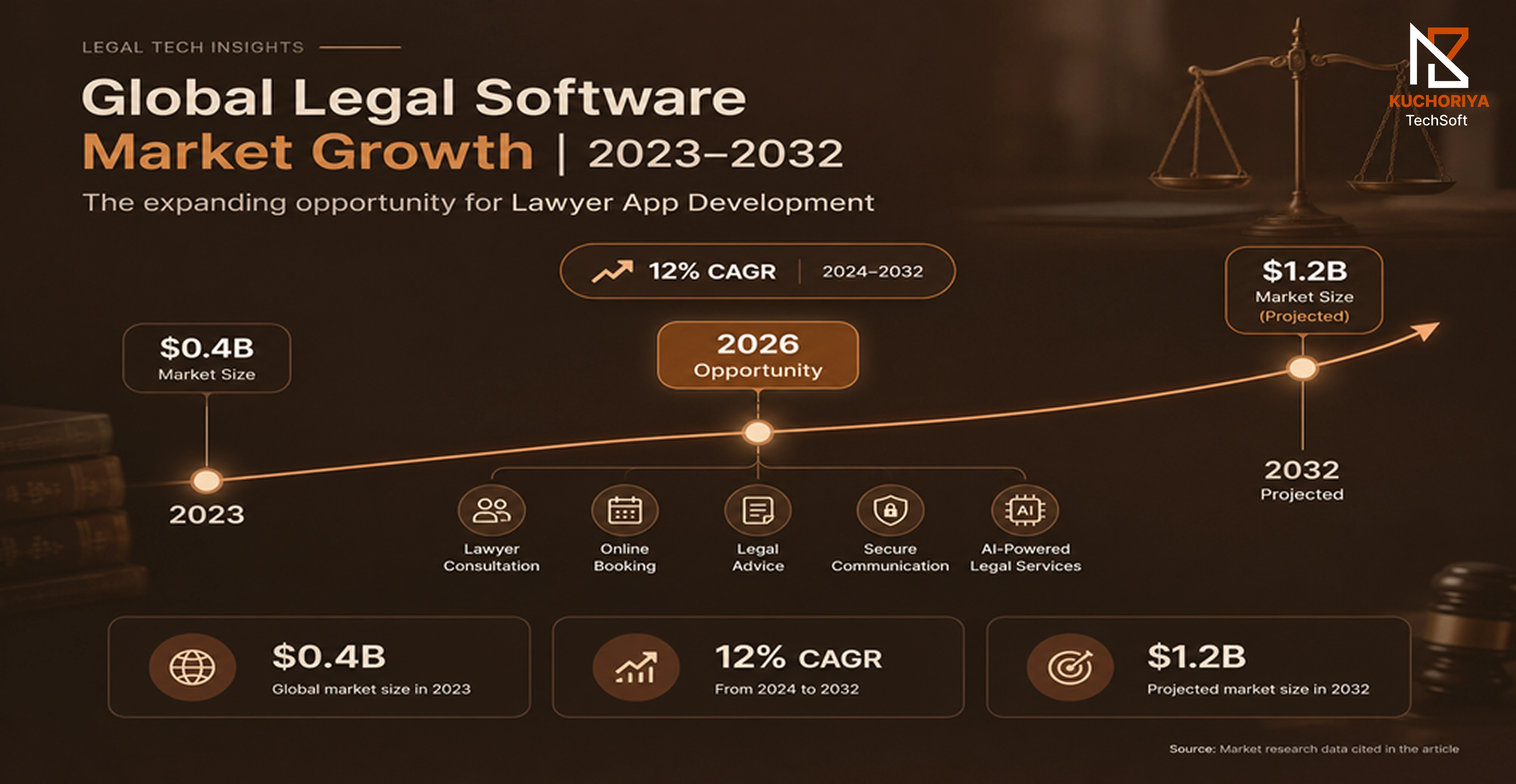
- Market size: Allied Market Research values global legal software at $0.4 billion in 2023, rising to $1.2 billion by 2032 at a 12% CAGR.
- Regional lead: North America held 49.0% of the legal technology market in 2025 (Grand View Research), the biggest base for lawyer app development USA projects.
- Main buyer: Law firms were the largest end users at 53.9%, so law firm technology demand starts with them.
- AI shift: Clio reports AI use among legal professionals rose from 19% to 79% in one year, so artificial intelligence in legal technology needs a place in your plan.
- App fit: The graph marks five starting points for legal technology app development: consultation, booking, legal advice, secure communication, and AI services.
What Is Lawyer App Development?
Two people, same wall, different sides. A client needs advice at midnight and office hours don't help. A lawyer wants more billable hours and keeps losing the day to calls, forms, and follow-ups. Lawyer app development fixes both problems at once. One platform. Booking, consultation, payments, all in it.
Legal app development at its core just means this: a legal services platform where a client finds a lawyer, books a slot, and gets advice without picking up a phone. Some apps go deeper into attorney app development, handing law firms a dashboard to run cases and clients from one screen. Others strip it down further. They're built as a client-lawyer communication app first, nothing but secure chat, video, and file sharing between two people who need to talk. Either version does the same job. Lawyer mobile app development takes a process that once took days and folds it into one thread.
Clio, MyCase, Rocket Matter. These names already prove the model works. Firms still running on voicemail and sticky notes are the ones falling behind.
Why Build a Lawyer App in 2026?
People book a cab, order food, and pay bills from their phone. Legal help is the one thing still stuck behind a receptionist and a callback. That gap is the opportunity.
- Legal startup app development means a two-person team can go live without renting an office first.
- Intake forms, scheduling, and repeat data entry, all of it disappears once legal workflow automation takes over.
- Clients don't switch firms because they're unhappy. They switch because a law firm mobile app made someone else easier to reach.
- A consultation ends and most firms let the relationship go cold. Legal services app development keeps it warm with reminders and simple follow-ups.
- Provincial bar rules are loosening up, and lawyer app development Canada searches are climbing because of it.
- Visa cases can drag on for a year. An immigration lawyer app gives clients a status update without another anxious phone call.
What Types of Lawyer Apps Can You Build?
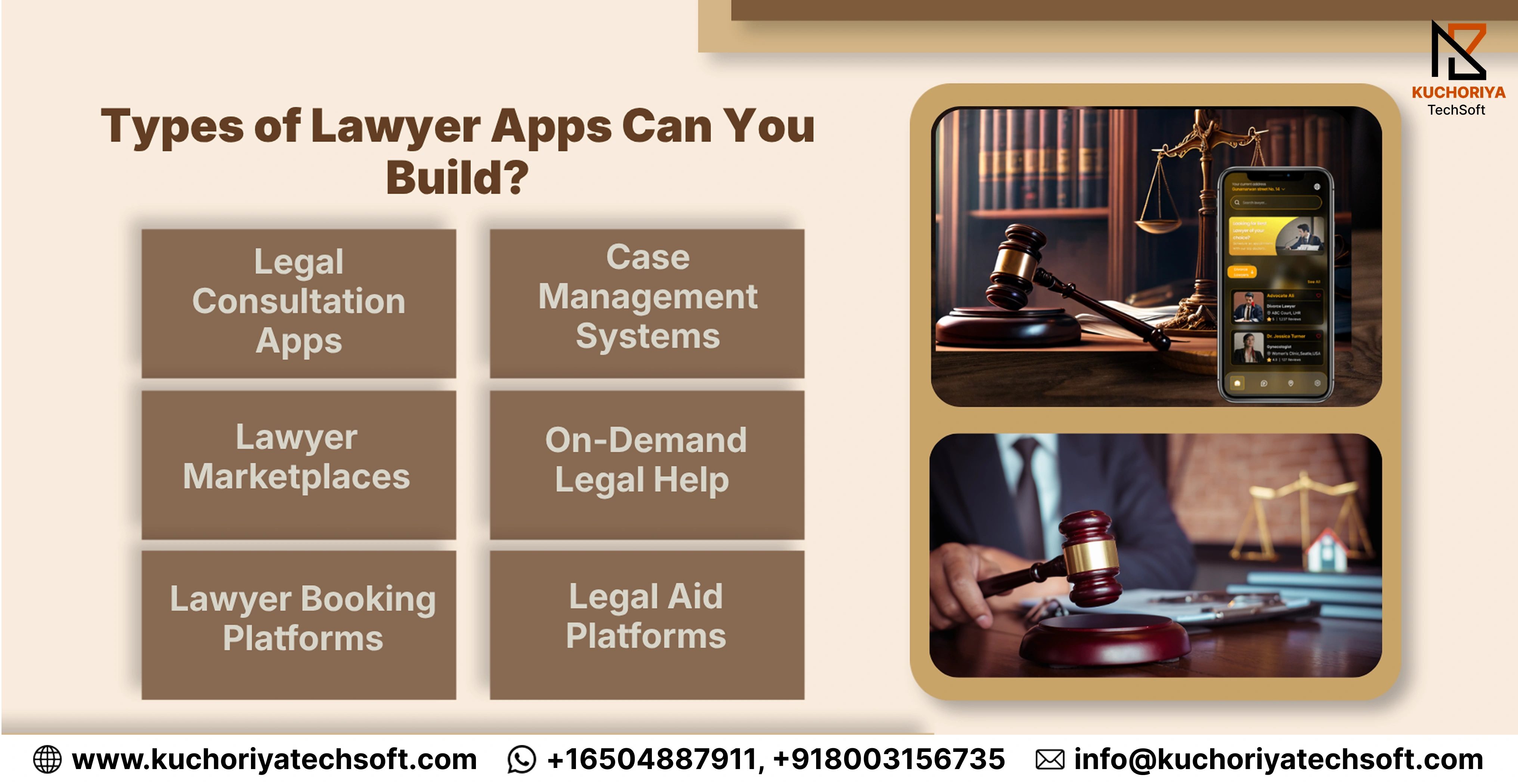
Some firms need one lawyer talking to clients. Others need dozens of firms on one screen. Pick your type based on that.
1. Legal Consultation Apps
Just a client's question meeting a lawyer's answer over chat or video. Legal consultation app development skips booking calendars and case files on purpose.
2. Lawyer Booking Platforms
No marketplace, no chatbot, just fewer no-shows. Lawyer booking app development is basically a calendar that passed the bar exam.
3. Lawyer Marketplaces
Dozens of firms and solo lawyers sharing one storefront, clients scroll, compare, and choose. Lawyer marketplace app development costs more to build but the user ceiling is far higher.
4. On-Demand Legal Help
Your client can't wait until Tuesday. An on-demand lawyer app finds whoever's free right now, not whoever has the next opening.
5. Case Management Systems
Deadlines, documents, client history, scattered across six folders until this exists. A legal case management app pulls all of it into one dashboard for the firm's own side of the work.
6. Legal Aid Platforms
Money shouldn't decide who gets legal help. Legal aid app development serves nonprofits, public defenders, and community programs on tight budgets.
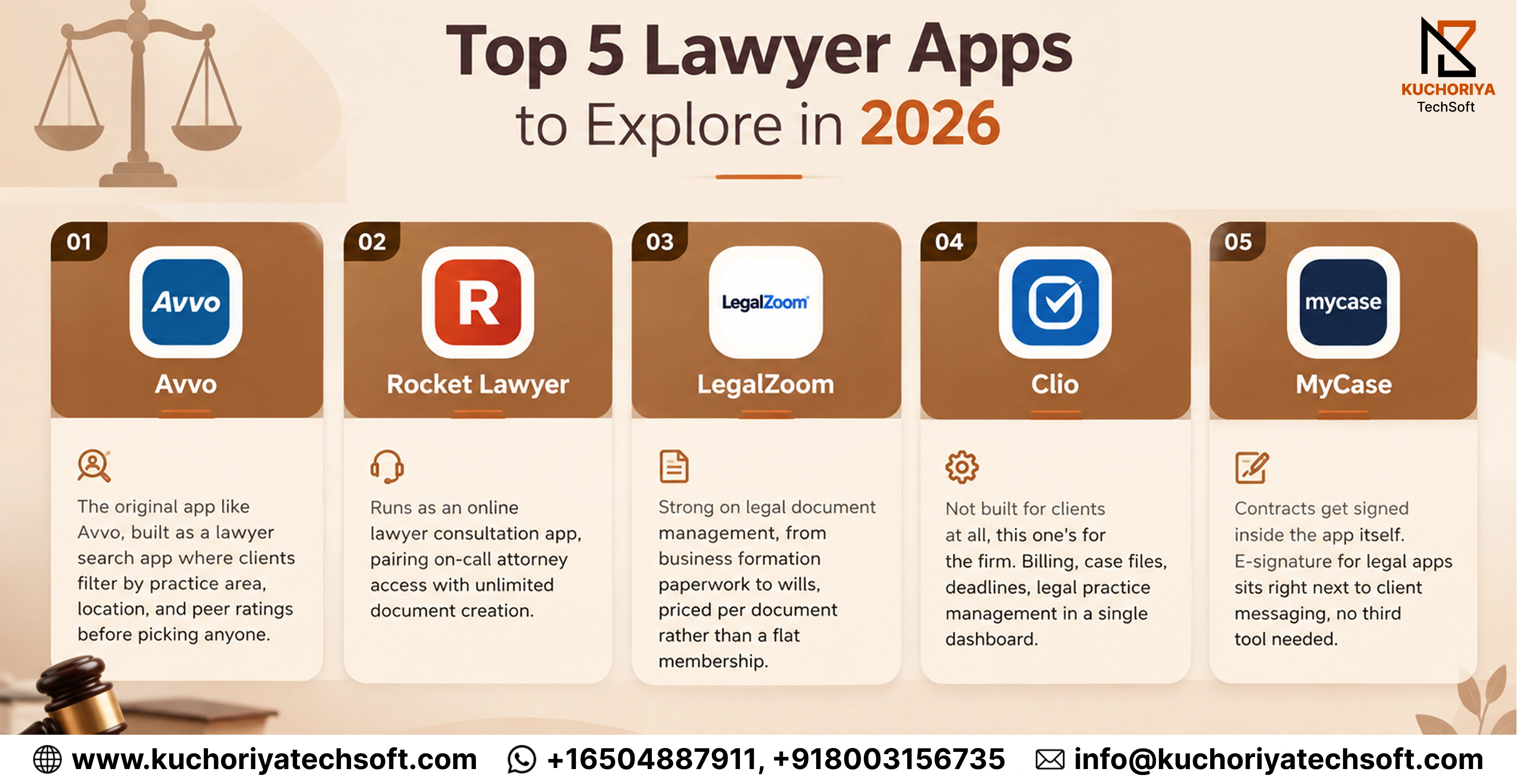
What Are the Top 5 Lawyer Apps to Explore in 2026?
These five already show what works. Study them before you design your own.
What Features Should a Lawyer App Include?
Every agency pitches a different feature list for this. Most of it is filler. Here's what actually gets used, split by who's touching the app.
For Clients
- Real-time slots, not a "request a callback" form that sits untouched for two days. That's the bare minimum a lawyer appointment booking app needs.
- Credentials, specialties, past reviews, all visible before a client commits. Lawyer profile management turns a stranger's name into someone worth trusting.
- Chat and video that work inside the app itself. The moment a client has to download something else just to talk, the app's already failed.
- In-app payments. Mailing a check to a law firm shouldn't be a thing anyone does in 2026.
For Lawyers and Firms
- Scheduling, client records, billing, three tools stitched into one screen. That's what a real lawyer app admin panel does.
- Document upload paired with e-signature. Half of legal work is still paperwork waiting on 3a signature, this closes the gap.
- Automated reminders. Small feature, outsized drop in no-shows.
- Analytics on booking volume and response time. Skip it and growth stalls without anyone knowing why.
Behind the Scenes
- AI-based lawyer matching routes a case to the right specialist instead of letting it sit in one shared inbox.
- Push notifications keep both sides in sync on appointment changes, no manual checking required.
Generic lawyer app features fill a checklist. The legal app features above are the ones clients actually stick around for. What features does a lawyer app need comes down to one question: does it remove a phone call, or just move it inside an app?
How Does a Lawyer App Work?
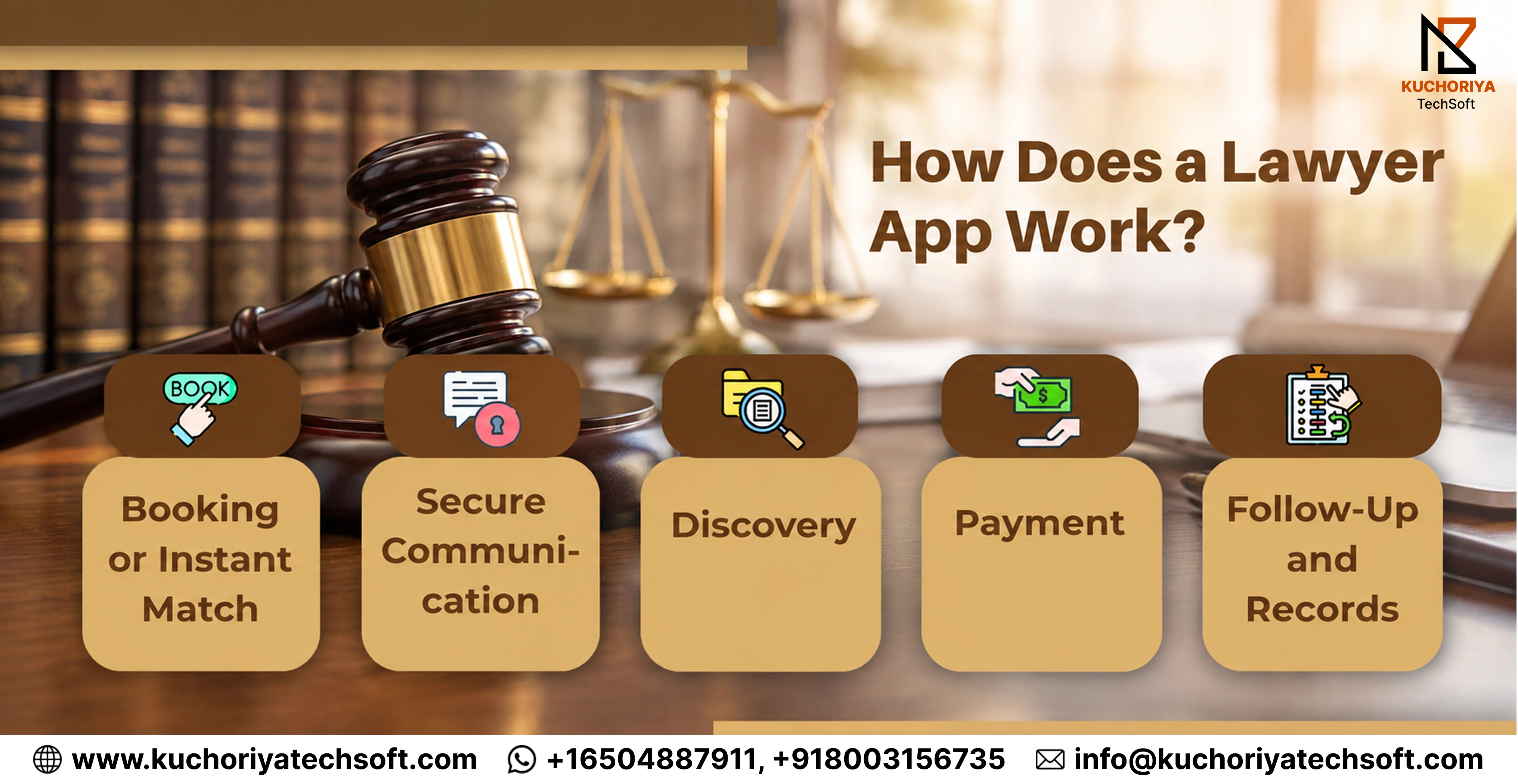
Strip away the branding and every lawyer app runs through the same five steps. Here's what actually happens between a client opening the app and a case getting handled.
1. Discovery
A client opens an iOS and Android lawyer app, searches by practice area or location, and browses profiles until one fits. Most apps lose users right here if the search filters are weak.
2. Booking or Instant Match
The client either picks a slot or gets matched instantly to whoever's free. Some platforms lean on an AI legal consultation app layer at this stage, routing the request by case type instead of making the client guess who to pick.
3. Payment
Booking gets confirmed the moment payment clears. Clean legal app payment integration handles cards, wallets, and sometimes installments, all before the consultation even starts.
4. Secure Communication
Now the actual consultation happens, chat, video, or document sharing. Secure legal communication matters most right here, this is where privileged information actually moves between two people.
5. Follow-Up and Records
The consultation ends, the case doesn't. Notes and documents get logged so both sides have a record, and reminders go out if another session's needed.
Worth noting: this flow doesn't shift much by region. Lawyer app development Mexico projects run the same five steps, the difference shows up in payment rails and compliance, not the core journey.
What Technology Stack Is Used for Lawyer App Development?
The tech choices here decide how the app scales later, not just how it looks on day one.
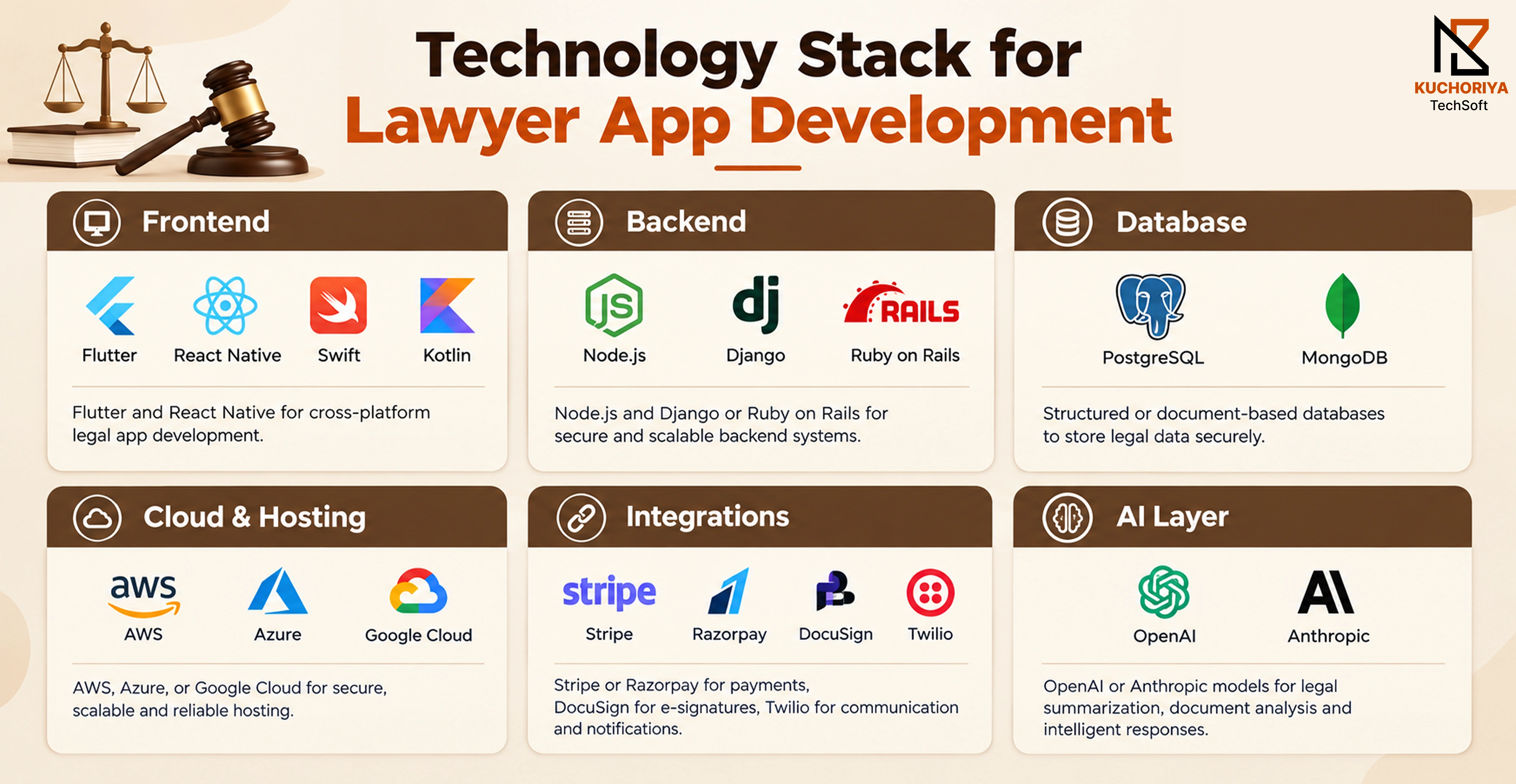
That's what technology is used for lawyer app development in practice. Get this lawyer app technology stack wrong early, and mobile app development for legal services ends up costing double in rework later.
What Is the Lawyer App Development Process?
Here's the actual lawyer app development process, the same one behind every serious legal platform built this year.
Step 1: Requirements Gathering
Every build starts here. Nailing down lawyer app development requirements early, who's the user, what's the core flow, what compliance rules apply, saves weeks of rework later.
Step 2: Planning and Scoping
This is where the lawyer app development timeline gets locked in. Firms usually want a number here before anything else, and honestly, that number depends entirely on what got decided in Step 1.
Step 3: UI/UX Design
Wireframes, then prototypes. A booking flow that confuses a client at this stage will confuse them just as badly after launch, so this step gets tested before a single line of code runs.
Step 4: MVP Development
Lawyer app MVP development means building the core loop only, discovery, booking, payment, nothing extra. Ship this, get real users on it, then decide what's worth adding next.
Step 5: Full Development and QA
Features from the roadmap get built out properly here, and testing runs alongside development instead of after it. Security testing especially can't wait until the end.
Step 6: Launch and Iteration
The app goes live, then the real feedback starts. Most teams asking how long does it take to develop a lawyer app are really asking how long until this step, and the honest range sits between 4 and 9 months depending on scope.
That covers how to create a legal app from the ground up. One more thing worth flagging: legal app development Israel projects often move faster through Step 1, the regulatory environment there is comparatively lighter than the US or UK.
Must Read: Lawyer App Development Guide
What Security and Compliance Standards Should a Lawyer App Follow?
Legal apps handle information that can't leak, ever. Here's what secure legal app development actually requires, not the generic checklist most agencies copy-paste.
Getting this right rarely happens solo. Most firms bring in experienced legal app developers just for this part, mistakes here cost far more to fix after launch than before it.
What Monetization Strategies Work for Lawyer Apps?
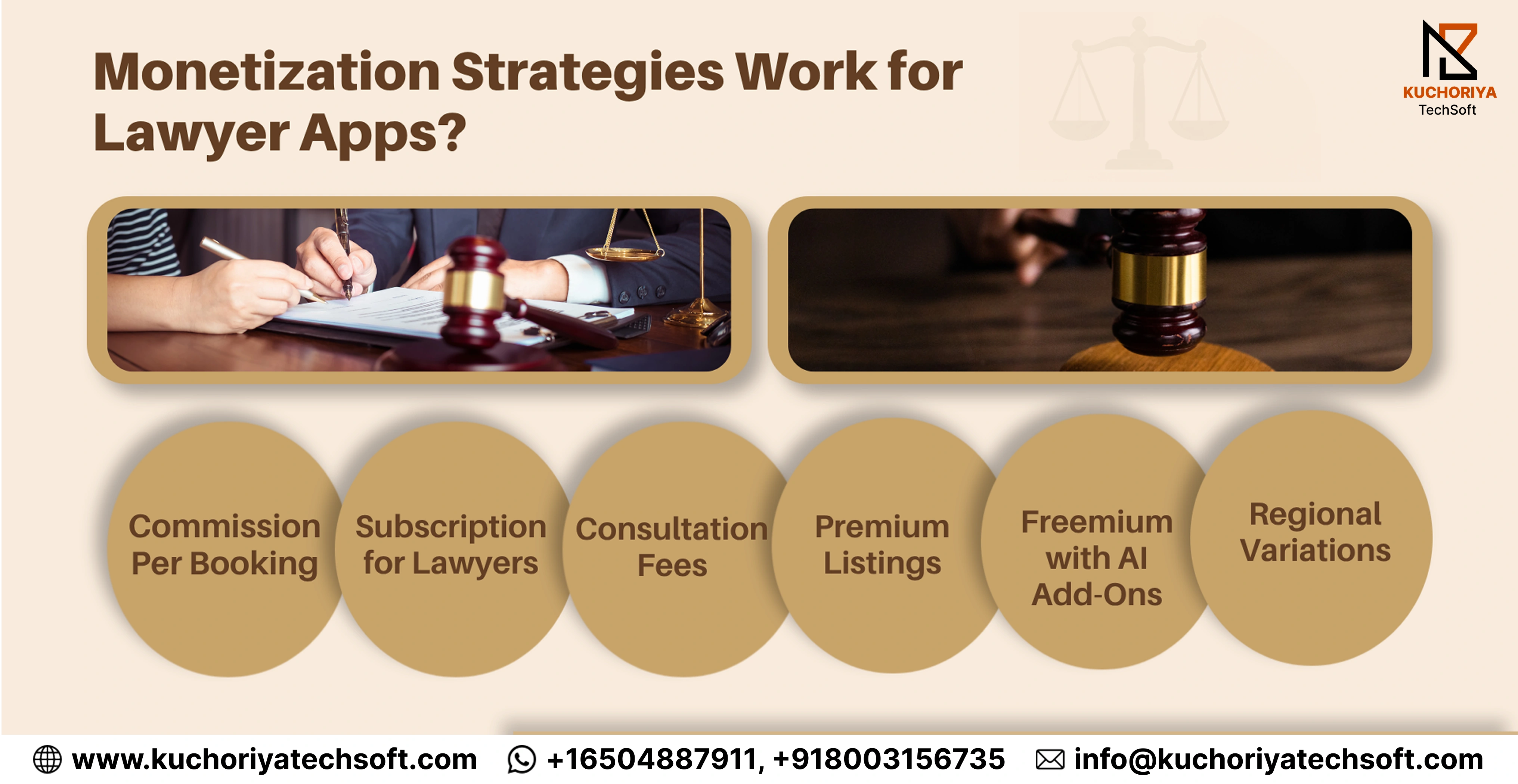
The app itself doesn't make money. The model behind it does. Here's what actually works.
Commission Per Booking
Every time a client books, the platform skims 10 to 20 percent off the top. Marketplaces with a real bench of lawyers competing for visibility do fine on this. A single-firm app with no volume behind it, not so much, there's nothing to skim from.
Subscription for Lawyers
Lawyers pay monthly to list their profile and get leads. This is where most custom legal app development projects end up once the founder wants steady revenue instead of chasing individual transactions.
Consultation Fees
Flat fee per session, split between the platform and the lawyer. Easy to explain, easy to build, usually the first model any new legal app developers team ships with.
Premium Listings
Pay more, rank higher. That's the entire pitch, and lawyers buy into it because search position is basically the only thing deciding who gets picked first. No changes needed to the core booking flow, just an extra revenue line sitting on top of it.
Freemium with AI Add-Ons
Basic search and booking stay free. Document drafting, priority matching, faster responses, all of that sits behind a paywall. This is where an AI-powered legal app layer tends to justify its own subscription tier.
Regional Variations
Monetization doesn't travel the same everywhere. A legal app development in Australia builds often leans on subscriptions because of how local bar associations regulate referral fees, while legal tech app development in Spain projects lean more on commission, as regulatory friction there is lighter.
How Much Does It Cost to Build a Lawyer App in 2026?
Nobody can give you one number for this without knowing scope first. If they do, walk away, that's a guess dressed up as a quote.
That range is lawyer app development cost as it plays out in real builds, not a number pulled from a sales deck. Three things move it the most, platform count, compliance depth, and whether AI gets built in from the start or bolted on six months later.
What Actually Drives Lawyer App Development Cost
- Platform count. iOS, Android, and web are each their own build and their own testing cycle, not a checkbox.
- Compliance depth. A single-region app is straightforward. Add a second jurisdiction and the legal review alone eats weeks.
- Integrations. Payment gateways, e-signature tools, and video calling, each adds setup cost and quirks that show up during testing.
- Team location. Two agencies quoting the same feature list can land $30,000 apart just based on where their developers sit.
Cost to develop a lawyer app really comes down to scope, decide that first, and the number writes itself. Want a real figure instead of a range? A free consultation gets you actual lawyer app development pricing based on what you're building, not a template.
Why Choose Kuchoriya TechSoft for Lawyer App Development
Kuchoriya TechSoft has built for clients across the USA, UAE, UK, Canada, and Australia, and legal platforms follow the same pattern every other serious app does, get the compliance and the user experience right, or clients leave in the first session.
As a lawyer app development company, the team handles everything from MVP to full-scale builds, booking flows, secure communication, payment integration, all of it under one roof. Firms that hire lawyer app developers here get people who've already dealt with the compliance headaches most first-time builders hit halfway through.
Kuchoriya works as a legal software development company for firms that want practice management tools, and as a legal technology development company for startups building something closer to a marketplace or consumer app. Based in India with delivery across time zones, the team supports legal app development company USA projects on US business hours and lawyer app development company Dubai clients without the usual handoff delays.
Conclusion: Building a Secure and Scalable Lawyer App in 2026
A lawyer app succeeds or fails on the same two things every time, security that actually holds up and a booking flow that doesn't make anyone think twice. Everything covered in this guide, features, tech stack, process, cost, comes down to getting those two right first.
Kuchoriya TechSoft works as a legal app development company for firms that want the full build handled end to end, and as a legal mobile app development company for teams that just need the client-facing app done right. The approach doesn't change much by region, lawyer app development UK projects and legal app developers Singapore engagements both run through the same process outlined above, timelines and compliance requirements aside.
Firms that don't want to hire an in-house tech lead can bring in Kuchoriya's Virtual CTO services instead, someone who owns the technical decisions from architecture through launch without sitting on a full-time payroll. Agencies and consultants who refer clients can join the referral partner program, and studios looking for a longer-term build relationship can explore the associate partner program.
Ready to start? Get a free consultation or talk to the team about what your lawyer app actually needs before writing a single line of code.
FAQs About Lawyer App Development
Q. How to choose a lawyer app development company?
A. Portfolio screenshots don't tell you much on their own. Ask what compliance work they've actually shipped, not just claimed in a sales call. During that first conversation, bring up custom legal app development directly, ask how they've handled scope changes mid-project before. Their answer says more than any case study will. And if GDPR or anything HIPAA-adjacent has never crossed their desk, that's usually a sign to keep looking elsewhere.
Q. What's the real cost breakdown for a lawyer app?
A. MVPs run $13,000 to $33,000. Mid-range builds, $38,000 to $78,000. Enterprise projects start past $88,000 and climb from there depending on scope.
Q. Are there hidden costs in legal app development?
A. Three places they usually show up. API fees that scale with usage instead of staying flat, so costs creep as the app grows. Compliance audits that get bolted on mid-build the moment a new region enters the plan. And bug fixes after launch that nobody thought to put in the original quote in the first place.
Q. What's the typical legal app maintenance cost?
A. Budget 15 to 20 percent of the build cost every year. Covers servers, security patches, and the small stuff that only surfaces once real users start clicking around in ways nobody tested for beforehand.
Q. What does AI lawyer app development actually add?
A. Mostly speed. Summarizing documents, drafting first responses, and routing a case to the right lawyer without someone sorting the inbox manually. It doesn't replace legal judgment, it just clears the repetitive part out of the way before a person looks at it.
Q. How is an AI legal assistant app different from a regular chatbot?
A. A chatbot answers generic questions and stops there. An AI legal assistant app works off actual case data instead, drafts real documents, and knows exactly when to step back and hand things to a licensed lawyer rather than guessing at advice it has no business giving.