What Is Restaurant App Development?
Ask ten restaurant owners what they actually want from an app, and most give some version of the same answer. Fewer missed calls, faster orders, and a real sense of who their regular customers are.
Restaurant app development, without the jargon, is really about putting ordering, table bookings, payments, and the customer relationship under one roof instead of scattering them across a phone line and a delivery marketplace that keeps most of that data to itself.
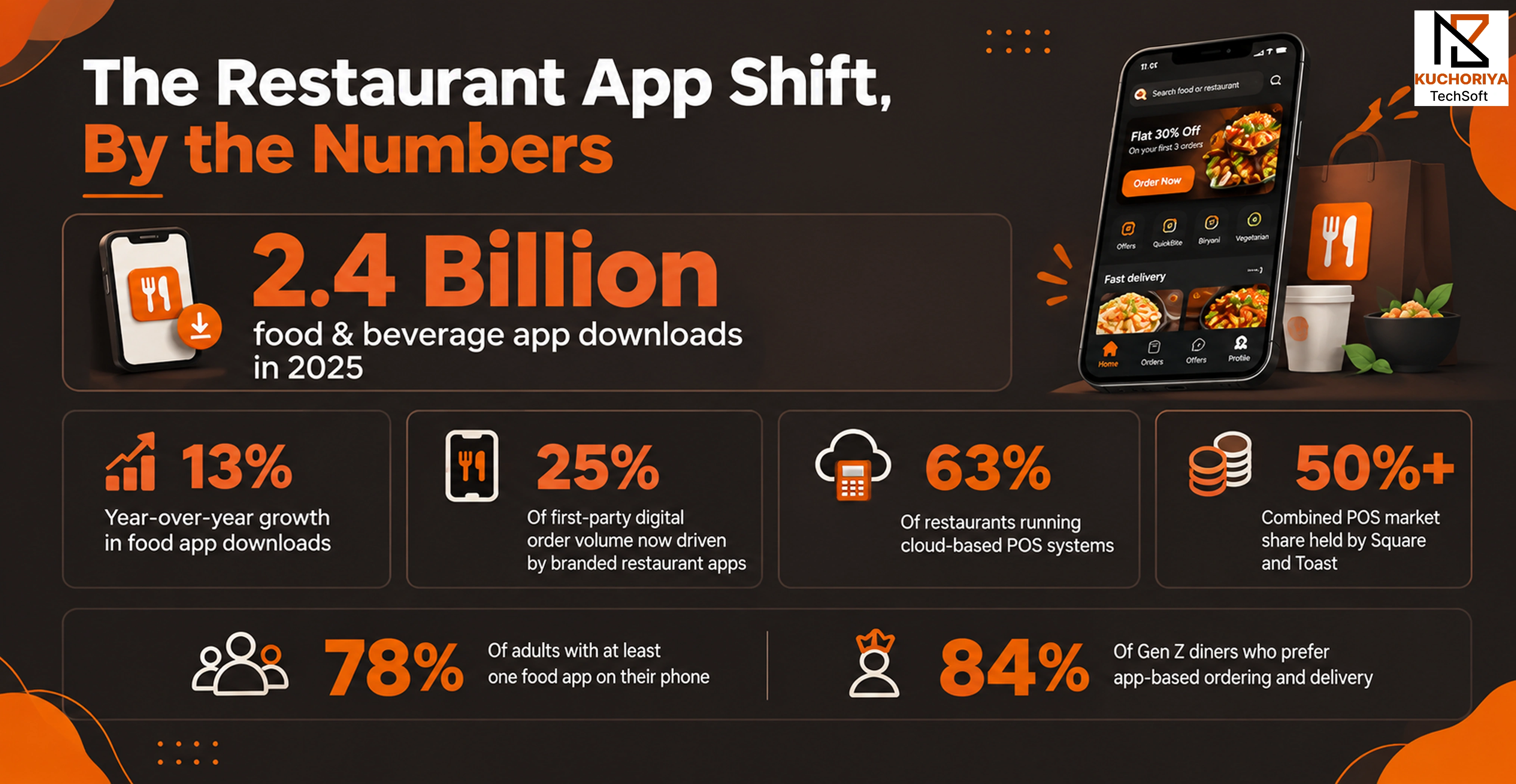
The download numbers back this up too. The food and beverage app category pulled in 2.4 billion downloads last year, up 13% from the year before. That's not a niche category anymore, it's how most people order food now.
What Is Restaurant App Development, Really
What is restaurant app development once you strip away the buzzwords? It comes down to three things learning to talk to each other properly: the order, the kitchen, and the payment. Most restaurant app development guides skip straight to features and miss this part entirely. A proper restaurant app development guide starts here instead.
What's changed things is the backend. Square and Toast alone now cover more than half the POS market, and around 63% of restaurants already run cloud-based systems. So a new app usually plugs into what's already running instead of forcing a full rebuild.
Why This Counts as Restaurant Digital Transformation
Close to 78% of adults have at least one food app on their phone now, up from roughly half during the pandemic peak. Most people carry three or more today.
Gen Z leans even further into this, with around 84% preferring app-based ordering and delivery over any other option.
Restaurant digital transformation isn't a slide in a boardroom deck anymore. It's just how people already decide what to eat.
Types of Restaurant Apps Businesses Can Build
A café with one location and a chain running twelve locations don't need the same thing built. It comes down to what's actually broken, slow ordering, empty tables going unbooked, scattered operations, or customers who order once and never come back. The types of restaurant apps for businesses map pretty closely to those problems.
Online Ordering Apps
Start here if the phone line is the bottleneck. An online ordering app puts the full menu on someone's phone and routes the order directly to the kitchen, no call, no hold time, and no chunk of the order going to a delivery marketplace as commission.
Table Reservation Apps
Restaurants losing money to no-shows usually need this before anything else. A table reservation app like Eatigo keeps bookings straight so a hostess isn't juggling a paper book on a Friday night, trying to remember who confirmed and who didn't.
Restaurant Management Apps
Customers barely notice this one, staff feel it every shift. A restaurant management app takes scheduling, inventory, and order routing, stuff that used to live in three different tools, and puts it under one roof. Nobody has to cross-check a spreadsheet against a whiteboard anymore.
Multi-Restaurant Apps
Here's where it gets bigger. One brand, several locations, all running off the same system. A multi-restaurant app means the menu doesn't drift between branches, and a loyalty balance earned in one city actually works in another. UAE restaurant groups are leaning into this hard right now, multi-restaurant app development especially, since chains expanding across Dubai and Abu Dhabi don't want five separate systems running five separate versions of the truth.
Loyalty & Customer Engagement Apps
Smallest of the five, usually. Fastest to pay for itself, also usually. A loyalty and customer engagement app isn't really about the app at all, it's about the moment someone's deciding where to eat and a notification lands at exactly the right second.
Figuring out which of these to build first is usually where experienced restaurant app developers in the UAE earn their fee, since the order matters as much as the build itself.
Essential Features of a Restaurant App
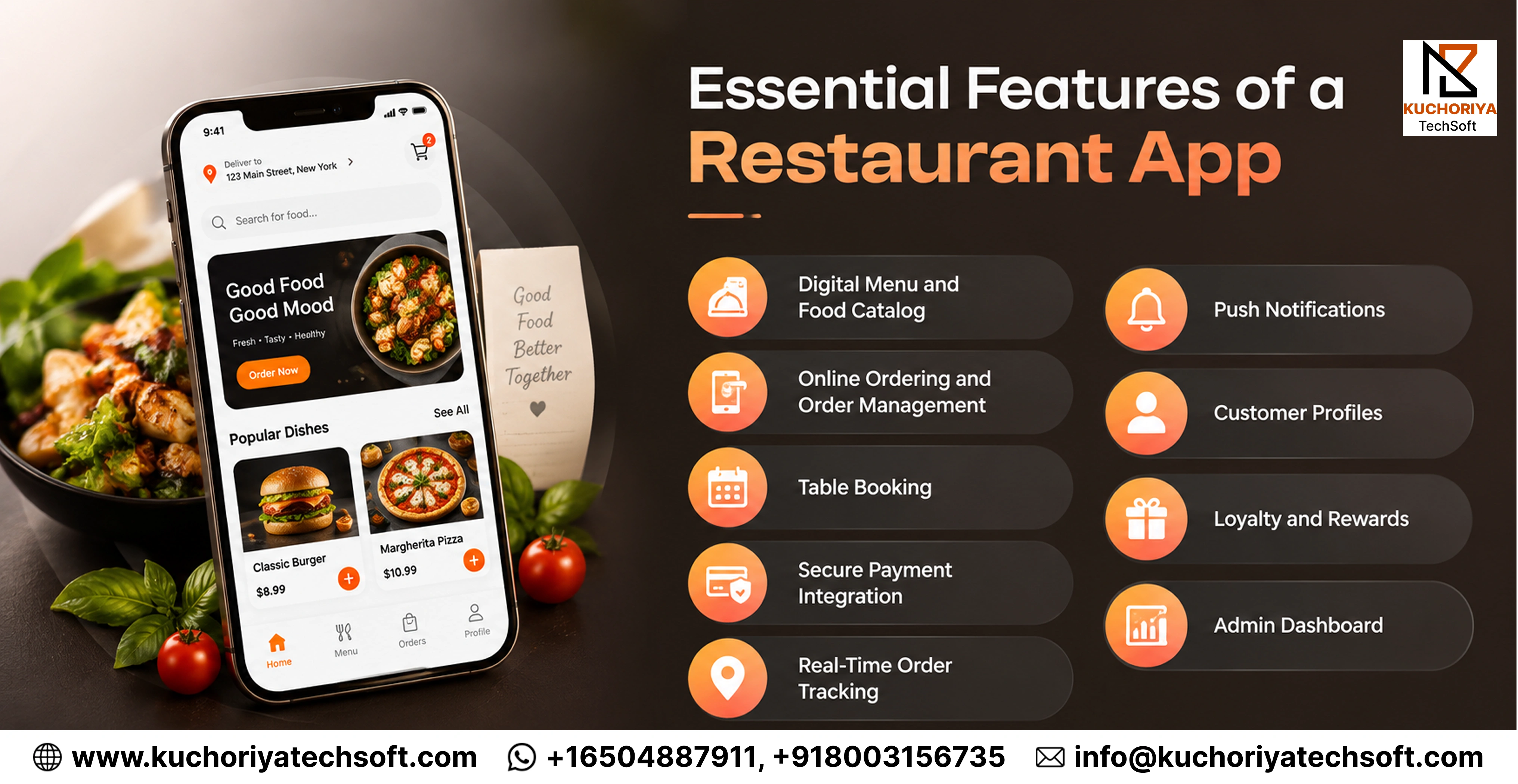
Most restaurant app features come down to a handful of things that actually matter, not a long checklist. Restaurant mobile app features work best when they're few, reliable, and built to survive a busy Friday night.
Digital Menu and Food Catalog
The full spread appears on screen and updates the second something sells out, no reprinting needed. It also works as a food catalog app, letting people browse before they're ready to order.
Online Ordering and Order Management
Online food ordering is the part customers see and tap through. Behind it, every order needs to land in the kitchen instantly, not buried during a rush.
Table Booking
No more hostess flipping through a notebook trying to remember who confirmed. Reservations sit right in the app, so the same slot never gets promised to two tables at once.
Secure Payment Integration
Cards, wallets, split bills, all of it runs quietly in the background through secure payment integration. Worth getting right too, since roughly 73% of diners now specifically reach for a digital wallet when paying at a restaurant.
Real-Time Order Tracking
Nobody wants to sit there refreshing an app wondering if their food even left the kitchen. Real-time order tracking just shows them, no guessing involved.
Push Notifications
An order confirmation here, a table-ready ping there, maybe a note when a seasonal dish comes back. That's the whole job, staying useful without turning into noise someone eventually mutes.
Customer Profiles
Saved order history and preferences mean returning customers don't start from zero. Staff get a real shot at recognizing regulars too.
Loyalty and Rewards
A loyalty and rewards program turns a single order into a habit through points and timed offers. It works best when it's built on actual past behavior, not generic blasts.
Admin Dashboard
The admin dashboard is where staff manage menus, track sales, and run the business in real time. No more piecing numbers together from five disconnected tools.

Why Build a Restaurant Mobile App? Key Benefits
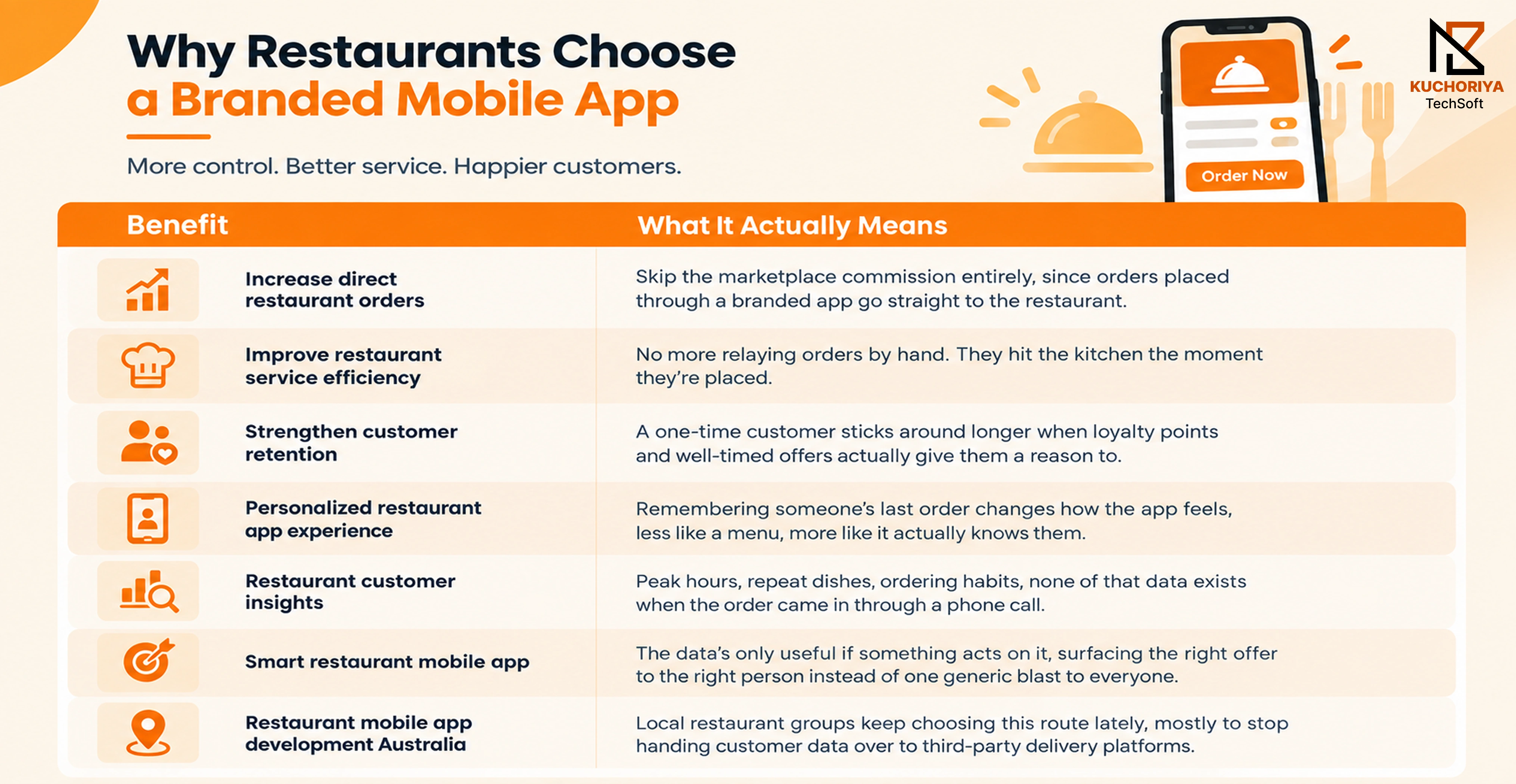
Restaurant mobile app development isn't just about keeping up with competitors. It actually changes how a restaurant makes money and understands its own customers
Common Restaurant App Development Challenges
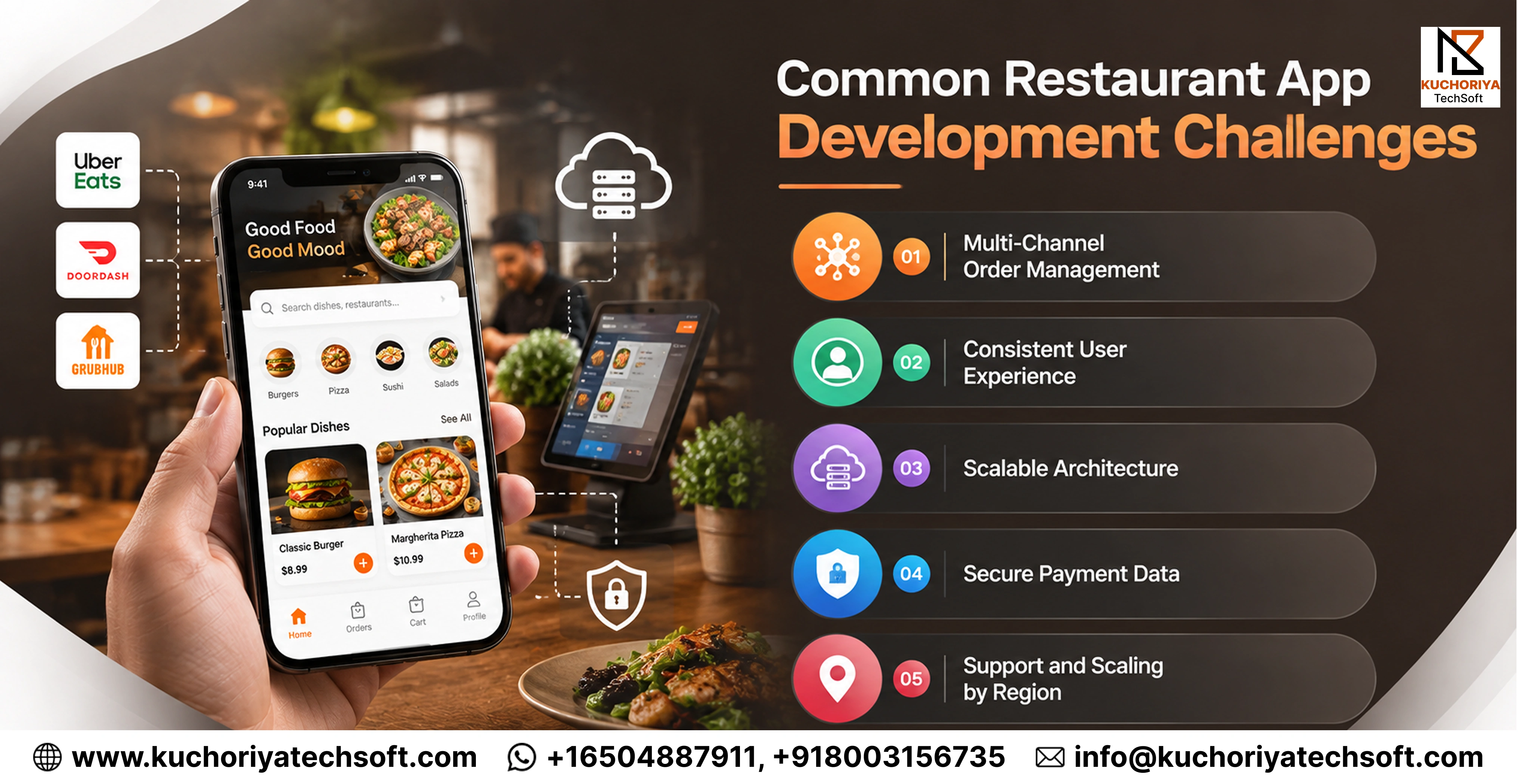
Most restaurant apps don't fail because the idea was bad. They fail because of stuff nobody planned for until it showed up mid-launch, usually on the busiest night possible.
Multi-Channel Order Management
App orders, website orders, sometimes a delivery marketplace too, all landing at the same time. Multi-channel order management is basically the difference between kitchen staff working off one clear queue or three separate screens that don't sync.
Consistent User Experience
Here's what actually erodes trust fast: a button that's in a different place tomorrow, a menu that loads slightly differently on the second visit. A consistent restaurant app user experience just means none of that happens, whether it's someone's first order or their fiftieth.
Scalable Architecture
Fifty orders a day, no problem. Five hundred, and things start cracking if nobody planned for it. That's exactly what scalable restaurant app architecture is for, handling growth without forcing a full rebuild the moment business actually picks up.
Secure Payment Data
Saved cards, digital wallets, full order history, sitting right there in the app. Secure restaurant payment data has to hold up, because one breach undoes years of whatever trust the restaurant built.
Support and Scaling by Region
Expectations shift by market too, not just by app size. A restaurant looking into restaurant app development services in Singapore is working under different payment and data regulations than one scaling across the US or UAE, which quietly changes what "secure" and "scalable" even mean there.
Must Read: Top 10 Restaurant App Development Companies
Why Businesses Choose Our Food Delivery App Development Services
Proven Solutions to Restaurant App Development Challenges
Every challenge from the last section has a fix that restaurants have already tested and refined. These restaurant app solutions aren't theoretical, they're what actually gets built when the problems above show up.
1. Sync menus and inventory in real time
Menu and inventory synchronization stops a customer from ordering something that ran out twenty minutes ago. The moment stock changes in the kitchen, it reflects in the app, no manual updates needed.
2. Track performance, not just uptime
Restaurant app analytics show what's actually happening, peak order times, which dishes convert, and where customers drop off mid-order. Restaurant app performance monitoring catches the technical side too, slow load times or checkout failures before they cost a night's worth of orders.
3. Build in AI where it actually helps
AI restaurant app development solves personalization and forecasting problems that manual systems can't touch, predicting demand, adjusting recommendations, and flagging unusual order patterns before they become bigger issues.
4. Go local when scaling into new markets
Restaurants entering new regions often lean on custom restaurant app development teams in Canada who already understand local payment rails and compliance requirements, instead of retrofitting an app built for a different market.
How to Build a Restaurant App: Step-by-Step Process
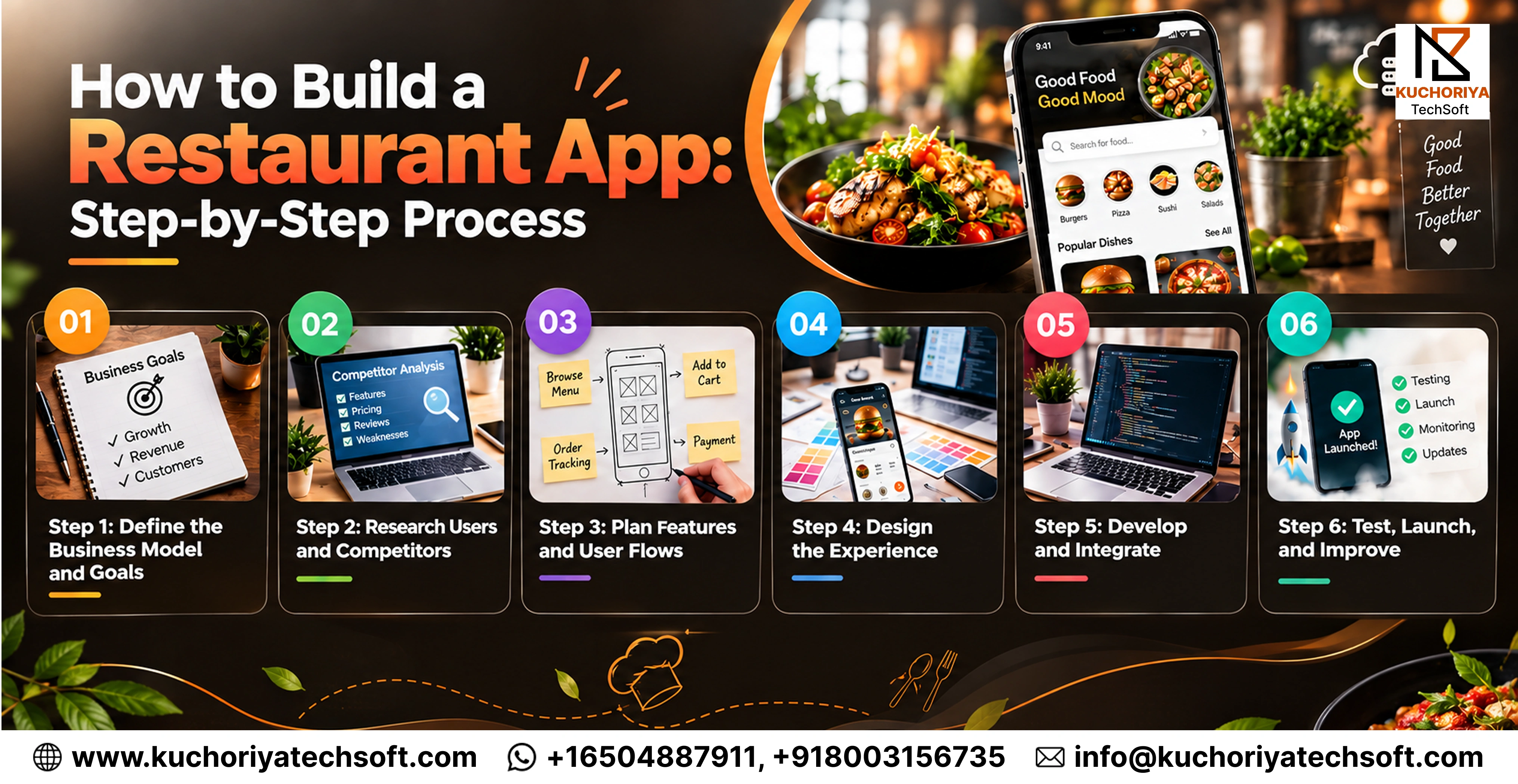
Wondering how to build a restaurant app without wasting six months on the wrong priorities? Six stages, roughly, and the order actually matters more than people assume going in.
Step 1: Define the Business Model and Goals
Ordering, reservations, loyalty, maybe all three together. Whatever it is, this gets settled before anyone touches a design tool, not after. Skip it and how to build a restaurant app from scratch turns into guesswork halfway through.
Step 2: Research Users and Competitors
Look at what similar restaurants already offer and where their apps fall short. Half the features worth building come from spotting what competitors got wrong.
Step 3: Plan Features and User Flows
Think about the actual path, someone opens the app, browses, orders, and pays. Get that sequence wrong, and it doesn't stay contained, every feature built on top just inherits the mistake. This is really what a restaurant app development process comes down to underneath all the terminology.
Step 4: Design the Experience
Wireframes come first. Screens after that. Then the part that actually determines whether it feels good to use. Catching a broken flow at this stage costs almost nothing, catching it after development's underway costs a lot more, which is why the restaurant app design process deserves more time than it usually gets.
Step 5: Develop and Integrate
This is where how to develop a restaurant mobile app turns into actual code, connecting the ordering system, payments, and kitchen display so they all talk to each other properly. Teams working in restaurant software development in the USA often build with US payment compliance and POS standards in mind from this stage onward.
Step 6: Test, Launch, and Improve
Restaurant app testing and launch isn't the finish line, it's the start of a feedback loop. Real usage always surfaces things no amount of planning catches beforehand.
Why Choose Kuchoriya TechSoft for Restaurant App Development?
Plenty of teams call themselves a top restaurant app development company. Few have actually shipped results that show up in real sales numbers.
- Built AI-driven ordering, delivery optimization, and loyalty for a US restaurant chain running 50+ outlets, resulting in a 30% sales increase and 40% better customer retention. That's what our restaurant app development services actually deliver.
- Restaurant software development covering POS integrations, real-time order sync, and payment security, handled properly from day one, not bolted on later.
- Hospitality app development experience that extends beyond restaurants, since hotels and hospitality brands run on similar operational logic.
- Restaurant app development company USA clients trust for handling US payment compliance and POS standards.
- Restaurant app development company Canada groups turn to for scaling across provinces with local regulatory know-how.
- Restaurant app development company Dubai restaurants rely on to navigate the UAE's fast-moving hospitality market.
Offices across the USA, Canada, the UAE, Australia, and Singapore mean the same team building the app also understands the market it's launching into.
Building a Restaurant App That Drives Real Growth
Strip away everything else in this guide and one thing stays true: the app only matters if it changes how the business runs day to day.
A good restaurant app development firm doesn't start with features, it starts with whatever's actually broken at the restaurant. That's the difference between a generic build and real custom restaurant app development, one solves a checklist, and the other solves the actual business.
Restaurant technology solutions and food service app development aren't separate categories anymore, they've merged into one system covering ordering, operations, and customer data together. The same thinking carries over to hospitality technology solutions in general, since hotels and restaurants run on nearly identical digital logic underneath.
Underneath all of it sits restaurant customer engagement, the one thing every feature in this guide eventually comes back to. That's what separates a working app from a restaurant digital solutions partner actually worth choosing.
Running an agency that works with restaurants? Kuchoriya's referral partner program lets you refer projects and earn without building anything yourself. Want something longer-term instead? The associate partner program fits that kind of ongoing collaboration better.
Got a restaurant app in mind? Book a free consultation and figure out where it actually needs to start.
Frequently Asked Questions About Restaurant App Development
Q. What is restaurant app development?
A. One platform for ordering, bookings, and payments, doing what phone calls and paper notebooks used to. That's how a restaurant app works underneath.
Q. Why do restaurants need a mobile app?
A. Diners expect one by default now. What types of restaurant apps you can build depend on the need, online ordering, table reservations, or full management systems.
Q. What are the benefits of a restaurant mobile app?
A. More direct orders, better retention, real customer data. What features should a restaurant app have to get there? Digital menu, payments, real-time tracking, loyalty.
Q. What challenges do restaurant apps solve?
A. Mostly a restaurant ordering system that can't juggle multiple channels and a food ordering platform that hoards the customer data instead of sharing it back.
Q. How to build a restaurant app step by step?
A. Restaurant app business model planning and restaurant app user research come first, always. Then design, development, and testing, in that order. Those are the steps to develop a restaurant app from scratch, and really, how to create an app for a restaurant that works.
Q. Does it work differently for startups?
A. Restaurant app development for startups usually means one solid feature over five half-built ones. A realistic restaurant app development timeline runs a few months for a working first version.