

Why a Tinder Clone App Is Still a Smart Business Idea in 2026
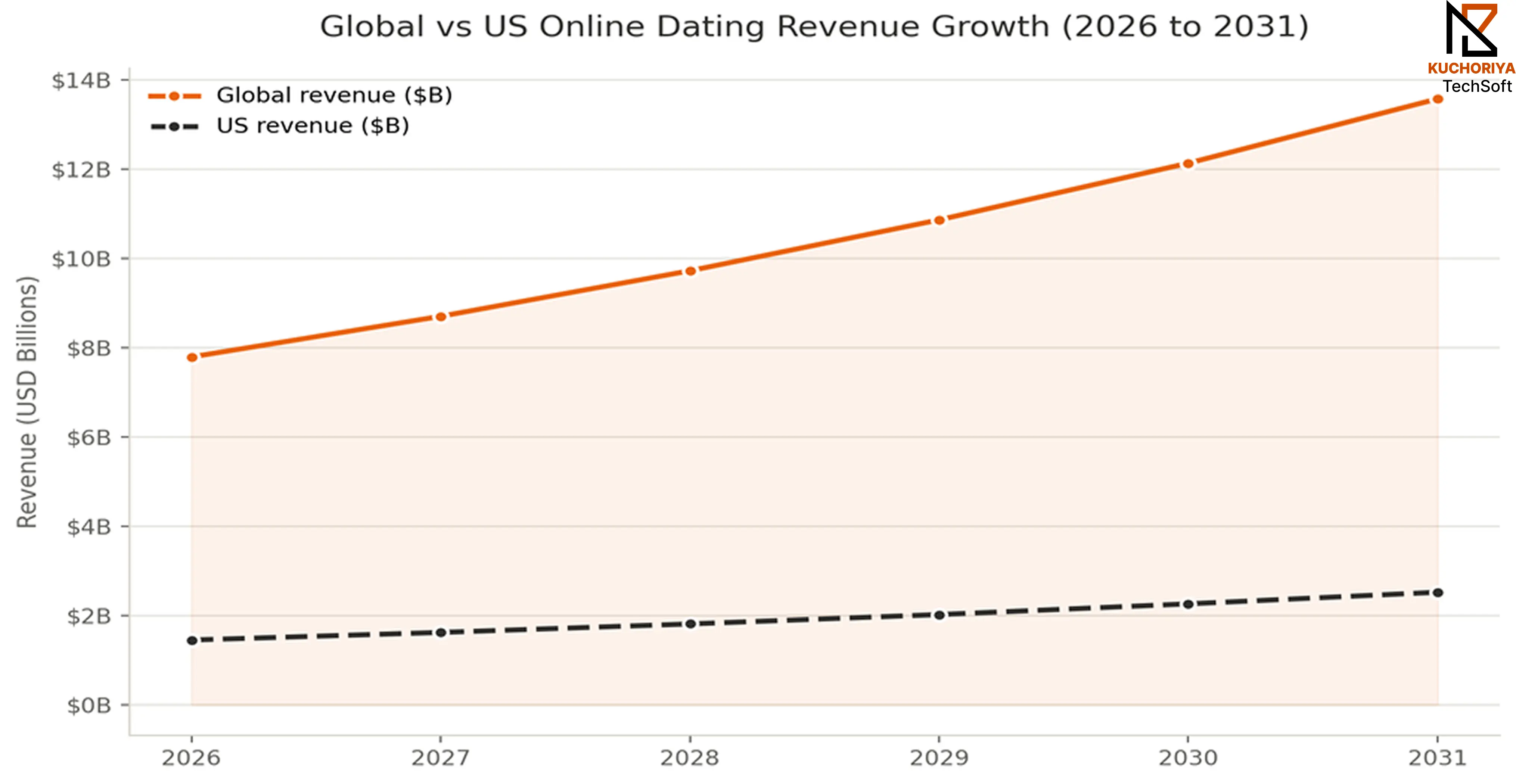
People keep asking if the dating app space is oversaturated. Numbers say otherwise. Mordor Intelligence has the global online dating market sitting at $7.79 billion this year, climbing to $13.57 billion by 2031. Nearly 12 percent growth, year after year. Not exactly a market that is drying up. So here is the thing about Tinder clone app development in 2026, you are not late to this. You are early to the next phase of it.
Money used to come almost entirely from subscriptions. That is shifting fast. Boosts, gifts, small in-app purchases, these are pulling in more revenue growth than flat monthly plans now. If you are putting together a dating app founder guide for your own build, this is not a detail to figure out later. It shapes how you design the app from the first wireframe.
Then there is matching. Apps that actually learn from how users swipe, instead of just showing profiles by distance, hold onto users longer. That is where AI matchmaking in Tinder clone apps stops being a nice-to-have and becomes the thing that decides whether people stick around past week one. It is also one of the clearest dating industry trends 2026 founders keep bringing up. (Source)
What Goes Into Tinder Clone App Development
Swiping is the small part. Maybe a fifth of the real build. Everything else sits where users never look.
- Pick a Lane First: Going head to head with Tinder rarely works. Social dating platform development built around one specific group, professionals, a faith community, or a certain age range, tends to do better than trying to appeal to everyone at once.
- Build Rules In Not On: Age verification usually gets skipped in the rush to launch. So do region-based privacy laws and a report or block system that actually catches problems. Adding these later costs way more than planning for them from day one, and by then some users have already had a bad experience.
- Money Talk Starts Early: Ask anyone who has written a Tinder clone app development guide, and they will tell you the same thing. Decide what people are paying for before the first screen gets designed. Founders who leave this for later usually end up bolting on a paywall that feels like an afterthought, because it is one.
- Bottom Line: It does not matter if the app targets one small niche or tries to go wide. Good online dating app development in 2026 treats every piece, chat, matching, payments, safety, as one system working together. The apps that feel like a swipe screen with random features stapled on are the ones that lose users fast.
Core Features Every Tinder Clone App Needs
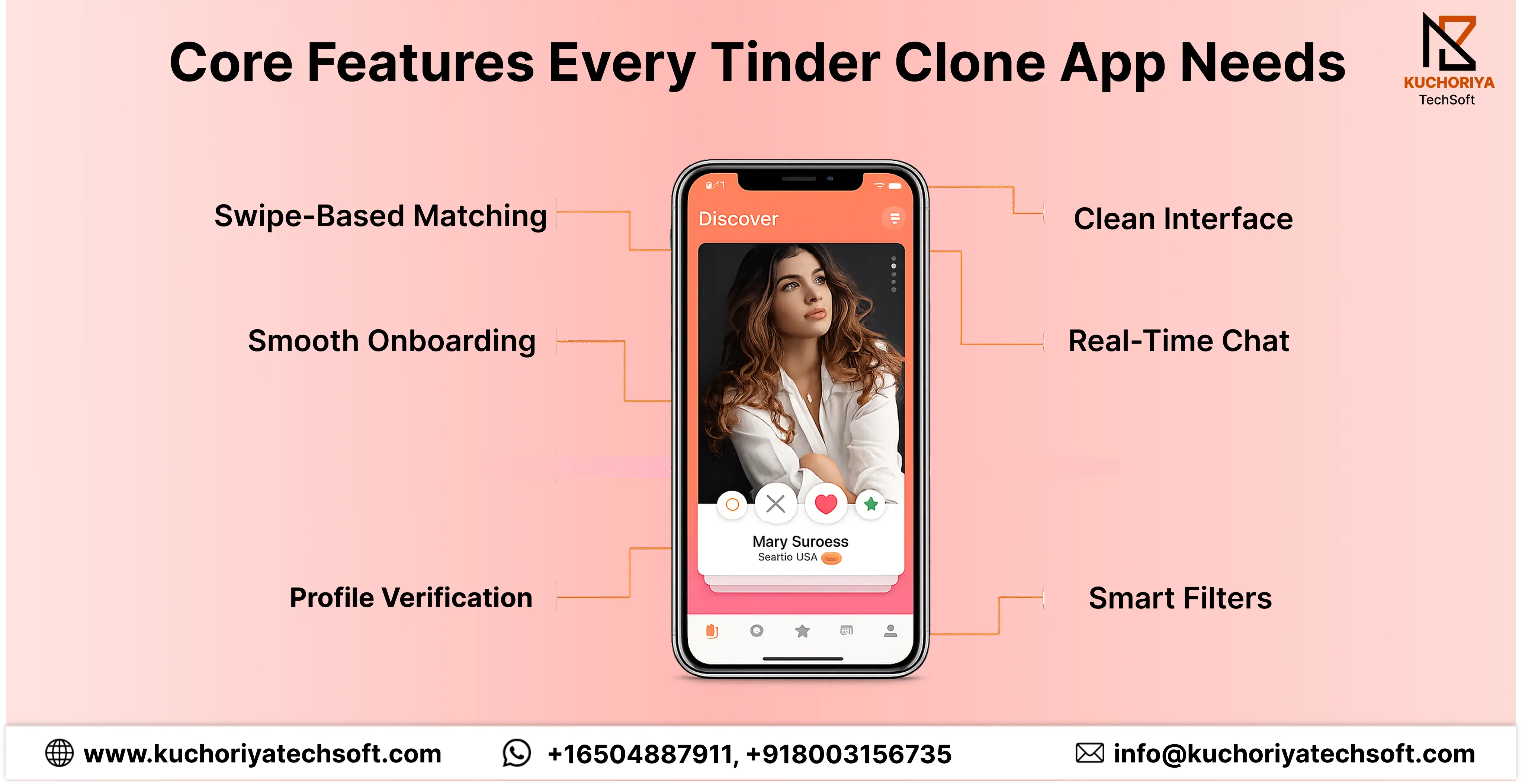
A new dating app usually gets judged fast, often before someone finishes their first session.
Advanced Features to Make Your Tinder Clone App Stand Out
Basic swiping gets people to download an app. These features decide if they stay.
- Smarter Matches Over Time: An AI-based swipe recommendation system watches actual swipe behavior, not just the filters someone set on day one, and adjusts recommendations as it learns.
- Meeting Before Meeting: Video calls before a real date? That is what a dating app with video call feature adds. Fewer no-shows, more trust built early.
- Location That Actually Matters: A geolocation-based dating app updates in real time as people move around, so results stay accurate instead of stuck on whatever city was entered at signup.
- Video Is Not Optional Anymore: Video dating app development has moved past calls. Short clips on a profile now do more to build a first impression than five photos ever could.
Tinder Clone Script vs Custom Tinder Clone App Development
Founders usually land on one of two paths here. Both work, but they solve different problems.
The right call depends on the goal. Testing a concept quickly favors a script. Building something meant to scale and stand out favors custom development.
Deep Dives: How to Build a Dating App Like Bumble: Features, Cost & Development Guide
How to Build an Exclusive Dating App Like Raya in 2026
Best Tech Stack for Tinder Clone App Development
Getting the tech stack for Tinder clone app development right early saves a lot of pain later, switching frameworks mid-build is expensive and slow.
- Frontend Framework: The React Native vs Flutter for dating apps question comes up in almost every planning call. React Native wins when the team already knows JavaScript and wants a bigger community to lean on. Flutter usually pulls ahead on animation smoothness, which shows the moment someone starts swiping fast.
- Backend: Most teams land on Node.js or Python when building backend architecture for Tinder clone apps. Both handle chat and live notifications without the lag that kills a good match moment.
- Database: MongoDB and other NoSQL options tend to win the database design for dating app development debate, mostly because profiles and messages rarely fit into rigid rows and columns, and the data needs room to grow sideways as users pile up.
- Geolocation: Redis or PostGIS handles the location math here, keeping results accurate as people move around without dragging down match speed.
- Cloud Infrastructure: AWS and Google Cloud both scale up automatically when traffic spikes unexpectedly, which tends to happen right after a good marketing push or app store feature.
None of these choices exist in isolation. A framework decision affects backend load, and database design affects how fast geolocation queries run. The stack works best when planned as one system, not five separate decisions.
Step-by-Step Tinder Clone App Development Process
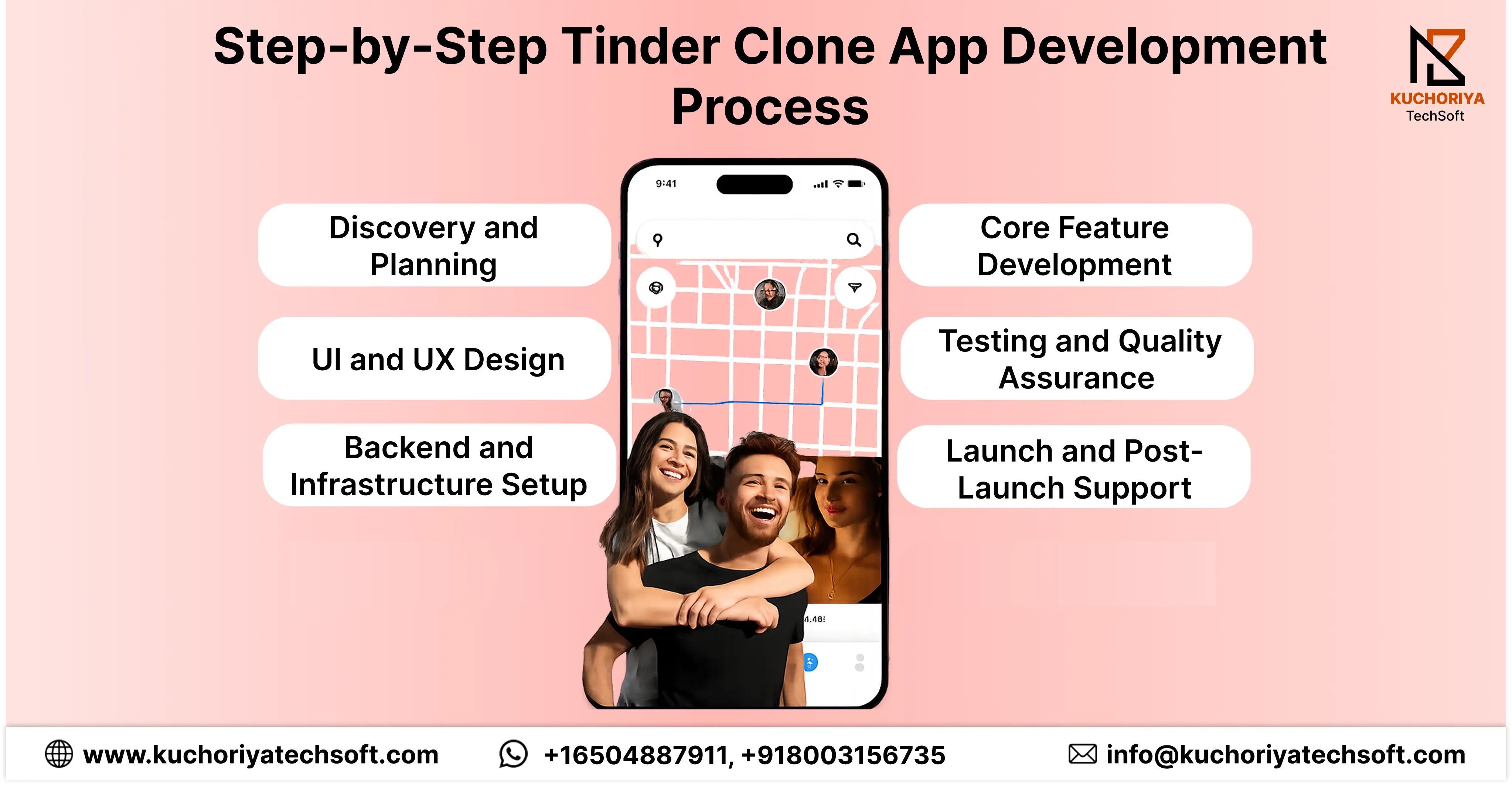
Every solid Tinder clone app development process follows roughly the same path, even when the features and audience differ.
1. Discovery and Planning
The first Tinder clone app development steps involve locking down the niche, the core features, and a realistic scope before any design work begins.
2. UI and UX Design
Wireframes and prototypes get tested here, long before development starts, so the swipe and match flow feels right from the first version.
3. Backend and Infrastructure Setup
This is where real-time messaging infrastructure for dating apps gets built, chat, notifications, and the systems that keep everything running without lag.
4. Core Feature Development
Swiping, matching, profiles, filters, all of it gets built here. Most teams spend more time on this phase than any other, simply because this is where the app actually starts working.
5. Testing and Quality Assurance
This phase catches what planning missed. Matching accuracy gets checked, chat gets pushed under load, and the app gets poked at from every angle before a single outside user touches it.
6. Launch and Post-Launch Support
A strong dating app launch strategy covers app store rollout, early user acquisition, and fixing issues fast once real users start swiping.
Tinder Clone App Development Cost Breakdown
Ask five agencies and the numbers will differ, but they tend to cluster once the feature list actually gets locked down.
The Tinder clone app development cost mostly comes down to three questions. How many features are actually going in. Which tech stack the team is working with. And where that team happens to be based. A North American developer bills noticeably more per hour than someone in Eastern Europe or South Asia, and founders who go with the cheaper option usually give something up in return, like faster replies or fewer timezone gaps, that kind of thing.
Launch does not end the spending either. Anyone setting a real budget for building a dating app needs to plan for what comes after: hosting, moderation, and ongoing fixes. Those add up to roughly 15 to 25 percent of the original build cost every year, and that percentage only feels heavier once actual users start showing up.
Location tends to swing the cost to hire dating app developers the most. A leaner overseas team can knock a big chunk off the total, but rushing the backend to save money early has a way of costing more later, once something breaks under real traffic.
How Long Tinder Clone App Development Takes
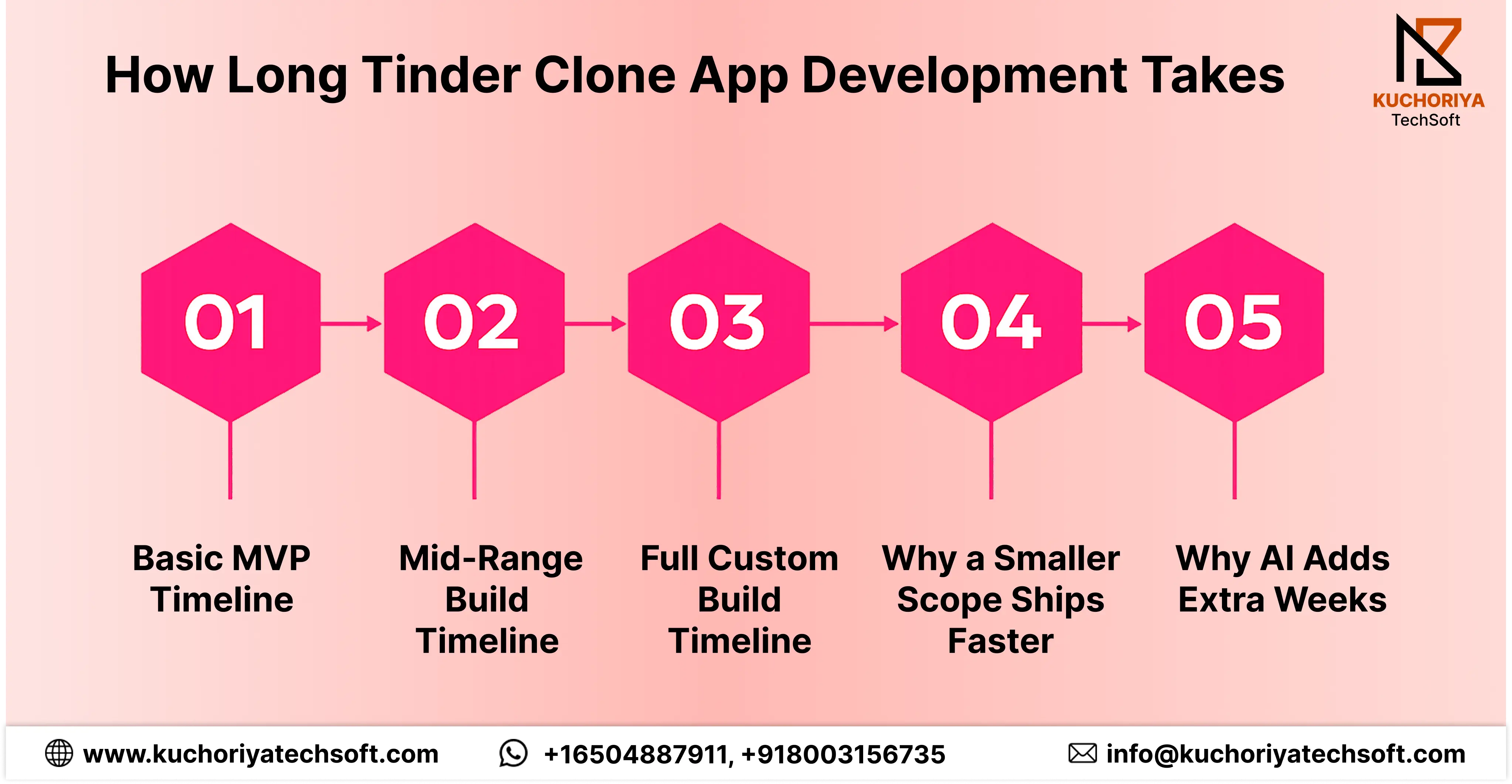
Timelines shift with scope, but most builds land somewhere between three and nine months.
1. Basic MVP Timeline
A lean build with swiping, chat, and basic profiles usually takes 12 to 16 weeks. Nothing extra, just enough to test if the idea holds up.
2. Mid-Range Build Timeline
Adding AI matching, video calls, and a stronger UI pass stretches the dating app development timeline to 20 to 28 weeks.
3. Full Custom Build Timeline
A production-ready app with every feature and heavier testing typically runs 30 to 40 weeks before launch.
4. Why a Smaller Scope Ships Faster
A tighter dating app MVP roadmap gets real user feedback months earlier than waiting for a full feature list to be ready at once.
5. Why AI Adds Extra Weeks
Machine learning for dating app matching takes longer to build than a basic filter system, but it usually decides whether users stick around past week one.
Monetization Strategies for Your Tinder Clone App
Money planning starts way before launch day. Waiting until the app is live to figure out a dating app monetization model usually means scrambling to fix pricing after users already have opinions about it.
- Subscriptions tend to bring in the steadiest income. A subscription-based dating app locks the good stuff, unlimited swipes, seeing who liked you first, sharper filters behind a monthly fee people actually stick with.
- Free access keeps the app crowded, which matters. A freemium dating app model lets everyone swipe without paying a cent, then charges the ones who want extras. Paying users benefit from that crowd too, since an app full of only paid users would feel pretty empty.
- Some people just will not commit to a subscription, and that is fine. A quick super like or profile boost, bought once, covers that gap without asking for a recurring payment.
- Different audiences pay differently. Casual dating app development aimed at short-term connections or no-strings dating tends to see different spending habits than an app built around people looking for something long-term.
- Ads fill in the rest. Placed between profiles, they pull in quiet, steady money from users who were never going to pay for anything, no pressure, no upsell.
Common Mistakes in Tinder Clone App Development
Bad ideas rarely kill a dating app. Small things nobody bothered to flag do.
- Security gets treated as a nice-to-have too often. Skip proper dating app security and verification and fake profiles start showing up within weeks. Women notice first, and they leave first too.
- Privacy is the other one people push off. "We'll add dating app data privacy compliance later" sounds fine until a GDPR complaint lands, and suddenly the fix costs three or four times what it would have cost to just build it right the first time.
- Founders nail the launch and forget what comes after. Nobody sticks around without a reason to come back. No dating app user retention strategies, no push notifications, no improving matches over time, and the app just quietly empties out after the first week.
- Trying to out-Tinder Tinder does not work either. A matchmaking app for relationships aimed at literally everyone competes with a company that has a decade's head start. Pick one group, one niche Tinder handles badly, and build for them instead.
- Launch is not the finish line. Servers get hit with real traffic, bugs that testing missed start surfacing, moderation queues fill up fast. Teams that stop planning at launch day spend the next month firefighting instead of growing.
Why Choose Kuchoriya TechSoft for Tinder Clone App Development
Picking the right team matters more than picking the right feature list.
1. A Real Tinder Clone App Development Company
We build dating platforms from the ground up, not a template with a new logo. Every project starts with the niche, not the code.
2. Built for Founders, Not Just Developers
We handle mobile app development for founders the way founders actually think, what gets people to sign up, what keeps them swiping past the first week, not just a list of finished sprints.
3. Startup-Focused Guidance
Code is only part of it. Our startup app development consulting covers positioning, pricing, and how the launch actually goes to market, the calls that end up deciding whether an app makes it past year one.
4. Experience Beyond Dating Apps
Our work covers on-demand app development for startups across categories, we have helped clients build a banking app and worked with teams looking to hire restaurant website design experts, so the same engineering discipline carries over to every project.
5. Recognized Across Markets
We are known as a top mobile app development company in UAE, with delivery experience across the USA, UAE, Australia, Canada, and Singapore, each build shaped around the market it is launching in.
Final Thoughts on Tinder Clone App Development
That wraps up this complete guide to Tinder clone app development, from features and cost to the mistakes that quietly sink most launches.
Here is the short version. Any real dating app growth strategy gets planned before launch, never after. It does not matter if the goal is wide-reaching relationship app development or something built for one specific group, the apps that stick around picked their audience early and stopped trying to please everyone else.
Matching is what people remember. Smart matchmaking technology for dating apps decides whether someone deletes the app after a rough week or keeps opening it every night. Pair that with real security and a monetization plan that was never an afterthought, and that is basically the whole recipe.
Ready to start? Contact us at Kuchoriya TechSoft to talk through your idea, and ask about our Referral Partner Program if you know a founder who could use the same help.
FAQs on Tinder Clone App Development
Q. I have no coding background. Can I still build a Tinder clone app for founders like me?
A. Yes, most founders in this space are not developers. What matters more is a clear niche and a solid feature list written down before talking to any development team. The team handles the technical side, the founder drives the product direction.
Q. What does the Tinder clone app development roadmap actually look like week to week?
A. It runs through discovery, design, backend setup, feature build, testing, then launch. Founders who try to skip ahead, say jumping straight to development without proper design, usually end up paying for it later when things need to get redone.
Q. How much time does matchmaking algorithm development eat into the schedule?
A. A basic version using filters can be ready fast, sometimes under two weeks. A system that actually learns from user behavior takes longer, closer to four to eight extra weeks, since it needs real data before it starts working well.
Q. Do I need AI-driven user compatibility scoring for a first version of the app?
A. Not really. It is useful once there is enough swipe data to make the scoring meaningful, which usually means after launch, not before. Building it too early often means training a system on data that does not exist yet.
Q. Clone script or full custom build, which one should I start with?
A. Depends on the goal. A script gets an idea tested fast and cheap. A custom build makes more sense once that idea is proven and the plan shifts toward features that set the app apart from Tinder itself.