






How Much Does It Cost to Develop a Mobile App in 2026?
Ask three agencies for a quote on the same app idea, and you'll walk away with three very different numbers. One firm might say $30,000. Another might quote $180,000 for what sounds like the same project. Neither is lying to you. Mobile app development cost in 2026 swing that hard because the number depends entirely on what gets built underneath the surface, not just the idea pitched on a call.
Screen count matters. Backend complexity matters more. A simple custom mobile application with a login screen and a feed, built for one platform, might cost under $30,000. Add live syncing across iOS, Android, and web, plug in payments, and the same "simple app" idea turns into a $150,000 build without anyone padding the invoice.
The market backs up why this rush exists. Global app spending crossed $935 billion this year, and projections put it near $1.1 trillion by 2029. Founders racing to launch before a competitor does are part of that number. So are established brands finally moving on a custom app development project they'd been sitting on for years. A startup app development team working with limited runway approaches this budget conversation very differently than either of those, but the underlying question is the same for all three: what does this actually cost, not what does someone hope it costs?
That's what this mobile app pricing guide walks through next, starting with the factor that swings the price more than anything else does.
Mobile App Development Cost by App Type
App type changes the budget a lot. Content apps stay cheap. Apps that touch money or medical records don't.
- eCommerce app development runs about $25,000 for a basic setup, catalog, cart, checkout. Add filters, wishlists, or multiple vendors and it goes up to $250,000.
- Fintech app development costs more from the start. KYC and fraud checks alone push most builds past $40,000 before any screens are designed. Full compliance work can take it over $300,000.
- What is the average cost of mobile app development? Across categories it's roughly $60,000 for something ready to actually launch, not a demo version.
- App feature scope is where costs sneak up. A healthcare app needs HIPAA handling sorted before design even starts.
- Mobile app developers in the USA cost more per hour than offshore teams. That difference adds up over a full project.
- Secure mobile applications need security built in from day one. Fixing it later after something goes wrong always costs more.
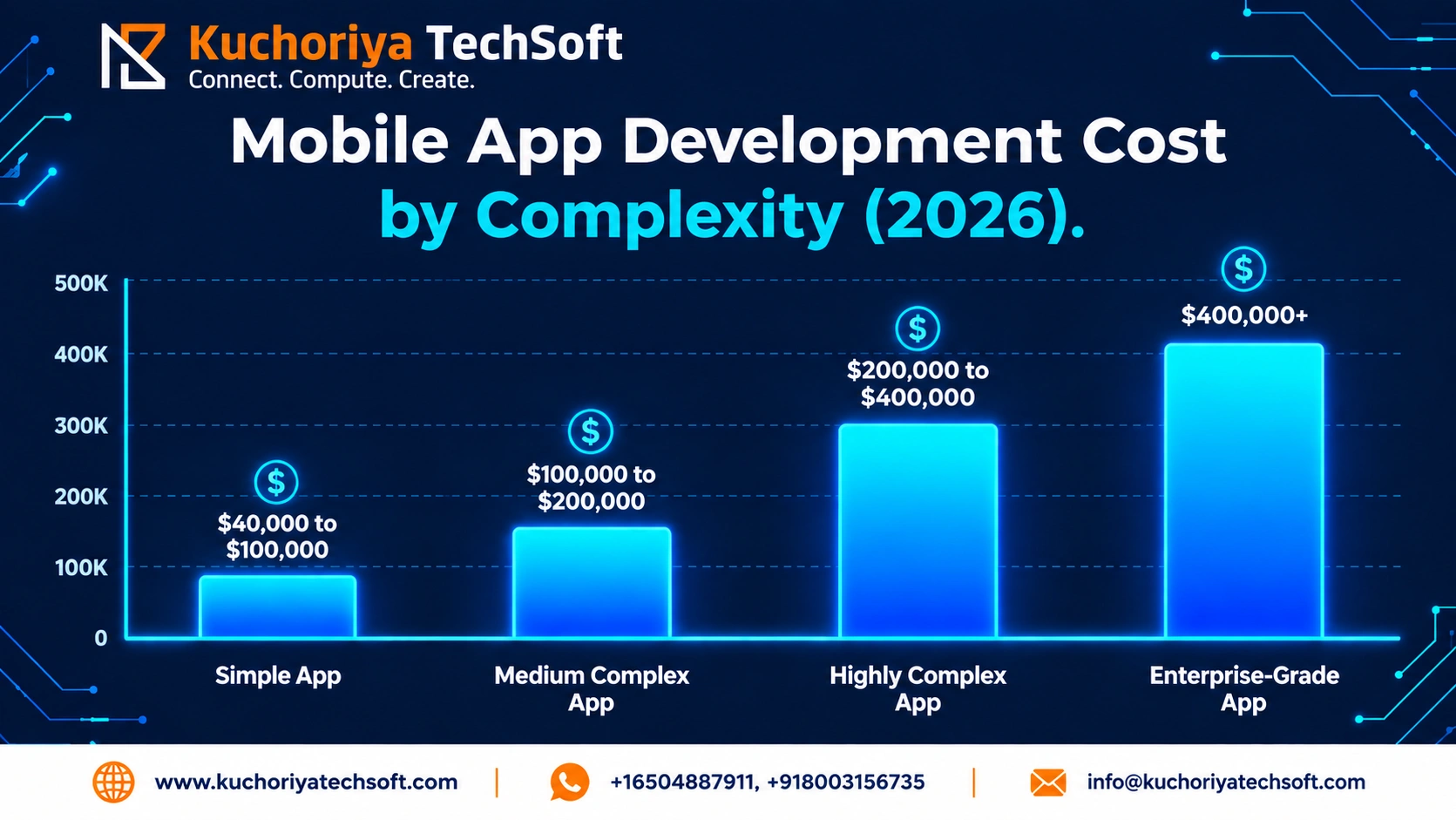
Mobile App Development Cost by Complexity

App complexity moves the budget more than anything else.
How much does an MVP app cost? $15,000, if you strip it down to basics. MVP development cost climbs fast the moment you add anything beyond that.
Healthcare app development starts around $80,000. HIPAA compliance work happens before any screen gets designed.
Every tier above still needs real mobile software development work. Screens get built. Data has to move correctly. Testing takes time either way.
_1789706551012.webp)
What Factors Affect Mobile App Development Cost?
No two projects land at the same number for the same reasons. Here's what actually moves the needle.
1. Backend Architecture
Simple storage and basic login logic stay cheap to build. Real-time data sync, live updates, or heavy server-side processing push costs up fast because the backend does more work behind every screen.
2. Travel App Development
Travel app development brings its own cost baggage. Live inventory sync with airlines, hotels, and booking partners means constant API work, and that integration rarely comes cheap.
3. App Development Lifecycle
Every stage of the app development lifecycle costs money. Planning, design, build, testing, launch, each needs time and people. Cut corners on any one stage and you'll likely pay for it again during testing or after launch.
4. Development Team Expertise
Professional app developers charge more per hour than junior teams or freelancers picked purely on price. Fewer bugs and fewer rebuilds usually offset that gap over the full project.
5. Team Location
Where your team sits changes the bill too. Mobile app developers in India typically charge less per hour than teams in the US or UK. That's the main reason so many companies outsource to keep budgets in check.
How App Features Impact Development Pricing

Two apps with the same idea can cost completely different amounts once you count what's actually built into them.
1. UI/UX Design
UI/UX design eats up more of the budget than most people expect going in. A basic template-based layout stays affordable, but custom animations, unique flows, and polished visual details push the design bill up fast, sometimes before a single line of backend code gets written.
2. Core App Functionality
Every added piece of app functionality adds development hours somewhere. A login screen is quick work. Search filters, in-app chat, or offline mode each need their own build and testing time, and that adds up screen by screen.
3. Food Delivery App Development
Food delivery app development shows this clearly. Live order tracking, restaurant dashboards, and rider apps all run alongside the main customer app, which is really three products bundled into one price tag.
4. AI-Powered Features
AI-powered personalisation sounds like one feature but rarely behaves like one. Recommendation engines need training data, ongoing model tuning, and ongoing hosting cost, none of which shows up in a simple feature list.
5. Team Structure
A dedicated development team costs more upfront than piecing together freelancers, but the tradeoff usually shows up in fewer miscommunications and fewer redone features later in the project.
Mobile App Development Cost by Platform and Technology
Platform choice alone can swing a budget by tens of thousands, before a single feature gets discussed.
Android app development costs vary by device fragmentation. More screen sizes and OS versions mean more testing hours, which shows up directly in the final bill.
How much does an iOS app cost? Usually less to test than Android since Apple controls fewer device variants, but design standards run stricter, so review cycles take longer.
App development cost by platform narrows once frameworks like Flutter or React Native enter the picture. One codebase covers both stores, which cuts the build timeline nearly in half for simple apps.
App compatibility across older devices and OS versions adds hidden QA hours. Skipping this testing phase to save money almost always costs more later in support tickets.
A fitness app development project built for wearables needs deeper OS-level integration than a standard content app, which pushes platform costs up regardless of which framework gets picked.
Mobile app developers in the UK charge closer to US rates than offshore teams, so platform decisions often get paired with a location decision to keep the budget realistic.
Mobile App Development Team and Hourly Rates
Team structure decides more of the final invoice than most people expect walking into a project.
Hidden Costs to Consider When Building a Mobile App
Most budget overruns don't come from the build itself. They come from costs nobody mentioned in the first quote.
- Nobody budgets for post-launch support upfront. Then an OS update breaks something three months in, and suddenly there's an invoice for it.
- Software licensing fees creep in quietly. Design tools, backend services, third-party libraries, each one adds a recurring charge that never made it into the original estimate.
- Real user data changes everything. That's usually when app security and data protection work gets added mid-project, encryption, secure storage, a compliance audit nobody planned for.
- Payment gateways cost more than a flat setup fee. Most third-party integrations carry ongoing transaction charges too, and those rarely get mentioned upfront.
- A real estate app development
- project needs map APIs and listing syndication. Both come with separate monthly bills that stack fast.
- Hosting looks cheap in month one. Cloud services scale with user count, so storage and bandwidth costs can quietly triple by month six.
Mobile App Development Timeline: How Long Does It Take?
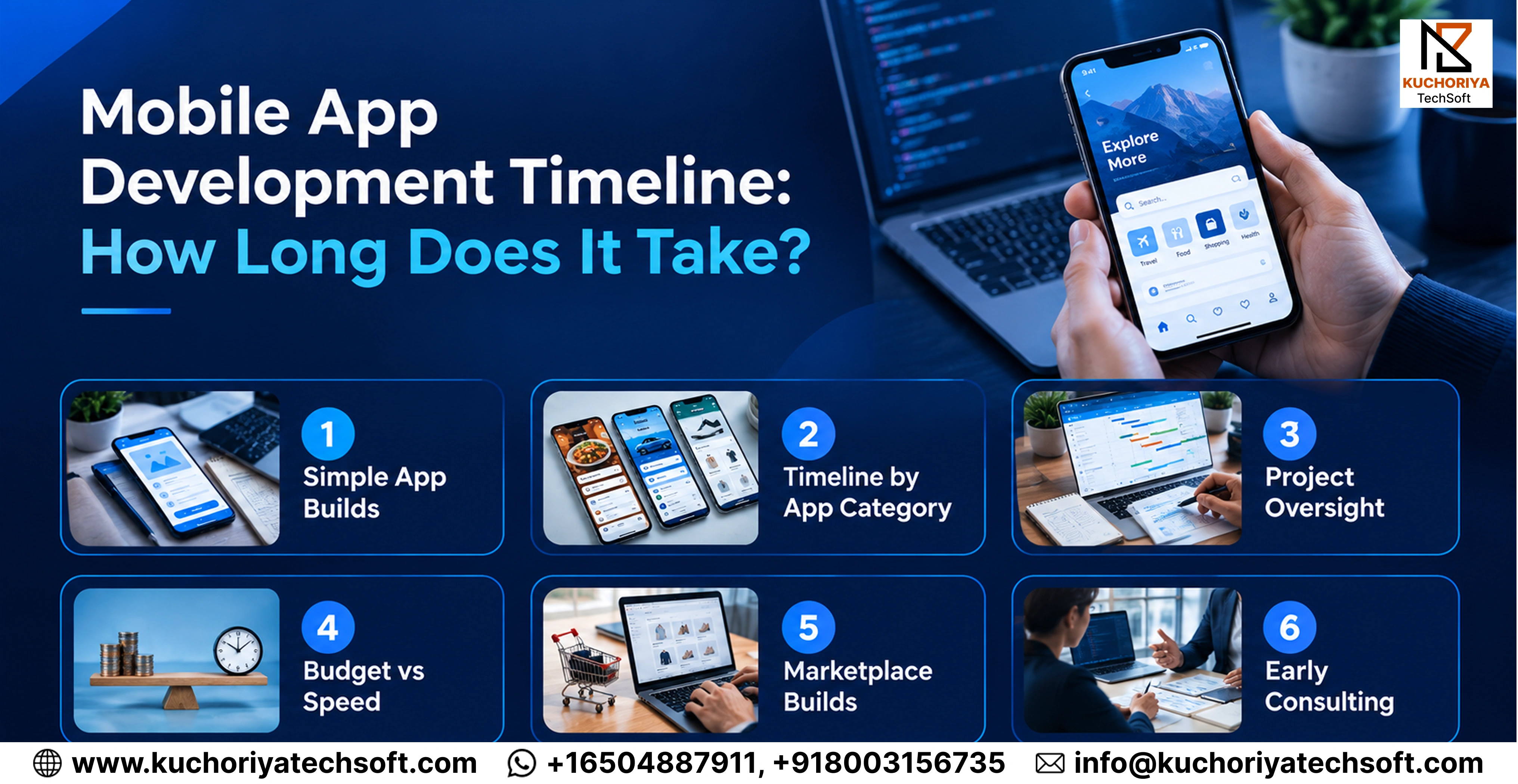
Timeline swings almost as much as cost does. The two usually move together, whether anyone plans for it or not.
1. Simple App Builds
A basic app with a handful of screens can ship in eight to twelve weeks. Add backend complexity and that window stretches fast.
2. Timeline by App Category
App development timeline depends on category more than anything else. A content app moves quicker than one handling payments or live data sync.
3. Project Oversight
Weak project management turns a three-month build into a six-month one. Someone has to own the schedule, or deadlines slip week by week without anyone noticing.
4. Budget vs Speed
Mobile app development budget and timeline pull against each other constantly. Rushing a build usually means paying more for extra developers just to hit the same deadline.
5. Marketplace Builds
A marketplace app development project takes longer than most estimates suggest. It needs two connected experiences, buyers and sellers, built and tested together.
6. Early Consulting
Bringing in technical consulting early catches scope problems before they turn into delays. Skipping this step is how projects end up months behind schedule.
What Does Mobile App Maintenance Cost?
Most teams budget for the build and forget maintenance exists until the first bill shows up.
- Mobile App Maintenance Services usually land between 15 and 20 percent of the original build cost, every single year. Bug fixes, server upkeep, small updates, it all adds up quietly.
- Testing doesn't end at launch. Mobile app testing and QA has to keep running, because a new OS version can break something that worked fine last month.
- Security patches. Dependency updates. Performance tuning. Software maintenance covers all of it, and none of it is optional if the app needs to keep working.
- Put cost to build a mobile app next to a year of upkeep and the gap is bigger than most founders expect walking in.
- On-demand app development projects need closer watching than most. Live tracking and real-time features tend to break first when something updates upstream.
How to Reduce Mobile App Development Costs Without Sacrificing Quality
What is the cheapest way to develop a mobile app? There's no single trick, but a few decisions consistently save money without gutting quality.
1. Pick a Cross-Platform Framework
Flutter app development covers iOS and Android with one codebase, which cuts build time nearly in half. Fewer developers needed, fewer billable hours, same end result.
2. Add AI Where It Actually Helps
Machine learning app development sounds expensive going in, but pre-built models usually cost less than writing custom recommendation logic from scratch.
3. Move to the Cloud Early
Cloud app development skips the upfront cost of physical servers entirely. Only pay for what gets used, and scale up when the app actually needs it, not before.
4. Optimize Before Adding Features
App performance optimization early in the build stops small issues from turning into expensive rewrites down the line. Fixing lag after launch always costs more than catching it early.
5. Skip Unnecessary Complexity
A social networking app development project doesn't need every feature live on day one. Launch with the core functionality first, add the rest after, and the first invoice stays lower.
Build Smarter, Spend Smarter
Mobile app development cost in 2026 comes down to one thing, matching the build to the actual goal instead of chasing every feature at once. A clear scope, the right team, and the right platform choice save far more than any late-stage discount ever will.
Businesses exploring a bigger build often start through the Referral Partner Program, which connects growing companies with vetted development partners before a single line of code gets written.
Agencies and consultants looking to expand their own service offering can join as an Associate Partner and bring app development into client conversations without building an in-house team.
For teams that need ongoing technical direction without hiring full-time, Fractional CTO services cover architecture decisions, vendor evaluation, and cost planning across the entire build, so nothing gets missed between planning and launch.

FAQs About Mobile App Development Cost
Q. How much does it cost to build an app?
A. Depends entirely on complexity. A basic build can start around $15,000, while a fully custom app with backend work, integrations, and advanced features can run past $250,000.
Q. What does mobile application development cost typically include?
A. Mobile application development cost covers design, backend architecture, testing, and deployment work. Maintenance gets billed separately, and it rarely shows up in that first quote.
Q. Does the cost to develop a mobile app change by platform?
A. It does. Building the cost to develop a mobile app for both iOS and Android together runs higher than launching on one platform first and expanding once it proves out.
Q. How is mobile app development pricing calculated?
A. Most agencies base mobile app development pricing on hourly rates multiplied by estimated build time, then adjust that number for team location and how complex the project actually is.
Q. What is the average app development cost across industries?
A. Average app development cost lands around $60,000 for something market-ready. Fintech and healthcare builds usually run higher because of compliance work baked into the process.
Q. Is there a reliable app development cost calculator?
A. Not really. Most app development cost calculator tools online give a rough ballpark at best. A detailed quote from an actual team beats any calculator every time.
Q. What is included in the mobile app development cost beyond design and build?
A. Third-party API fees, cloud hosting, app store submission charges, and and post-launch bug fixes, these expenses rarely make it into the first conversation but always show up eventually.