






Introduction to ParkMobile Clone App Development
Ever circled the same block three or four times just looking for a spot? Most city drivers have. That everyday headache is part of why ParkMobile clone app development has picked up so much interest lately.
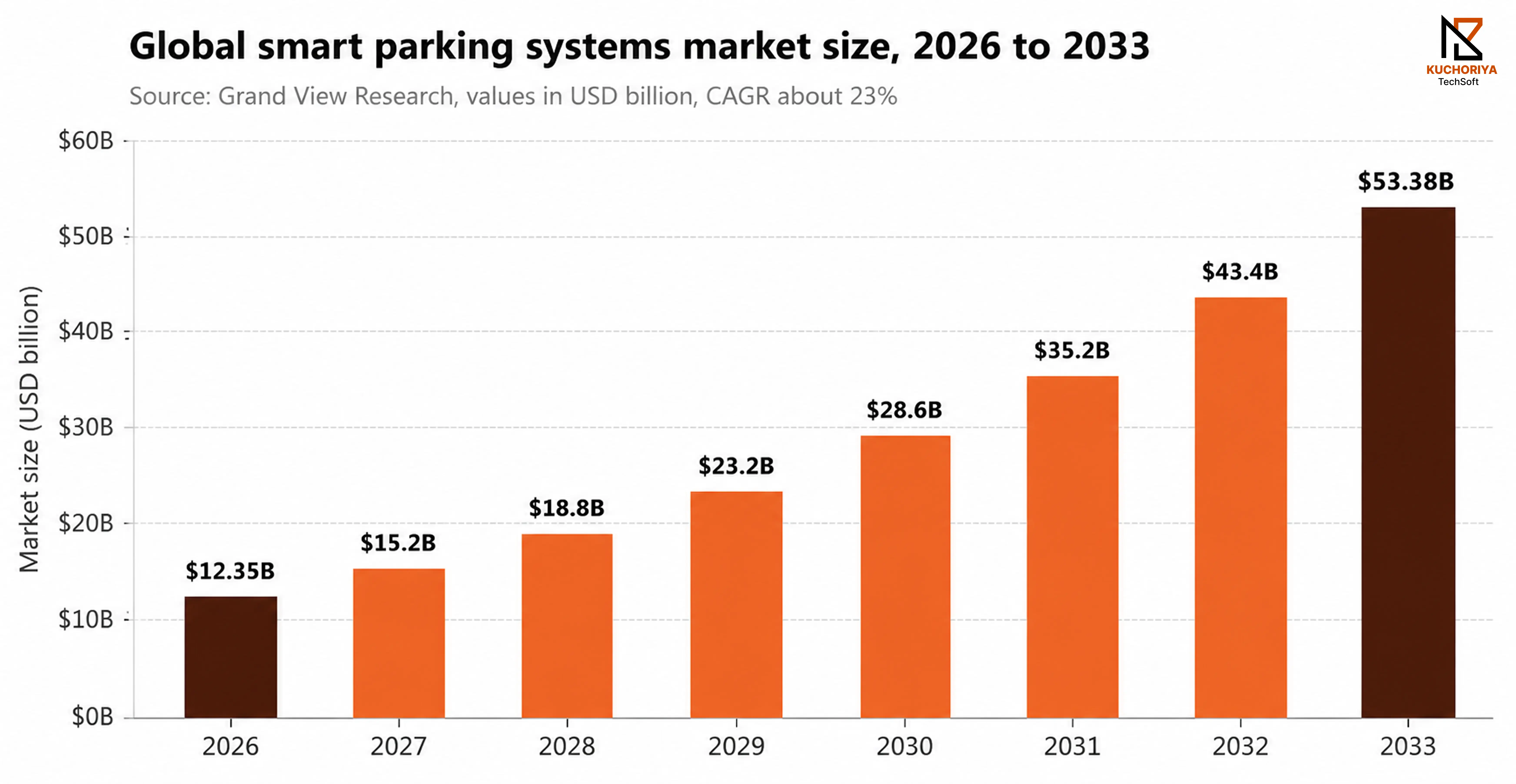
A few numbers worth knowing. Grand View Research values the global smart parking systems market at about 10.2 billion dollars for 2025, and growth from here isn't slow either, past 20 percent a year through 2033. In North America, the parking meter apps piece alone brought in 2.5 billion dollars back in 2024, and it's on track to cross 4 billion by 2033.
And it's not just congestion in big cities pushing this. Mall operators, airport authorities, private lot owners, they're all catching on that a parking app like ParkMobile isn't just handy for drivers. It brings in real, steady revenue on their end too.
Building something like this isn't complicated once you know what actually goes into it. Up next: the features worth including, a realistic ParkMobile clone app cost, and where parking app trends 2026 are headed. Nothing fluffy, just what you need to plan this properly.
What Is ParkMobile and Why Is It So Popular?
Remember digging through your car for quarters just to feed a meter? ParkMobile got rid of that headache. It's a mobile parking app, plain and simple, search for a spot, reserve it, pay from your phone, done. No wonder it caught on fast in so many US cities.
- It's not just a payment tool. Think of it as a parking locator app too, it shows you what's open before you drive there and start circling.
- The GPS parking app side of things pulls live availability based on exactly where you are.
- Street spots, garages, stadium lots on game day, ParkMobile covers most of it.
- Commuters use it daily. Tourists use it once and never forget it. Either way, it works as a real smart parking solution, not just another app taking up space on your phone.
Why Businesses Are Investing in ParkMobile Clone App Development
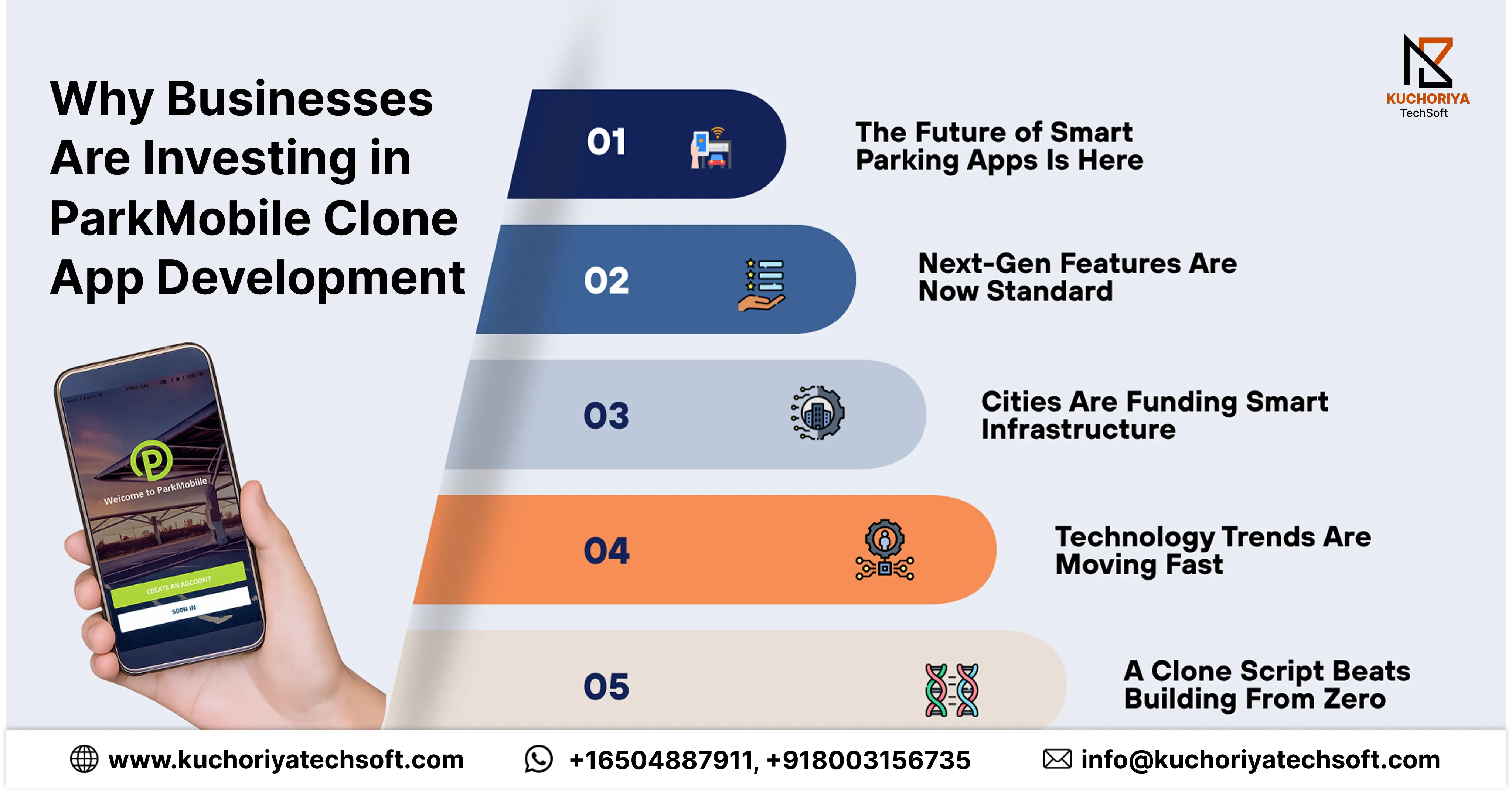
Parking used to be an afterthought for property owners. Not anymore. Operators, malls, and city planners are now treating it as a real digital revenue channel, one that's only growing as urban traffic gets worse.
1. The Future of Smart Parking Apps Is Here
Cities aren't slowing down on vehicle numbers anytime soon. Every operator who digitizes now is positioning ahead of the curve instead of scrambling to catch up later, which is exactly where the future of smart parking apps is headed.
2. Next-Gen Features Are Now Standard
AI-based routing, dynamic pricing, predictive occupancy, these aren't nice-to-haves anymore. They're the baseline businesses are expected to offer as part of next-gen parking app development.
3. Cities Are Funding Smart Infrastructure
Municipal projects are actively funding connected parking systems under smart city parking solutions 2026 initiatives. Operators with app-ready systems get first pick of these partnerships.
4. Technology Trends Are Moving Fast
Contactless payments, license plate recognition, IoT sensors, the space is shifting quickly. Businesses tracking parking industry technology trends closely capture the most loyal users early.
5. A Clone Script Beats Building From Zero
Starting from a proven ParkMobile clone script cuts both development time and risk, letting businesses launch and start earning months sooner than a custom build from scratch.
Must Dive: Smart Parking Systems: How Technology Is Solving Urban Parking Problems
License Plate Recognition (LPR): A Game-Changer for Parking Operations
Smart Car Rental App Development with AI: Automation, Personalization, and Growth

Must-Have Features of a ParkMobile Clone App
A parking app lives or dies by its feature set. Get this part wrong and no amount of marketing saves it. Here's what actually needs to be in there, broken down by who's using it.
Driver App Features
- Real-Time Spot Search – This is the core of any real-time parking availability feature, showing drivers exactly which spots are free before they even leave home.
- One-Tap Booking – A smooth in-app parking reservation feature means users lock in a spot in seconds, not minutes.
- Contactless Checkout – Support for contactless parking payments through cards, wallets, or saved methods, no fumbling for cash at the gate.
- Clean Navigation – Solid parking app UI/UX design keeps the whole booking flow simple enough that first-time users don't need a tutorial.
Parking Operator Features
- Live Occupancy View – Operators can glance at a dashboard and instantly see which spots are taken and which aren't, so pricing and space calls happen on the spot, not after the fact.
- Pricing That Moves With Demand – Rates can shift based on the hour, the day, or a nearby event, all without anyone touching a single line of backend code.
- Digital Parking Management – Full digital parking management tools replace manual logs, tickets, and guesswork with clean, trackable data.
Admin Panel Features
- Multi-Lot Oversight – Solid parking app admin panel features let a single dashboard manage dozens of locations at once.
- Revenue and Usage Reports – Automated reporting saves hours of manual reconciliation every week.
- Role-Based Access – Clear separation in driver app vs operator app features keeps each user seeing only what's relevant to them.
Put together, these cover the must-have features in a parking app and the broader parking app essential features that any serious ParkMobile clone app features list should include from day one.
Advanced AI and Smart Parking Features for 2026
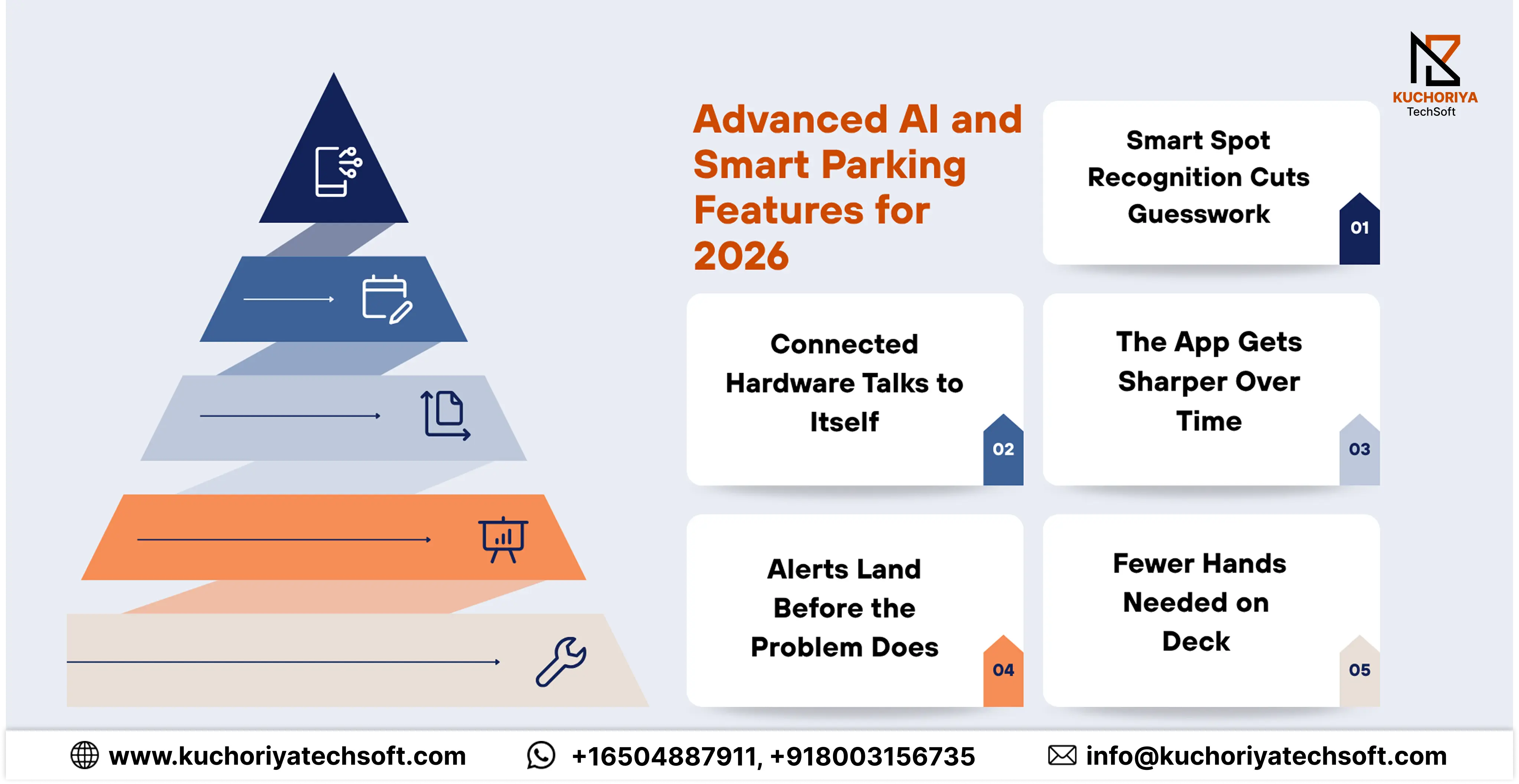
A parking app in 2026 isn't just a booking tool anymore. It's starting to think on its own, and most of that shift comes down to how far AI in parking apps has come in just a couple of years.
1. Smart Spot Recognition Cuts Guesswork
AI-powered parking space detection uses camera and sensor feeds to confirm a spot is genuinely empty, not just marked free on some outdated map that hasn't synced in hours.
2. Connected Hardware Talks to Itself
IoT parking system integration links sensors, gates, and payment terminals into one live feed, instead of each piece running its own disconnected little system.
3. The App Gets Sharper Over Time
With machine learning parking app development, demand forecasts improve the longer the app runs, learning from actual patterns instead of static assumptions.
4. Alerts Land Before the Problem Does
Predictive parking analytics flags a zone as likely to fill up before drivers even leave the house, not after they've already circled the block twice.
5. Fewer Hands Needed on Deck
Smart parking automation handles gate control, pricing shifts, and enforcement on its own, cutting down how much staff has to step in manually.
Best Tech Stack for Building a Parking App Like ParkMobile
Picking the right tech stack early saves months of pain later. Here's what actually holds up at scale for a platform like this.
1. Mobile Layer Built for Speed
React Native parking app development is the go-to choice here, one codebase covering both iOS and Android without sacrificing performance on either side.
2. Solid Groundwork Underneath
Getting the parking app backend architecture right early means the app can handle spikes in traffic, like a stadium event or a busy Friday night, without buckling.
3. Every Piece Needs to Talk to the Others
Payment gateways, mapping services, IoT sensors, none of it works in isolation. Good parking app API integration ties these together so the app behaves like one system instead of a bunch of parts stitched together after the fact.
4. Hosting Has to Keep Up With Demand
Nobody notices good hosting until it fails. Solid cloud infrastructure for parking apps means the difference between a quiet Tuesday afternoon and a packed stadium night doesn't break anything; it just scales.
5. Choosing the Right Overall Stack
Landing on the best tech stack for parking apps usually means pairing a mobile-first framework with a flexible backend and cloud hosting; that combination is what most current parking app development technology setups lean on.
Read Related Insights: How Car Rental App Development Stops Your Business From Losing Bookings
Car Rental App Marketing Guide: Proven Strategies to Grow Your Business in 2026
How Much Does ParkMobile Clone App Development Cost in 2026?
Cost is usually the first real question once features are locked in. Makes sense, nobody wants to plan a build blind. Here's a realistic parking app cost estimate 2026, split across three build sizes that cover most operators.
An MVP parking app cost stays on the lower end for a reason, it's meant to prove the idea works, not launch with every bell and whistle attached. Most operators start small here, get real bookings flowing, then build out from there once demand backs it up.
What actually pushes the number up or down: how many platforms you need, how deep the AI and IoT work goes, and how many lots or cities the app has to cover right away. That's really the parking app development cost breakdown behind any quote you'll get.
So how much does a ParkMobile clone cost in practice? For most mid-size operators, something between MVP and mid-scale covers a solid, launch-ready build. Getting exact parking app development pricing means sharing your feature list and lot count, since no two builds land on the same number.
Revenue Model: How Parking Apps Make Money
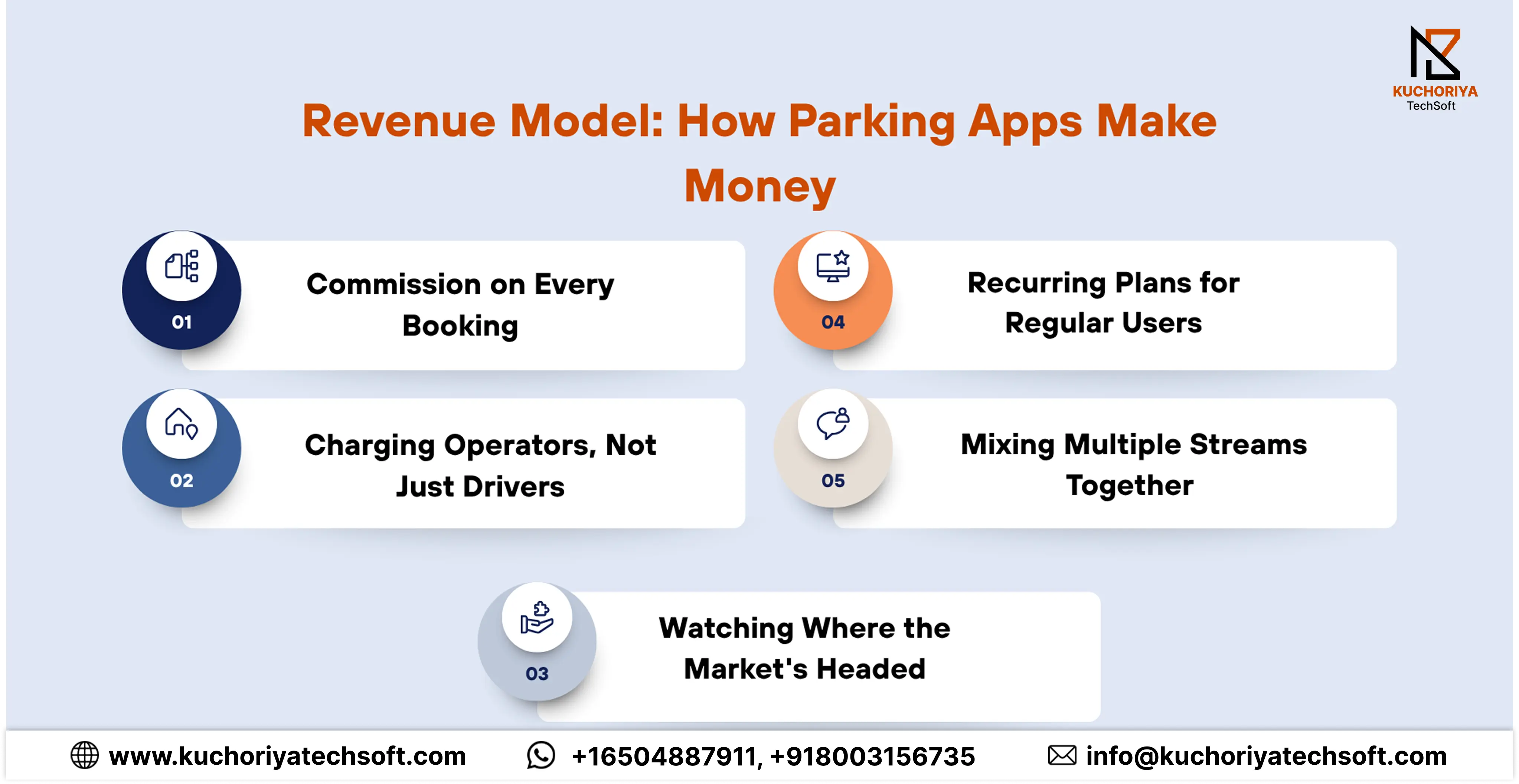
Building the app is half the story. The other half is figuring out how it actually earns, and there's more than one way to make a solid parking app revenue model work.
1. Commission on Every Booking
Most platforms lean on a commission-based parking app model, taking a small cut from each transaction. It scales naturally, more bookings just means more revenue without changing the pricing structure.
2. Recurring Plans for Regular Users
A subscription model for parking apps works well for daily commuters who'd rather pay a flat monthly fee than get charged per session.
3. Charging Operators, Not Just Drivers
Some platforms flip the model entirely, charging lot owners a licensing or listing fee to appear on the app instead of taking a driver-side cut.
4. Mixing Multiple Streams Together
The strongest parking app monetization strategies rarely rely on just one method. Combining commissions, subscriptions, and premium features tends to hold up better long-term.
5. Watching Where the Market's Headed
Heading into a parking app business model 2026 setup, dynamic pricing and AI-driven demand forecasting are starting to shape how operators price their commission tiers.
That's essentially how parking apps make money today, a mix of transaction fees, subscriptions, and operator partnerships working together.
Step-by-Step Process to Build a Parking App Like ParkMobile
Building a parking platform isn't a single leap, it's a handful of deliberate steps, each one setting up the next. Here's roughly how it plays out from idea to launch.
- Nail down the business model first. Lock in the ParkMobile business model you're chasing, commission-based, subscription, or a mix, before a single line of code gets written.
- Choose the tech stack early. The ParkMobile clone tech stack decision shapes everything downstream, from how fast features ship to how well the app scales later.
- Build the core loop before extras. Spot search, booking, and payment come first. Teams working on parking finder app development usually get this part live before touching admin tools.
- Borrow from adjacent industries. A lot of what goes into fleet management software development overlaps with tracking and asset visibility, useful if the platform ever expands past single-lot parking.
- Pilot regionally before scaling. Companies doing smart parking app development San Francisco or a ParkMobile clone development company in Miami-style rollout usually test in one city first, then expand once the kinks are worked out.
Interested Dives: Top Car Rental App Development Solutions for Startups and Enterprises
How to Build an AI-Powered Car Rental App Like Uber: Features, Cost, Tech Stack, Fleet Management
Challenges in Parking App Development and How to Overcome Them
No build goes perfectly smooth. A few recurring roadblocks show up across most parking app projects, here's what they are and how teams actually get past them.
1. Integration Gets Messy Fast
Sensors, payment gateways, mapping APIs, connecting them all sounds simple until you're actually doing it. Borrowing patterns from AI in logistics software helps, since logistics platforms juggle similar real-time data.
2. Scaling Across Multiple Lots
A single-lot app is easy. Dozens of lots gets complicated fast. Lessons from AI in fleet management systems apply well here, tracking many assets shares the same logic as tracking many parking spots.
3. Predicting Demand Accurately
Occupancy shifts by day, weather, and local events. Teams pulling from proven logistics app development solutions solve this faster, since demand forecasting isn't new, just applied differently.
4. Keeping Costs Under Control
Feature creep is real. Scope tends to balloon mid-build unless the roadmap stays locked from the start, with only essential additions approved along the way.
Future Trends in Smart Parking Applications
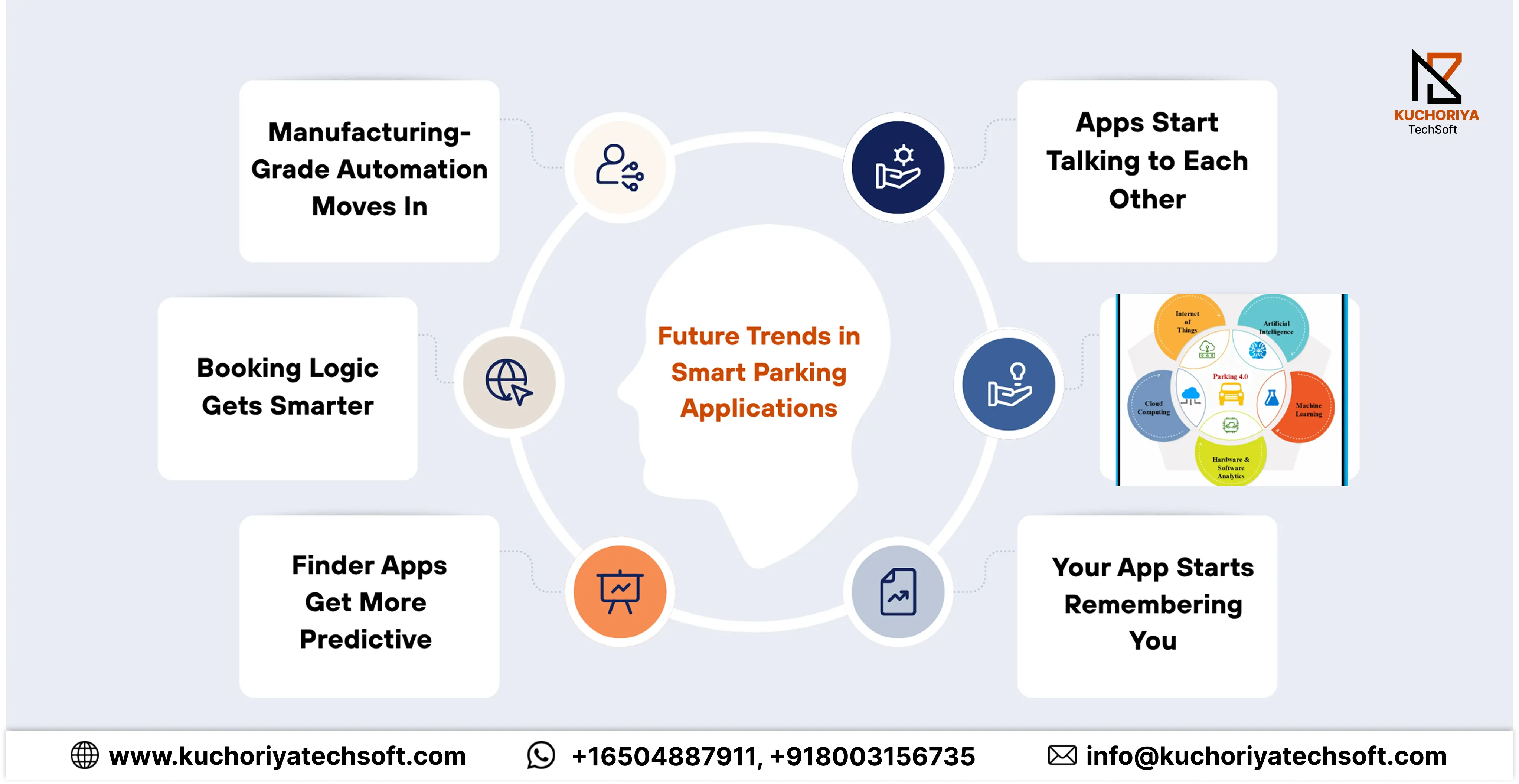
Parking tech isn't standing still; it's borrowing ideas from other industries fast. Here's where things are headed.
1. Manufacturing-Grade Automation Moves In
Ideas from AI in manufacturing automation are showing up in large parking structures, automated systems managing space with almost zero manual input.
2. Booking Logic Gets Smarter
Patterns from AI in taxi booking solutions are shaping how parking apps handle demand-based pricing and instant availability matching.
3. Finder Apps Get More Predictive
AI in parking finder apps is shifting from showing what's open now to predicting what'll be open in ten minutes.
4. Apps Start Talking to Each Other
Traffic data, transit schedules, ride-hailing activity, parking platforms are starting to pull all of it in instead of working off their own isolated numbers. The result is smarter real-time calls, not just guesses.
5. Your App Starts Remembering You
Regular spots, favorite lots, saved payment methods, apps are getting better at holding onto this stuff. Over time, booking turns into basically one tap instead of a whole flow.
Why Choose Kuchoriya Techsoft for ParkMobile Clone App Development?
Plenty of teams can write code. Fewer have actually shipped mobility platforms across multiple markets, that's where working with us makes a real difference.
1. You Get Cross-Industry Experience Baked In
Our work spanning AI in car rental platforms, taxi booking app development, and ride sharing app development means your parking app benefits from routing and matching logic that's already been battle-tested elsewhere.
2. Your Build Moves Faster
As a car rental app development company with hands-on smart transportation app development work behind us, we're not learning on your dime, the overlap in real-time tracking cuts your timeline down.
3. You're Backed by Local Delivery Experience
We're recognized among the best parking finder app developers in Chicago and active in parking app development services in Los Angeles, so you're not our first rollout in a competitive US market.
4. You Deal With One Team, Not Five
Backend, admin panels, app store submission, it all stays under one roof for you. No handoffs, no vendors pointing fingers at each other when something breaks.
Conclusion: Is a ParkMobile Clone App Worth Building in 2026?
Given where the market's headed, the answer's a clear yes. With the future of smart parking apps leaning hard into automation and smart city parking solutions 2026 getting real municipal backing; operators who move now have a real head start.
If you're ready to build, working with a parking app development agency USA businesses actually trust makes the difference between a rushed launch and one that scales. Whether you need full ParkMobile clone app development, want to explore our Referral Partner Program, or need Fractional CTO services to guide the technical roadmap, we're set up to help from day one. Reach out to get the conversation started. 
Frequently Asked Questions About ParkMobile Clone App Development
Q. Do you handle ParkMobile clone app development for businesses in New York?
A. Yes. ParkMobile clone app development New York is one of our regular project types, covering multi-lot networks, garage operators, and event venue parking across the city.
Q. What's the typical parking app development cost in California?
A. It varies, but most parking app development cost in California quotes start around $15,000 for an MVP and climb from there depending on how many features and lots you're covering.
Q. Are there smart parking app builders in Texas who understand local operator needs?
A. We work with smart parking app builders in Texas regularly, including multi-city rollouts and integrations with lot management systems that are already in place.
Q. Is there a parking app development company in Austin experienced with this kind of build?
A. Yes, our team has delivered as a parking app development company in Austin, everything from an early MVP to a full enterprise platform.
Q. How long does building a parking app usually take?
A. An MVP typically wraps in 8 to 12 weeks. If you're going for a full enterprise build with AI and IoT baked in, expect somewhere around 4 to 6 months, scope really drives the timeline here.