
In 2026, businesses evaluating Software Development Cost in California (2026) are facing noticeably higher budgets compared to previous years. On average, mid-scale software projects now require 30–40% more investment than they did just three years ago, primarily due to increased demand for senior engineers and complex digital ecosystems.
Recent market benchmarks indicate that Software Development Rates in California commonly range between $120 to $200 per hour, depending on expertise and project requirements. For full-cycle projects, the overall Cost of Software Development in California often starts from $80,000–$120,000 for basic platforms and can exceed $300,000+ for enterprise-grade solutions. This pricing reality has pushed many decision-makers to reassess budgeting strategies before initiating development.
From a business and marketing perspective, an accurate understanding of Software Development Pricing in California directly impacts go-to-market timelines, funding conversations, and ROI forecasting. Startups that underestimate development costs are statistically more likely to delay launches, while companies that plan budgets with data-backed assumptions achieve faster delivery and smoother scaling.
By combining cost benchmarking with strategic planning, Kuchoriya TechSoft supports businesses in setting realistic expectations, aligning investment with growth objectives, and avoiding the financial surprises that often derail software projects in competitive markets.
Key Factors Affecting Software Development Cost
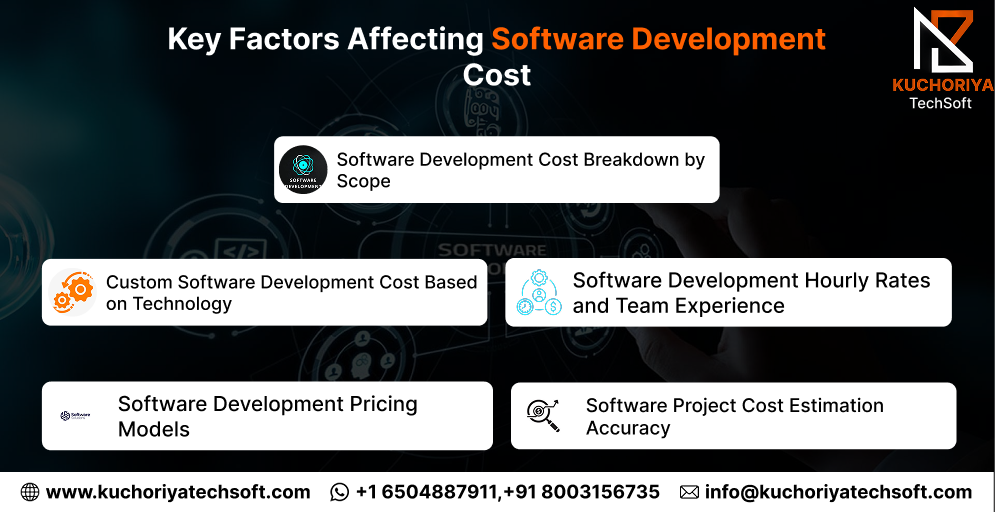
In 2026, accurate budgeting depends on understanding the variables that directly impact Software Development Cost across different project types and business models.
1. Software Development Cost Breakdown by Scope
Project scope is the biggest pricing driver. Applications with advanced dashboards, third-party integrations, and scalable architecture increase the overall Software Development Cost Breakdown due to higher engineering effort and testing cycles.
2. Custom Software Development Cost Based on Technology
The choice of framework and platform affects timelines and expertise requirements. AI-driven systems, SaaS platforms, and cloud-native products significantly raise Custom Software Development Cost compared to standard applications.
3. Software Development Hourly Rates and Team Experience
Senior engineers, architects, and specialists command higher Software Development Hourly Rates, but they reduce long-term expenses by minimizing rework. Cheaper teams often increase total cost due to delays and quality issues.
4. Software Development Pricing Models
Selecting the right engagement approach impacts budget control. Fixed-scope contracts, milestone-based billing, and agile models all influence Software Development Pricing depending on flexibility and risk tolerance.
5. Software Project Cost Estimation Accuracy
Poor estimation is a leading cause of budget overruns. Detailed planning, realistic timelines, and clear documentation improve Software Project Cost Estimation, helping businesses forecast investment more reliably. This disciplined planning approach is a core strength of Kuchoriya TechSoft.
Must Read: Software Development Costs in Austin, Texas (2026)
Software Development Cost Breakdown by Project Type
Understanding how different project types impact budgets is essential for accurate Software Development Cost planning. Each project category requires unique resources, skill sets, and timelines, affecting the overall investment.
1. MVP Development Cost
Minimum Viable Products are designed for fast market entry. MVP Development Cost typically ranges from $40,000–$80,000, depending on feature complexity and platform. Early-stage startups benefit from MVPs by validating ideas with minimal risk.
2. Enterprise Software Development Cost
Large-scale platforms with multi-user support, integrations, and compliance needs fall under Enterprise Software Development Cost. Such projects often start from $200,000 and can exceed $500,000, reflecting advanced architecture and robust security requirements.
3. SaaS Development Cost
Subscription-based platforms require scalable cloud infrastructure, automated workflows, and multi-tenant support. SaaS Development Cost typically begins at $100,000 for basic versions and grows with features and integrations.
4. Web Application Development Cost
Web applications vary from internal tools to customer-facing platforms. Web Application Development Cost is influenced by UI/UX complexity, backend architecture, and third-party integrations, generally ranging between $60,000–$150,000.
5. Mobile App Development Cost
Native and cross-platform apps demand specialized skills. Mobile App Development Cost depends on OS, user interactions, and third-party services, with typical budgets from $50,000–$200,000. Well-planned apps ensure faster adoption and long-term ROI.
Software Development Cost Table (2026 Estimates)
Kuchoriya TechSoft helps businesses select the right project type, optimize budgets, and align cost planning with growth objectives, ensuring maximum ROI from every investment.

In-House vs Outsourcing vs Offshore Software Development Cost
Choosing the right development model greatly affects total investment and project outcomes. Understanding cost structures for In-House, Outsourced, and Offshore Software Development helps businesses optimize budgets while maintaining quality and speed.
1. In-House Development Cost
In-house teams provide full control and immediate collaboration but require salaries, benefits, and infrastructure. Hire Software Developers Cost for an in-house team can range from $150,000–$250,000 per year for a small specialized team, making it suitable for long-term strategic projects.
2. Outsourced Development Cost
Outsourcing to local vendors reduces operational overhead. Dedicated Development Team Cost for outsourcing depends on vendor rates and project scope, generally $100–$180 per hour, offering predictable costs without permanent staffing commitments.
3. Offshore Development Cost
Offshore teams provide cost efficiency for scalable projects. Offshore Software Development Cost Comparison shows typical rates between $40–$80 per hour, making it ideal for startups or projects with flexible timelines, though communication and timezone coordination must be managed carefully.
4. Quality vs Cost Consideration
Lower cost options may save money upfront, but can increase long-term expenses due to rework or delays. Balancing expertise, quality, and price is key, a strategy Kuchoriya TechSoft applies by matching teams to project requirements.
5. Strategic Model Selection
The right mix of in-house, outsourced, or offshore resources ensures optimized project delivery and maximum ROI. Businesses that strategically select a hybrid model often achieve faster timelines and better cost efficiency.
In-House vs Outsourcing vs Offshore Cost Comparison Table (2026)
Kuchoriya TechSoft guides businesses to choose the most effective model for their projects, ensuring cost optimization without compromising quality or delivery speed.
Software Development Cost by Technology and Industry

The technology stack and industry sector strongly influence the overall Software Development Cost. Projects with advanced features or strict compliance requirements require specialized expertise, which directly affects budgets. Strategic cost planning ensures maximum ROI while avoiding overspending.
1. AI Software Development Cost
Artificial intelligence projects require machine learning models, data analysis, and predictive algorithms. AI Software Development Cost for mid-sized projects usually starts at $120,000–$250,000, increasing with complexity and training data requirements. Investing in AI early can significantly improve product competitiveness.
2. SaaS Development Cost
SaaS platforms require cloud infrastructure, multi-tenant architecture, and automated workflows. SaaS Development Cost generally begins at $100,000 and scales with the user base and integrations. Proper SaaS planning reduces operational risks and ensures subscription-based revenue streams are profitable.
3. MVP Development Cost for Startups
Minimum Viable Products are built to validate market demand. MVP Development Cost ranges from $40,000–$80,000, depending on features. A well-designed MVP helps startups attract investors and test assumptions with minimal risk, improving market entry success rates.
4. Web Application Development Cost
Web applications vary from simple internal tools to complex customer-facing platforms. Web Application Development Cost is influenced by UI/UX complexity, backend architecture, and third-party integrations, usually ranging from $60,000–$150,000. Smart design reduces maintenance costs and increases adoption.
5. Mobile App Development Cost
Mobile apps, whether native or cross-platform, require specialized developers. Mobile App Development Cost typically ranges between $50,000–$200,000, based on OS support, user interactions, and integrations. Optimized apps increase user retention and long-term engagement.
6. FinTech Software Development Cost
Financial applications need compliance, high-security standards, and transaction integrity. FinTech Software Development Cost often exceeds $150,000 for enterprise solutions. Careful planning reduces legal risk and improves customer trust.
7. Healthcare Software Development Cost
Healthcare solutions must comply with HIPAA and other regulations. Healthcare Software Development Cost starts around $120,000 for small applications and can rise significantly with advanced features like patient data analytics or telemedicine support. Regulatory adherence ensures safe deployment and reduces liability.
8. E-commerce Software Development Cost
E-commerce platforms need scalable inventory, secure payment gateways, and smooth UX. E-commerce Software Development Cost varies from $70,000–$200,000 depending on features and integrations. Strategic architecture ensures fast load times and higher conversion rates.
9. EdTech, Logistics, and Real Estate Software Development Cost
Industry-specific requirements impact cost:
- EdTech – interactive learning tools, tracking progress, scalable user management
- Logistics – route optimization, real-time tracking, warehouse integration
- Real Estate – property management, listing databases, client engagement tools
Custom Software Development Cost for these sectors is highly variable but planning reduces rework and accelerates deployment.
10. Strategic Planning and Cost Optimization
Aligning technology choices with industry-specific needs allows businesses to control Custom Software Development Cost effectively. Kuchoriya TechSoft provides expertise to map project complexity with realistic budgets, ensuring projects are financially sustainable while maximizing ROI.

Hourly Rates vs Fixed Pricing Software Development Models
Choosing the right pricing model is critical for predictable budgets and efficient delivery. Understanding Software Development Hourly Rates versus Fixed Pricing Software Development Models helps businesses plan investments effectively and optimize ROI.
1. Hourly Rates Explained
Hourly billing charges clients based on actual development hours. Software Development Hourly Rates in California typically range from $120–$200 per hour, depending on developer expertise and technology complexity. This model is flexible for evolving project scopes.
2. Fixed-Price Model Overview
Fixed-price contracts provide a pre-agreed total cost. Software Development Pricing under this model ensures predictable budgets, but any changes in project scope may require renegotiation. It suits projects with clearly defined deliverables.
3. Pros of Hourly Rates
- Flexible for changing requirements
- Pay only for completed work
- Easy to scale team size
Hourly models are ideal for startups or projects testing new features, allowing incremental investment with measurable outcomes.
4. Pros of Fixed Pricing
- Budget predictability
- Defined milestones and deliverables
- Reduced financial risk for the set scope
Businesses preferring certainty often choose fixed pricing for larger or long-term projects.
5. Choosing the Right Model
Hybrid approaches combining hourly and fixed-price components optimize budgets while maintaining flexibility. Kuchoriya TechSoft advises clients on selecting the optimal model based on project complexity, timeline, and ROI goals.
6. Hidden Costs to Consider
Regardless of the model, potential hidden costs—like third-party licenses, integrations, and post-launch support—must be accounted for. Awareness of these factors improves Software Project Cost Estimation and ensures project success.
Software Development Pricing Comparison Table
Virtual CTO and Fractional CTO Services for Cost Optimization

Hiring the right technical leadership can significantly reduce Software Development Cost and improve project success. Virtual CTO and Fractional CTO services provide strategic oversight without the expense of a full-time executive, making them ideal for startups and growth-stage companies.
1. Virtual CTO Services
Virtual CTO Services for Small Businesses allow companies to access high-level technical guidance remotely. These services reduce the need for a full-time CTO while ensuring proper technology strategy, architecture planning, and roadmap execution.
2. Fractional CTO vs Full-Time CTO
Fractional CTO vs Full-Time CTO offers cost efficiency for companies that do not require a permanent technical executive. Fractional CTOs work on a part-time or project basis, delivering expert guidance and reducing overhead costs compared to full-time hiring.
3. Key Benefits of CTO Consulting Services
CTO Consulting Services California and similar advisory offerings help businesses:
- Optimize development budgets
- Reduce rework and technical debt
- Align technology with business goals
- Scale technology teams strategically
Businesses leveraging consulting services report up to 20–30% cost savings on development projects due to better planning and risk mitigation.
4. When to Hire a Virtual CTO
Knowing when to hire a Virtual CTO is critical. Ideal situations include:
- Launching a new product or platform
- Scaling engineering teams without hiring full-time
- Needing expert guidance on cloud migration, security, or technology stack decisions
Hiring a Virtual CTO at the right time prevents costly mistakes and accelerates product delivery.
5. Fractional CTO and Cost Optimization
Fractional CTOs focus on maximizing ROI by balancing cost, team productivity, and technical strategy. Their guidance often reduces unnecessary spending on unnecessary features, redundant tools, or inefficient architectures. Kuchoriya TechSoft provides these services to ensure clients optimize their Software Development Cost while achieving scalable and secure solutions.
6. Strategic Impact
Engaging Virtual or Fractional CTO services allows startups and enterprises to:
- Avoid hiring full-time leadership prematurely
- Maintain expert oversight across projects
- Reduce project delays and budget overruns
With proper leadership, businesses can ensure every dollar spent contributes to measurable growth and operational efficiency.
Read More: Top 10 Software Development Companies in Toronto, Canada (2026)
Why Choose Kuchoriya TechSoft for Affordable Software Development
Selecting the right technology partner directly impacts project success, cost efficiency, and ROI. Kuchoriya TechSoft combines expert technical guidance, strategic planning, and cost optimization to deliver reliable, scalable, and affordable software solutions.
1. Transparent Software Development Pricing
Clients gain clarity on Custom Software Development Cost, avoiding hidden fees or surprise expenses. Transparent budgeting allows businesses to plan effectively and allocate resources strategically.
2. Expertise Across Industries and Technologies
From AI, SaaS, Web, Mobile, FinTech, Healthcare, E-commerce to industry-specific platforms, Kuchoriya TechSoft provides specialized teams for every project type, ensuring high-quality outcomes and optimized Software Project Cost Estimation.
3. Flexible Engagement Models
Whether it’s Dedicated Development Teams, Fractional CTO, or project-based support, flexible models allow businesses to scale resources without overcommitting, reducing overhead while maintaining efficiency.
4. Proven Cost Optimization Strategies
Strategic leadership and process-driven execution help reduce unnecessary spending on features, tools, or delays. Clients often experience 15–25% savings on overall development costs compared to traditional approaches.
5. Focus on ROI and Business Growth
Every solution is designed to maximize business value. By aligning technology with growth goals, Kuchoriya TechSoft ensures software investments translate into measurable performance, faster market entry, and long-term scalability.
Conclusion: Final Software Development Cost Insights for 2026
Understanding Software Development Cost in California (2026) is more than just numbers—it’s about making strategic choices that drive growth, ROI, and long-term success. Businesses that align technology selection, project scope, and expert guidance early can save significant time and money while accelerating product launches.
Partnering with a trusted technology advisor like Kuchoriya TechSoft allows startups, growth-stage companies, and enterprises to navigate complex cost structures with confidence. From affordable MVPs to enterprise-grade platforms, our team ensures every investment maximizes value, reduces technical risks, and prepares businesses for scalable growth.
Ready to take your next digital project to the next level? Contact us today to explore how our services—including Virtual CTO, Fractional CTO, and Custom Software Development—can optimize your costs and drive measurable results. Join our Referral Partner Program to connect and grow with a network of forward-thinking businesses leveraging technology to stay ahead of the curve.
Stay ahead, plan smart, and invest wisely—2026 is the year to turn software development costs into strategic opportunities.

FAQs on Software Development Cost and CTO Consulting Services
Q. What is the average Software Development Cost in California (2026)?
A. The average cost varies by project type and complexity. Mid-sized web or mobile apps typically range from $60,000–$150,000, while enterprise solutions can exceed $300,000. Kuchoriya TechSoft helps businesses plan realistic budgets and avoid unexpected expenses.
Q. How can a Virtual CTO reduce development costs?
A. A Virtual CTO provides strategic technical guidance without the expense of a full-time executive. By optimizing architecture, prioritizing features, and preventing technical debt, businesses can save 20–30% on overall development costs.
Q. Should I choose hourly rates or fixed pricing for my project?
A. Hourly rates offer flexibility for evolving projects, while fixed pricing ensures predictable budgets for clearly defined scopes. Hybrid models often provide the best balance, and Kuchoriya TechSoft advises clients on the optimal choice based on project needs.
Q. What factors most impact Software Development Cost?
A. Key factors include project scope, technology stack, team structure, development timeline, and industry-specific requirements. Strategic planning at the outset reduces unexpected costs and accelerates delivery.
Q. How much does an MVP cost for startups?
A. A Minimum Viable Product typically costs between $40,000–$80,000, depending on features and platform. MVPs enable startups to validate their ideas quickly, attract investors, and keep costs manageable.
Q. Why hire Kuchoriya TechSoft for software development?
A. Kuchoriya TechSoft provides affordable, scalable, and high-quality solutions across industries. Services include Custom Software Development, Virtual CTO, and Fractional CTO offerings, ensuring projects stay on budget while maximizing ROI.
Q. Are offshore development teams cost-effective?
A. Yes, offshore teams can reduce hourly costs to $40–$80, making them ideal for scalable projects. Proper planning, communication, and oversight ensure quality is maintained alongside cost savings.