




The Evolution of Mobile Apps in 2026: A Canadian Perspective
The economy of Canada’s top mobile app development company is growing faster, with over $6.2 billion. More than 70% of Canadian businesses have become mobile-first. The high-performance Toronto app development company is Toronto is positioned among the top 5 tech ecosystems in North America. This way, Toronto is attracting global investments from the top companies.
But growth alone isn't the story. What's changed in 2026 is how apps are being built. Businesses across Ontario looking to hire dedicated mobile app developers now expect on-device processing and privacy-first architecture as standard. Canada's Bill C-27 (CPPA) has made data security a legal obligation, not a feature. Businesses that are still treating mobile as an afterthought aren't just behind, they're losing ground every day to competitors who aren't.
At Kuchoriya TechSoft, as a trusted mobile app development company in Toronto with 1,000+ deliveries across 100+ industries, we've built our entire process around exactly where the market is heading, not where it has been.
Top 5 Mobile App Development Trends Dominating Canada (2026)
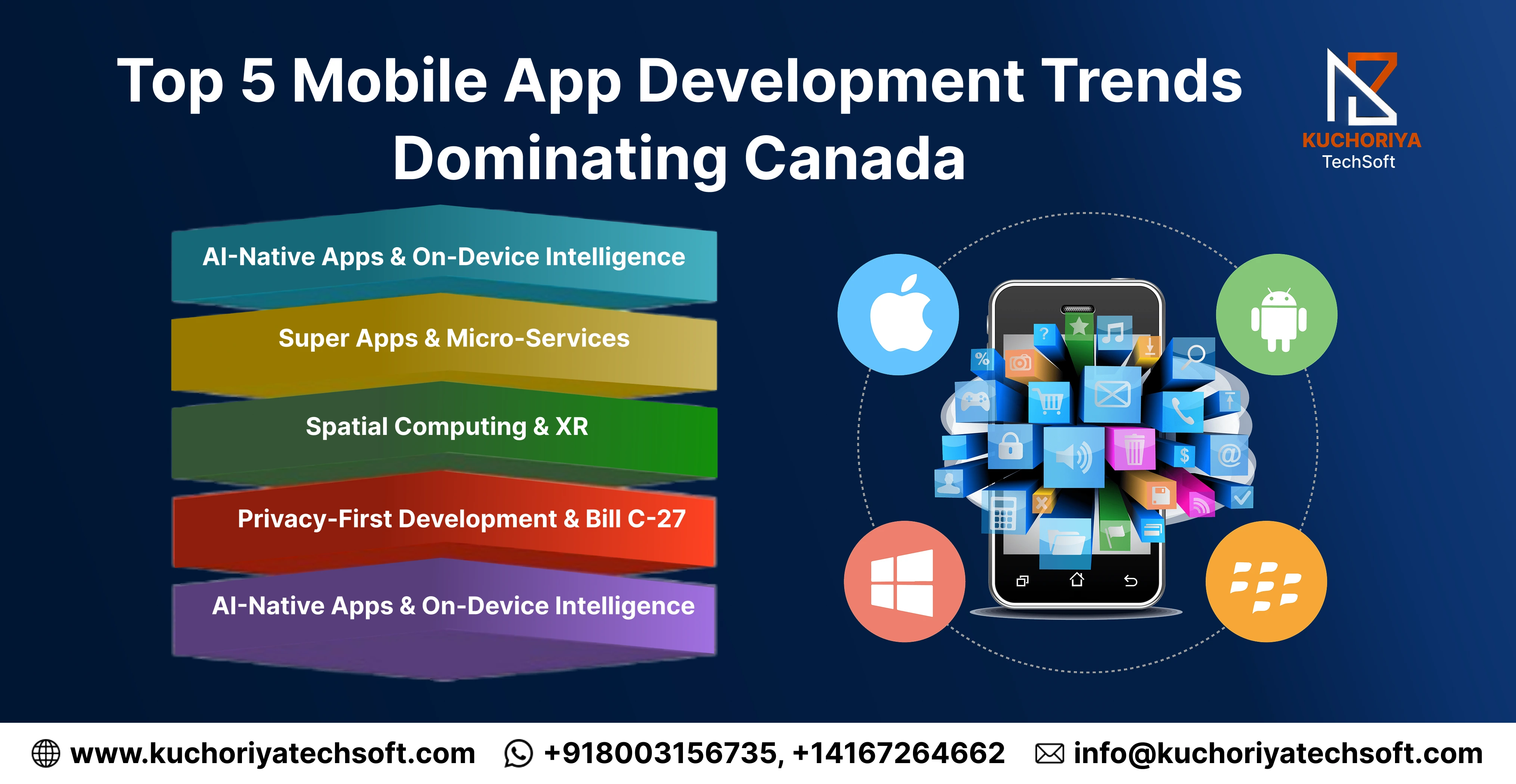
1. AI-Native Apps & On-Device Intelligence
Gone are the days of simple chatbots. In 2026, Canadian businesses are deploying AI agents that take actions and adapt to users in real time, all processed directly on the device. For the best iOS and Android app development, every custom mobile app development company worth hiring now treats on-device intelligence as a foundation, not a feature.
2. Super Apps & Micro-Services
Toronto and Vancouver startups are done building single-purpose apps. In 2026, the focus has shifted to ecosystems, one platform covering payments, bookings, and loyalty without the user ever switching apps. Flutter or React native app development, the frameworks are making this modular approach faster and more affordable for any top mobile app development company canada scaling products at speed.
3. Spatial Computing & XR
The Extended Reality market is heading toward USD 599.59 billion by 2030, and Canadian businesses in retail, real estate, and education aren't waiting around. Immersive AR/VR experiences, virtual property tours, and interactive product try-ons are already live in the market, built by teams who saw this shift coming early.
4. Privacy-First Development & Bill C-27 / CPPA Compliance
Canada's Bill C-27 turned privacy from a selling point into a legal obligation. Zero-trust architecture, end-to-end encryption, and blockchain-backed data security are now standard practice for any best mobile app development company in Canada working in finance, insurance, or healthcare, built in from day one, not patched in after launch.
5. Eco-Friendly (Green) Coding
Canadian businesses with ESG commitments are choosing development partners who build leaner, cleaner apps. Optimised code, fewer redundant API calls, and regular app maintenance keep performance tight and energy consumption low, and any mobile app development services company treating sustainability as a technical standard is already a step ahead.
Strategic Tech Stack: Choosing Your Framework for Success
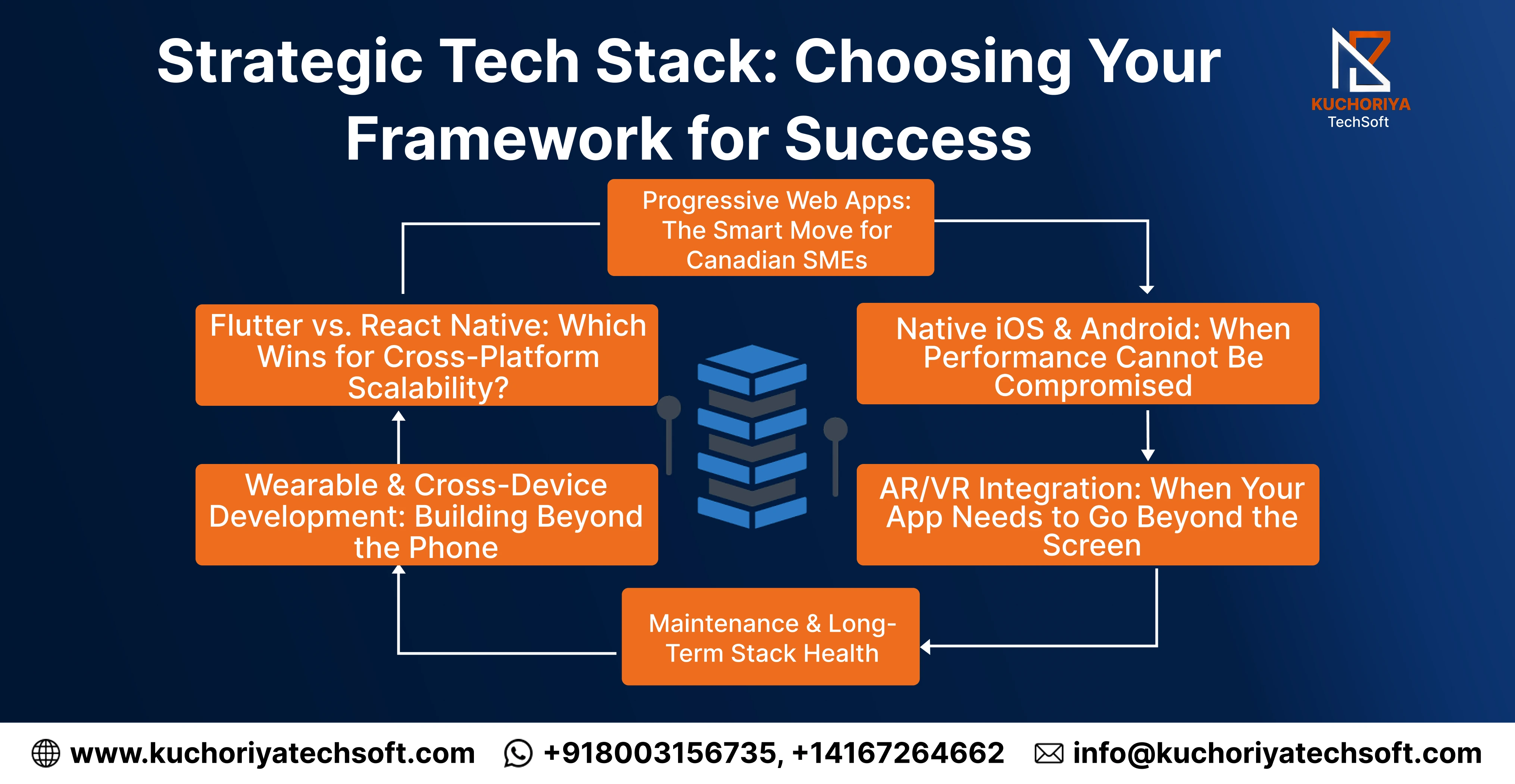
Picking the wrong framework doesn't just slow your build; it affects performance, maintenance costs, and how fast you can scale. Here's what the Canadian market actually favours in 2026.
1. Flutter vs. React Native: Which Wins for Cross-Platform Scalability?
Flutter holds 46% of the cross-platform market against React Native's 35%, but the right choice depends on your product, not the numbers. Flutter leads on UI consistency; React Native wins on JavaScript ecosystem and onboarding speed. As a top mobile app development company in Canada, our Flutter and React Native experts help you pick what fits, not just what's trending.
2. Native iOS & Android: When Performance Cannot Be Compromised
Some products simply can't afford the overhead of a cross-platform layer. Banking apps, real-time healthcare monitors, and high-frequency trading platforms are built natively for a reason: full hardware access, tighter security, and zero performance compromise. Our dedicated iOS and Android app development services exist for exactly these cases, where the stakes are too high to settle for "good enough."
3. Progressive Web Apps: The Smart Move for Canadian SMEs
Not every business needs a native build from day one. Progressive Web App development gives Canadian SMEs a faster, cost-effective mobile route, no app store wait, offline-ready, and one codebase for both web and mobile. For startups and tighter budgets, it's a practical call that any best mobile app development company would back
4. Wearable & Cross-Device Development: Building Beyond the Phone
The mobile screen is no longer the only screen that matters. Smartwatches, health monitors, and connected devices are becoming part of the product conversation, especially in healthcare and fitness. With Wearable App Development services, your product roadmap isn't locked to a single form factor, giving businesses the flexibility to grow into new hardware.
5. AR/VR Integration: When Your App Needs to Go Beyond the Screen
Retailers, real estate businesses, and training platforms across Canada are already adding AR layers to their existing mobile products. The AR/VR App Development services integrate directly into native and cross-platform builds, no separate stack, no extra overhead, just experiences your competitors haven't shipped yet.
6. Maintenance & Long-Term Stack Health
A framework choice does not end at launch; outdated dependencies and security gaps show up months later. With Mobile App Maintenance Services, keep your product secure, stable, and performing over time, because any trusted mobile app development services company knows the real work starts after go-live.

UI/UX Design Trends & Accessibility Standards
Good design is not just about how an app looks; it's about how easily anyone can use it. In 2026, UI/UX trends and accessibility standards are shaping which apps people stick with and which ones they delete.
Design Trends
- Minimalist Interfaces: Any reputable custom app development firm keeps screens clean and focused, too much going on at once, and users simply stop paying attention.
- Glassmorphism & Depth: Soft, layered surfaces are now common among top-tier app builders in Canada, making it easier for users to tell sections apart without extra effort.
- Purposeful Micro-interactions: A tap, a swipe, a button press, each one should give users clear feedback, and every good iOS & Android development studio designs with this in mind.
- Dark Mode by Default: Easier on the eyes, better on battery, any solid leading app development partner now ships dark mode as standard, not an afterthought.
- Motion Design with Meaning: Transitions and animations should tell users what just happened on screen, not just fill space between actions.
- Biometric & Passwordless Login: Face ID and fingerprint login are quickly becoming the norm across banking, healthcare, and retail apps built by experienced enterprise mobile solutions providers.
- AR Where It Actually Helps: Whether it's trying on clothes or previewing furniture, AR works best when it solves a real problem, not just to look impressive.
Accessibility Standards
- WCAG 2.2 Compliance: Every trusted app development agency in Canada should be building to this standard from the start, as it covers contrast, navigation, readability, and assistive tech support.
- Screen Reader Support: Apps need to work properly with VoiceOver and TalkBack so visually impaired users can navigate just as comfortably as anyone else.
- Colour-Blind-Friendly Palettes: About 1 in 12 men have some form of colour blindness, and a dependable cross-platform app development team accounts for this in every design review.
- Scalable Text & Adaptive Layouts: When users increase their font size, the layout should adjust cleanly; any professional mobile solutions company tests this before shipping.
- Accessibility Drives SEO Too: Fixing accessibility gaps brought a 23% traffic increase and 27% more keyword rankings for many brands.
Mobile App Development Cost in Canada (2026 Pricing Guide)
Budgets vary widely depending on what you're building and who you work with. Here's a straightforward breakdown to help businesses plan smarter before reaching out to any top mobile app development company in Canada.
How to Choose the Right Mobile App Development Partner in Canada
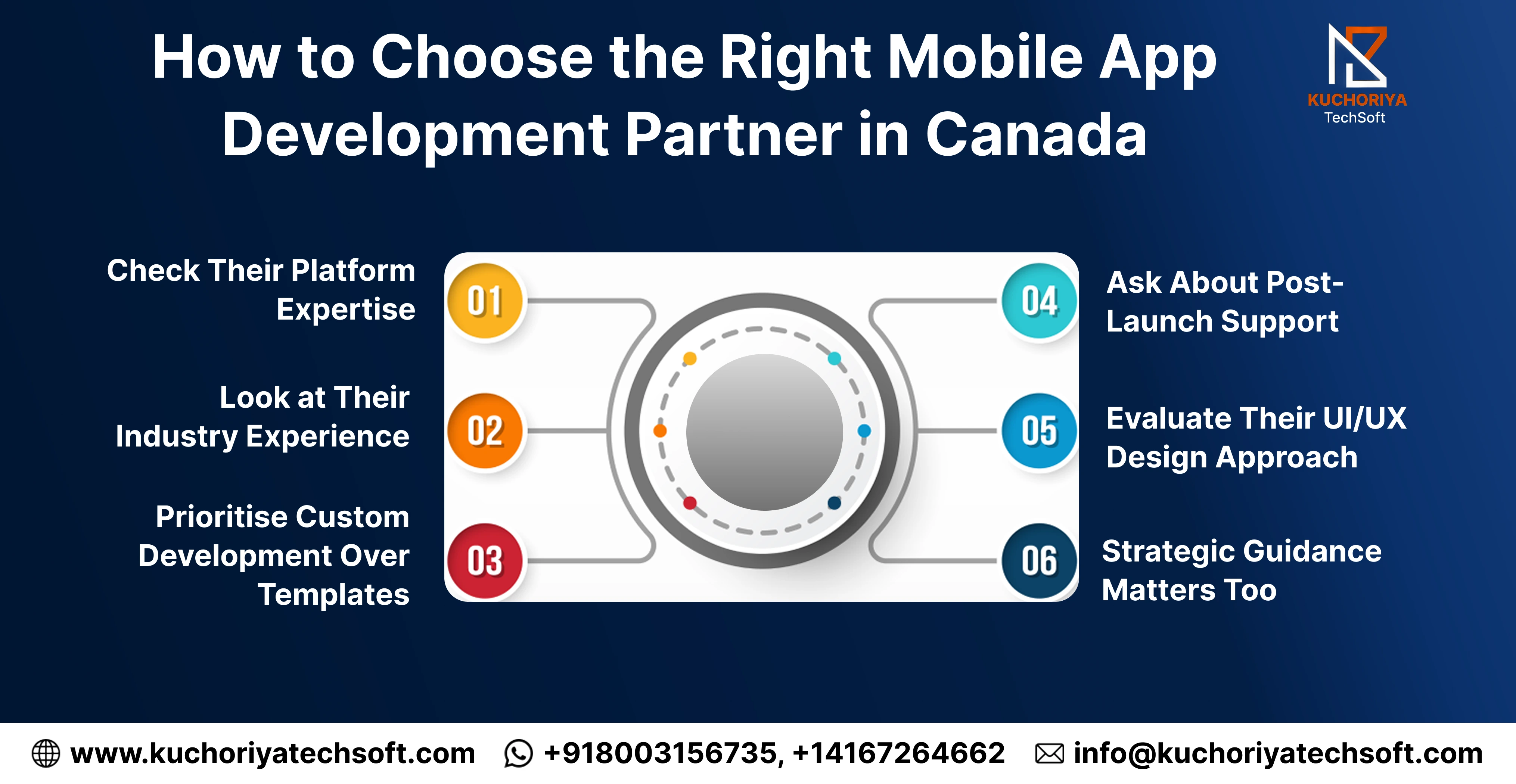
Choosing the wrong development partner costs you time, money, and market opportunity. Here is what actually matters when making that call.
1. Check Their Platform Expertise: Make sure they build confidently across iOS, Android, Flutter, and React Native. A solid cross-platform app development team should not push you toward one platform just because it suits them.
2. Look at Their Industry Experience: Whether you are in FinTech, Healthcare, Logistics, or eCommerce, your partner should have real work done in your space, not just a list of buzzwords on their website.
3. Prioritise Custom Development Over Templates: Off-the-shelf solutions rarely fit your business. Look for a partner that offers genuine custom mobile app development tailored to your workflow, users, and goals, not recycled code dressed up differently.
4. Ask About Post-Launch Support: Building the app is only half the job. A trustworthy partner offers proper mobile app maintenance services, covering updates, bug fixes, OS compatibility, and performance monitoring long after launch.
5. Evaluate Their UI/UX Design Approach: Good design is not decoration. Ask how they handle user research, accessibility, and interface testing. Teams offering dedicated mobile app UI/UX design as a core service, not an afterthought, tend to ship products people actually enjoy using.
6. Strategic Guidance Matters Too: Beyond coding, the right partner helps you make smart product decisions. Virtual CTO services from an experienced firm like Kuchoriya TechSoft give growing businesses the technical leadership they need without the cost of a full-time hire.
Industry-Specific Innovations: Who is Leading the Charge?
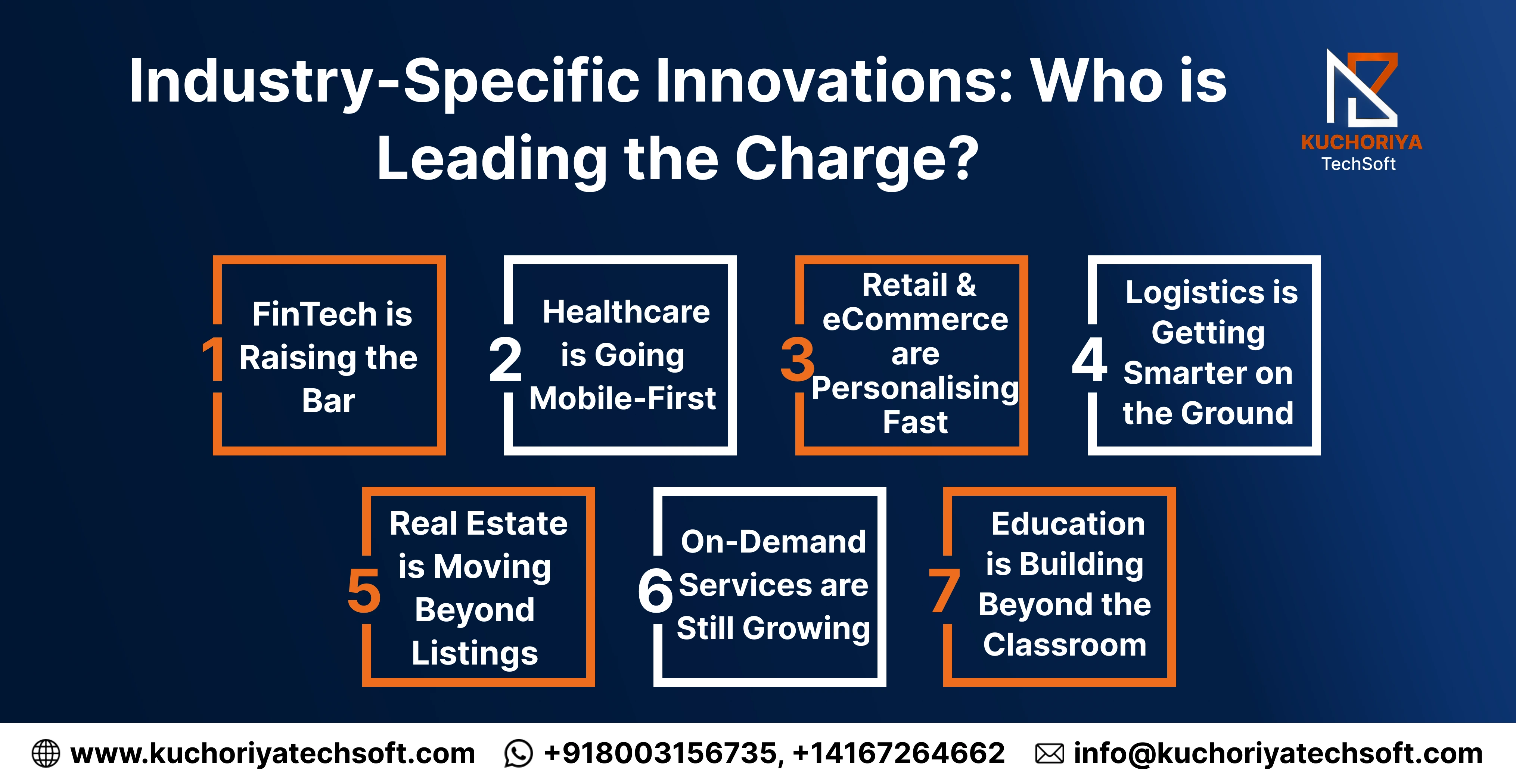
Across Canada, businesses in every sector are moving fast with mobile, and the ones pulling ahead are those investing in the right technology from the right partners.
1. FinTech is Raising the Bar: From digital wallets to real-time payment tracking, financial brands need secure, compliant apps built by a seasoned FinTech app development team that understands both the tech and the regulations.
2. Healthcare is Going Mobile-First: Patient portals, appointment booking, and remote monitoring are no longer optional. Businesses working with a reliable Healthcare app development partner are already ahead of those still depending on paperwork and phone calls.
3. Retail & eCommerce are Personalising Fast: Shoppers expect smooth browsing, quick checkout, and real-time order updates. A focused eCommerce app development company helps retail brands deliver that without overcomplicating the build.
4. Logistics is Getting Smarter on the Ground: Fleet tracking, delivery management, and route planning are driving major efficiency gains for companies that have invested in purpose-built logistics app solutions rather than generic off-the-shelf tools.
5. Real Estate is Moving Beyond Listings: Virtual tours, mortgage calculators, and instant agent connect features are becoming standard. Forward-thinking agencies partnering with a dedicated real estate app development firm are seeing stronger lead conversion as a result.
6. On-Demand Services are Still Growing: From food delivery to home services, the on-demand space keeps expanding. Brands entering this space need a proven on-demand app development company that knows how to handle real-time booking, payments, and multi-user flows without dropping the ball.
7. Education is Building Beyond the Classroom: Interactive learning, live sessions, and progress tracking are reshaping how students engage. Institutions working with an experienced eLearning app development team are setting the standard for what digital education should feel like.
App Monetisation Models for Canadian Apps (2026)
Choosing the right revenue model is just as important as building the app itself. Here is a straightforward breakdown of what works, what it suits, and where Kuchoriya TechSoft fits in.
The Kuchoriya TechSoft Advantage: Our 2026 Development Roadmap
We have been building digital products for over a decade. Here is what sets us apart in 2026 and why businesses across Canada keep coming back.
1. We Build for Your Industry: From Insurance and Banking to Aviation and Fleet Management, our teams carry real domain experience across industries that most development firms have never even touched.
2. Cross-Platform Done Right: Our Flutter and React Native teams treat cross-platform development seriously, and you get native-quality performance on both iOS and Android without paying for two separate builds.
3. Design That Respects the User: Our UI/UX design team builds accessibility and performance into every screen from day one, not as an afterthought squeezed in before launch.
4. Blockchain & Wearables, Ready to Deliver: For businesses exploring Blockchain solutions or Wearable app development, we bring existing delivery experience to the table, no learning curve billed to your project.
5. We Cover Industries Others Overlook: Aviation software, Oil & Gas solutions, Political campaign apps, and even Equine industry platforms. If there is a business problem, we have likely already solved a version of it somewhere.
Conclusion: Navigating Your Digital Transformation
The Canadian mobile market is moving fast, and businesses that get their digital products right today will be the ones leading tomorrow, whether that is a Travel app, a Manufacturing platform, or the best Media & Entertainment solution.
The right development partner makes all the difference, one that builds clean, designs for real users, and stays with you long after launch. That is exactly how Kuchoriya TechSoft has earned a 4.9 rating from 1,000+ clients across Canada and beyond. Ready to build? Contact us today, or know someone who is? Join our Referral Partner Program and earn rewards for every successful introduction.

Frequently Asked Questions
Q. What does a top-rated app development firm in Canada typically charge for a custom build?
A. A basic MVP starts around CAD $15,000, mid-complexity apps sit between CAD $50,000–$150,000, and enterprise platforms go CAD $400,000 and above. Platform choice, features, and compliance requirements like PIPEDA all influence the final number.
Q. How long does a reliable Canadian app development agency take to deliver a production-ready product?
A. A focused MVP can be ready in 2–4 months, mid-level apps take 4–7 months, and full-scale enterprise builds run 8–12 months. Clear requirements from day one and an experienced team are what keep things on track.
Q. Which industries does Kuchoriya TechSoft serve across its app development offerings?
A. We have worked across 100+ industries, including FinTech, Healthcare, Logistics, Real Estate, Retail, Insurance, Telecom, Aviation, Manufacturing, and On-Demand platforms, each handled with genuine domain knowledge, not recycled templates.
Q. Does Kuchoriya TechSoft provide post-launch support for apps built for the Canadian market?
A. Yes, our Mobile App Maintenance Services cover everything from OS updates and security patches to performance monitoring. We stay involved long after your app goes live.
Q. Why do Canadian businesses prefer cross-platform development over building natively?
A. Flutter and React Native help you launch on both iOS and Android for around 60% of the cost of two native builds. For startups and growing businesses watching their budget, it is usually the smarter first move.