






Why Is Hiring Full-Stack Developers More Challenging Than Ever?
Try to hire full-stack developers right now and you'll notice something odd. The applications pour in, sometimes hundreds within a day, but almost none of them can actually take a project from front end to back end without hand-holding.
That's the real bottleneck. Developers aren't missing. Developers who can do the job well are.
By 2026, this talent gap is expected to cost businesses worldwide $5.5 trillion. In the US alone, over 1.2 million developer roles could go unfilled this year. Most hiring managers already admit it's taking longer to find good people than it did a year back.
The usual hiring process, job boards, resume screening, three rounds of interviews, was built for a slower market. It just doesn't hold up anymore. That's pushing more companies toward a leaner full-stack developer hiring guide and turning to software outsourcing so projects don't sit waiting on a hire.
Interestingly, even a top full-stack development company in USA rarely limits its search to local candidates anymore. The gap between companies that hire well and companies that hire slow isn't budget. It's whether they're still searching the same narrow pool everyone else already gave up on.
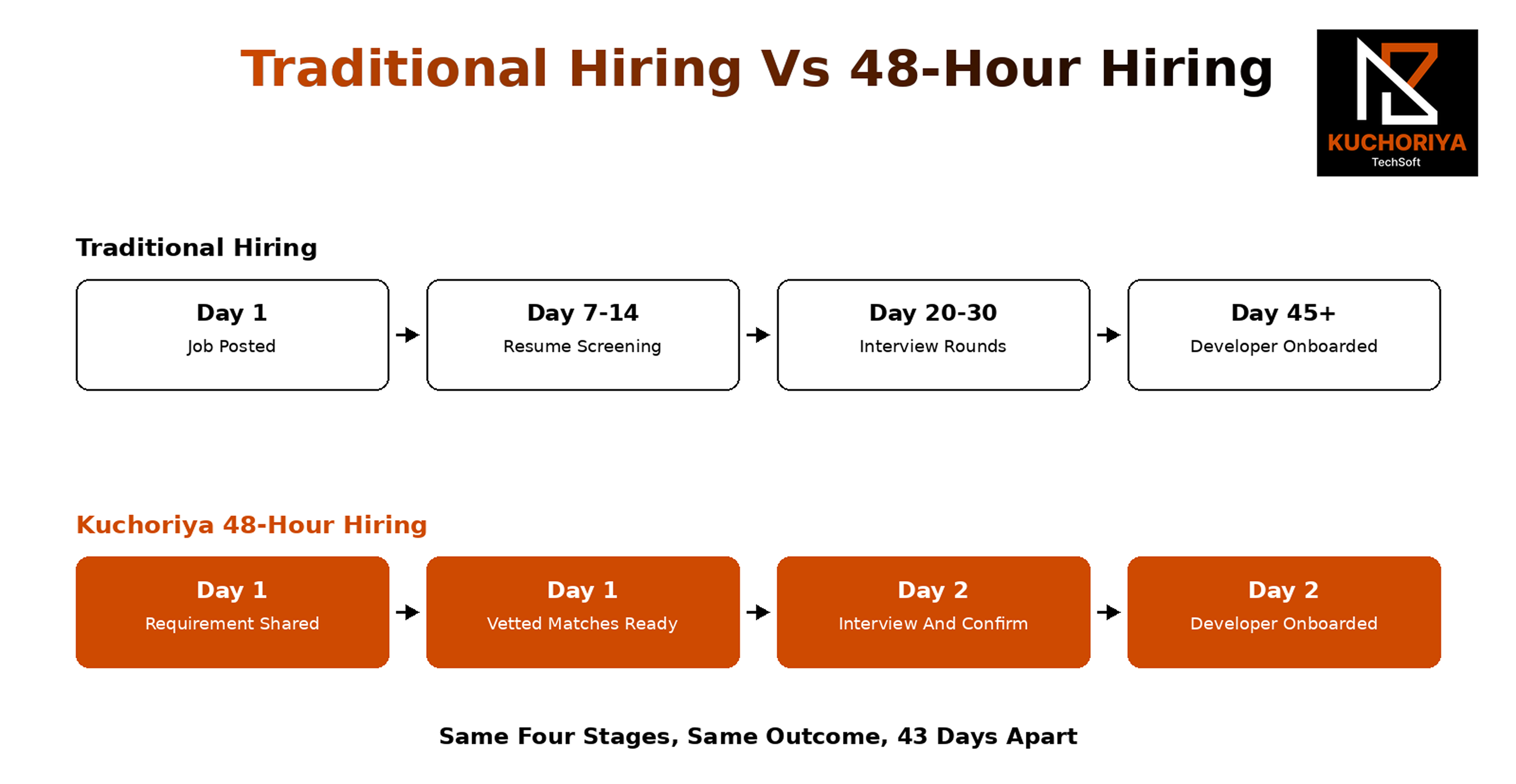
What Skills Should You Look For In A Full-Stack Developer?
Half the resumes that say "full-stack developer" are stretching the truth a little. Here's how to actually tell who's real before you're stuck mid-project.
- Frontend Sense: Before you hire frontend developers, ask why a component might re-render when it shouldn't. A good answer tells you more than any portfolio screenshot.
- Real React Depth: A lot of people who hire React developers skip testing state management, and only find out it's shaky once the app is already live.
- Backend Truth Test: Backend development is where copied CRUD tutorials fall apart fast. Look for someone who's built real APIs and thought about the database long-term.
- Node.js Under Load: Async handling is where most Node developers get exposed. Just ask them to walk you through a time traffic spiked and something almost broke, then decide if you still want to hire Node.js developers based on that answer.
- End-To-End Case: Fewer handoffs, fewer bugs. That's basically why smart teams hire MERN stack developers instead of running separate frontend and backend hires who barely talk to each other.
- Judgment, Not Just Skill: The developers worth keeping tell you something's broken the moment they spot it, not two weeks later.
Why Do Businesses Prefer Full-Stack Developers?
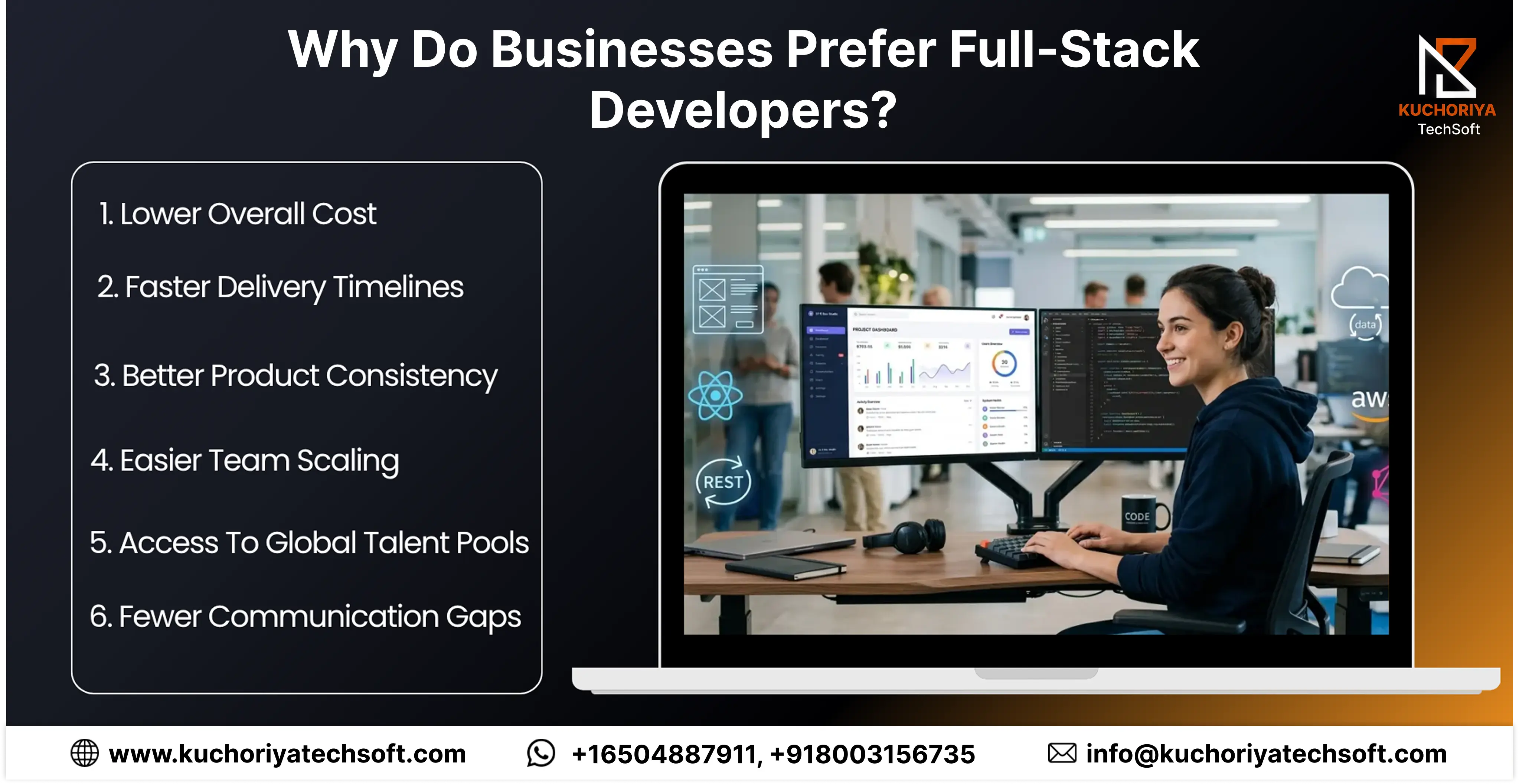
One hire, one skill set, no coordination headaches between two separate teams. That's the real reason this hiring shift keeps growing.
1. Lower Overall Cost
Bringing on full-stack software developers means paying for one strong skill set instead of two separate specialists. Companies cut payroll without cutting the quality or speed of what gets shipped.
2. Faster Delivery Timelines
Full-stack development services move noticeably quicker since one developer owns the build from start to finish. There's no waiting around for handoffs between a frontend team and a backend team.
3. Better Product Consistency
Web application development stays cleaner when the same person understands both layers of the app. Design decisions on the frontend rarely clash with logic decisions on the backend, because it's all coming from one mind.
4. Easier Team Scaling
Custom software development projects scale faster when each hire can flex across multiple tasks. Nobody sits idle waiting for their one specific piece of the puzzle to become relevant.
5. Access To Global Talent Pools
More businesses now actively choose to hire full-stack developers for hire in UAE and other growing tech hubs, since strong engineering talent is no longer limited to one city or one time zone.
6. Fewer Communication Gaps
When the developer edits each end of the images, there is actually less room for issues to get mixed up between a the front-quit request and the returned-end processing Fewer encounters, fewer misunderstandings, faster resolution.
How to Hire Full-Stack Developers Within 48 Hours
Most people assume fast hiring means cutting corners somewhere.No, not now if the process is engineered correctly from the beginning.
- Skip the Public Job Board: If your goal is to hire full-stack developers in 48 hours, posting to the process committee is already a biased first spread. That step alone eats a week. Go straight to a pool that's pre-vetted instead.
- Be Specific About What You Actually Need: Tech stack, project scope, rough timeline, spell it out. Teams that stay vague here almost always end up stuck three weeks later, still explaining requirements over email.
- Let Matching Replace The First Few Rounds: Companies that hire remote developers through an already-screened network skip straight past the resume pile and the first two interview rounds most hiring managers still do by hand.
- One Good Interview Is Enough: Fast developer hiring works because the interview is sharper, not shorter anymore. Three carefully chosen questions in an interview will tell you more than 5 scattered interviews will ever do.
- Say Yes And They Start: On-demand full-stack developers the day you decide. No notice period. No waiting on a background check to clear.
- Distance Was Never the Real Problem: Plenty of businesses now bring on a remote development team in Canada and get them working just as fast as a local hire, because good process, not proximity, was always what made hiring slow.
Which Hiring Model Is Right for Your Business?

Not every project needs the same setup. The model you pick decides how fast you move and how much you're stuck managing later.
1. Staff Augmentation For Ongoing Work
A project running for months doesn't need new hires, it needs extra hands inside the workflow that's already working. That's what IT staff augmentation does. Nobody rebuilds anything, the team just grows.
2. Staffing Solutions For Sudden Gaps
When a project stalls because of a missing skill set, developer staffing solutions fill that gap fast, usually faster than reopening a job listing and starting the search from zero.
3. Flexible Contracts For Shifting Scope
Scope rarely holds still for long. One month it's a two-person job, the next it's five. Flexible hiring models exist for exactly that, so headcount can move with the project instead of against it.
4. Contract-Based Hiring For Defined Timelines
Know the project's end date already? Then a permanent hire is probably overkill. Businesses that hire developers on contract usually have the scope locked down from day one, and the contract just matches that.
5. Engineering Talent Without Local Limits
Some companies go further and hire full-stack engineers straight from vetted global networks, including some of the best offshore developers in Australia, because strong technical talent rarely stays confined to one country anymore.
Related Insights: Hire Remote Mobile App Developers: A Guide to Finding Top Talent
Hire Expert Fantasy Sports App Developers to Build Your Platform Today
How to Hire Remote Developers: Step-by-Step Guide
Where Can You Hire Full-Stack Developers Worldwide?
Location stopped being a real constraint years ago. The best talent could be sitting four time zones away.
- Remote Is the Default Now: Ask around and most companies aren't searching within a commute radius anymore when they want to hire remote full-stack developers. That habit is basically gone.
- Full Ownership, No Office Needed: Architecture calls, the final deploy, everything in between, remote software developers handle the whole thing now. Nobody's stepping into a client's office to make it work.
- Engineering Depth Without Borders: More teams hire remote software engineers who've shipped production systems for companies twice their size, simply because geography stopped filtering out good people.
- Singapore's Talent Pool Is Growing: Full-stack talent in Singapore has become a go-to for companies expanding across Asia, as the region's engineering output keeps climbing.
- UK Teams Are Going Distributed: More dedicated developers for UK businesses now work from entirely different countries, and the setup holds up fine.
- Saudi Arabia's Outsourcing Market Is Maturing: Software development outsourcing in Saudi Arabia has picked up as companies look outward instead of hiring purely local.
- Dubai Stays a Global Hub: A fair number of full-stack engineers based in Dubai work on projects for clients they've never met, and it hasn't slowed anything down.
How Much Does It Cost to Hire Full-Stack Developers?
Budgets rarely land where people expect. Location and structure move the number more than skill level does.
- Offshore Rates Beat Local Hiring: Offshore full-stack developers typically cost a fraction of a local hire without any real drop in output, which is exactly why more budgets are shifting that direction.
- Working With An Established Partner: Going through an offshore development company usually costs a bit more than a solo freelancer, but the vetting and accountability that comes with it tends to be worth the difference.
- Vetting Adds Cost, But Saves More Later: Skipping the step to screen and hire developers properly is how projects end up paying twice, once for a bad hire, then again for whoever fixes the mess.
- Europe's Rates Vary By Region: Hiring full-stack talent across Europe shifts a lot by country, and Eastern Europe still lands cheapest overall.
- Bulgaria Holds Its Own On Value: Rates stay low, but the output doesn't. That's the whole pitch behind affordable development teams in Bulgaria right now.
Top 5 Platforms and Ways to Find Full-Stack Developers
Every platform sells the same promise. The experience once you're actually inside it looks very different.
1. Toptal
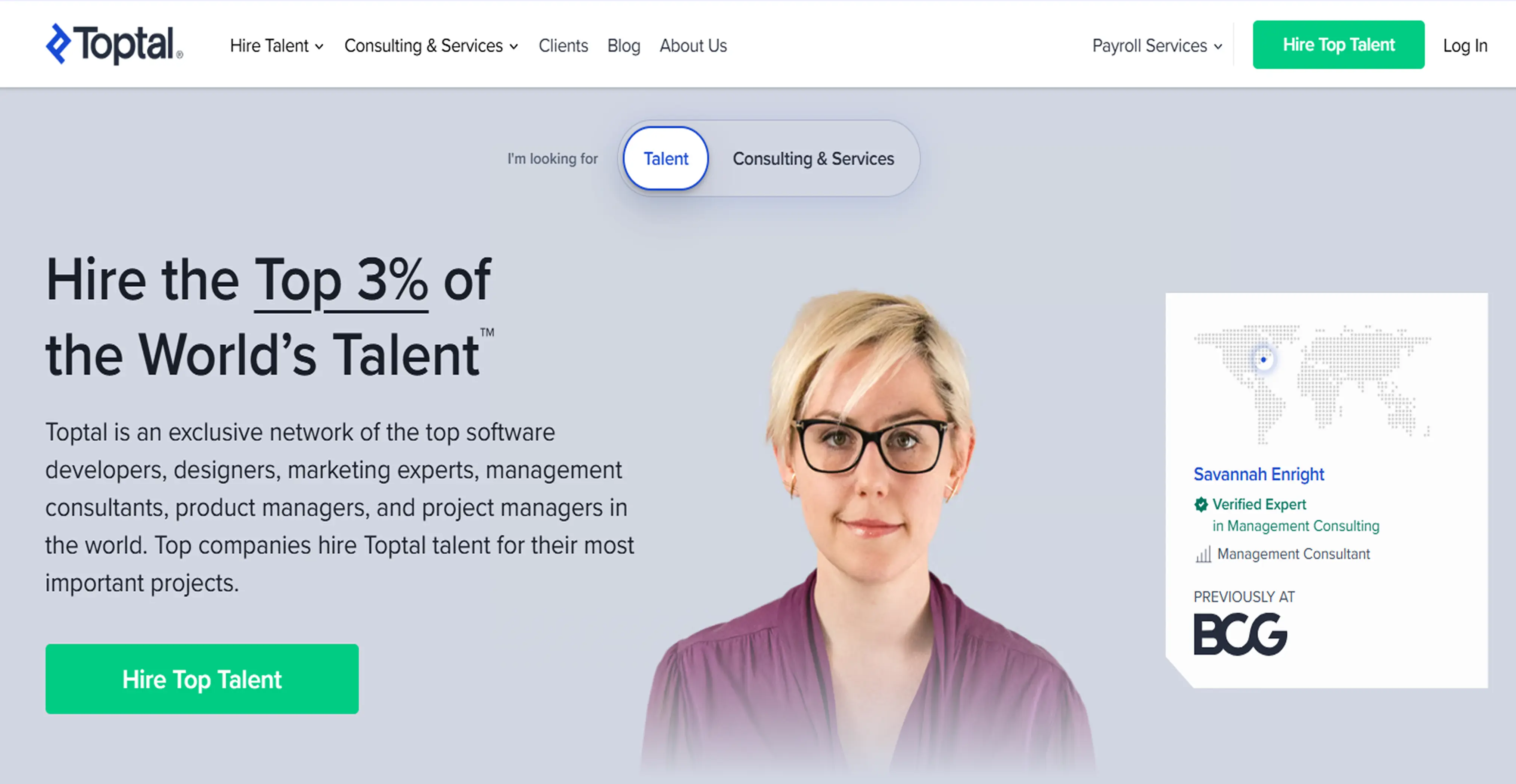
Screening is real here, but so are the trade-offs. Toptal markets itself as the place to hire pre-vetted developers, yet the fine print rarely gets mentioned upfront.
- Additional charges stack up fast once you're past the initial pitch
- The process drags on longer than most teams expect going in
- Getting a call scheduled can take a day or two on its own
- Every hire comes with a mandatory test assignment first
2. Kuchoriya TechSoft
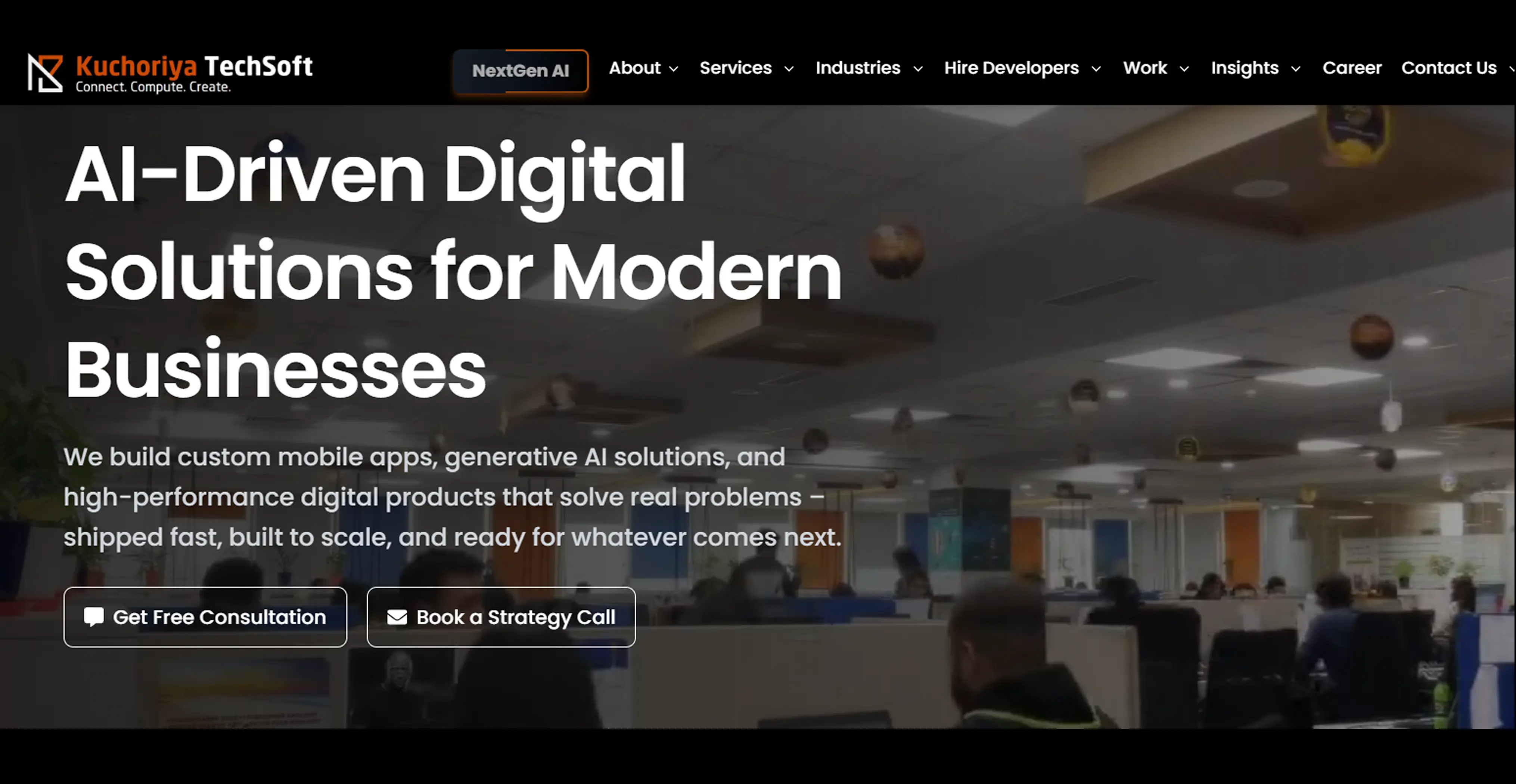
Here, the process gets built around the client instead of the platform.
- Developers carry five to fifteen years of experience across top tech stacks
- Communication stays direct, with one dedicated point of contact
- Timelines flex, and businesses can run multiple projects without juggling vendors
- Budget negotiation costs nothing, and intake starts the moment requirements land
3. Upwork
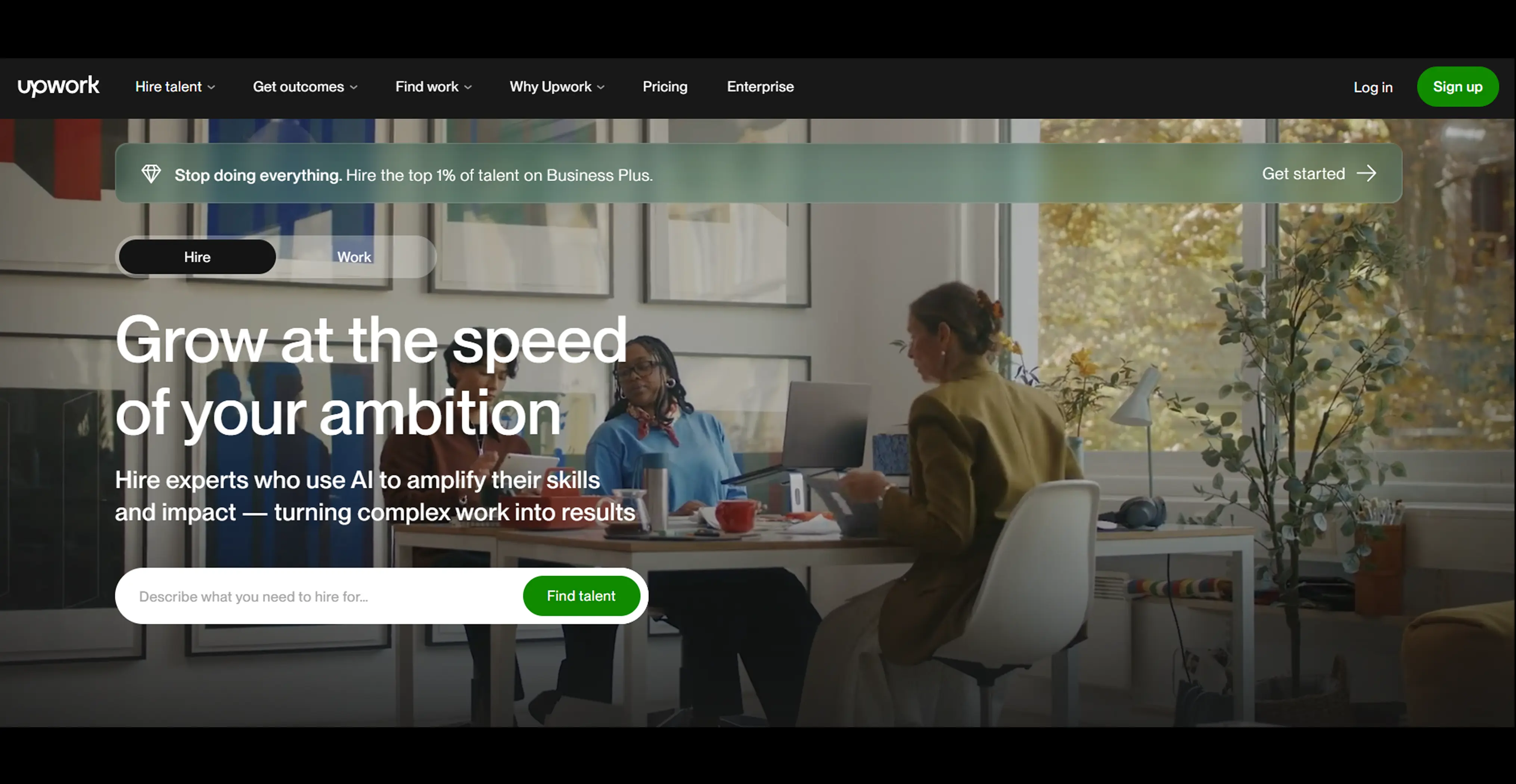
One of the largest places to hire software developers, though quality swings depending on how carefully listings get filtered.
- Massive pool of profiles, but filtering through them eats real time
- Platform fees cut into freelancer earnings, which sometimes shows in pricing
- No dedicated vetting layer, so due diligence falls entirely on the business
4. Freelancer
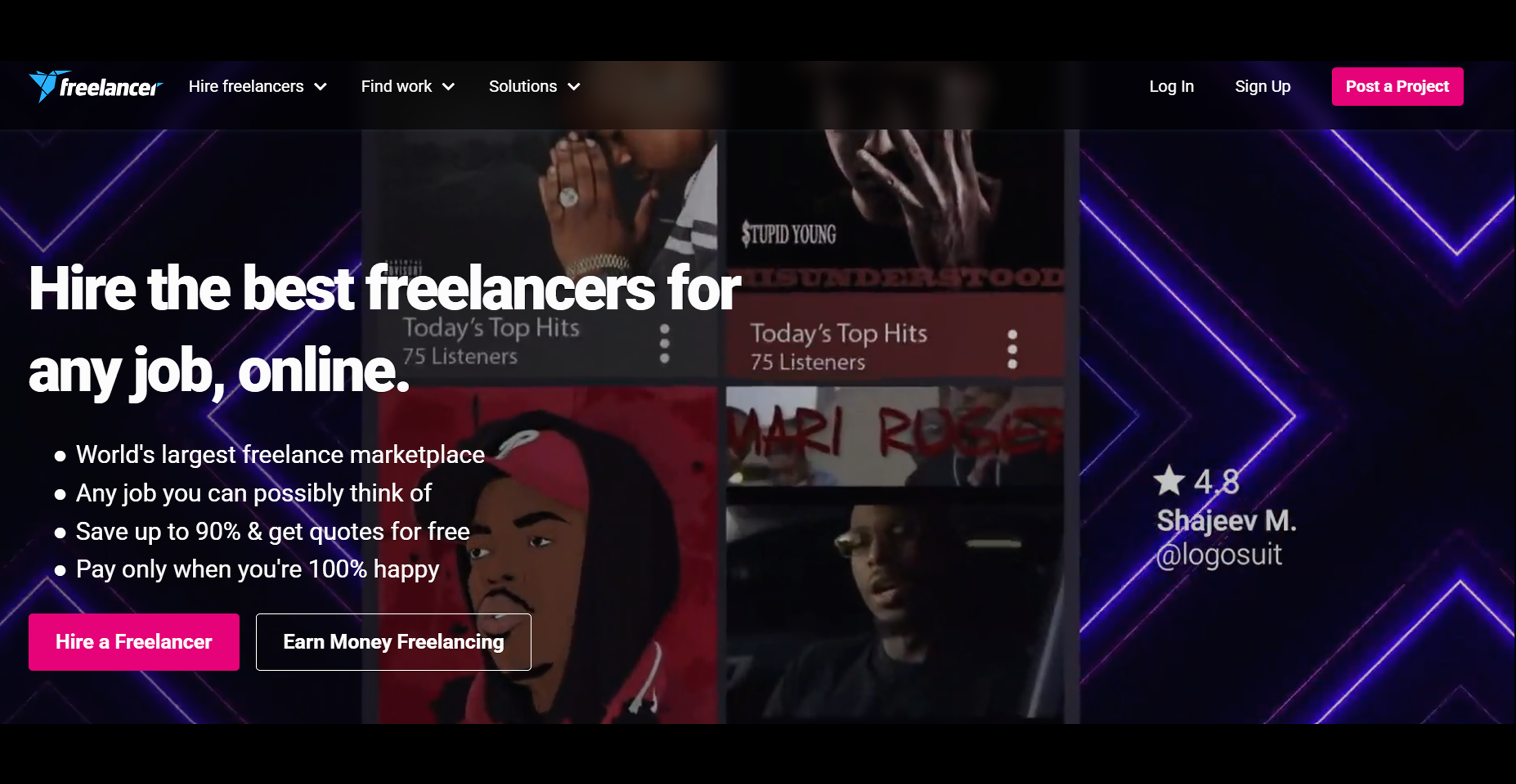
Good for companies wanting to hire developers online without much overhead, provided someone sorts through a wide skill range.
- Bidding system means rates vary wildly between profiles
- Skill verification is minimal compared to curated platforms
- Works best for smaller, well-defined tasks rather than long builds
5. PeoplePerHour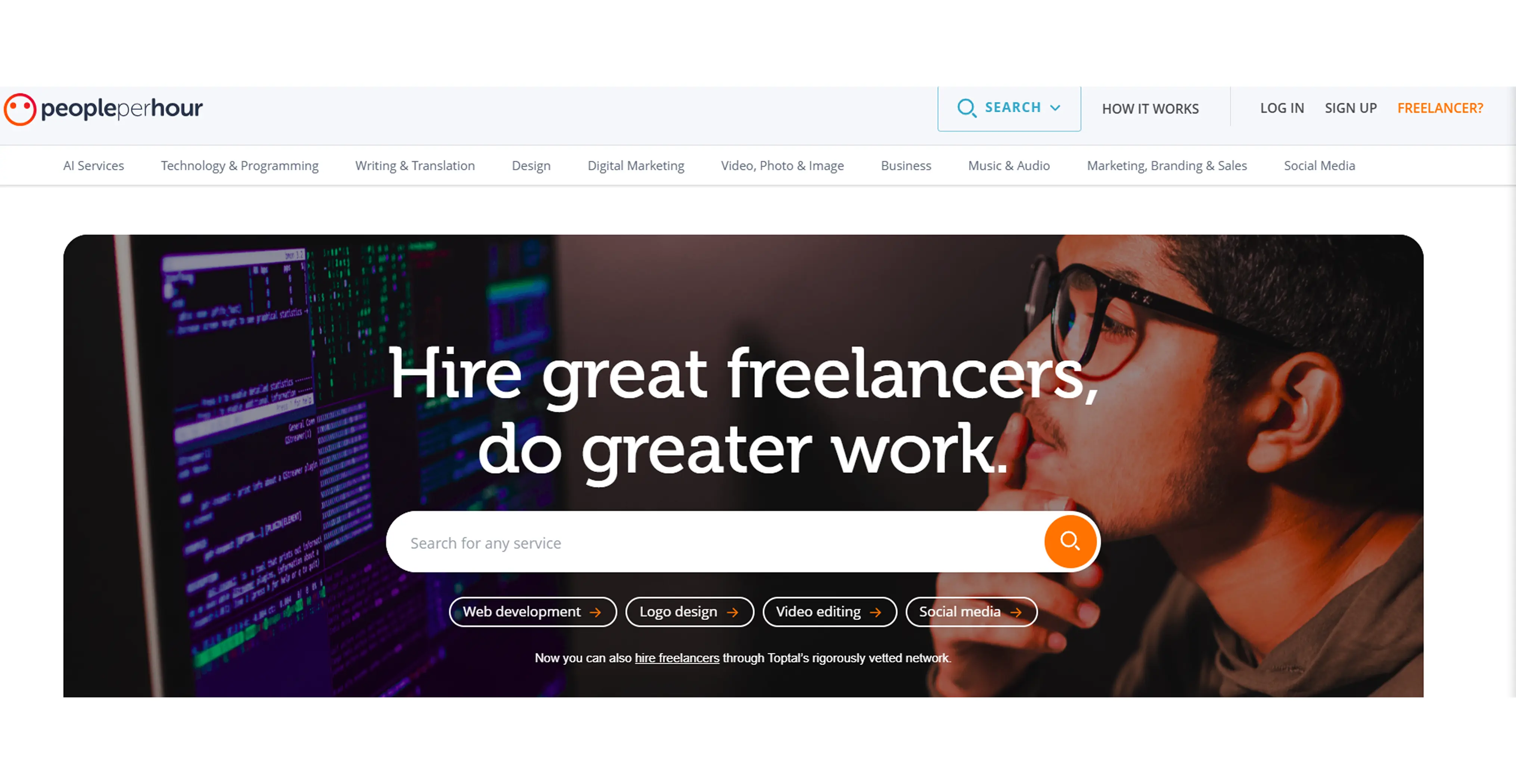
Known for full-stack development support for London businesses, connecting companies with freelance full-stack developers who already understand regional compliance.
- Strong for UK-based hiring, weaker outside that region
- Hourly and fixed-price options both available
- Smaller talent pool compared to global platforms
Common Mistakes to Avoid When Hiring Full-Stack Developers
Most bad hires trace back to the same handful of avoidable missteps.
1. Treating It Like A Solo Hire, Not A Team Fit
A single strong resume doesn't guarantee someone fits into an existing full-stack development team. The skills might check out, but nobody tests how that person actually works alongside people who are already there.
2. Skipping Real Vetting Before Committing
Rushing past proper screening is how businesses end up with dedicated full-stack developers who look sharp on paper and stall the moment real project pressure hits.
3. Underestimating What A Team Actually Needs
Some projects genuinely need one developer. Others need a full dedicated development team, and the companies that miss that difference early almost always pay for it later, usually in missed deadlines.
4. Ignoring Regional Talent Options
A lot of businesses default to the same two or three familiar markets without looking further. Custom software teams in Italy rarely make that shortlist, even though the engineering quality there holds up at a far more reasonable rate.
How AI Is Transforming Full-Stack Development
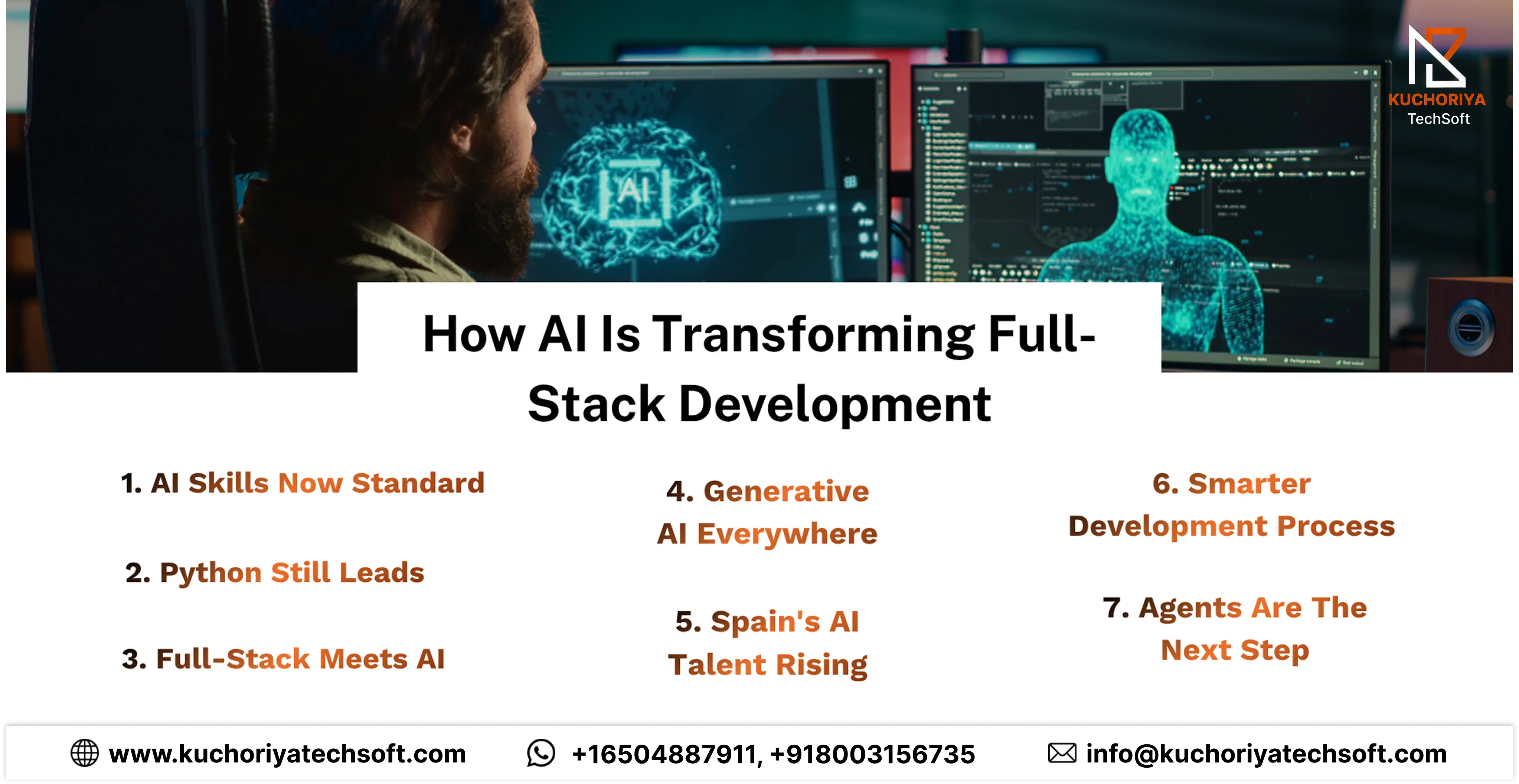
AI stopped being a side feature a while back. It's shaping full-stack builds from the ground up now.
1. AI Skills Now Standard
Web-only hiring is fading. Teams hire AI developers right alongside the rest, since most builds expect intelligence baked in from day one.
2. Smarter Development Process
AI-powered full-stack development catches bugs early and flags weak architecture before it becomes a real problem later.
3. Full-Stack Meets AI
Companies now hire full-stack developers for AI projects, expecting them to own the interface and the model integration both.
4. Generative AI Everywhere
Generative AI development services have moved past chatbots, now covering content automation and full workflow generation.
5. Agents Are The Next Step
Businesses that hire AI agent developers want systems that act on input, not just respond to it.
6. Python Still Leads
Python shows up in most AI builds, which is why teams keep choosing to hire Python developers.
7. Spain's AI Talent Rising
Outsourced development solutions in Spain are building a name specifically around AI-integrated full-stack work.
Read More: How Much Does It Cost to Hire AI Developers?
How to Hire Developers for Your Project: A Complete Guide
Top Freelance Mobile App Developers
Why Choose Kuchoriya TechSoft to Hire Full-Stack Developers?
Plenty of companies say the same thing. Very few actually back it up with real delivery.
1. A True Full-Stack Development Company
Every hire here works across the entire build, frontend to backend, which is what makes this a genuine full-stack development company rather than one outsourcing half the work quietly.
2. A Team Built Global From Day One
The global full-stack development team spans multiple regions, so project timelines don't stall waiting on one timezone to log back in.
3. Full Product Builds, Not Just Websites
As a custom software development company, the scope covers entire products, architecture through deployment, not landing pages dressed up as software.
4. Blockchain And Mobile, Covered In-House
Whether a project needs someone to hire blockchain developers for a live production system or hire mobile app developers for iOS and Android, both stay within the same team, no second vendor required.
5. Development Backed By Real Project Management
Work here doesn't stop at writing code. The same developers, many sourced through active tech talent sourcing in Hong Kong, also manage timelines and flag risks early, keeping delivery on track without a separate PM layer.
Ready to Hire Full-Stack Developers? Here's Your Next Step
Research is done. Time to act. Whether it's full-stack development for startups on a tight budget, or full-stack development for enterprises with several moving parts, the process should scale with the project. Need deeper technical skill? Full-stack engineering teams in Israel deliver well on complex builds.
Industry matters too. Full-stack development for healthcare and full-stack development for fintech demand strict compliance from day one. Full-stack development for eCommerce, full-stack development for logistics, and full-stack development for real estate each bring their own priorities, from uptime to real-time sync to search accuracy.
Not sure what's needed yet? A hire fractional CTO or hire virtual CTO service can map out the right stack first.
Have a strong network? The referral partner program rewards anyone who connects the right business with the right full-stack developers for hire.
Ready to move forward? Get in touch and the next step starts here.

Frequently Asked Questions
Q. How fast can I hire full-stack developers?
A. Two days, sometimes less, if the hiring goes through a pre-vetted pool instead of a public job listing. Hire full-stack developers in 48 hours and skip the usual three-week wait entirely.
Q. Full-stack developer or two separate specialists, which one actually makes sense?
A. Depends on the build. Full-stack software developers work great for smaller projects where speed matters. Bigger, more complex builds often still need two dedicated people.
Q. What's the real cost to hire remote full-stack developers?
A. Anywhere from $16 to $150 an hour. Local hires sit at the top end, offshore and a dedicated development team usually land much lower without losing quality.
Q. Is contract hiring even an option here?
A. It is. Plenty of businesses hire developers on contract specifically because the project has a clear end date and a permanent hire wouldn't make sense.
Q. What about AI-heavy projects, do full-stack developers cover that too?
A. Increasingly, yes. More teams now bring on full-stack developers for AI projects, expecting them to own both the interface and whatever's happening underneath with the model.
Q. Remote hiring across borders, is that actually reliable?
A. It holds up fine, provided the vetting is real and communication doesn't get sloppy. Remote software engineers rarely under