Introduction: Why Stadiums Need the Right Digital Ticketing System
A stadium gate that jams just 10 minutes before kickoff costs more than a few seconds of delay. Fans miss the first play, line queues extend onto the street, and employees work the rest of the night to field complaints. And most of those moments all have a root cause: a flimsy digital ticketing system for sports stadiums selected in a rush. Some clubs jump straight to stadium ticketing system development to fix it, but choosing well comes first. If you do want to build, our guide on how to build sports ticketing software walks you through it.
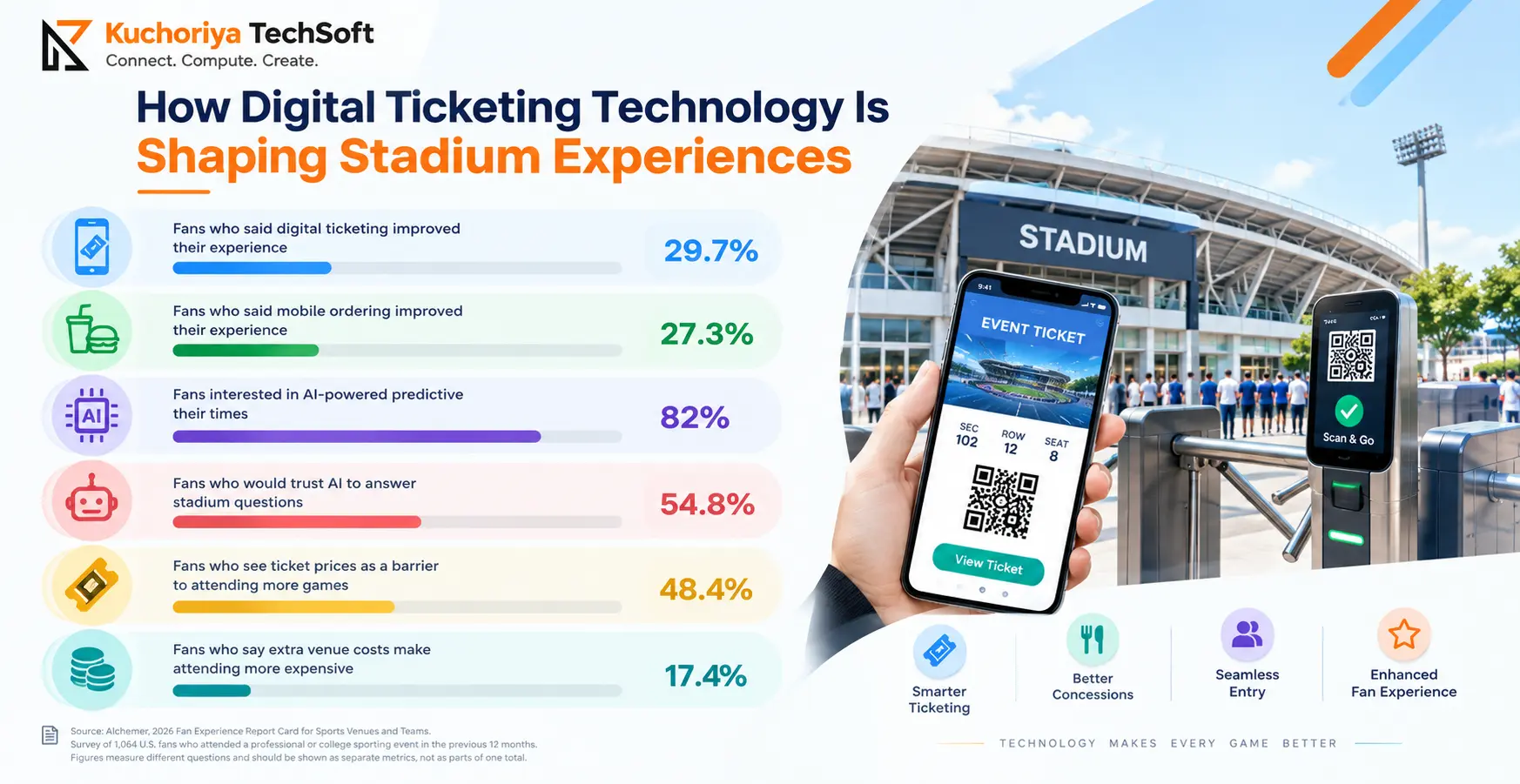
It's happening now. Digital tickets account for 62% of the sports events ticket market, according to. Fans also think same. In 2026, 30% of fans said that digital ticketing enhanced their experience more than any other technology and 82% of fans would buy into predictive wait times at the entrance gates. Digital ticketing trends in sports venues are all about mobile entry, wallet passes and better fraud detection. (Source)
However, a stadium ticketing solution is not a pre-made purchase. Scanners, charges, seat maps and the stadium ticketing UX differ significantly from one provider to another. How do you pick a digital ticketing system for stadiums so you won't regret it?
Essential Features of a Digital Ticketing System for Sports Stadiums
Start with the stadium ticketing software features that decide how smooth match day feels.
Mobile Tickets, Seat Selection, and Season Passes
- Mobile Tickets in Wallets: Fans expect their ticket inside the phone wallet. Decent mobile ticketing for stadiums also lets them pass a seat to a friend in a few taps. Some clubs even want their own branded app, which is where stadium ticketing app development comes in.
- Live Seat Maps: Your stadium seat selection system needs to show what is open right now, by section and price, and stop two people from buying the same seat.
- Reserved Seats and Boxes: The correct reserved seating ticketing software handles hospitality boxes and accessible seating without a spreadsheet on the side.
- Season Passes: A season ticket management system have to deal with renewals, installments, and resale when a holder can’t make a game.
QR Validation, Offline Scanning, and Access Control
- Correct QR code ticket validation must verify each QR code in real-time, so the use of screenshot copies fails.
- An effective ticket scanning system for stadiums would carry on scanning when the stadium Wi-Fi goes, then sync.
- Fast entry into the stadium with NFC or tap to wallet so the turnstiles continue to run.
- Live stadium entry queue management lets staff see gate loads and move fans early.
How to Compare Sports Stadium Ticketing Providers
Learn how to compare stadium ticketing providers by asking every vendor the same questions. A fair stadium ticketing software comparison is only possible when the checks stay identical.
The top stadium ticketing software is what is going to work for your stadium, not what has the most features. Before you settle for a stadium ticketing platform, ask all the stadium ticketing system providers on your shortlist for a live demo.
Cloud-Based vs. Custom vs. White-Label Ticketing Systems
Pick the model first, then choose the vendor. Here is how the three stack up.
If one enterprise stadium ticketing platform has to run several venues, custom usually wins. Before you sign anything, ask two things.
Can it survive a sold-out derby? Get proof of stadium ticketing system scalability, not a promise on a slide. And what if you want out later? Find out how your data leaves before stadium ticketing platform migration becomes your problem. Curious how a build actually works? Our sports ticketing software development guide covers it.
Stadium Ticketing Integrations, Security and Data Ownership
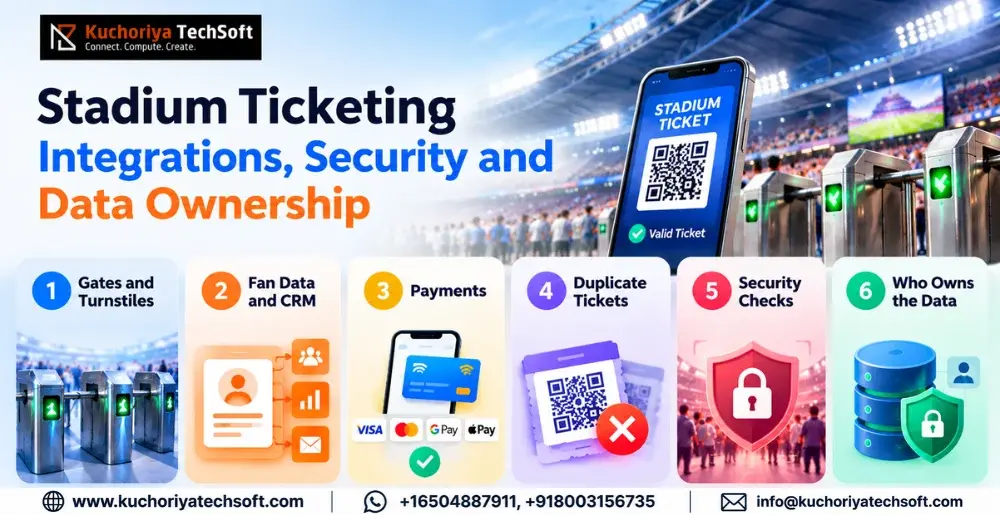
Most ticketing headaches start when one tool won’t talk to the others. Before you buy, find out what it plugs into and who ends up holding your fan data. If you’re making your own, plan stadium ticketing API development early, because every tool you add leans on it. Some vendors offer stadium ticketing integration services, which helps when your IT team is small.
1. Gates and Turnstiles
Start with the stadium access control system. The wait caused by a slow reader can turn a momentary delay into a delay that backs up behind it. Make sure you see the system working on turnstiles similar to yours.
2. Fan Data and CRM
Deep stadium ticketing CRM integration transfers the customer information directly into your marketing software. Handy for knowing which buyers are missing in action, and who should be on the renewal phone call.
3. Payments
Your fans pay in all kinds of ways-cover all their wallets and local methods of payment with your ticketing payment gateway integration. If a payment fails just before event time, what will happen next, including retries and refunds?
4. Duplicate Tickets
There's rotation of QR codes and an alert to block scans over and over again. A warning on the website defeats no one, so request to see it working at a gate.
5. Security Checks
If the vendor is still relying on encrypted links and role-based logins and not currently providing you with an audit report you can actually read you should walk away.
6. Who Owns the Data
Create your stadium ticketing data privacy policy. Take note of the stadium ticketing compliance regulations in your area, and preserve ownership of fan data if you switch providers.
Industry Insight: How to Build Sports Ticketing Software: Features, Costs, and Development Guide
Sports Stadium Ticketing Software Pricing and Total Cost
Quote is looking very simple until you read what’s left out. We are taking two published examples. The first one is the venue manager, which serves sports clubs, lists a monthly fee of DKK 6,900, a ticket fee of DKK 3.75 plus 0.6%, and an order fee of DKK 8 and DKK 495 per entrance each month (Source). Ticketmatic is the other one: in its own example, a yearly fee of €6,400 covers 10,000 tickets, and each extra ticket costs €0.64 (Source).
So stadium ticketing software pricing can be per ticket, per order, per gate or a yearly fee. Run each against your own ticket volume, not the headline number. Thinking about stadium ticketing platform development instead of a license? Get stadium ticketing software development services quotes in writing too.
Then add what quotes usually skip:
- Setup and stadium ticketing system implementation, like seat map building and data import
- Scanners and gate hardware
- Payment processing fees
- Paid stadium ticketing support services on match days
Add it all up over three to five years. Some digital stadium ticketing solutions only look cheap because half this list is billed separately.
How to Measure a Ticketing System ROI and Operational Efficiency
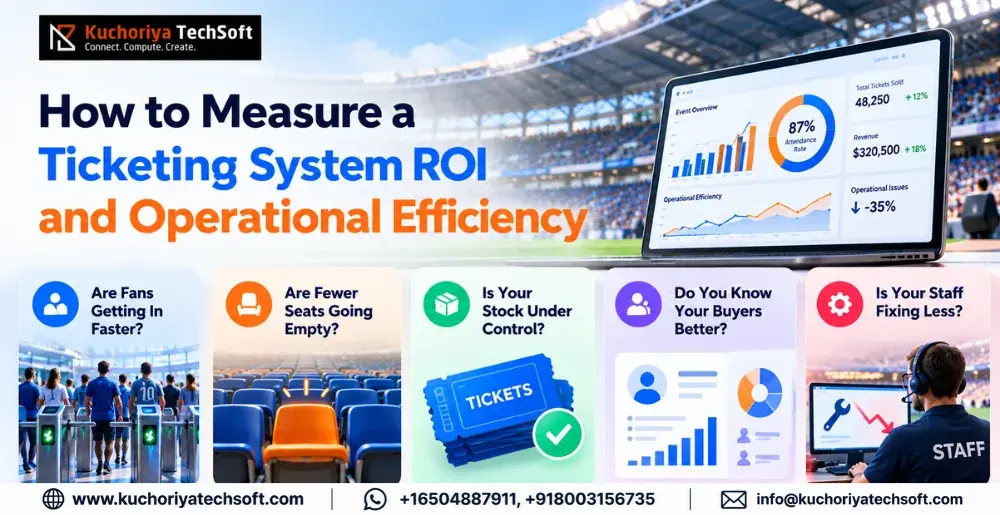
Skip the fancy dashboards. Three months after launch, ask these five questions and compare the answers with last season.
Are Fans Getting In Faster?
Time your gates on a match day. Automated ticket verification should cut the wait you can actually see.
Are Fewer Seats Going Empty?
With real-time seat availability, a sold seat stops showing as open, so fewer fans get turned away at checkout.
Is Your Stock Under Control?
Check your holds, comps and released blocks. Clean stadium ticket inventory management means none of them go missing.
Do You Know Your Buyers Better?
Useful stadium ticketing analytics tell you who renews and which price tier sells out first.
Is Your Staff Fixing Less?
Count the hours spent on refunds and manual fixes. Then ask each vendor which AI-powered stadium ticketing features they offer, and whether AI stadium ticketing development, like demand forecasts, is on their roadmap.
Stadium Ticketing Vendor Evaluation Checklist
Take this list to every demo. A fair stadium ticketing vendor evaluation just means asking each vendor the exact same things, so nobody wins on charm.
First, write down your own digital ticketing system requirements for stadiums: capacity, gates, seat types and where tickets get sold. Then go through these:
- Has the vendor run a sports venue ticketing system of your size on a real match day?
- Are fees, setup and hardware all in one written quote?
- Does it clear your stadium ticketing system integration checklist: gates, CRM, payments and accounting?
- Do you own the fan data, and can you export it easily?
- Will a real person pick up the phone on match day?
- Can you call two venues that already use it?
Give each vendor one point per yes. That turns your stadium ticketing system selection checklist into a simple score out of six. Keep the questions to ask a stadium ticketing vendor short and identical for everyone, so the answers line up.
Why Choose Kuchoriya TechSoft for Stadium Ticketing Solutions?
Before you hand match day to any stadium ticketing solution development company, check who they are. Plenty of venues want a long-term stadium ticketing development partner, not a one-off vendor. Here’s where we stand.
1. We’ve Been at It a Long Time
Kuchoriya TechSoft started in 2009. Since then we’ve delivered 1,000+ projects across 100+ industries, and 98% of our clients keep working with us.
2. We Listen First
Our stadium ticketing software consultation starts with a simple chat about your gates, your seats and your fan data. No slide deck, no pushy pitch.
3. It Works With What You Have
We build stadium ticketing technology solutions that talk to the gate scanners, CRM and payment tools your team already uses.
4. Built Around Your Venue
Every stadium runs a little differently. That’s why we make ticketing solutions for stadium operators to fit your way of working, not the other way round.
5. Safe and Easy To Reach
We’re ISO 27001 and ISO 9001 certified. Our team of 350+ developers works with clients in 40+ countries, and if you message us, you usually hear back within 30 minutes.
Conclusion: Choosing a Ticketing System That Scales with Your Stadium
Pick the system you will still be happy with when the crowd doubles, not the one that only looks good in a demo. Test it at a real gate, go through the fees line by line, and keep your fan data in your own hands. The right stadium ticket management system makes your staff’s job a little easier every season.
Of course, sometimes nothing off the shelf fits. If that is your situation, stadium ticketing software development built around your venue may be the smarter move, and our stadium ticketing software developers are glad to talk it through with you.
And if you know a club or venue stuck on this decision, you can point them our way. Agencies, consultants and IT firms can join our referral partner program, or build something longer term through our associate partner program.
Want to talk about your own stadium? Contact our team and we will take it from there.
Frequently Asked Questions About Digital Ticketing Systems for Sports Stadiums
Q. So which ticketing system is actually best for a stadium?
A. Depends on the stadium. A small club ground and a huge arena need very different things. Pick two or three vendors, hand each one of your busiest match days to run, and go with the stadium ticket booking system that doesn’t fall over.
Q. What’s this going to cost us?
A. It varies a lot. Some vendors take a cut of every ticket, some want a yearly fee, some do both. Scanners and setup are extra. Get it all in one quote and look at three seasons, not one.
Q. Can someone just copy a ticket and sneak in?
A. Not easily. The QR code keeps changing and every scan gets checked live. Forward a screenshot to a mate and it’s useless by the time he reaches the gate.
Q. Will it work with the turnstiles we already have?
A. Often yes, but check. Ask which turnstile makers the vendor has already hooked up, then watch it run at a real gate before you sign.
Q. How do we get queues moving faster?
A. Fans use online stadium ticket booking and the ticket’s already on their phone, so a scan takes a second. A few extra entry lanes help too, and offline scanning saves you when the signal drops.
Q. What should I ask vendors before choosing?
A. Fees first. Then who picks up the phone on match day, who owns the fan data, and how easy it is to leave. Oh, and ask what happened at their last sold-out game.