What Is AI-Powered eCommerce App Development?
It means building a shopping app that learns from every search, tap, and purchase, then uses that data to personalize what each shopper sees next. Search, recommendations, support, and pricing all get smarter with use.
Picture this. Someone searches “black dress for a wedding,” ignores half the results, and buys the fourth one. The app logs it. The next shopper gets better picks, faster.
So, what are AI eCommerce apps? Stores that improve with every visit. Amazon’s “customers also bought” row is the one you’ve already seen, and it’s no small feature: recommendations can drive 25 to 35% of e-commerce revenue. An AI-powered eCommerce app stretches that idea across the entire store. Brands know it, too. 84% of e-commerce businesses rank AI as their top strategic priority. (Source)
What’s inside one?
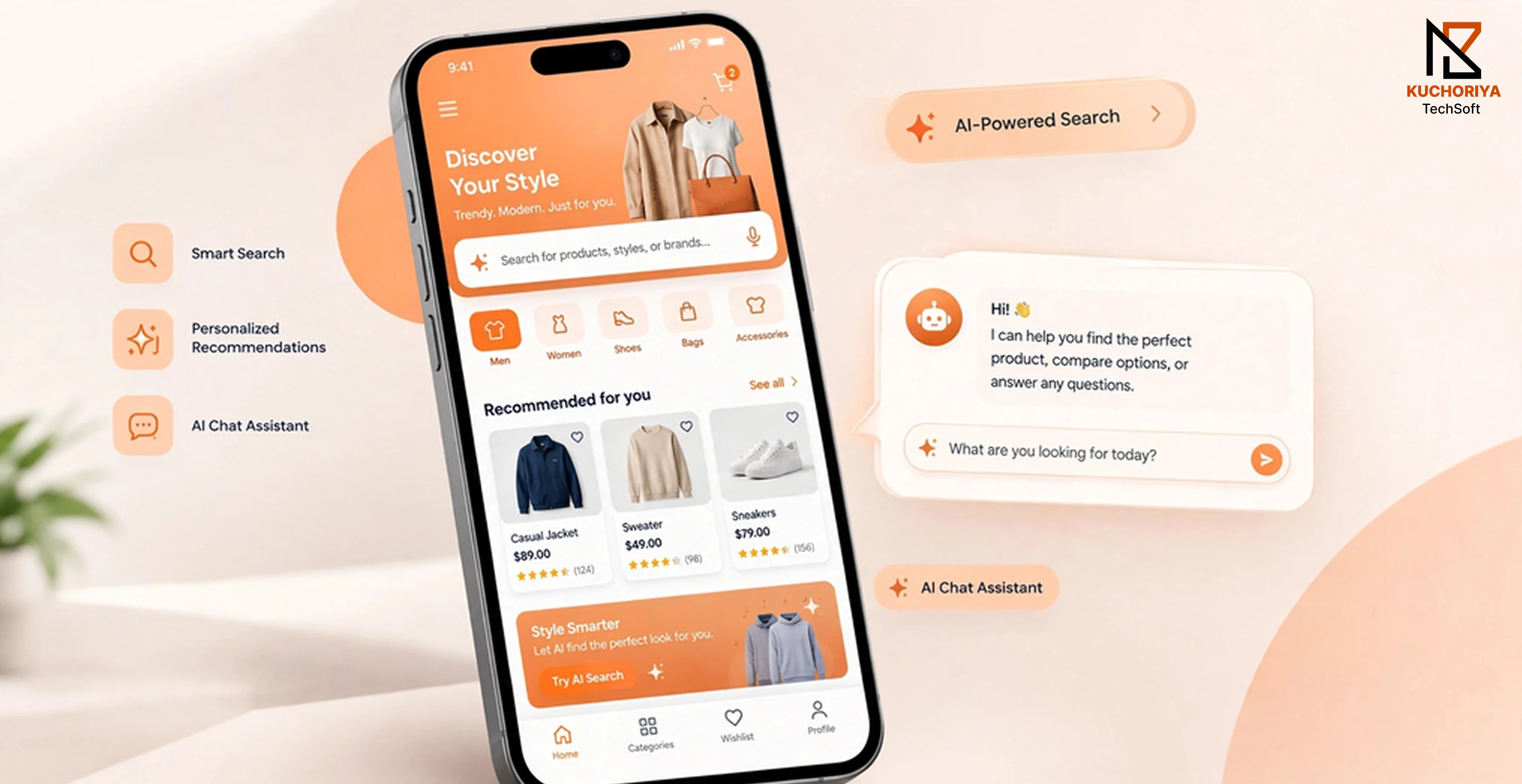
- Smart search that handles typos and vague queries
- Chatbots that sell and support at 2 a.m.
- Personalized feeds for every user
- Dynamic pricing and stock planning
That’s the core of AI-driven eCommerce app development. The last item matters most. Intelligent eCommerce app development pays off in pricing and inventory, because those two quietly decide your margins.
Timing is the catch. Treat an AI-enabled eCommerce application as a phase-two add-on and you’ll likely rebuild your data layer later. eCommerce app development with AI costs less when it starts in sprint one. The right AI solutions for eCommerce slot in easily before you design the first screen.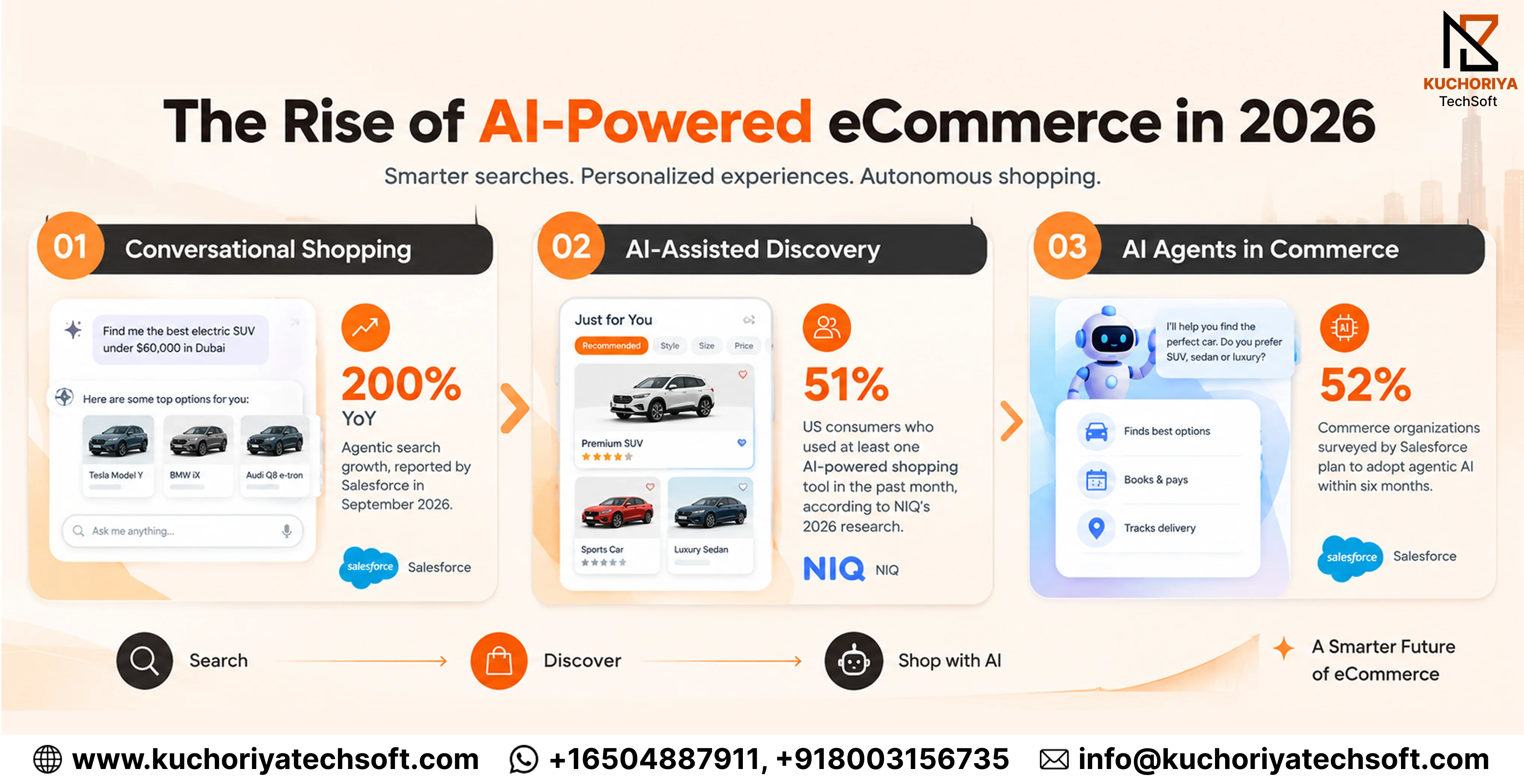
Why Do eCommerce Apps Need AI?
Because shoppers expect an app to know what they want, and fixed filters can’t keep up. AI learns from behaviour and adjusts in real time.
What are the benefits of AI in eCommerce?
- More sales from personalised picks.
- Lower support costs with round-the-clock chat.
- Smarter pricing and fewer stockouts.
- Faster, more relevant search.
The benefits of AI-powered eCommerce apps show up in revenue too: AI leaders report revenue gains of up to 40% from personalisation. (Source)
A Quick Example
Picture a shopper who leaves running shoes in the cart. A regular app forgets them. An AI app sends a reminder with their size in stock. That’s how AI improves eCommerce apps, and it builds an AI-driven customer experience where two people open the same app and see two different stores.
Where Automation Fits
AI integration in eCommerce apps can start small, with search or recommendations. From there:
- Customer experience automation answers “where’s my order?” instantly.
- Retail automation handles reorders and price changes.
- AI commerce automation ties both together, so routine decisions run without constant checking.
Best AI Features for eCommerce Apps: Chatbots and Shopping Assistants
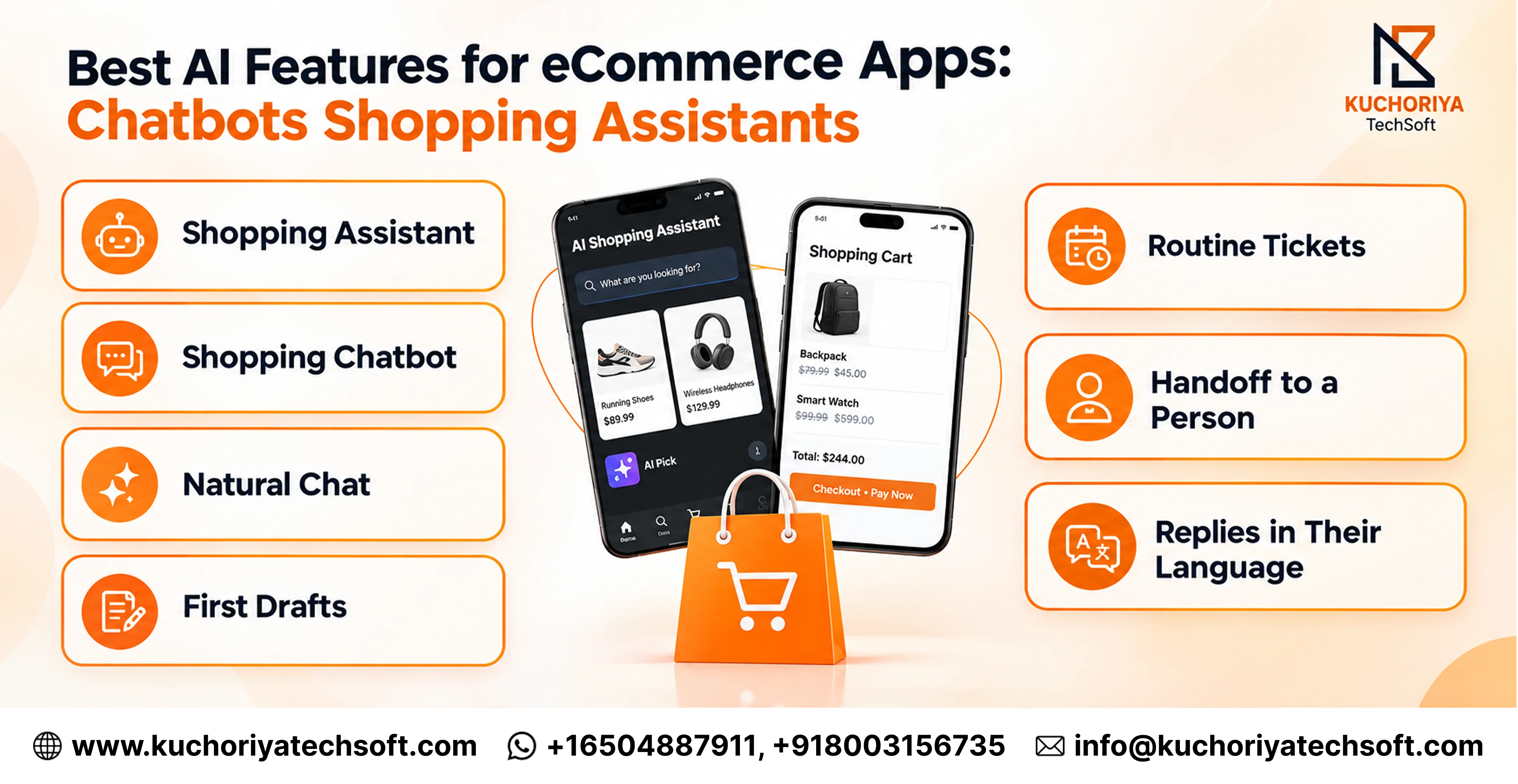
Start with these AI eCommerce app features. The rest can wait until these are working well.
1. Shopping Assistant
An AI shopping assistant helps people who don’t know what they want yet. A buyer types “birthday gift for my dad, likes cricket, around $50” and gets a few picks to choose from. A normal search bar can’t handle a sentence like that.
2. Shopping Chatbot
An AI shopping chatbot takes the questions that clog up your support inbox. Does this come in medium? When will it ship? Can I return it? The answer comes right away, even when your team is offline and the shopper doesn’t leave the app.
3. Natural Chat
Conversational AI for eCommerce understands normal typing, typos included. Someone writes “something warm for a cold evening” and sees jackets, not a blank page saying “no results found". Nobody needs to know the exact product name.
4. First Drafts
Generative AI in eCommerce helps most when there’s a lot of writing. Product descriptions and offer emails take forever by hand. It gives a rough first version, someone on your team edits it, and it goes live much sooner.
5. Routine Tickets
AI customer service automation deals with tickets your team has answered a hundred times already. Order status and return rules are the usual ones. Once those run on their own, agents have time for upset customers and odd cases.
6. Handoff to a Person
A good AI chatbot for online shopping knows it can’t solve everything. If a customer is upset or the question is strange, it forwards the chat to a human along with everything already said. People hate repeating themselves.
7. Replies in Their Language
Set the chat up once, and a buyer in Dubai can write in Arabic while one in Dallas writes in English. Same store, same bot, and you don’t need a separate support team for each market.

AI eCommerce Use Cases for Search, Recommendations, and Personalization
Shoppers don’t care what’s under the hood. They care that the search finds the thing and the app doesn’t waste their time. These are the AI use cases for online shopping apps that deliver that, and machine learning in eCommerce is what powers each one.
Stack a few of these and the app starts giving a personalized shopping experience. The homepage isn’t one poster for everybody anymore. AI recommendations for online stores only work if the product data underneath is clean, so sort out the catalog first.
Different store types lean on different pieces:
- AI for fashion eCommerce is mostly about size and fit. Get that right and fewer parcels come back.
- AI for marketplace apps has to rank thousands of sellers and catch fake listings.
- AI for grocery eCommerce remembers your weekly basket and fills it in before you ask.
How Businesses Use AI in eCommerce to Increase Revenue
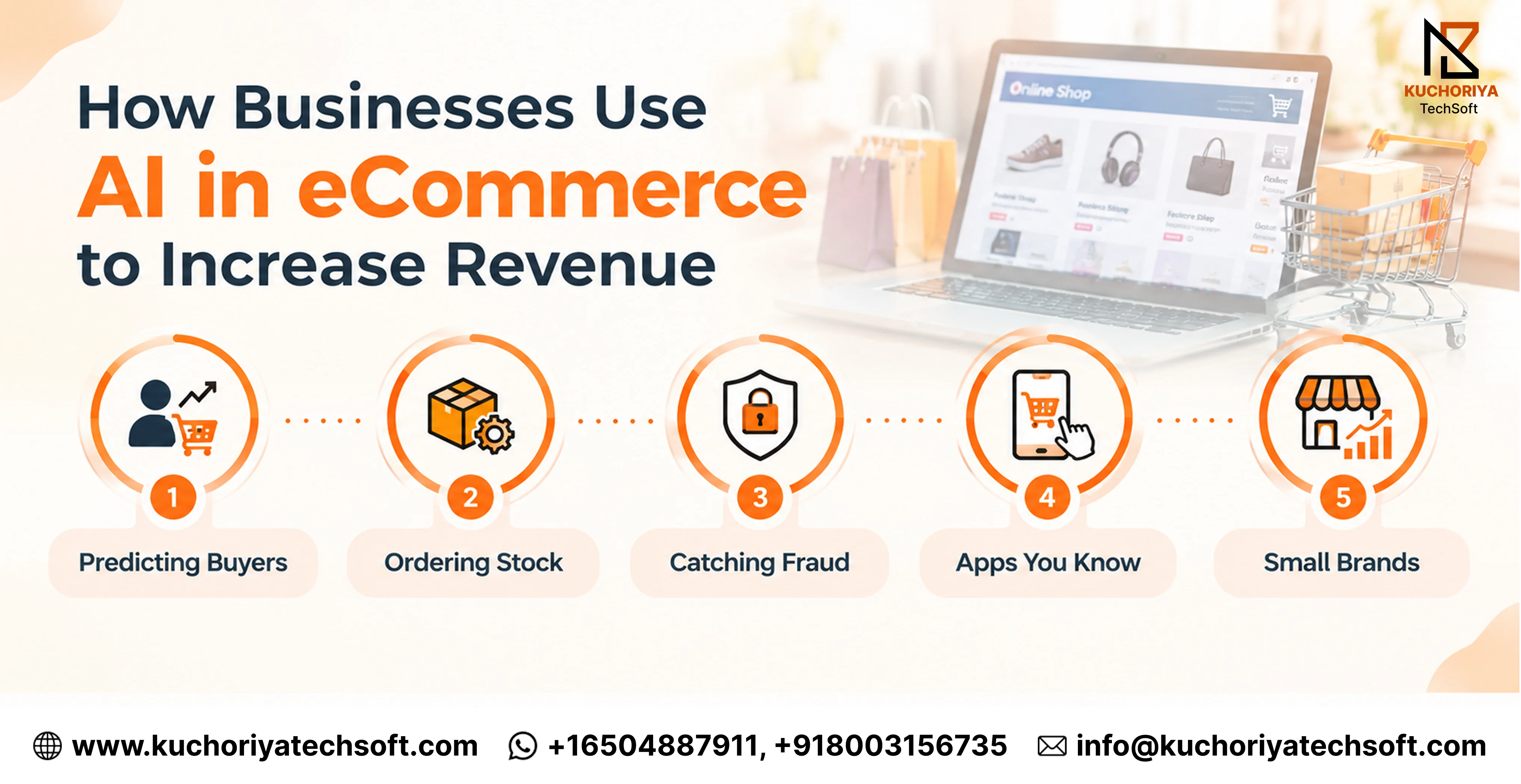
Online stores use AI to predict what shoppers will do next, plan stock, and catch fake orders. That means fewer lost sales and less money stuck in unsold goods.
1. Predicting Buyers
Predictive analytics for eCommerce checks past orders and flags who might buy again soon. Then AI-powered customer segmentation sorts them into groups. Coupon hunters get a coupon. Your regulars don’t need one.
2. Ordering Stock
AI demand forecasting predicts next month’s sales from last year’s numbers, the season, even Diwali. AI inventory optimization takes that forecast and does the reordering. Slow items get flagged early, before they pile up.
3. Catching Fraud
AI fraud detection for eCommerce watches orders as they come in. A huge order from an account made five minutes ago gets held for a check. Normal shoppers never see any of this.
4. Apps You Know
Amazon’s “customers also bought” row is one of the AI-powered eCommerce app examples everyone has seen. Sephora’s lipstick try-on through the phone camera is another one. Both nudge the shopper toward a purchase they were already close to making.
5. Small Brands
AI for D2C eCommerce is easier than most people think, since all the customer data is already yours. Even a team of five can send offers based on what each person actually bought.
Must Read: Top B2B eCommerce Website and Mobile App Development Guide 2026
How Much Does It Cost to Develop an eCommerce Website and Mobile App?
How to Build an AI eCommerce App: Process, Steps, and Timeline
Start with one problem, build a small version, test it on real shoppers, then grow it. That’s the AI eCommerce app development process in a nutshell.
Here are the AI eCommerce app development steps most teams follow:
- Pick one goal. Better search, fewer abandoned carts, whatever hurts most right now.
- Clean your data first. Duplicate products and missing sizes will confuse any model.
- Search or chatbot? Choose one feature and the tech choices get easier from there.
- Build a small MVP with only that feature inside the app.
- Hand it to real shoppers for two weeks. They’ll find problems your team never thought of.
- After launch, check the results every month and feed in the new orders.
A simple MVP often lands in three to six months. The AI eCommerce app development timeline for a full custom build runs longer, sometimes a lot longer.
Data causes most of the pain. Those are the AI eCommerce app development challenges teams hit first: messy catalogs, missing order history, and old systems that don’t connect. They slow a project down more than the AI part does.
You don’t need to build everything yourself. AI tools for eCommerce app development include ready-made recommendation engines and chatbot platforms, which can save weeks on a first version.
AI eCommerce app security matters from day one, since you’re holding payment details and shopper data. Encrypt it, limit who can see it, and find out how any outside AI service stores what you send it.
AI eCommerce Technology Stack and Development Cost
You don’t need a giant toolbox. AI technologies for eCommerce app development mostly come down to four things: a database, a model that learns, something that handles language, and the app itself. Small projects begin with just two.
Those are the AI technologies used in eCommerce apps most teams reach for first.
What It Costs
Money next. The AI eCommerce app development cost starts from what a normal eCommerce app costs. Agencies charge about $80K to $250K (USD) for that, and take 4 to 8 months. AI is extra. groovyweb
Want the cost to build an AI eCommerce app lower? Launch with one feature, say search, and add the rest once it’s paying for itself.
What Pushes the Price Up
A few AI eCommerce app development cost factors do most of the damage. Too many AI features at once. Android and iPhone both, instead of one. Developers in an expensive city. And messy data, which can eat weeks before any AI work even starts. Old systems add to the AI integration cost for eCommerce as well, because someone has to wire them in.
How to Choose an AI eCommerce App Development Company
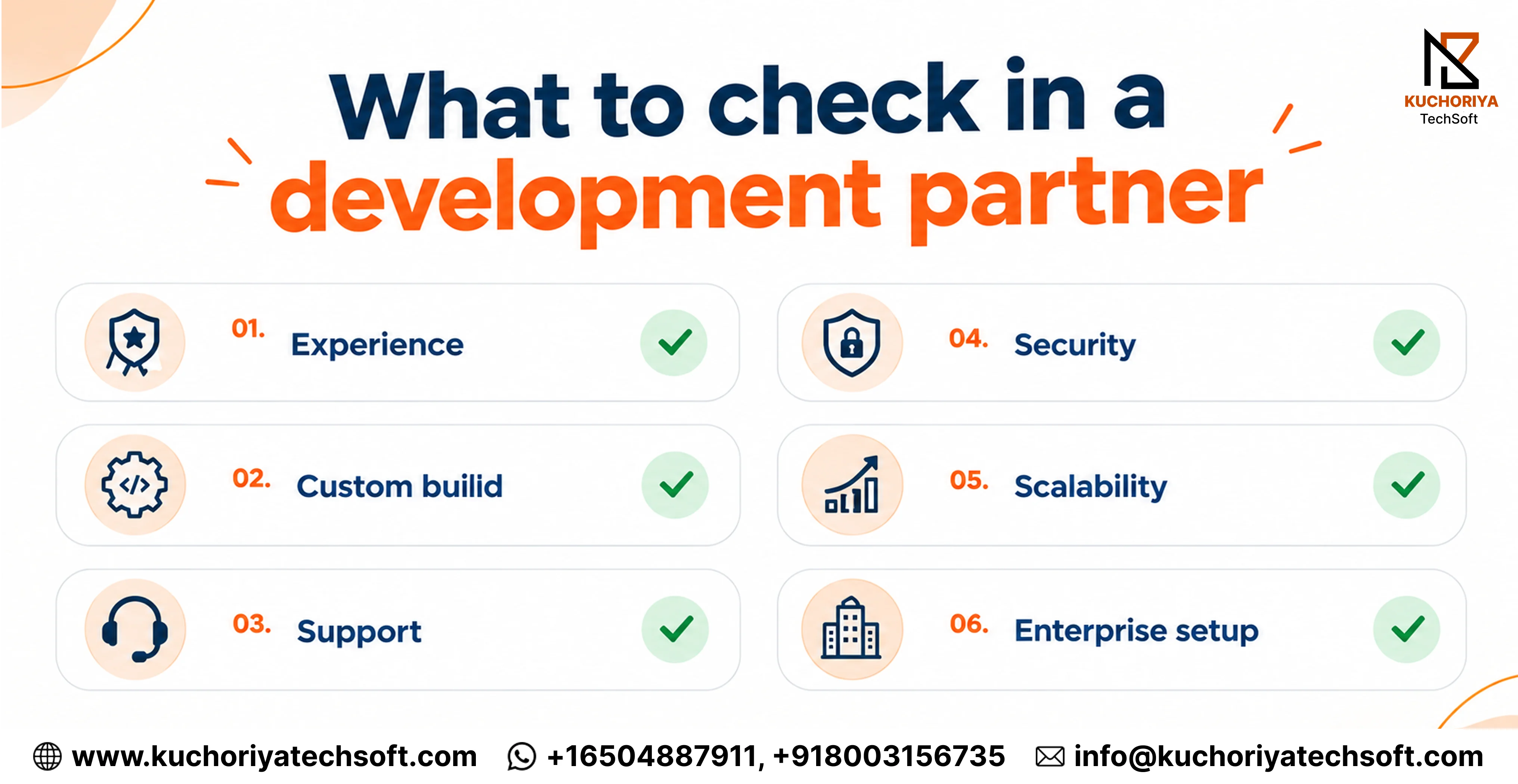
The wrong partner costs you months. Searching for an AI eCommerce app development company USA brands can rely on? Check these six things, and see how Kuchoriya TechSoft answers each one.
1. Real Experience, Not Just Claims
Ask any agency to show a live eCommerce app with AI inside. At Kuchoriya TechSoft, our AI eCommerce app developers USA clients work with have built these systems for stores in the USA, UAE, UK, Canada, and Australia.
2. Built Around Your Store
Templates break the moment your pricing or checkout gets unusual. Our custom AI eCommerce app development starts from your catalog and your customers, so nothing gets squeezed into a ready-made box.
3. Support Beyond Launch Day
Our AI eCommerce app development services cover planning, design, development, testing, and support after go-live. Clients in the US also get working hours that overlap with theirs, which matters for AI eCommerce development services USA projects where a quick reply saves a day.
4. Security From the First Sprint
A secure AI eCommerce application isn’t a feature you bolt on at the end. We plan how card details and shopper data are stored and who can reach them before a single screen is built, and we check what any outside AI service gets to see.
5. Ready for Traffic Spikes
A scalable AI eCommerce app has to survive Black Friday, not just a quiet Tuesday. We test AI eCommerce app scalability early, with heavy loads, so the first big sale doesn’t become the first big crash.
6. Fits Small and Large Setups
For big retailers, our enterprise AI eCommerce solutions connect the app to warehouse, accounting, and CRM tools. Smaller brands get the same AI eCommerce solutions, just sized to their budget and rolled out in phases.
Conclusion: The Future of AI-Powered eCommerce Apps
The future of AI in eCommerce apps looks a lot like a helpful shop assistant. Search will follow plain sentences, chat will take the routine questions, and stock and prices will adjust by themselves.
AI transformation in eCommerce doesn’t have to happen all at once. Pick search or chat, get it working, and check the numbers before spending on more. If you’d rather not guess, our virtual CTO services for eCommerce give you a technical lead without hiring one full-time.
Good AI-powered eCommerce development shows up in sales and repeat orders. Our eCommerce referral partner program is for people who know a store that needs this. Agencies and freelancers can join our AI eCommerce associate partner program and take on AI projects with our developers behind them.
Planning an AI eCommerce app? Contact us with a few details about your store, and we’ll tell you what to build first.
FAQs About AI-Powered eCommerce App Development
Q. How does AI work in eCommerce apps?
A. It uses the data your app already collects. Every search, click, cart addition, and order gets stored, and a model finds what tends to go together. Say a lot of tent buyers also buy sleeping bags. The app then puts a sleeping bag on the tent page.
Q. What AI features should an eCommerce app have?
A. Smart search, product recommendations, and a chatbot. That’s the short list. Pricing tools and fraud checks come later, once you have enough orders for them to learn from.
Q. How much does an AI eCommerce app cost?
A. Ask three agencies and you’ll get three different numbers. Searching alone is cheap. Chat, forecasting, and fraud checks in one build are not. Request a separate price for each feature.
Q. How to build an AI-powered shopping app?
A. Begin with whatever is costing you money right now, maybe abandoned carts. Clean the product data, build a basic version that handles only that, and release it to a small group of shoppers. Watch what they do. The next feature comes after.
Q. What are the use cases of AI in eCommerce?
A. Shoppers get better search, suggestions, chat, and photo search. Store owners get demand forecasts, reorder alerts, fraud flags, and smarter email targeting.