Why Does Choosing the Right Insurance App Development Company Matter?
Choosing a development team is a big call for any insurer. Get it wrong, and you lose months, money, and customers. A strong insurance app development partner in the USA can save you from most of that.
Customers don’t wait around either. JD Power found that 29% of insurance customers switched insurers last year, and 44% of buyers now purchase through digital channels. If your app feels slow or confusing, people simply leave. (Source)
Many buyers ask how to choose an insurance app development company and then go with the cheapest quote. That’s usually where trouble starts. Cheap often means thin security and no help after launch. A good insurance technology partner for US insurers already knows state rules and how carriers work, so your insurance digital transformation doesn’t stall halfway.
So, what makes a good insurance technology partner? Real insurance experience, proven delivery, tight security, and straight talk.
What Should You Look for in an Insurance App Development Partner?
Before you shortlist anyone, work out what to look for in an insurance app development company. Here’s a quick test: a strong insurance software development partner will ask how your claims desk runs before it mentions a single tool.
Your Checklist
- Insurance app development services that go past coding into QA and post-launch fixes
- A custom insurance app development company that bends to your underwriting rules, not the other way round
- An insurance mobile app development company with apps agents already use in the field
- Insurance application development services where one team owns design, build, and testing
- An insurance technology development company that introduces its engineers, not just a sales deck
- A custom insurance software development company that answers without jargon
Ask for two past client names. If they dodge, move on.
10 Key Factors to Check Before Hiring an Insurance App Developer
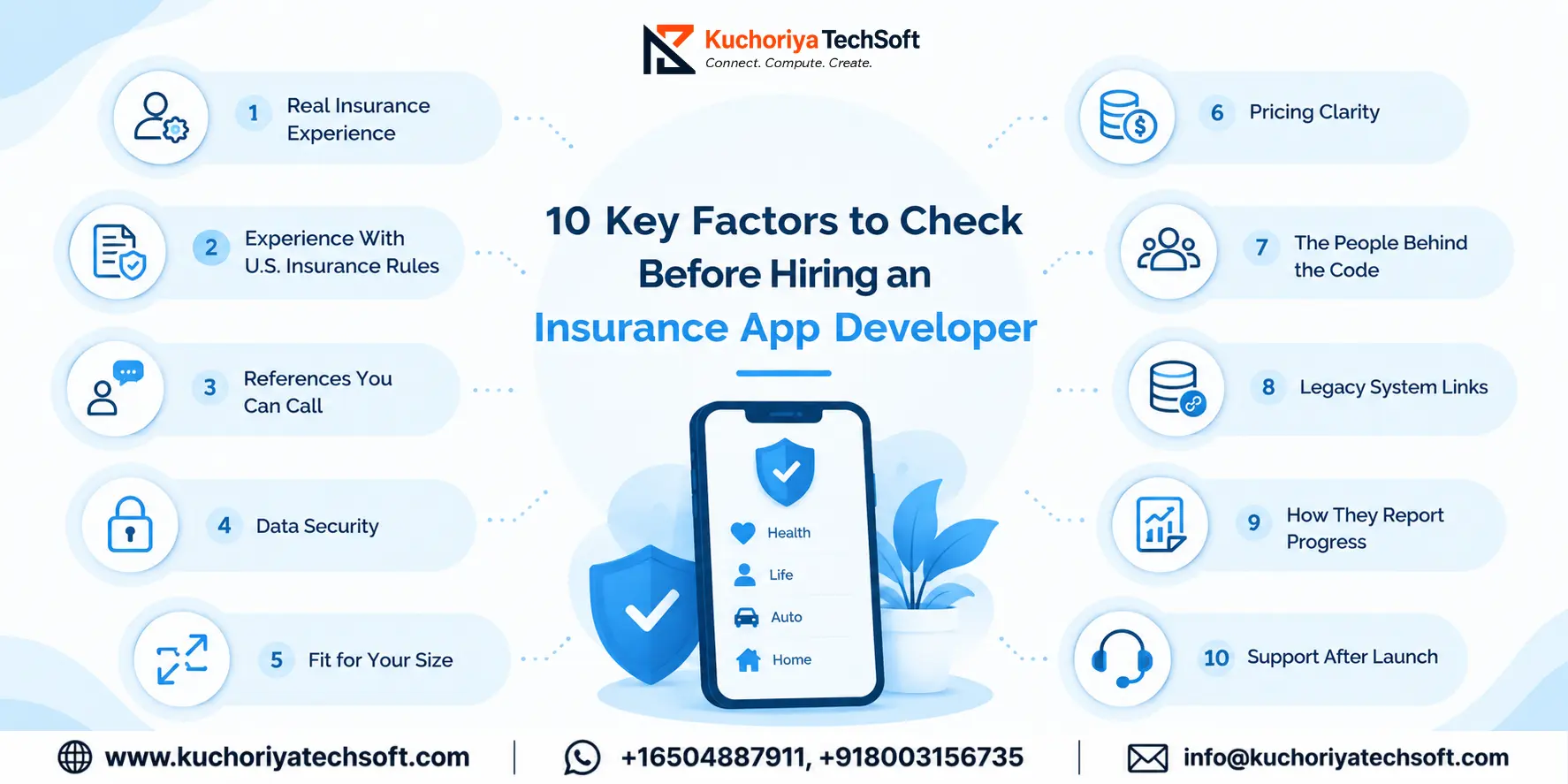
Planning to hire insurance app developers? Don’t go with a gut feeling. Run each candidate through these ten checks, and you’ll also see how to evaluate an insurance software development vendor without leaning on their pitch deck.
1. Real Insurance Experience
Ask which policy admin, claims, or billing systems they’ve shipped. A team that only built food delivery apps will learn insurance on your budget.
2. Experience With U.S. Insurance Rules
Every state has its own filing and rate approval process. An insurance app development agency USA that has been through those filings will spot trouble early. Newer teams tend to find out in the final month, when changes cost the most.
3. References You Can Call
Anyone can paste a logo wall on a website. Phone two past clients instead and ask what slipped, how late it was and who fixed it. Jot the answers beside each name in your insurance app development vendor comparison sheet.
4. Data Security
Who on their team can open your policyholder records? If the answer takes a while, that tells you plenty. Ask about encryption, audit logs and how fast they’d report a breach.
5. Fit for Your Size
Running a ten-person agency? An insurance app development company for insurance agencies will already get commissions, renewals and producer licensing. A big enterprise vendor may hand your project to whoever is free that month.
6. Pricing Clarity
Ask for the scope line by line, with hours beside each item. A quote that says “full platform, one price” is where a small project quietly doubles. Anything excluded should be written down too.
7. The People Behind the Code
Before you hire insurance software developers, ask to meet them. The sales lead won’t be writing your code. Find out if the same people stay until launch.
8. Legacy System Links
Your app has to talk to old policy systems, payment gateways and CRMs. Ask for one example where they connected a legacy system. Then ask what broke.
9. How They Report Progress
Weekly demos beat monthly status emails. You want working screens, not slides. A good insurance software development outsourcing partner will also lay out how handoffs work across time zones.
10. Support After Launch
Bugs appear once real users show up. Check the contract for response times and who pays for fixes. An insurance software development company USA with a local contact is easier to reach when something breaks.
How to Check an Insurance Company’s Experience and Past Projects
Wondering how to verify an insurance app development company’s experience? Ask for proof and match it against the table below. Begin with their insurance app development portfolio.
Look for insurance software development case studies with before and after figures. Real insurance technology expertise shows when the team explains why they built a feature that way. Decide what technical skills insurance app developers should have for your project, and test how to evaluate insurance software scalability with the growth question above. Finally, the insurance app development experience that counts is recent and close to your line of business.

How Will Your Insurance App Stay Secure and Protect Customer Data?
One leak can cost an insurer a customer for good. Here are the four questions to put to any vendor.
Whose Information Sits in the App?
A single policyholder file can hold a Social Security number, a doctor’s note and a bank account. Quiz the vendor on their insurance app security capabilities: who can log in, from where, and what they get to see once inside.
Do Privacy Laws Reach Your Vendor?
They do, in practice. The Gramm-Leach-Bliley Act covers how insurers guard customer records, and plenty of states layer the NAIC model law on top. Ask how the team’s insurance data protection practices deal with who sees what, and what happens when something goes wrong.
How Is the App Tested?
Good insurance software security practices include code reviews and penetration tests. Solid insurance software quality assurance catches claim and payment errors before customers do.
What About Old Systems?
Legacy insurance system modernization needs extra care, because moving old data is where leaks tend to happen.
Which Technologies and Integrations Does Your Insurance App Need?
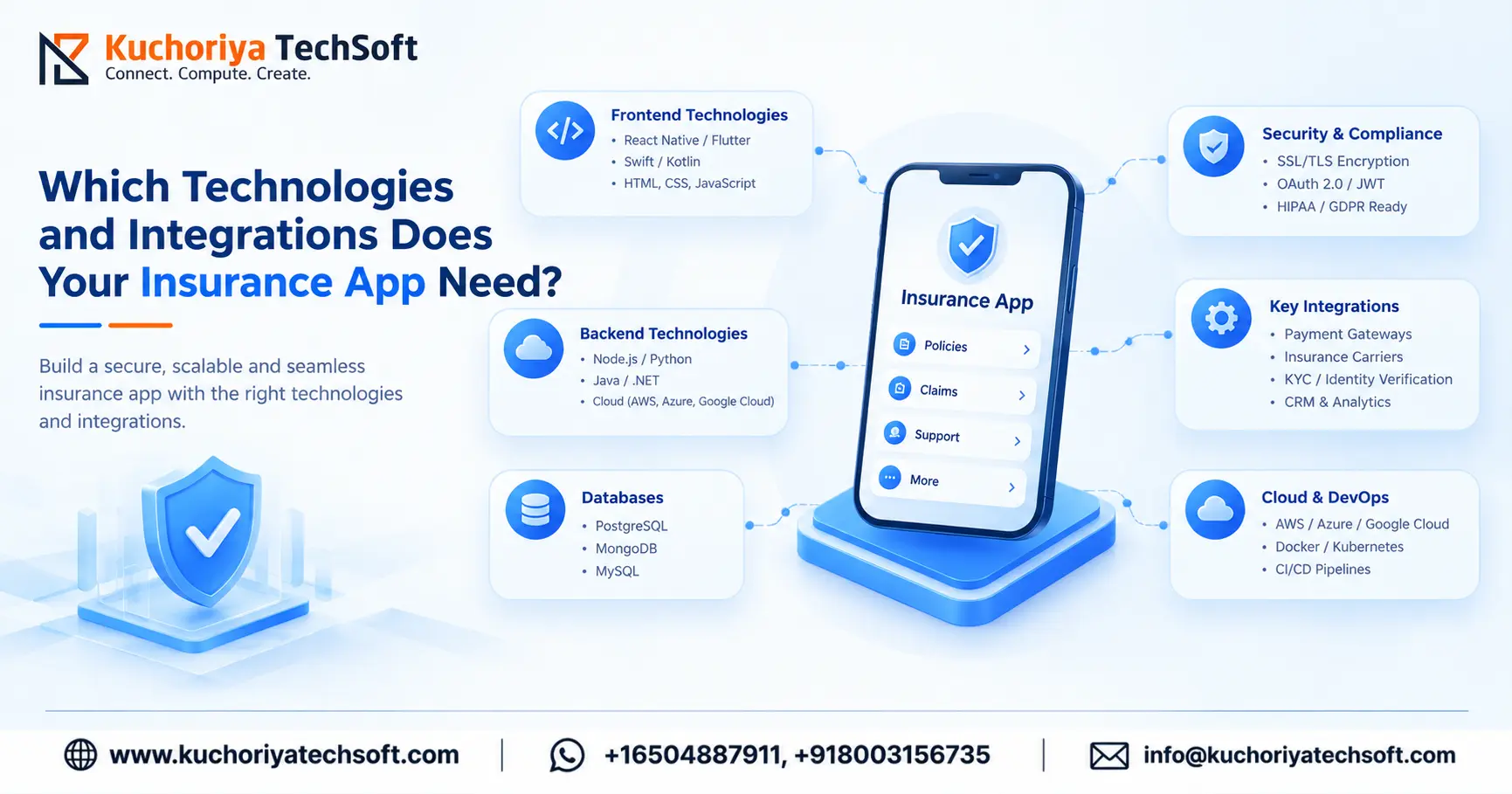
Pick technology by the job it does, not by what’s trending. Good InsurTech software development starts with a simple map, and a clear insurance platform development plan gives every piece one shared base.
Each row is its own build, yet they all have to share data. Every quote and renewal lands in policy administration system development, so start there. Faster settlements come from claims management software development. Agents get one customer record instead of five inboxes through insurance CRM development. Follow-ups and approvals can run themselves with insurance workflow automation, and insurance API integration is what lets the new app pull data from your older systems.
AI is worth a look once those basics work. AI claims automation for insurers can sort straightforward claims quickly and hand the odd ones to a person. AI underwriting software development helps underwriters read risk faster, though a human should still sign off. If one row eats most of your team’s week, build that one first.
Related Reads: Top 10 Insurance App Development Companies in the USA for 2026
How to Build an Insurance App MVP That Attracts Users and Investors
Custom Insurance App vs. Ready-Made Software: Which Is Better?
Neither option wins every time. Put them side by side before you decide.
Custom wins when your edge lies in how you work. That is where insurance customer portal development and insurance agent portal development pay off, since both can follow your own journey. Ask any team for scalable insurance software architecture and a plain-language view of their insurance application architecture before you sign.
Leaning custom? Look for a partner who’ll tell you honestly when ready-made is enough. That’s the heart of how to select an InsurTech development company. If you’re asking how to choose an insurance app development company in the USA, check that they know state rules and can show live work. Also confirm which integrations should an insurance app development partner support, such as payments, e-signature, and your core system.
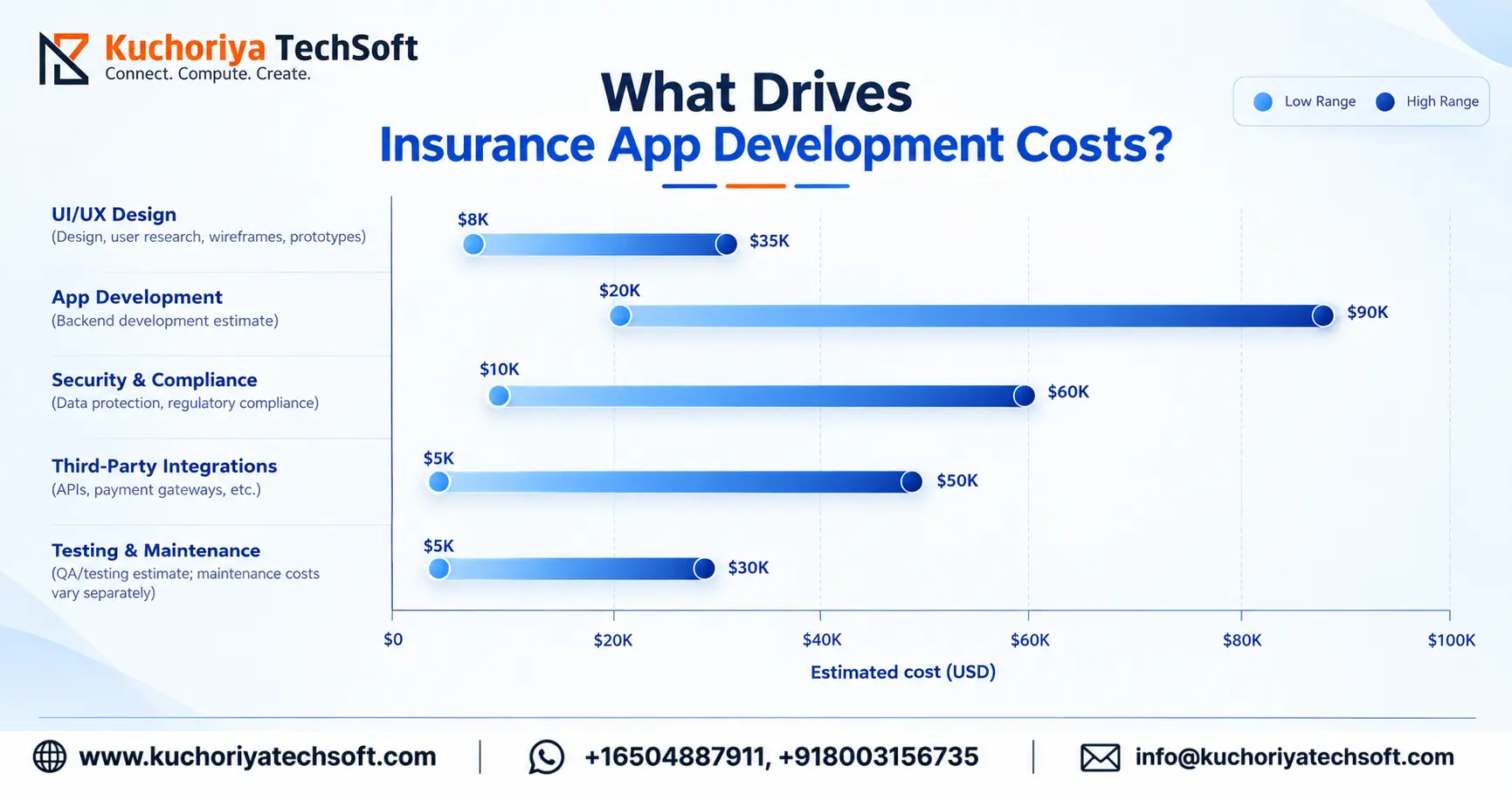
Insurance App Development Cost Breakdown: Key Expenses and Timelines
Two vendors can quote the same app and land tens of thousands apart. That gap is why an insurance app development consultation should happen before anyone talks budget.
What else moves the number:
- Security work and testing, since audits and device checks add real hours
- Maintenance after launch, which never really stops
- Timeline: a simple MVP takes about 3 to 4 months
- Get an insurance software development quote that prices each of these
- Request an insurance app development proposal that breaks the timeline into phases
How to Compare Development Companies, Quotes, and Project Plans
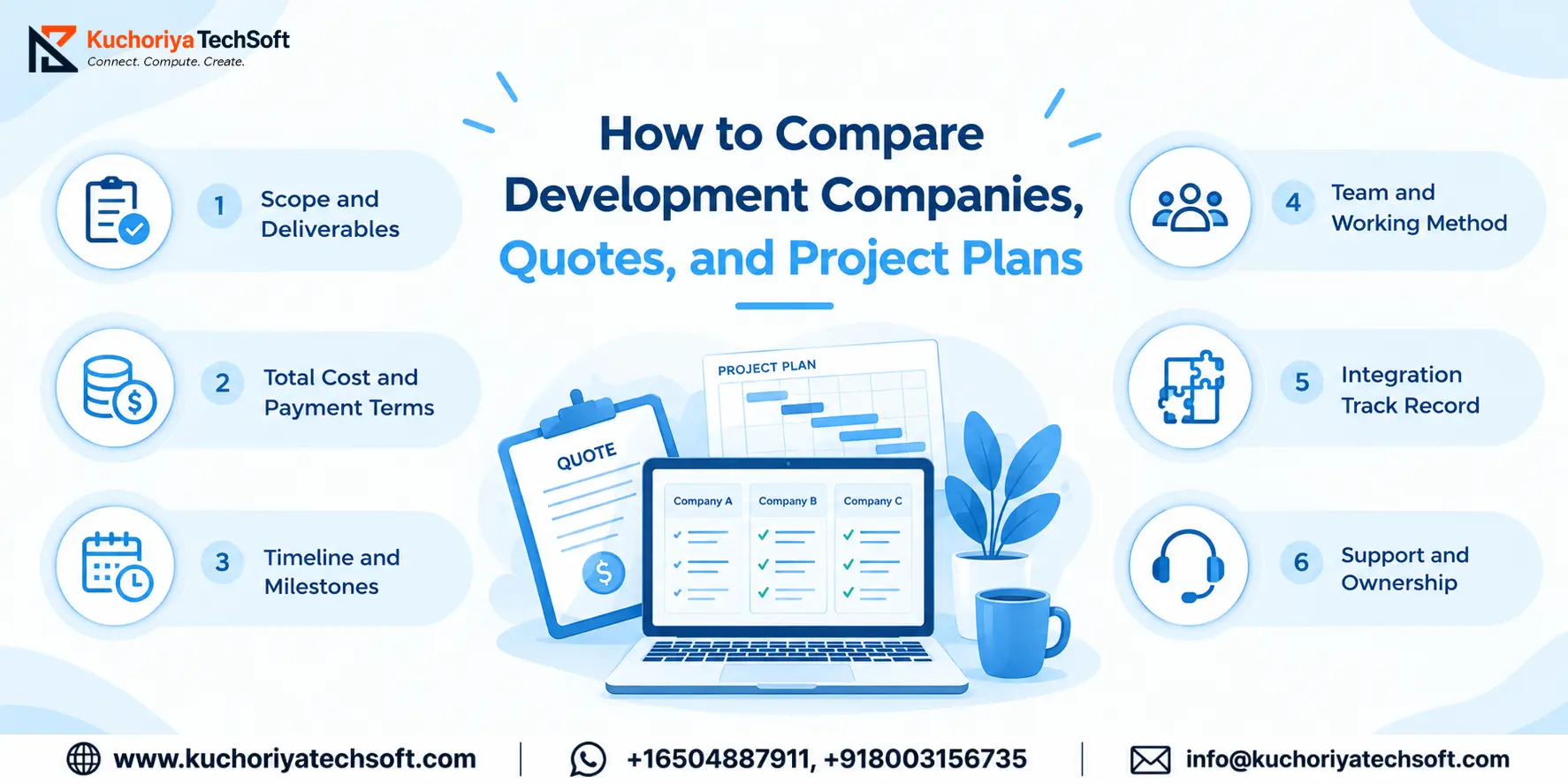
Three quotes, three different formats. Here’s how to compare insurance app development proposals without getting lost.
1. Scope and Deliverables
- Every feature, screen, and integration named
- Exclusions written down, not assumed
- Clear sign-off steps for each deliverable
2. Total Cost and Payment Terms
- Fixed price or hourly, with the reason
- Payments tied to milestones, not dates
- Extra charges for changes spelled out
3. Timeline and Milestones
- Phase-wise dates, not one launch date
- Time set aside for testing and fixes
- A plan for what happens if dates slip
4. Team and Working Method
- Their insurance software development methodology, such as agile sprints
- Regular demos so you see progress early
- Named people, not “a dedicated team”
5. Integration Track Record
- Proof of insurance app integration experience with core systems
- Past work with payment and e-signature tools
- One past project you can ask about
6. Support and Ownership
- Who owns the code after launch
- Support hours and response times
- Handover notes and documentation included
Score each proposal out of five on these six points. The gap between vendors usually shows up fast.
What Happens After Launch? Support, Updates, and Maintenance
Here’s something vendors rarely say upfront. The first real bug report usually lands within a week of launch, and it’s never the one you tested for. That’s why insurance app maintenance and support belong in the contract, not in a handshake promise.
What Will You Pay For Later?
Phones get a new operating system every year, and a state can change a filing rule with barely any notice. Each time, someone has to adjust the app. Decide now who that someone is and what they charge.
Who Answers When Something Breaks?
Picture a claim form freezing on a Friday evening. Does the vendor pick up, or does a ticket sit until Monday morning? Get the hours and response times in writing.
Where Does the App Go From Here?
After a few months, you’ll see which screens customers skip. Sit down with the team every quarter and decide what to change next.
Wondering how to assess post-launch insurance app support? Phone one of their current clients and ask about the last bug they reported. How long did the fix take?
Why Choose Kuchoriya TechSoft for Insurance App Development?
Kuchoriya TechSoft was founded in 2009 and now serves clients in over 40 countries, with an office in the USA. Insurers, agencies, and InsurTech startups work with our USA insurance app developers because the team keeps US business hours when a project needs it. As a US insurance software development partner, we handle everything from planning to post-launch support.
Facts you can verify on our About page:
- 1,000+ projects delivered across 100+ industries
- 350+ developers on the team, with a 98% client retention rate
- ISO 27001 and ISO 9001 certified, which backs our security answers
- 30-minute average response time
Our insurance app development services in the United States cover design, build, testing, and support. Carriers that want policy, claims, and agent tools in one place can ask us about custom insurance software for US insurers. We stay on as your insurance application development partner in the USA after launch too. Book an insurance app consultation, and we’ll walk you through relevant work.
See how we’ve built insurance products in our insurance project portfolio, or read the story behind Aviva Insurance App Development.
Conclusion: Choosing the Right Insurance App Development Partner
Picking a vendor feels like a gamble until you know what to test. Can they show insurance work you can open and click through? Do they answer security questions straight? Is the paper price? Will they still pick up the phone a year after launch? If a vendor stumbles on even one of those, keep looking.
Not ready to build yet? Consultants and agencies in the insurance space can earn by joining our insurance referral partner program, and software firms that want to deliver insurance projects alongside us can look at our insurance software associate partner program. Need technical direction without a full-time hire? Our CTO services for insurance app development can shape your roadmap.
Ready to move forward? Talk to our insurance app team and share your idea.
Frequently Asked Questions About Insurance App Development
Q. What should I check before hiring insurance app developers?
A. Open the store listing of an app they built and check when it was last updated. Read the one-star reviews too, since that’s where real problems show up. Then call a past client.
Q. How do I compare insurance app development companies?
A. Lay the quotes side by side and ask what’s missing from each, not what’s included. One will skip testing, another will skip support. Whatever’s missing tends to come back later as an extra charge.
Q. How much does insurance app development cost?
A. It really depends on what you ask for. Vendor guides quote around $40,000 for a small app, and a quarter million or more once a big platform with claims and billing is involved.
Q. How long does insurance app development take?
A. About 3 to 4 months for a first MVP, though you should add a few weeks if the app has to hook into an older core system, since those links rarely go smoothly.
Q. How important is security when choosing an insurance app developer?
A. Think about what happens if one of their developers leaves next month. Can that person still get into your customer files? A good vendor can explain how they handle access, logging and breach notices without having to look anything up.
Q. Should an insurer choose custom software or an off-the-shelf platform?
A. It comes down to what you do better than anyone else. When pricing or claims handling is that thing, custom protects it. If you’re running ordinary quoting and billing, a ready-made tool will do, and the money you save can go elsewhere.
Q. What support is needed after an insurance app launches?
A. The first few weeks are mostly bug fixes. After that, it’s patches, plus updates whenever iOS, Android or a state rule changes. Get response times in writing.