What It Takes to Build the Right Fintech App
Choosing a fintech app development company is the single decision that shapes everything else in a fintech build, security, compliance, how fast the product reaches real users. Get this wrong and no amount of good design fixes it later.
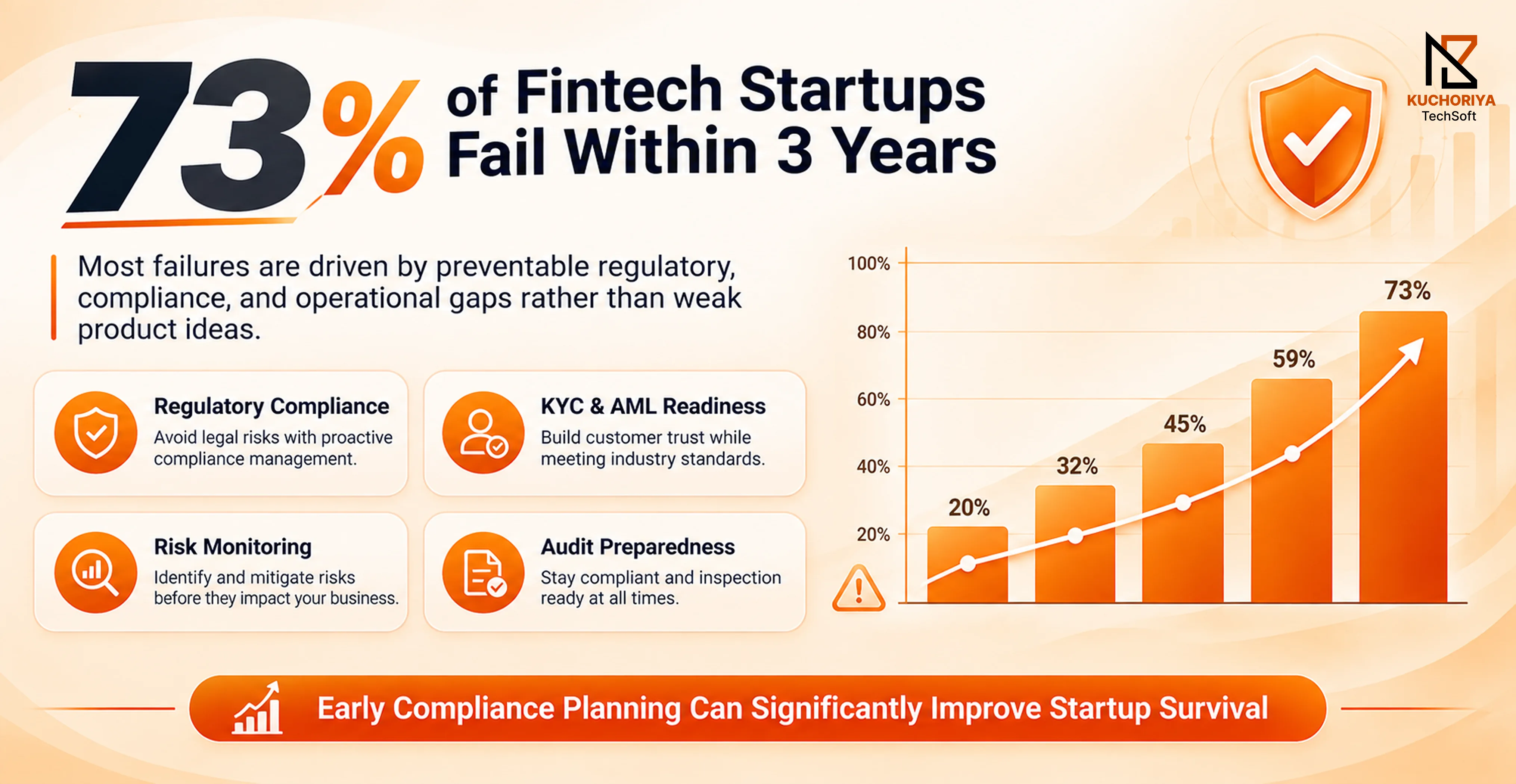
Roughly 73% of fintech startups fail within their first three years because of preventable regulatory and compliance gaps, not a bad product idea. That risk traces straight back to who gets picked to build the app in the first place. (Source)
The right fintech development partner understands AI in fintech at a production level, plans for fintech app scalability from the first sprint, and builds financial technology solutions shaped by teams that have actually shipped regulated financial products before.
Why Choosing the Right Fintech App Development Company Matters
Most fintech apps that struggle after launch had problems baked in from week one, long before anyone noticed.
- Custom fintech app development shaped around the actual users a business serves, not a template reused across every client.
- Fintech data security is built into the architecture from the start, not added after a compliance review flags a gap.
- Fintech app architecture designed to hold up under real transaction load, not just a smooth demo run.
- Digital banking app development experience that separates a working prototype from a banking flow ready for production.
- Payment app development handled by a team that understands settlement timing and failure states, not just the ideal-case path.
Key Factors to Consider When Choosing a Fintech App Development Company
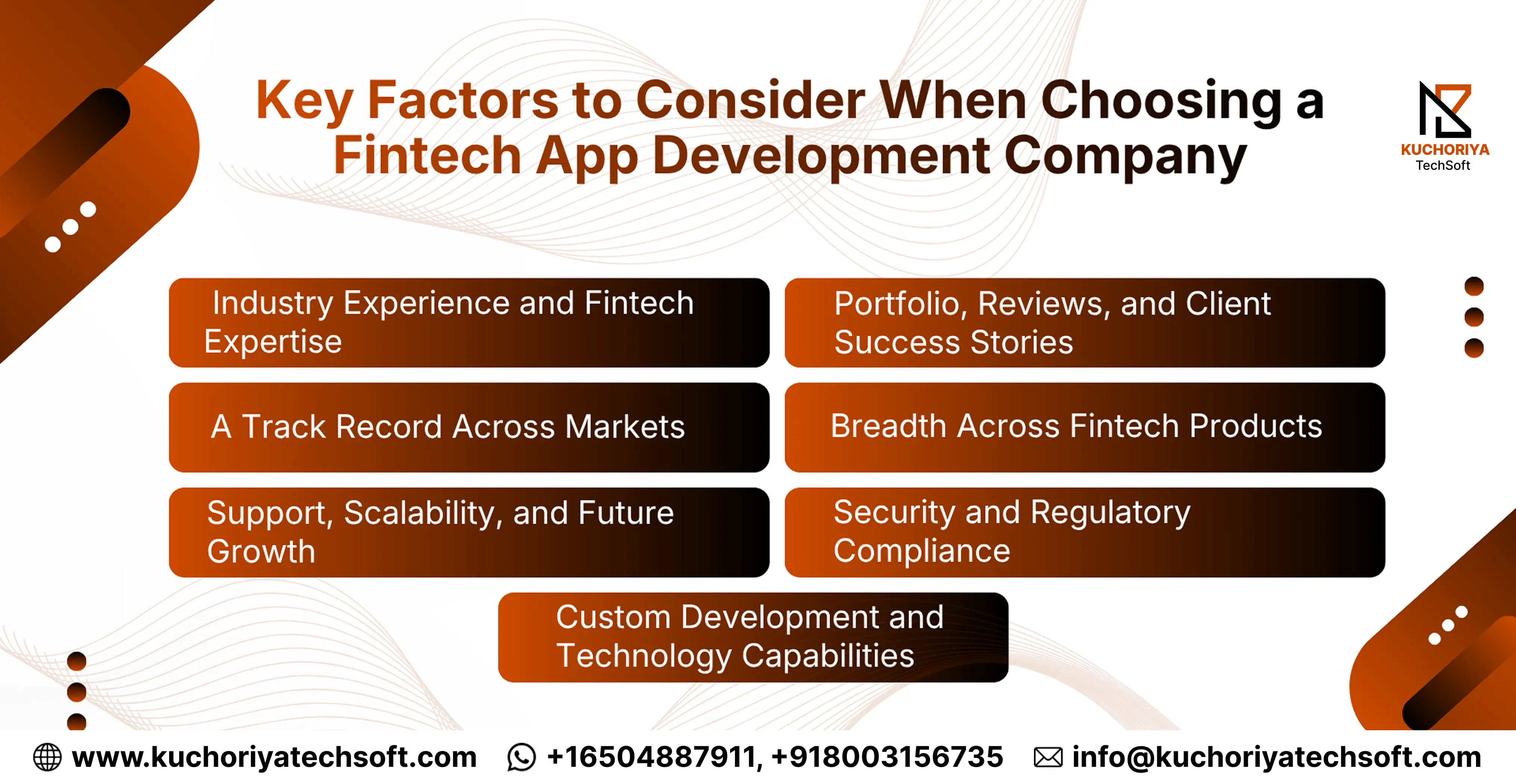
Not every vendor understands what a financial product actually demands. These factors separate the ones who do from the ones learning on your budget.
1. Industry Experience and Fintech Expertise
Real fintech app developers have shipped banking app development and investment app development work before, not just generic apps with a payment screen added on.
2. A Track Record Across Markets
A financial app development company with proven delivery for a fintech app development company USA client, and compliance experience matching a fintech app development company UAE engagement, brings fewer surprises mid-build.
3. Security and Regulatory Compliance
PCI DSS compliance, GDPR compliance, AML compliance, and KYC verification aren't optional extras, they're the baseline every serious fintech build starts from.
4. Custom Development and Technology Capabilities
Fintech application development built on React Native fintech development or Flutter fintech app development, with real open banking integration, the depth expected from a fintech software development company Singapore partner.
5. Portfolio, Reviews, and Client Success Stories
Fintech software development services worth trusting come with real range, digital banking software development company builds, wealth management app development, insurance software development company work, and a fintech app development company Canada partnership.
6. Breadth Across Fintech Products
Experience spanning robo advisory app development, trading app development, buy now pay later app development, and credit scoring software development shows depth, not one lucky project.
7. Support, Scalability, and Future Growth
Enterprise fintech solutions need a partner who stays past launch, with fintech platform development and cloud-based fintech solutions strength that a fintech technology company like a fintech app development company Australia deployment relies on.
Must Read: Fintech App Development: Complete Guide to Features, Cost & Technology (2026)
Questions to Ask Before Hiring a Fintech Development Partner
A good vendor answers these clearly, without dodging or padding the response with jargon.
- Have you shipped fintech mobile app development projects that handled real transaction volume, not just a prototype.
- Do you have direct experience with neobank app development, building a bank product with zero physical branches.
- Can you walk through a payment gateway development project end to end, including how you handled failed transactions.
- What's your background in lending software development, specifically around credit risk and repayment logic.
- Have you built a digital wallet app development product that stored payment methods securely at scale.
- Do you have delivery experience matching what a fintech app developers UK client would expect, given how strict FCA rules are.

Common Mistakes to Avoid When Selecting a Fintech Software Development Company
Most bad fintech hires trace back to one of these decisions, made early and regretted months later.
- Picking a vendor purely on fintech development cost without checking if that quote even covers compliance work.
- Comparing fintech app development pricing across vendors without confirming they're quoting the same scope of features.
- Chasing affordable fintech app development so hard that security testing quietly gets cut from the plan.
- Hiring an offshore fintech app development team without confirming they've actually shipped regulated financial products before.
- Assuming secure fintech application development happens automatically instead of asking exactly how encryption and access control get handled.
- Overlooking a strong local option, like a fintech software development Toronto team, just because an offshore quote looked cheaper on paper.
Why AI and Blockchain Are Reshaping Fintech App Development
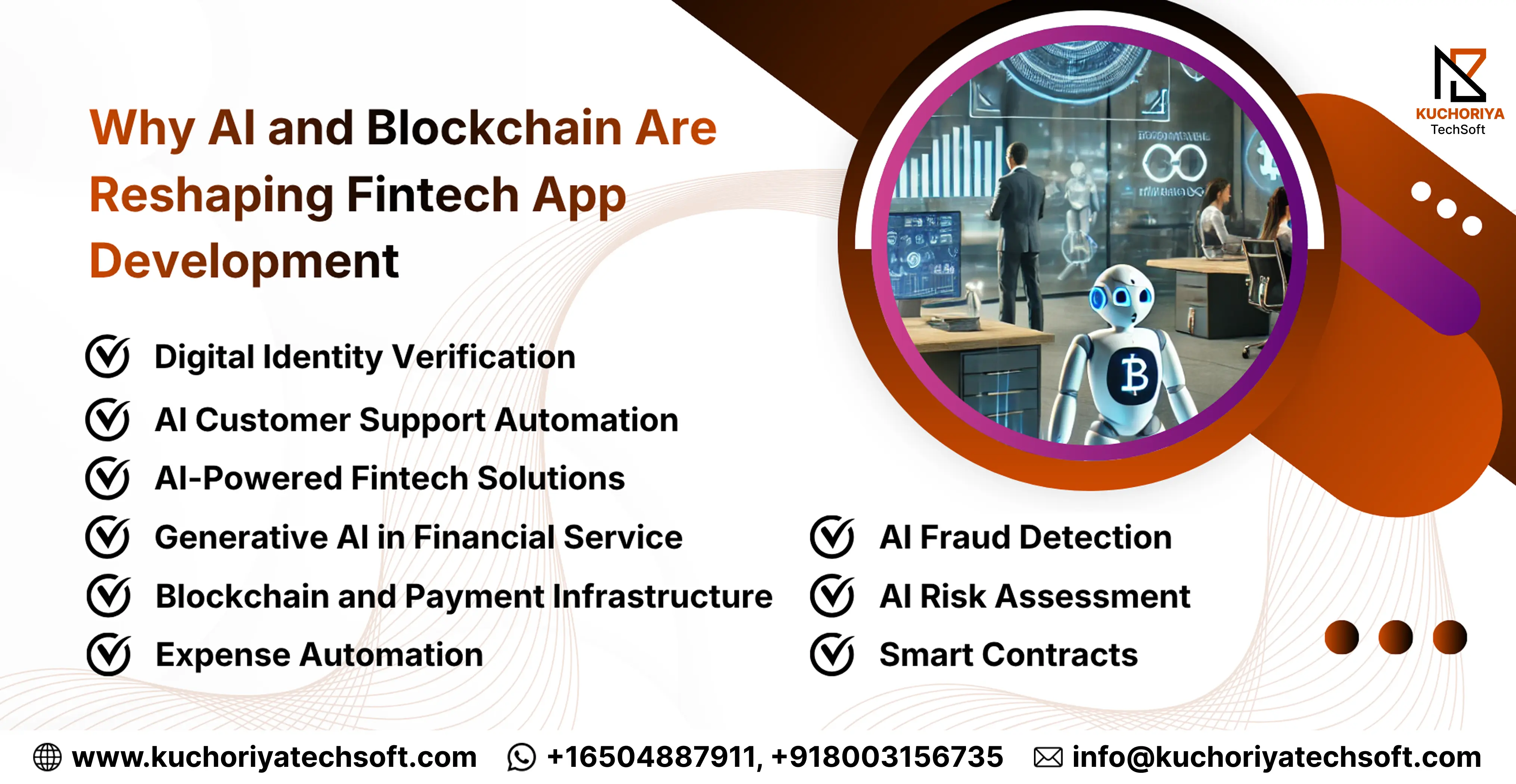
Neither of these is a future trend anymore, both are already deciding which fintech apps users actually trust.
1. AI Fraud Detection
A transaction that looks off gets flagged the moment it happens, not buried in a report someone reads next week. That's what real AI fraud detection does differently from a rules-based system checking boxes after the fact.
2. AI Risk Assessment
Old credit models worked off a handful of data points and called it a decision. AI risk assessment looks at far more, spending patterns, transaction history, behavior over time, so approvals happen faster without cutting corners on accuracy.
3. Smart Contracts
Two parties, one agreement, no lawyer rewriting the same clause for the third time. Smart contracts execute the moment both sides meet the terms already coded in, skipping the back and forth entirely.
4. Digital Identity Verification
A document check that used to take a day now takes seconds. Digital identity verification confirms who someone actually is without a human sitting there comparing photos side by side.
5. AI Customer Support Automation
AI customer support automation clears the repetitive account questions instantly, freeing up human agents for the cases that genuinely need judgment instead of a script.
6. AI-Powered Fintech Solutions
AI-powered fintech solutions now sit inside fraud checks, lending decisions, and personalization at once, mostly running quietly where users never notice they're there.
7. Generative AI in Financial Services
A quick manual scan misses patterns a trained model catches instantly. Generative AI in financial services drafts spending summaries and flags anomalies before they turn into a bigger problem.
8. Blockchain and Payment Infrastructure
Blockchain development locks transaction records in place where nothing can quietly get altered later, while UPI integration development speeds up real-time payments across accounts.
9. Expense Automation
AI-powered expense management software replaces what used to be hours of manual reconciliation, matching receipts and transactions automatically instead of someone doing it by hand.
Cost, Compliance, and Protocol Considerations Before You Sign
Price and paperwork tend to get glossed over during vendor pitches, then turn into the two biggest sources of budget overrun once development actually starts.
- Ask for a phase-by-phase breakdown, discovery, design, build, testing, instead of one lump number that hides what's actually included.
- Confirm which compliance frameworks apply to your specific product, since a lending app and a payments app don't carry the same regulatory load.
- Check whether real time payment solutions get priced as a basic feature or carry extra compliance overhead most vendors skip mentioning.
- Ask if embedded finance solutions are quoted separately, since bundling them into a base price often means cutting corners later.
- For products like payment gateway and digital wallet development, confirm PCI scope is priced in upfront, not added as a surprise line item mid-build.
- If the roadmap includes peer-to-peer lending software, ask how licensing and borrower-lender compliance get factored into the estimate.
Why Choose Kuchoriya TechSoft for Fintech App Development
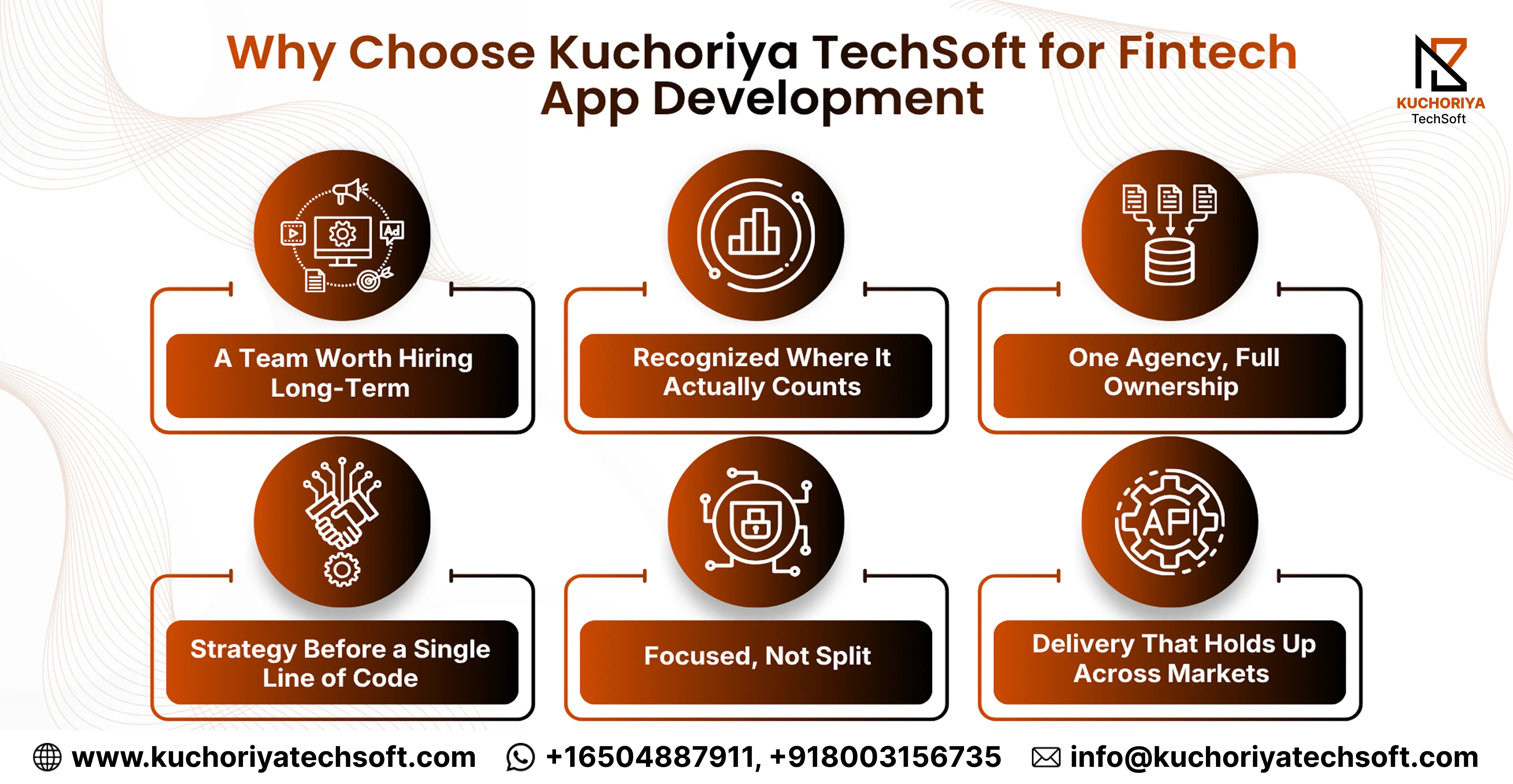
Plenty of agencies claim fintech experience. Fewer can show what their apps look like still running two years after launch.
1. A Team Worth Hiring Long-Term
When you hire fintech app developers, you want people who stay through launch and the messy months after, not a team that disappears once the demo ships.
2. Recognized Where It Actually Counts
Being called a best fintech app development company or a top fintech app development company option means less than production apps that survived a compliance audit intact.
3. One Agency, Full Ownership
As a complete fintech app development agency, strategy, design, build, and compliance run under one roof instead of getting split across three vendors who don't talk to each other.
4. Strategy Before a Single Line of Code
Fintech consulting services map out the roadmap first, so the build starts from a plan instead of a guess that gets corrected mid-project.
5. Focused, Not Split
Dedicated fintech developers stay on one build for its full duration, instead of getting pulled across five unrelated projects at once.
6. Delivery That Holds Up Across Markets
From fintech app development Dubai work to fintech technology solutions London rollouts, and extending into InsurTech software development for clients moving past core banking, the same standard applies wherever the project lands.
Making the Right Choice for Your Fintech App
Picking a fintech app development company isn't a step to rush through, it's the decision every other part of the build depends on. Fintech software solutions built by a team that understands compliance, security, and scale save months of rework down the line, while financial software development handled by the wrong partner tends to surface its cracks right when user volume finally picks up.
Whether the goal is a full mobile banking solutions platform or a focused lending tool, the same standard applies. Kuchoriya TechSoft has delivered for teams comparable to a fintech app development company New York engagement, a fintech app development company Texas rollout, and a fintech app development company California build, across markets with different regulatory demands and user expectations.
Startups weighing whether they need a full-time technical leader can also explore Fractional CTO services, senior technical guidance without a full-time hire, alongside the Referral Partner Program for teams looking to bring others into the fold. Ready to talk through what your fintech app actually needs? Reach out and let's map it out together.
Frequently Asked Questions About Choosing a Fintech Development Company
Q. How do I choose the best fintech app development company?
A. Skip the portfolio slideshow. Ask about one project that shipped and is still running today, how they handled their last compliance audit, and what support actually looked like six months after launch. Vague answers on any of that tell you more than a polished case study ever will.
Q. What should I look for in a fintech development partner?
A . A team that has:
- Genuinely built regulated financial products, not just apps with a payment button bolted on
- Straight answers on PCI DSS, GDPR, AML, and KYC, not a memorized paragraph
- A tech stack picked to fit the app's actual needs, not whatever they reach for out of habit
- Post-launch support spelled out in writing, not a verbal promise nobody follows up on
Q. How much does fintech app development cost?
A. It shifts a lot based on features, compliance load, and which platforms are in scope, so no honest vendor gives a flat number without knowing the details first. Our complete fintech app development guide breaks down real ranges by app type if you want specifics.
Q. Why is compliance important in fintech application development?
A. It isn't paperwork handled after the fact, it's what keeps the app legally allowed to operate at all. Teams that push it to later almost always pay more fixing it, sometimes with a regulator already asking questions by then.
Q. What technologies are used in fintech mobile app development?
A. React Native or Flutter, picked based on:
- Whether the app needs one shared codebase or heavier custom design work
- Cloud infrastructure actually built around compliance certifications, not repurposed general hosting
- Open banking APIs connecting to real accounts instead of mock data
- Encryption covering the full transaction path, not just the login screen
Q. Can AI improve fintech applications?
A. Yes, and not as a future promise, it's already standard. Fraud gets caught faster, credit risk gets scored with more real signal, and recommendations actually reflect how someone spends. A well-built fintech app leans on this now, not eventually.