






Introduction: Why Real Estate Apps Are Dominating the Property Market in 2026?
The Real estate industry is rapidly shifting from offline brokers to custom real estate app development and scalable property listing platforms. These days are gone when finding a property meant scouring the newspaper classifieds, relying solely on local brokers, or spending weekends driving through neighborhoods in hopes of spotting a “For Sale” sign. Today, more than 90% of home buyers start their journey with a modern online property search, making mobile apps the primary gateway for buying, selling, and renting properties. Users today expect more than just images; they want virtual property tours, 3D walkthroughs, and AR/VR experiences. These custom features of the real estate app allow buyers to explore properties remotely.
What Makes a Successful Real Estate App?
In today’s fast-growing real estate app development landscape, success goes beyond just listing properties; it’s about delivering a seamless and intelligent property search experience.
1. User-Centric Design and Seamless User Experience (UX/UI)
An advanced real estate mobile app feature must focus on user-centric design with clean layouts and intuitive navigation. A smooth user experience (UX) ensures users can easily browse high-performing property listing app features, apply filters, and complete actions without confusion, leading to higher engagement and retention.
2. Accurate and Verified Property Listings
Trust is built through accurate and verified property listings. A high-performing property listing app ensures all listings are genuine, updated, and include complete details like pricing, location, and amenities, which increases user confidence and conversions. This real estate app feature is an important key factor for all buyers and agents.
3. High Engagement Through Real-Time Updates and Notifications
This feature of the real estate app is a necessary factor to keep the customers and agents together and connected. Real-time notifications about new listings, price drops, and updates keep users active on the scalable real estate investing app platforms.
4. Seamless Communication Between Buyers, Sellers, and Agents
The most important factor that contributes to any deal is good communication between buyers, sellers, and agents. Effective communication tools such as chat, calls, and messaging enable direct interaction between users and real estate agents.
5. Fast Communication and Scalable App Architecture
Communication plays an important role, but speed and performance are critical. A successful real estate app development must have fast loading times, smooth performance, and scalable architecture to handle large volumes of users and property data efficiently.
Must-Have Features of a Successful Real Estate App

It is important to have the right set of features to build a high-performing property listing app or real estate marketplace. Modern users expect more than just listings -they look seamless property search experience.
1. Advanced Property Search and Smart Filters
A successful real estate app must offer advanced property search filters such as location, price range, property type, amenities, and budget. Users expect a seamless property search experience where they can quickly find relevant property market analysis without scrolling endlessly. Smart filters improve usability and increase conversion rates.
2. AI-Powered Recommendations and Personalization
Modern real estate management apps leverage AI-Powered recommendations to deliver personalized property suggestions. By analyzing user behavior, search history, and preferences, apps can provide relevant property market trends, enhancing user engagement and making the home-buying journey faster and smarter.
3. High-Quality Property Listings with Media Integration
A strong real estate investing app must include high-quality images, video tours, and detailed property descriptions. The must-have features in a real estate app are virtual property tours and 3D walkthroughs that give users a realistic view, helping them make informed decisions without visiting multiple sites physically.
4. Intuitive UI/UX and Seamless Navigation
User experience is a key factor in real estate app development. A clean, intuitive UI/UX design ensures users can easily browse listings, apply filters, and navigate the app. Smooth navigation reduces bounce rate and keeps users engaged longer. Top-performing apps for real estate provide real-time property alerts and push notifications for new listings, price drops, and updates.
5. Secure Login and Data Privacy Protection
Security is critical in any real estate mobile app. Features like secure login, user authentication, and data privacy protection build trust among users. A secure platform ensures safe handling of personal and financial information. The successful features of a real estate app must be fast, responsive, and scalable. Quick loading speed, smooth performance, and the ability to handle large amounts of property data are critical for long-term success.
6. Integrated Mortgage Calculator and Financial Tools
A successful app enables seamless feasibility and communication between buyers, sellers, and real estate agents through chats, calls, etc. Including tools like a mortgage calculator, EMI calculator, and loan estimation helps users plan their finances directly within the real estate mobile app development. This adds value and keeps users engaged within the platform.
7. Map Integration and Location-Based Search
Map-based property search allows users to explore properties based on location, nearby amenities, and neighborhood insights. This real estate app feature is essential for improving property discovery and decision-making.

Advanced Features That Give a Competitive Edge
In today’s rapidly evolving PropTech landscape, simply offering a standard search-and-filter interface is no longer sufficient to capture user attention or drive conversions. To truly differentiate your platform and establish a sustainable competitive edge, you must integrate sophisticated, high-performance capabilities.
1. AI-Powered Predictive Property Search and Smart Insights
The role of AI in today’s world is totally necessary. Advanced AI-Powered real estate apps go beyond basic recommendations by using predictive analytics. These systems analyze market trends, user behavior, and pricing patterns to suggest the best time to buy or sell property. This gives users deeper real estate insights and positions your real estate development app as a smart decision-making platform
2. AR/VR-Based Virtual Property Tours and 3D Visualization
In today’s world, technology has changed the traditional systems of many sectors. In custom real estate app development features, cutting-edge apps integrate AR/VR technology to offer virtual property tours and 3D walkthroughs. Users can explore homes remotely with an immersive experience, which significantly improves engagement and reduces physical visits, making your property app more efficient and modern.
3. Blockchain for Secure and Transparent Property Transactions
Using blockchain technology, real estate app features can ensure secure, transparent, and tamper-proof property transactions. Features like smart contracts and digital property verification reduce fraud and increase trust, which is a major competitive advantage.
4. Big Data Analytics for Real Estate Market Trends
It is important to make a good connection between the buyers and the agents; in this case, monthly rental market reports are very helpful to target the goal. Integration of big data analytics allows apps to provide real-time market trends, price predictions, and location insights. This helps users make informed investments in real estate brokerage valuations.
5. Voice Search and Smart Assistant Integration
AI assistants enhance the feasibility of using the real estate development application. It aligns the real estate app with modern search behavior trends, improving accessibility. With the rise of voice search, users can find properties using simple voice commands.
6. Multi-Language and Global Property Search Support
Language is a thread for good communication between people. Supporting multiple languages and international property listings expands the reach of the real estate development app globally. This is essential for targeting NRIs and international investors. This helps real estate apps platform a wider audience.
Real Estate App Monetization Strategies
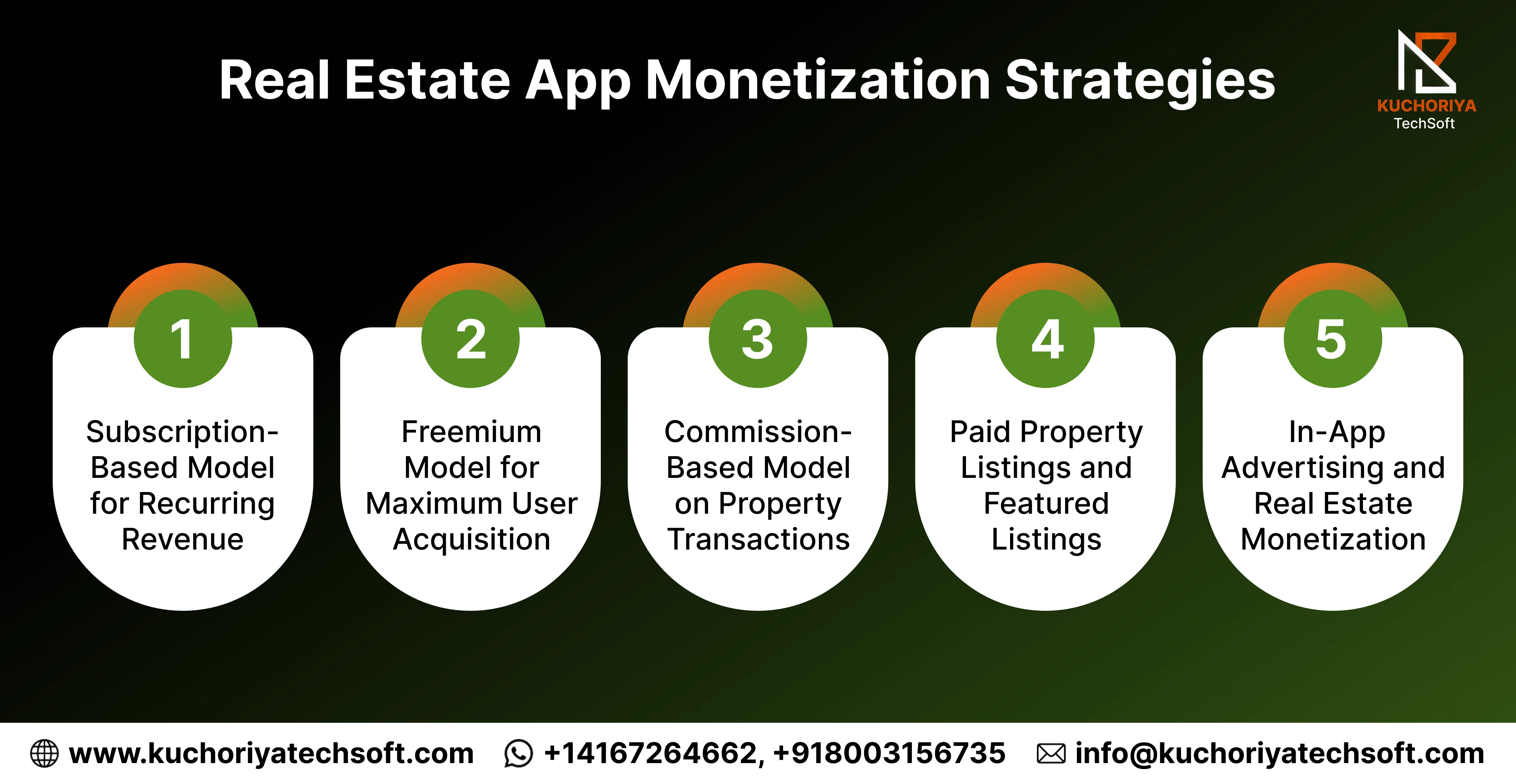
These strategies are essential for turning a property listing app into a profitable business. By leveraging models like subscriptions, paid listings, and real estate lead generation, businesses can create multiple revenue streams.
1. Subscription-Based Model for Recurring Revenue
A subscription-based real estate app offers premium tools such as advanced analytics and lead management for a monthly or yearly fee. This ensures recurring revenue and builds long-term relationships with agents, brokers, and property owners. This model is especially effective for B2B users.
2. Freemium Model for Maximum User Acquisition
This model allows users to explore basic features like property search, property listings, and map-based browsing without any cost. This strategy helps to attract a large audience and gradually convert them into paying users. It also improves user engagement and retention rates of the real estate development app.
3. Commission-Based Model on Property Transactions
In this model, the real estate investing app earns a fixed percentage from every successful property sale, rental agreement, or booking transaction. These models align the platform’s success with user experience, creating a win-win situation.
4. Paid Property Listings and Featured Listings
Charging for paid property listings and featured placements is one of the most common monetization strategies. It is a powerful lead generation and property promotion strategy. This increases visibility and improves chances of generating high-quality leads.
5. In-App Advertising and Real Estate Monetization
This feature allows businesses to display targeted real estate app development ads, such as home loans, insurance, interior design, and moving services. Since users on these real estate investing apps have strong buying intent, ads deliver high engagement and conversions.
Cost of Real Estate App Development in 2026
The cost of the real estate investing app depends on multiple factors, such as app complexity, features, technology stack, and development approach. With the rise of PropTech features, AI-powered real estate apps, and cloud-based property platforms.
1. Platform Selection (iOS, Android, Cross-Platform)
It is an important decision to choose a good platform. Developing real estate mobile apps for both iOS and Android platforms. Choosing cross-platform development (Flutter, React Native) can reduce costs while maintaining performance.
2. App Complexity and Feature Set
The biggest factor influencing real estate development cost is the complexity of features. A basic app with property listings, search filters, and map integration is relatively affordable.
However, adding advanced features like AI-powered recommendations, AR/VR virtual tours, chatbots, and predictive analytics increases real estate app development cost.
3. Type of Real Estate App (Business Model)
It is very important to know that new features in real estate development apps will impact the pricing. The type of app we build –whether it’s a property listing app, real estate investing app, or property management platform- directly impacts pricing.
4. UI/UX Design and User Experience Optimization
A well-designed UI/UX is important for engagement in real estate investing apps. Custom designs, animations, and intuitive navigation improve usability but increase design and development costs. High-quality user experience design can add up to 15-25% of the total budget.
5. Maintenance, Updates, and Scalability Costs
The most crucial key point that every platform should consider is good maintenance and updates. Post-launch costs, such as real estate management app maintenance, updates, bug fixes, and server hosting, are ongoing expenses.
6. Backend Development and Database Infrastructure
Real estate investing apps require strong backend infrastructure to manage large volumes of property data, images, videos, and user interactions. Building a scalable cloud-based database and APIs increases development cost but ensures performance reliability.
Why choose Flutter for Cross-Platform Real Estate App Development?
In 2026, businesses are increasingly choosing cross-platform app development to reduce costs and speed up time-to-market. Flutter, a powerful UI toolkit by Google, has become a preferred choice for building real estate mobile apps and property listing platforms.
1. Single Codebase for iOS and Android Apps
Flutter allows developers to build apps for both iOS and Android platforms using a single codebase. This significantly reduces development time and cost, making it ideal for startups and businesses building a real estate investing app or property listing app.
2. Faster Development with Hot Reload Feature
One of the flutter’s biggest advantages is its hot reload feature, which allows developers to instantly see changes in real time. This speeds up real estate app development, improves productivity, and helps launch apps faster in the market.
3. High Performance and Native-Like Experience
Flutter delivers bear-native performance by compiling directly into machine code. This ensures smooth animations, fast loading, and a seamless experience for property search apps and real estate management apps.
4. Cost-Effective Development Solution
Since Flutter uses a single codebase, businesses can save significantly on development, maintenance, and testing costs. This makes it a smart choice for companies planning real estate app development without a budget.
5. Scalability for Growing Real Estate
Flutter supports scalable app architecture, allowing apps to grow with increasing users and property data. This is crucial for real estate management apps and SaaS-based property platforms.
Real Estate App UI/UX Design: Best Practices for Better User Experience
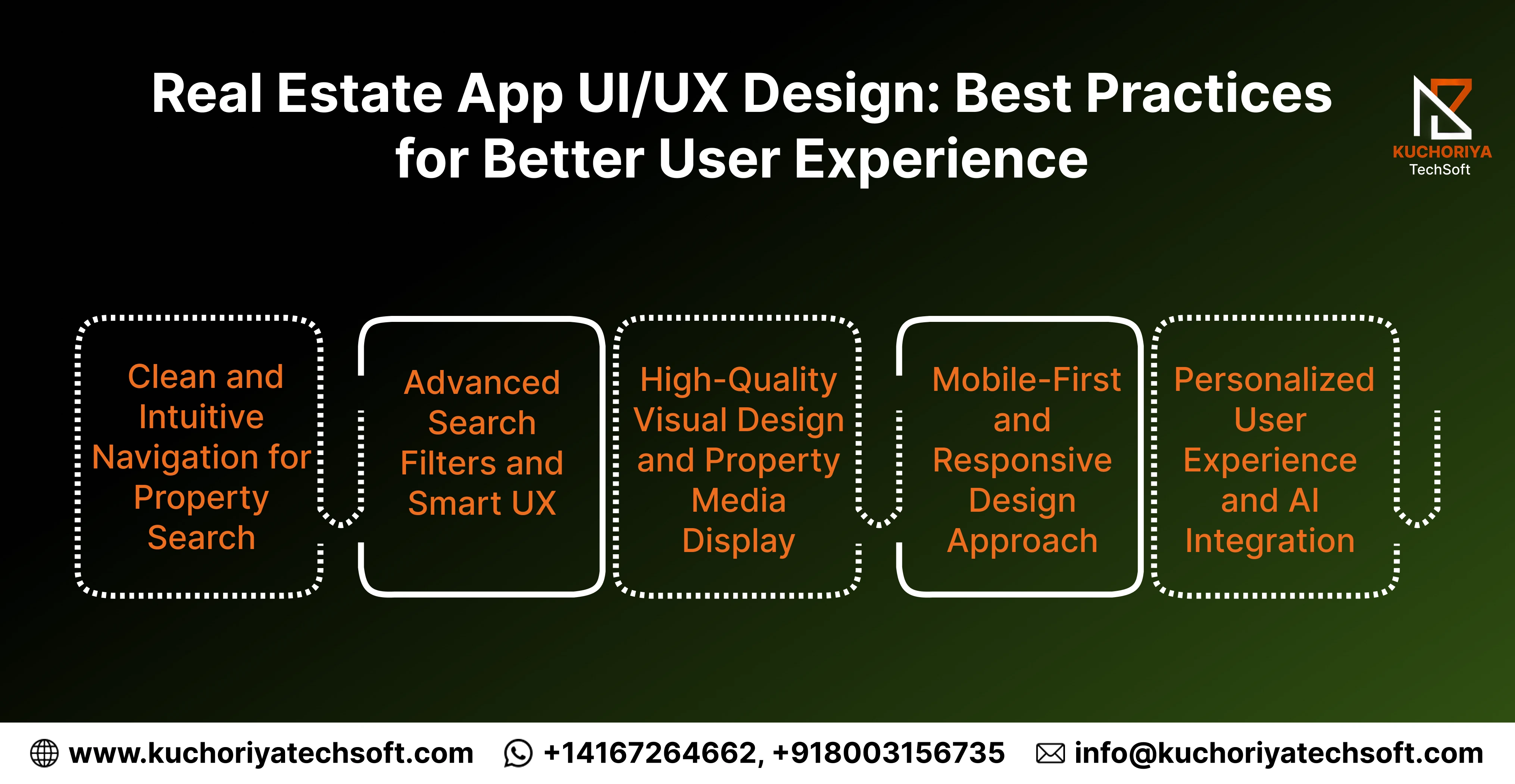
In today’s competitive real estate app development landscape, a strong UI/UX design is no longer optional; it’s essential. Users expect seamless navigation, fast loading, and visually appealing interfaces while browsing property listings and real estate app development platforms.
1. Clean and Intuitive Navigation for Property Search
A successful real estate app UI/UX design must focus on simple and intuitive navigation. Users should easily browse property listings, apply filters, and switch between categories without confusion.
2. Advanced Search Filters and Smart UX
Providing advanced search filters such as price range, location, property type, and amenities enhances usability. A well-designed filter system ensures faster property discovery and improves user satisfaction.
3. High-Quality Visual Design and Property Media Display
Real estate relies heavily on visuals. Using high-quality property images, videos, and virtual tours improves user engagement in real estate mobile apps. A visually rich UI design helps users better understand listings and builds trust in the platform.
4. Mobile-First and Responsive Design Approach
Most users access real estate investing apps on mobile devices, so mobile-first UI/UX design is essential. The app should be fully responsive and provide a consistent experience across devices.
5. Personalized User Experience and AI Integration
It is an important factor in real estate development apps. Modern apps use AI-powered personalization to show relevant property listings based on user behavior. This improves user engagement and creates a more customized real estate app experience.
SEO and Digital Marketing Strategies for Real Estate Apps

It is important to keep in mind that in this competitive real estate app market, building a great product is not enough; we need strong SEO and digital marketing strategies.
1. Keyword Research and Real Estate SEO Optimization
Effective keyword research is the foundation of any real estate SEO strategy. Targeting high-volume keywords like property listings, buy/sell property, real estate mobile app, and property search, along with long-tail keywords, improves ranking.
2. App Store Optimization (ASO) for Mobile Apps
This improves the real estate app’s ranking on Google Play Store and Apple App Store. Using relevant keywords like real estate investing apps, property finder, and housing apps, along with optimized descriptions and visuals, increases downloads and visibility.
3. Content Marketing and Blogging for Organic Traffic
Creating high-quality SEO blogs, guides, and market insights drives organic traffic to websites or apps. Topics like real estate trends, property investment tips, and home buying guides attract users and improve domain authority.
4. Social Media Marketing for Brand Awareness
It is very important to have an account on social media to grab the customers online. Platforms like Facebook. Instagram and LinkedIn are powerful tools for promoting real estate apps. Sharing property listings, success stories, and video content on these platforms.
5. Email Marketing and Lead Nurturing Campaigns
This is an important platform for leading campaigns. Email marketing campaigns help nurture leads by sending personalized property recommendations, updates, and offers. It improves customer retention and conversion.

Real Estate App Strategy Features: Data Privacy, KYC, and Secure Transactions
In today’s digital-first real estate app development landscapes, security is a critical factor for building trust and driving user adoption. Modern property listing apps and real estate marketplaces handle sensitive user data, financial details, and high-value transactions.
1. Data Privacy and User Data Protection
It is a must-have feature for any real estate management app. A successful real estate app must prioritize data privacy and user data protection for users. Implementing end-to-end encryption, secure databases, and compliance with regulations like GDPR.
2. KYC Verification for User Authentication
KYC (Know Your Customer) verification is essential for verifying the identity of buyers, sellers, and agents. Features like document verification, OTP-based login, and biometric authentication help prevent fake listings and fraud.
3. Secure Payment Gateway Integration
Integrating a secure payment gateway enables safe online property transactions, including booking amounts and deposits in a real estate investing app. Using trusted payment systems with SSL and encryption ensures that transactions are protected.
4. Fraud Detection and Risk Management Systems
Advanced fraud detection systems use AI and analytics to identify suspicious activities such as fake listings or unusual transactions on a real estate investing app.
5. Role-Based Access Control
This feature is an important one as it ensures that users, agents, and admins have access only to relevant features. This prevents unauthorized actions and enhances the overall real estate app security architecture.
6. Multi-Factor Authentication for Enhanced Security
Adding multi-factor authentication, such as OTPs, biometrics, or email verification, provides an extra layer of security. This reduces the risk of unauthorized access and strengthens user account protection. This helps all the users for better feasibility on the real estate management app.
High-Performance Real Estate App: Step-by-Step Development Guide
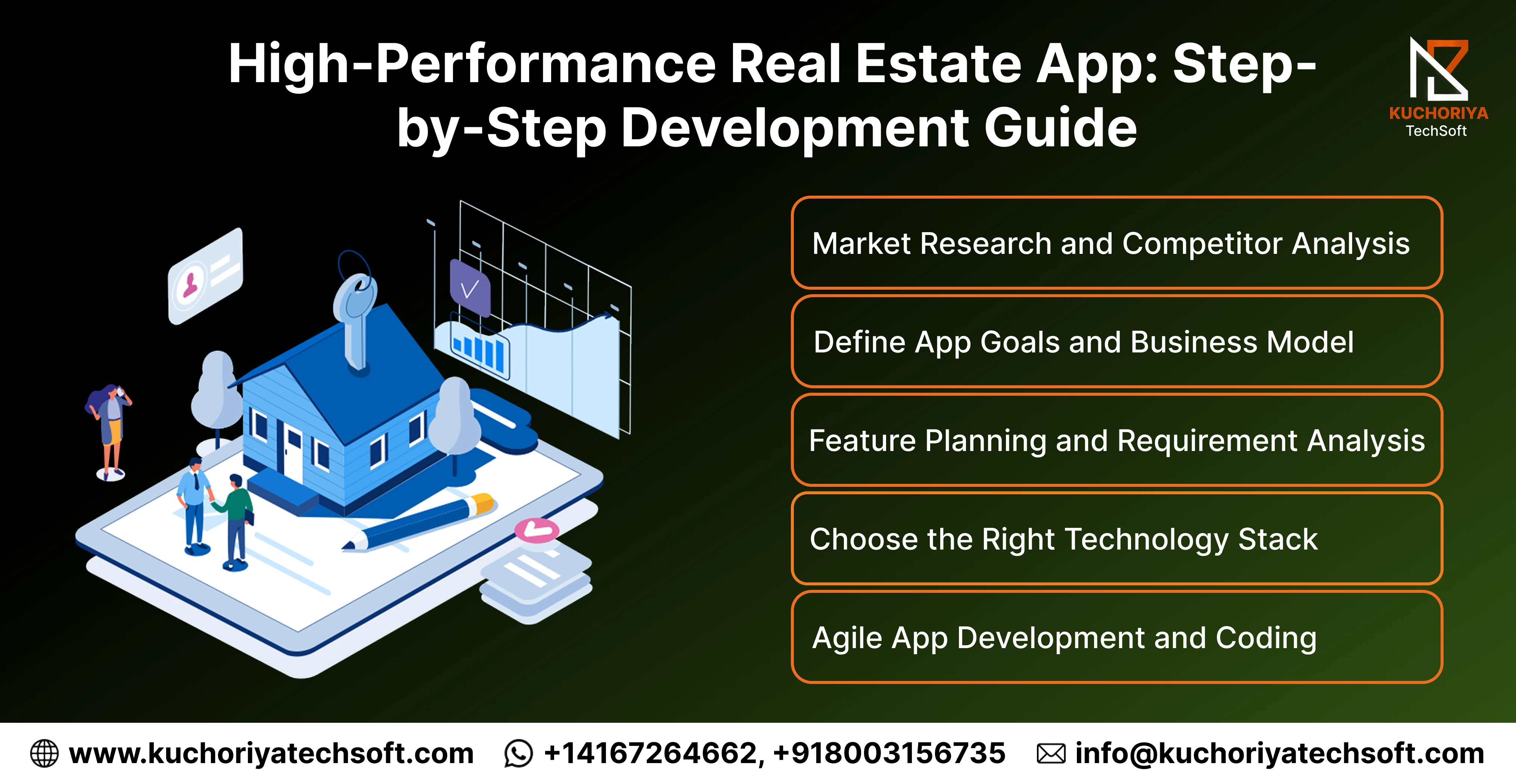
In an era where users expect instantaneous, accurate, and secure information, your development roadmap must prioritize both scalability and speed. Building a high-performance real estate application in 2026 requires more than just listings.
1. Market Research and Competitor Analysis
This is an important factor to grab the opportunities in the market. Start with in-depth market research to understand user needs, competitor apps, and current real estate trends. Analyze features of leading property listings platforms to identify gaps and opportunities.
2. Define App Goals and Business Model
The critical factor on which everything is dependent is clarity about the purpose of the app, whether it’s a property listing app, a real estate investing app, or a rental platform. A strong foundation improves long-term success.
3. Feature Planning and Requirement Analysis
Planning is the first step of every work and decision-making. List all essential and advanced real estate app features like property search, map integration, AI-powered recommendations, chat systems, and virtual tours.
4. Choose the Right Technology Stack
Select a scalable technology stack including frameworks like Flutter for cross-platform development, cloud hosting, and robust backend systems. The right tech stack ensures high performance, security, and scalability. This helps the real estate management app appear more legitimate.
5. Agile App Development and Coding
The most important factor is to follow an agile development approach to build the app in phases. This allows faster iteration, continuous improvements, and efficient handling of real estate app development challenges.
6. Integration of Advanced Features and APIs
Integrate essential tools like Google Maps API, secure payment gateways, CRM systems, and analytics tools. Add advanced features like AI, chatbots, and AR/VR virtual tours to enhance app functionality.
Why Kuchoriya TechSoft is the Right Choice for our Real Estate App?
Choosing the right real estate app development company is crucial for building a scalable, high-performance property listing app or real estate marketplace. AI-powered real estate apps and cloud-based platforms require those businesses that need a partner that delivers both technical expertise and industry-focused solutions. Kuchoriya Techsoft stands out by offering custom real estate app development services, ensuring a seamless user experience.
1. Expertise in Real Estate App Development and PropTech Solutions
Kuchoriya TechSoft specializes in real estate app development, building feature-rich property listing platforms, rental apps, and real estate marketplaces. Their deep understanding of PropTech trends ensures innovative and future-ready solutions.
2. Custom and Scalable Real Estate App Solutions
They offer custom-built real estate applications tailored to your business needs. With scalable architecture and cloud-based infrastructure, your app can handle growing users and property data efficiently.
3. Advanced Features and Modern Technology Integration
Kuchoriya TechSoft integrates AI-powered recommendations, virtual property tours, chatbots, and blockchain-based transactions. These advanced features enhance user engagement and real estate management platform performance.
4. High-Performance UI/UX Design for Better User Experience
The team focuses on delivering intuitive UI/UX design, ensuring smooth navigation and engaging interfaces. This improves user retention, conversion rates, and overall real estate investing app performance.
5. Cross-Platform App Development with Flutter and Modern Tech Stack
Using Technologies like Flutter, they build apps that work seamlessly on both iOS and Android. This reduces real estate app development cost while maintaining high performance and consistency.
6. Secure and Reliable App Development with Data Protection
Security is the priority, with features like data encryption, KYC verification, and secure payment gateways. This ensures safe transactions and builds trust in your real estate development platform.
7. Cost-Effective Development with High ROI
They offer cost-effective real estate app development solutions without compressing quality. Businesses can build high-performance, best real estate apps within budget while achieving a strong return on investment (ROI).
Conclusion: The Future of Real Estate App Development
In the rapidly evolving digital landscape of 2026, the future of Real Estate App Development lies at the intersection of AI-driven personalization, robust security, and seamless user experiences. As the PropTech industry matures, successful platforms will be defined by their ability to provide high-performance, scalable real estate solutions that bridge the gap between complex market data and intuitive, mobile-first design.
Adopting a strategy centered on custom real estate app development—integrated with advanced features like AI-powered property recommendations, secure blockchain-backed transactions, and big data analytics—is no longer a luxury but a requirement for market dominance. Whether you are aiming to streamline property management, enhance lead generation, or offer immersive virtual property tours, the focus must remain on building a secure, reliable, and user-centric property ecosystem.
By leveraging cutting-edge frameworks like Flutter for efficient cross-platform development and prioritizing stringent data privacy and KYC standards, businesses can effectively navigate the complexities of the modern property market. Ultimately, the winners in this space will be those who embrace digital transformation, ensuring their apps are not just functional tools but indispensable, high-value assets for buyers, sellers, and agents alike.
Ready to dominate the digital property market? At Kuchoriya TechSoft, we specialize in architecting high-performance, AI-driven real estate platforms that turn users into loyal clients. Contact us today to discuss your custom development roadmap, explore our scalable PropTech solutions, or learn more about referring partners for long-term growth.

Frequently Asked Questions (FAQs)
1. Why should I choose Kuchoriya TechSoft for my real estate app development? At Kuchoriya TechSoft, we specialize in PropTech solutions. We don’t just build apps; we architect high-performance, scalable ecosystems. Our deep expertise in the real estate sector allows us to deliver intuitive UI/UX designs and robust backend systems tailored specifically to the needs of modern buyers, sellers, and real estate agents.
2. Can Kuchoriya TechSoft integrate advanced features like AI and VR into my platform? Absolutely. We prioritize staying ahead of market trends. Whether you need AI-powered predictive search to increase user engagement or AR/VR-based virtual property tours to offer an immersive buying experience, our team has the technical prowess to implement these competitive features seamlessly into your application.
3. Does Kuchoriya TechSoft prioritize data security and secure transactions? Security is a cornerstone of our development process. We implement end-to-end encryption, KYC (Know Your Customer) verification protocols, and fraud detection systems to ensure that your platform remains a trusted environment for sensitive property transactions and user data.
4. Will my real estate app be scalable as my business grows? Yes. Our development strategy focuses on high-performance, scalable architecture. By leveraging modern tech stacks and cloud-native infrastructure, we ensure that your platform remains fast, responsive, and reliable, even as your user base expands and your property listings increase.
5. How cost-effective is it to build a custom real estate app with Kuchoriya TechSoft? We believe in delivering high ROI. By using cross-platform development frameworks like Flutter, we provide a cost-effective solution that allows you to deploy on both iOS and Android with a single codebase, drastically reducing development time and maintenance costs without compromising on quality.