
How Does a Car Rental App Make Money?
Every booking pays you once. The extras pay you again. Own the cars, and you keep the rental rate. List other people's cars, and you keep a cut.
Plenty of owners only google how do car rental apps make money once the app is live. By then, the payment flow is built around one price. Changing it later means paying developers to redo it. So it's cheaper to settle car rental app monetization while the screens are still sketches.
Demand isn't the issue in Dubai. The Dubai Department of Economy and Tourism says the city had 19.59 million international overnight visitors in 2025. That's 5% more than 2024. Mordor Intelligence says online booking accounted for 63.25% of UAE rental revenue that year. People book from their phones here. (Source)
Price is what bites. Ken Research says daily rates fell by more than 20% in the 2023 price war. If your app leans on one of the car rental app income sources and that one drops, you feel all of it.
Here's how car rental apps generate revenue in plain terms. The rental rate comes first. Then a commission, if you list other owners' cars. Then fees around the trip. Subscriptions and company accounts come later. Each one gets its own section below.
Car rental booking revenue is where you start. Get it steady before you add anything else. One new stream at a time, so you can see what's actually working. That's rental app monetization without betting everything on one line.
What Are the Best Revenue Models for Car Rental Apps?
Nobody can name the best car rental app revenue model for you until they know one thing. Do you own the cars, or does somebody else?
Your car rental app business model follows that answer. A founder with no cars can't run an owned-fleet plan, and a ten-car team doesn't need a marketplace. Short rentals still make up 70.45% of the UAE market, though long-term rentals are growing at 11.21% a year, says Mordor Intelligence.
Most car rental app revenue models end up as one of these five.
- Own fleet. You buy the cars and keep the whole rate, but every repair bill is yours too.
- Marketplace. Owners list their cars, and you take a cut of each trip. This vehicle rental app business model needs payouts and reviews sorted early.
- Monthly subscription. Customers pay every month for a car, so your income is easier to predict.
- Hourly or per-km billing. The pay-per-use model suits quick city trips where a full day is too much.
- Hybrid. A few cars of your own plus outside listings, once bookings are steady.
Test any car rental app revenue model with two questions. Can you get the cars? Do you get paid on time?
Then write your car rental app earning model on one page before development starts. Who pays, how much, and when. And none of it works if the vehicle booking platform underneath is shaky.
How Do Commission and Subscription Models Work?
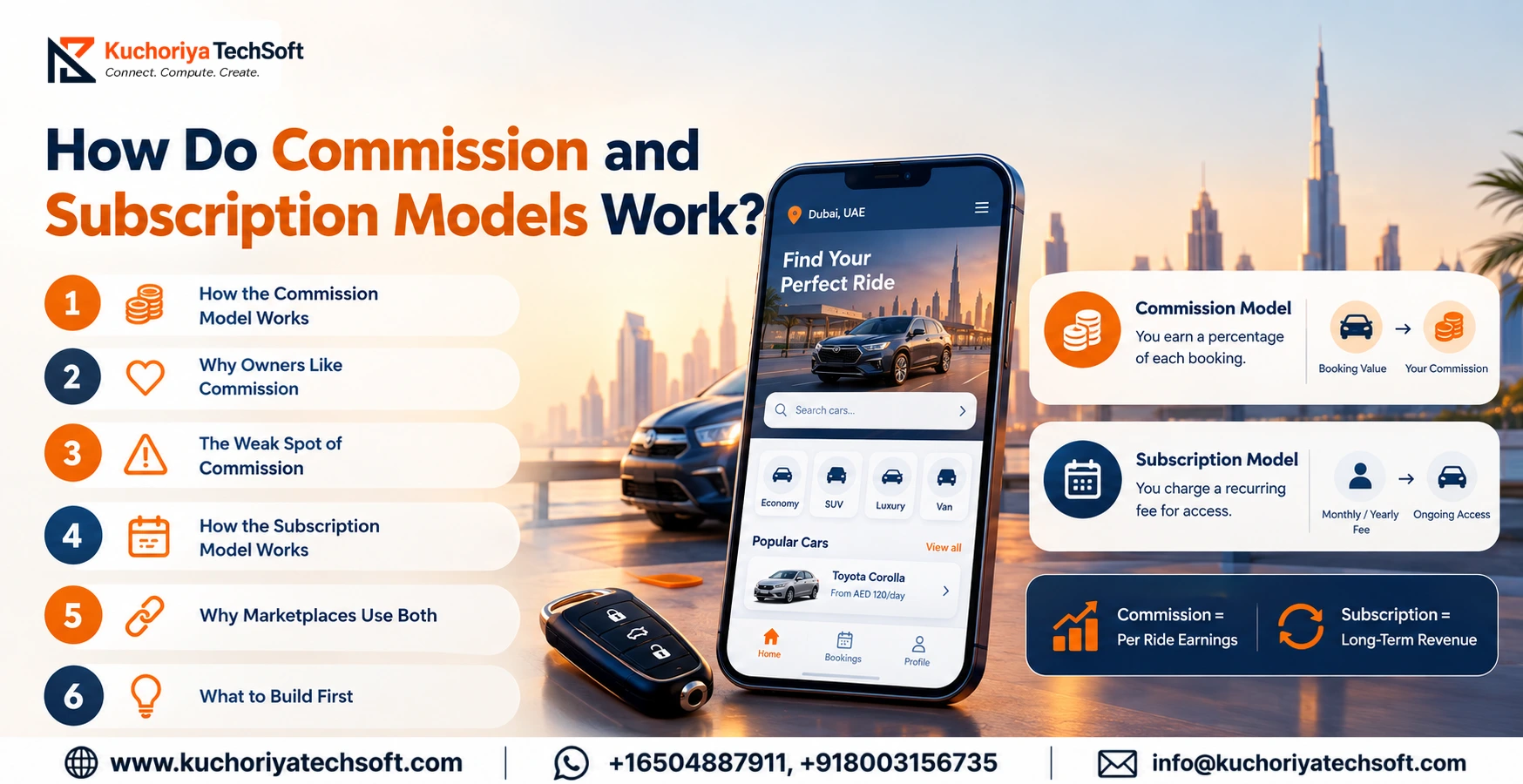
A marketplace can get paid in two main ways. It can take a share of each trip, or it can charge a fee every month. Which one you lean on decides how your car rental marketplace business model behaves in a slow month.
1. How the Commission Model Works
The commission-based revenue model is easy to picture. A car rents for AED 300 and the app keeps 15%, which is AED 45. The owner gets the other AED 255.
2. Why Owners Like Commission
Owners pay nothing to list their car. They only pay when they earn, so it's an easy offer to say yes to. That's why most apps use it to get their first listings.
3. The Weak Spot of Commission
Your income follows the booking calendar. A quiet week for the owners is a quiet week for you, and nothing is in place to cover it.
4. How the Subscription Model Works
A subscription revenue model charges a fixed fee every month. It can come from customers who want a car on repeat or from owners paying for extra tools. The income is easier to plan around, but people leave fast if they don't see the value in the first couple of months.
5. Why Marketplaces Use Both
Car rental marketplace revenue holds up better with both in place. Commission covers the busy weeks, and subscriptions cover the slow ones.
6. What to Build First
Start with commission, because it's simple and owners accept it. If you're aiming at a car rental app like Turo or Zoomcar, set up the payment flow for subscriptions now, even if you switch them on later.
How Can Premium Listings and Add-On Services Increase Revenue?
Most apps charge for the car and stop there. A fair bit of money gets left behind, because customers will pay for small extras when the offer shows up at the right moment.
What Owners Pay for Visibility
Premium listing revenue is the easiest to add. An owner pays, and their car appears higher in search. Featured vehicle listings go further and put one car on the home screen for a few days. Someone with a brand new SUV will often pay for that first week alone.
What Customers Pay to Skip Hassle
- A small line for booking fees at checkout covers card costs. Show it on the first price screen and not the last, or people leave.
- Delivery fees are an easy add in Dubai, since a lot of visitors land late at night and just want the car brought to their hotel.
- Put insurance add-ons in front of customers at pickup, when cover is on their mind. One plan is plenty, since a long menu tends to make people skip the whole thing.
What Both Sides Pay When Plans Change
- Cancellation fees cover the owner when a customer backs out close to pickup, after the owner may have already said no to other requests for that car.
- Late return fees are for the times a car comes back after the agreed hour while another customer is waiting for it.
Both rules should be written in plain words and shown before payment, since customers rarely complain about a fee they were told about in advance.
All of this depends on the car rental app features behind it. The admin should be able to change fees without calling a developer, and late charges should be added automatically.

Why Is Dubai a Promising Market for Car Rental App Businesses?
Dubai is one of the few cities where a rental app can find customers from the first week, because people land here and need a car every single day. A busy city is not an easy one, though, and the apps that last tend to be built around who actually rents.
Who Is Renting in Dubai
The UAE car rental market is not only for tourists. Visitors arrive at all hours, residents wait on a new car after moving, and companies need wheels for staff. Most of that demand sits in the Dubai car rental market, which had 19.59 million international overnight visitors in 2025, and short rentals still make up 70.45% of rentals across the country.
Why Online Booking Has Won
With 63.25% of UAE rental revenue now coming through online booking, digital car rental UAE is simply how most people rent. Customers compare prices on their phone before the plane has landed. Anyone building car rental technology for UAE users will trust the license upload, payment, and delivery to the hotel all working inside one app, and a clunky checkout loses the booking.
Where the Gap Is for New Apps
The big brands have the airport desks. The independent owner with fifteen cars is still taking bookings on WhatsApp and Instagram. I would say that the middle layer is the real car rental app business opportunity, much more than trying to beat the big names on price, especially after rates fell by more than 20% in the 2023 price war. A car rental marketplace UAE owners can actually list on, with clean payouts, is where a new app has room.
If you are planning car rental app development in the UAE, think about Arabic and English screens, AED payments, and local license checks from the start, because adding them after launch costs more.
Explore Insights: Car Rental App Development Cost in Dubai, UAE: Pricing, Features & Factors
Advanced AI Car Rental Solutions: Features, Integration, Cost & Monetization
How to Build a Successful Car Rental App Like Turo or Zoomcar
Why Is Dubai a Promising Market for Car Rental App Businesses?
In 2025 the Dubai car rental market had 19.59 million international overnight visitors to serve. Then add the residents and the companies, who keep renting in the quiet months too.
Who Rents and What They Need
Customers in the UAE car rental market don't all want the same thing from an app, so it helps to look at them one group at a time.
Why Online Booking Has Won
Nearly two-thirds of UAE rental revenue, 63.25% to be exact, now comes through online booking, so digital car rental in the UAE is where the money already sits. Someone in a taxi from the airport will open a few apps and book the one that doesn't make them upload their license twice. Most of what keeps customers coming back to car rental technology UAE apps is dull stuff like that: a license scan that works first time, and a driver who is actually at the hotel when the app says he would be.
Where New Apps Have Room
The airport desks belong to the big brands, and you won't beat them there. The owner with fifteen cars is a different story. That owner is still replying to bookings on WhatsApp and Instagram at eleven at night, and to me that is the real car rental app business opportunity. Competing on price is a losing game anyway, since rates dropped by more than 20% in the 2023 price war. A car rental marketplace UAE owners are happy to list on, one that pays them on time, has far more room to grow than another app trying to be the cheapest.
If you are planning car rental app development in the UAE, get Arabic into the screens early. AED payments and local license checks matter too, but the language part is the one people forget, and it is painful to bolt on after launch.
How to Build Multiple Revenue Streams Into a Car Rental App
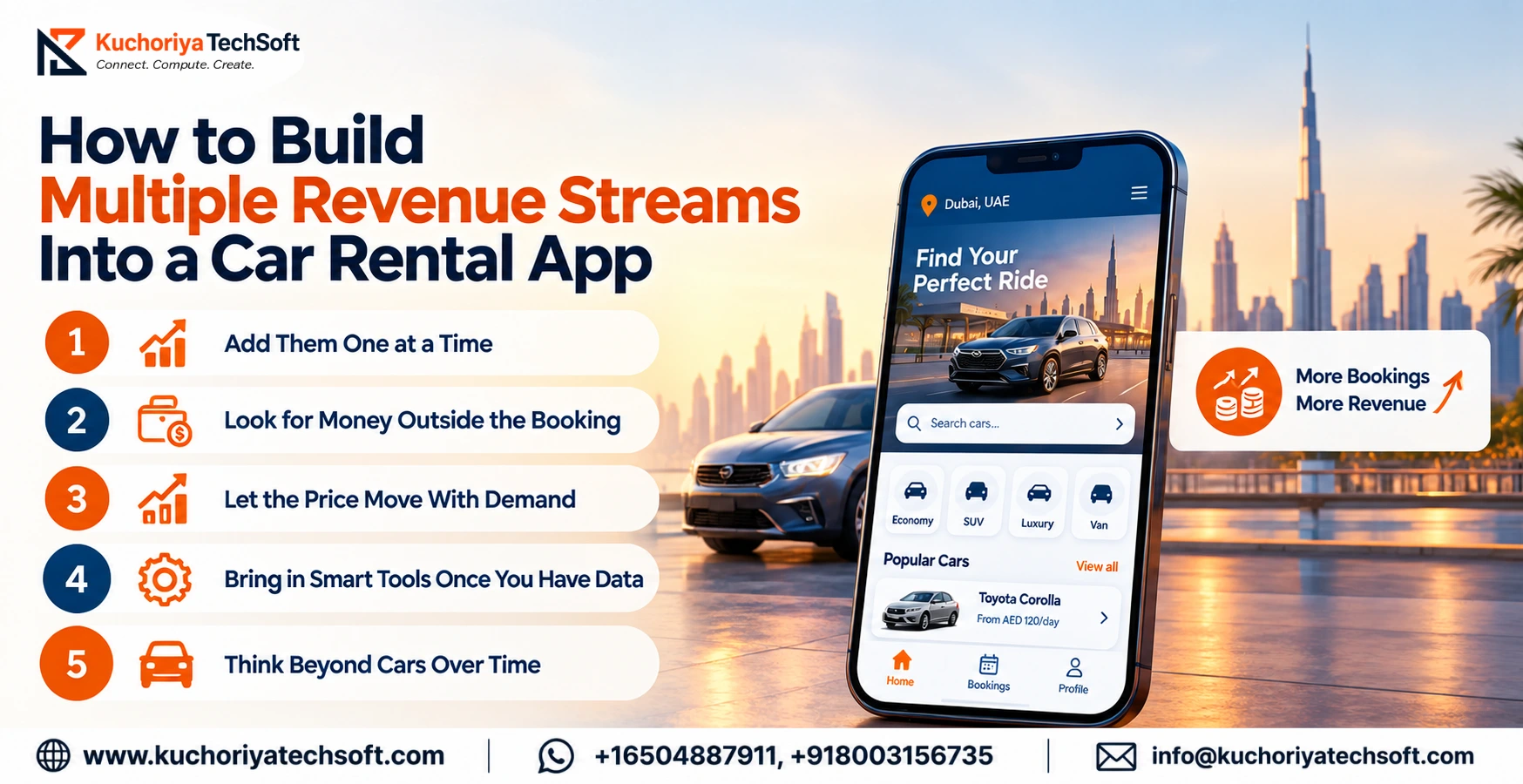
Most apps start with one fee and sit on it for a year, which hurts when July bookings slow down. Owners with multiple revenue streams for car rental apps feel that dip a lot less.
1. Add Them One at a Time
Start with commission alone. Once there are three months of booking data, add a delivery fee, and keep insurance for later. Built in that order, a hybrid monetization model never forces a rebuild of the payment flow.
2. Look for Money Outside the Booking
Once a few thousand people open the app each month, car rental app revenue streams beyond rentals make sense. Advertising revenue comes first, like a hotel paying for a spot on the booking screen. Brand partnerships are less obvious: a petrol chain might give 10% off fuel to anyone who booked through you. Two ad spots is plenty, since the third banner is where people start closing the app.
3. Let the Price Move With Demand
A sedan that gets AED 180 a day in July can fetch much more in the last week of December. Dynamic pricing car rental simply lets the app adjust the rate for season and cars left. Higher rates on Fridays and Saturdays are enough to begin with.
4. Bring in Smart Tools Once You Have Data
A model with two weeks of bookings behind it is only guessing. A team selling AI car rental app development should ask for a few months of real data before quoting, and if they skip that, be careful.
5. Think Beyond Cars Over Time
Chauffeur rides and airport transfers are a natural next step once the rental side runs smoothly. The customers and payment flow already exist, so each new service is cheap to launch. That is how it becomes a smart mobility platform, and car rental app revenue generation stops depending on one product.
How to Build Multiple Revenue Streams Into a Car Rental App
July is when an app with a single fee finds out how thin its income is. The tourists thin out and there is nothing else to lean on. Setting up multiple revenue streams for car rental apps fixes that, though not all in one go.
Which Metrics Should You Track to Measure App Revenue?
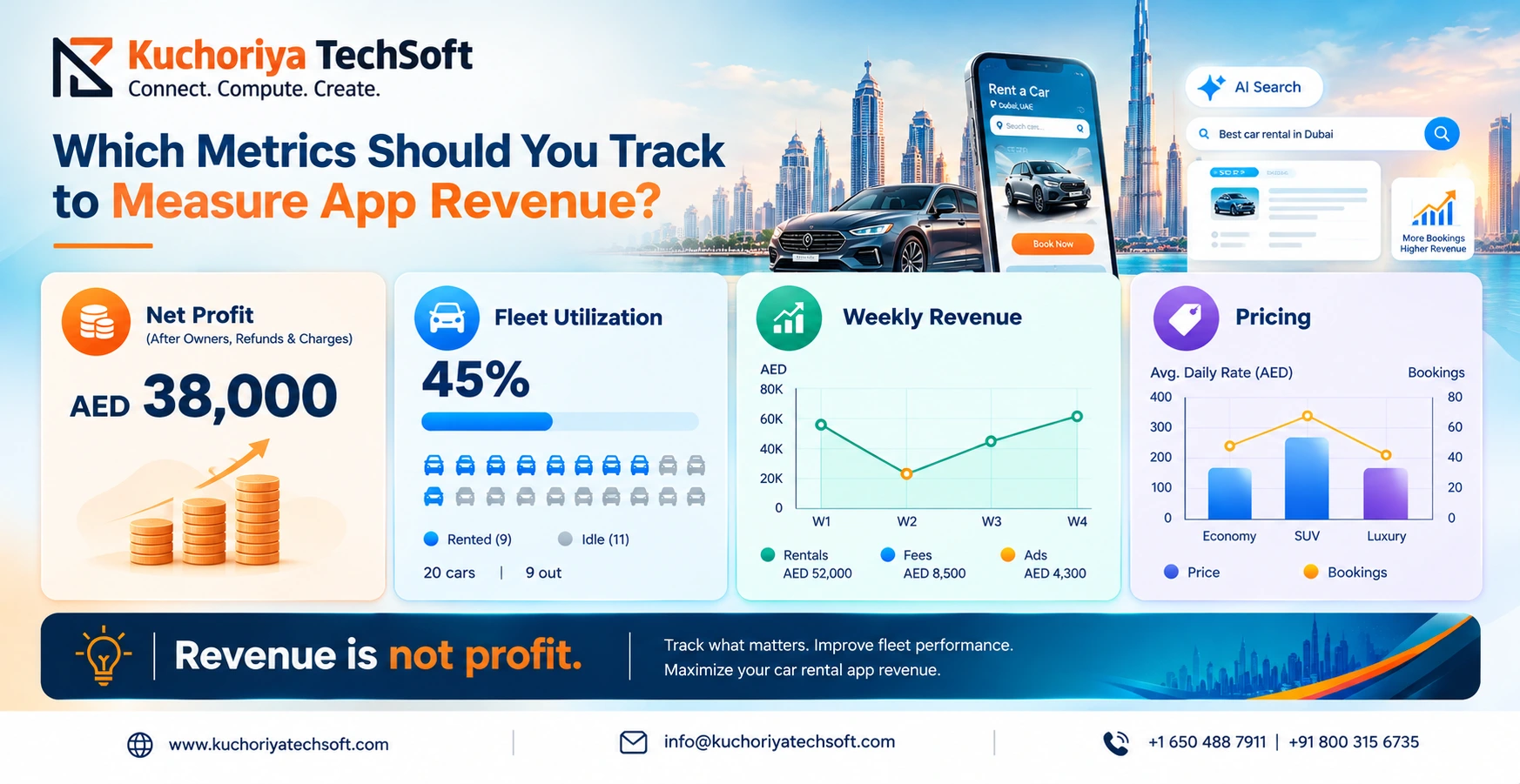
Revenue is the number everyone brags about, and it's also the least useful one. Plenty of apps post a record month and still end up out of pocket once the owners are paid and the refunds go out.
1. Look at What's Left After Everyone Is Paid
Last month the app took in AED 200,000. Owners got AED 150,000, and refunds plus card charges ate another AED 12,000. That leaves AED 38,000, and that is your car rental app profitability. I'd check it before anything else every month, even when the headline figure looks great.
2. Count the Cars That Actually Went Out
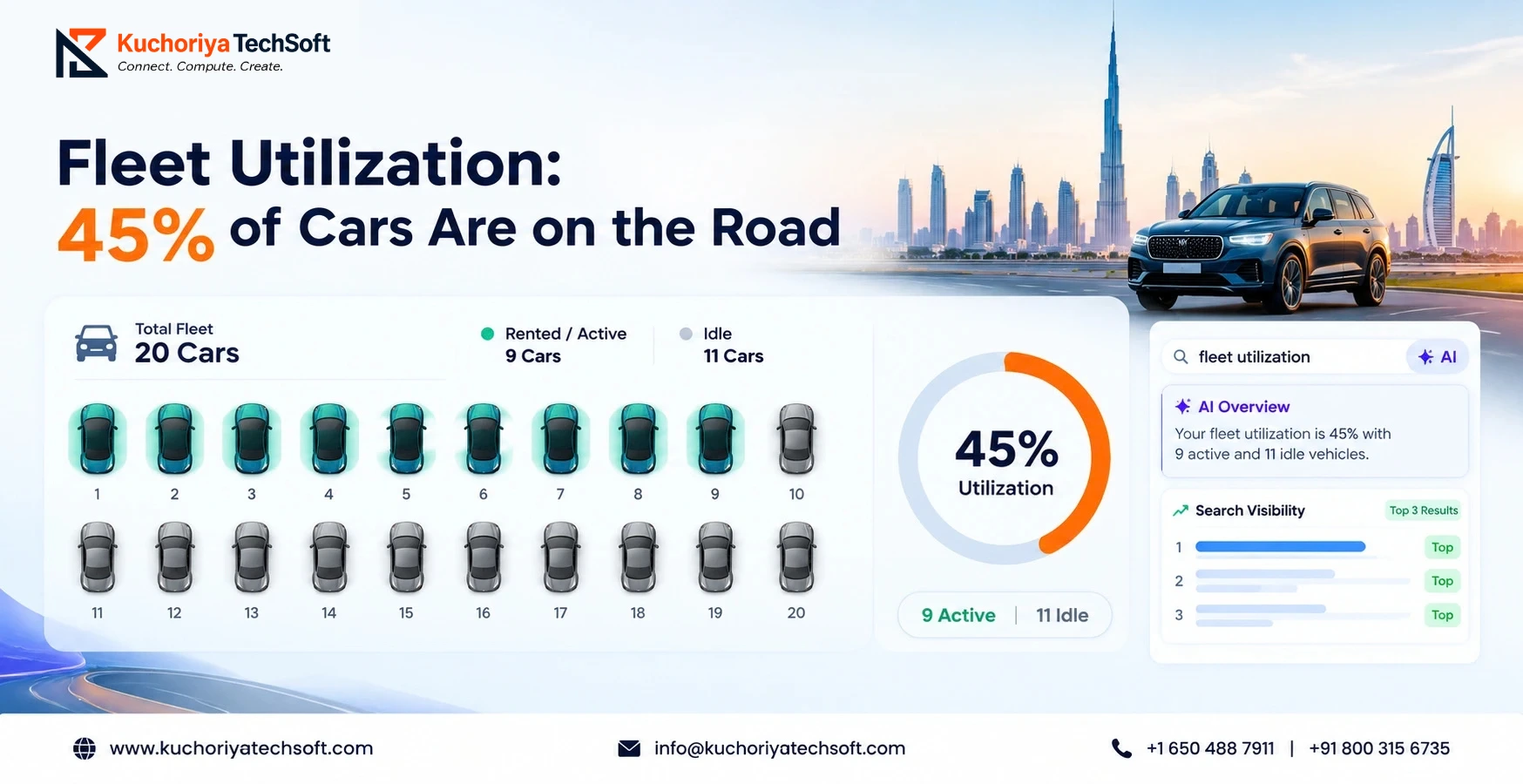
You have 20 cars, and on a normal Tuesday only 9 are out. That puts fleet utilization at 45%, and the other eleven are costing you insurance and parking for nothing. Below 50% I'd look at pricing before buying another car.
3. Weekly Numbers and a Place to Keep Them
March can look fine in the monthly total and awful in week two, but you only see that if you track car rental platform revenue by week. Split it into rentals, fees and ads while you're at it. A spreadsheet is okay for a month or two. After that you want proper rental management software, because nobody enjoys pasting payout figures from three tabs on a Monday morning.
4. Pricing From Your Own History
AI-driven car rental pricing only helps once the app has months of bookings behind it. Before that, just look at which cars sold at which rate. If a tool suggests a price and you can't see why, ignore it.
What Are the Common Car Rental App Monetization Mistakes?
Most car rental app monetization strategies don't blow up on day one. They leak slowly, and the owner finds out when the balance is already low. Here is how the first six months go for a typical owner with 15 cars.
Month 1: Every Fee Goes Live at Once
Commission, delivery charge, insurance add-on, late fee and a booking fee, all on launch day. Customers start dropping at checkout and nobody can say which fee did it. The AED 25 booking fee that only appears on the payment screen is usually the culprit, because people feel tricked when the price changes at the last step.
Month 2: Copying the Big App's Rates
The owner sets prices a little under the biggest competitor. That competitor runs 200 cars and can live on thin margins, while 15 cars cannot. A car rental app revenue strategy has to start from your own costs, otherwise you are the one paying for the discount.
Month 3: Ads Before the App Works
AED 8,000 goes into installs, and checkout still crashes on some Android phones. Every new user costs the same whether or not they can finish a booking. Fix the flow first, and spend on car rental app marketing strategies only after a test booking runs from start to finish without trouble.
Month 4: Bookings Run on WhatsApp
This works fine at five bookings a day. At thirty, two customers turn up for the same car. A booking management system would have blocked the second booking, and it would also have left behind the data needed to price properly later.
Month 6: Late Payouts and No Review
One owner waited a week for a payout and moved his cars to another app, which cost more than the commission on that trip ever earned. Nobody had looked at the January fees since January, either. A monthly review of what each fee actually brought in is boring and takes an hour.
How Can Kuchoriya TechSoft Build a Revenue-Ready Car Rental App?
We plan the money side before drawing a single screen, so fees, owner payouts, and company invoices are settled first. That is what our car rental technology solution is built around.
Do I Need Cars of My Own to Start?
No. With twelve cars you keep the full rate, and with none you list other people's cars and take commission. Those are two different builds, and a car rental software solution that mixes them up ends up wrong for both.
Can I Launch With Just One Way of Earning?
Yes, and we would push you to. A custom car rental platform from us goes live with one model, and your admin can edit fees later without calling a developer.
What if I Want to Run a Marketplace?
Then trust is the main job. Car rental marketplace development comes down to quick listing, a calendar that stays in sync, and payouts that arrive on the promised day.
What Will I See While It Is Being Built?
A working booking flow, early. Car rental platform development with us ends with one full test booking from search to payment, because that is where most apps break.
Why Talk to a Team in Dubai?
Arabic and English screens, AED payments, and local license checks need to be there from day one. As a car rental app development company Dubai owners can reach in person, we build them in from the start, and our car rental app development solutions include a dashboard for fleet utilization and weekly revenue.
Final Thoughts: Turning a Rental App Into a Profitable Business
Decide how the app earns before you build it. Owners who skip that step usually rebuild the payment flow within a year, and that costs more than the first version did. Get it right and you have a profitable car rental platform, which is not the same as a busy one.
Once bookings are steady, a scalable car rental platform should take on more cars and company accounts without a rebuild. A few months of data is when an AI-powered car rental platform can start forecasting demand, and AI revenue optimization is worth trying only then.
No tech lead on your side? Our Virtual CTO can join the early calls, like which model to launch with. Good intelligent rental management is just bookings and payouts on one screen, and AI-powered pricing optimization only helps if you can check its rates against your own history.
When you compare car rental app development companies in Dubai, ask who plans the earning model first. Know a fleet owner thinking about an app? Our referral partner program is open, so send them our way. To talk through your own fleet, contact our team for a free first call.
FAQs About Car Rental App Monetization
Q. What is the simplest way to earn from a rental app at the start?
A. Depends on who owns the cars. If they're yours, the daily rate is your income, and that's about it. If they belong to someone else, you take a percentage once the trip is done. Founders who ask us how to monetize a car rental app usually turn up with a long list of fees, when one would do for the first few months.
Q. Who should pay, the owner or the customer?
A. The owner pays, but only after a booking goes through, so it never feels like a cost up front. Customers can be charged too. The mistake is letting the fee pop up on the last screen, which is where a car rental app monetization strategy tends to lose people.
Q. How much will the app cost?
A. Depends on what you're building. Your own ten cars in one city is small. Add outside owners, payouts, and reviews, and the car rental app development cost climbs quickly. Any figure from us before a scoping call would be a guess.
Q. How long before it goes live?
A. Weeks for a simple app with your own cars, months for a marketplace. The car rental app development process ends with testing, so book a car on it yourself before launch.
Q. Can I add earning options later?
A. Yes, though it depends on how the app was built. In some, adding a single fee means a developer changing code, and that gets tiresome fast. Worth checking before you sign.