






What Is AI Lead Scoring and Why It Matters in 2026
AI lead scoring tools are not optional for B2B sales teams in 2026. They are the direct line between a bloated pipeline and actual closed revenue.
Reps used to rank leads manually. Basic CRM filters, gut feeling, point systems built on assumptions. That broke down the moment pipelines scaled beyond a few hundred contacts.
Modern machine learning lead qualification reads dozens of signals at once. Page visits, email activity, content downloads, company size, tech stack, buyer intent data. Scores update in real time. No manual input required.
The impact is straightforward. Reps stop chasing low-intent contacts. They focus only on accounts showing real purchase signals. Sales cycles shrink. Close rates go up. Revenue becomes predictable.
That is what makes predictive revenue growth an engineered outcome in 2026, not a lucky one.
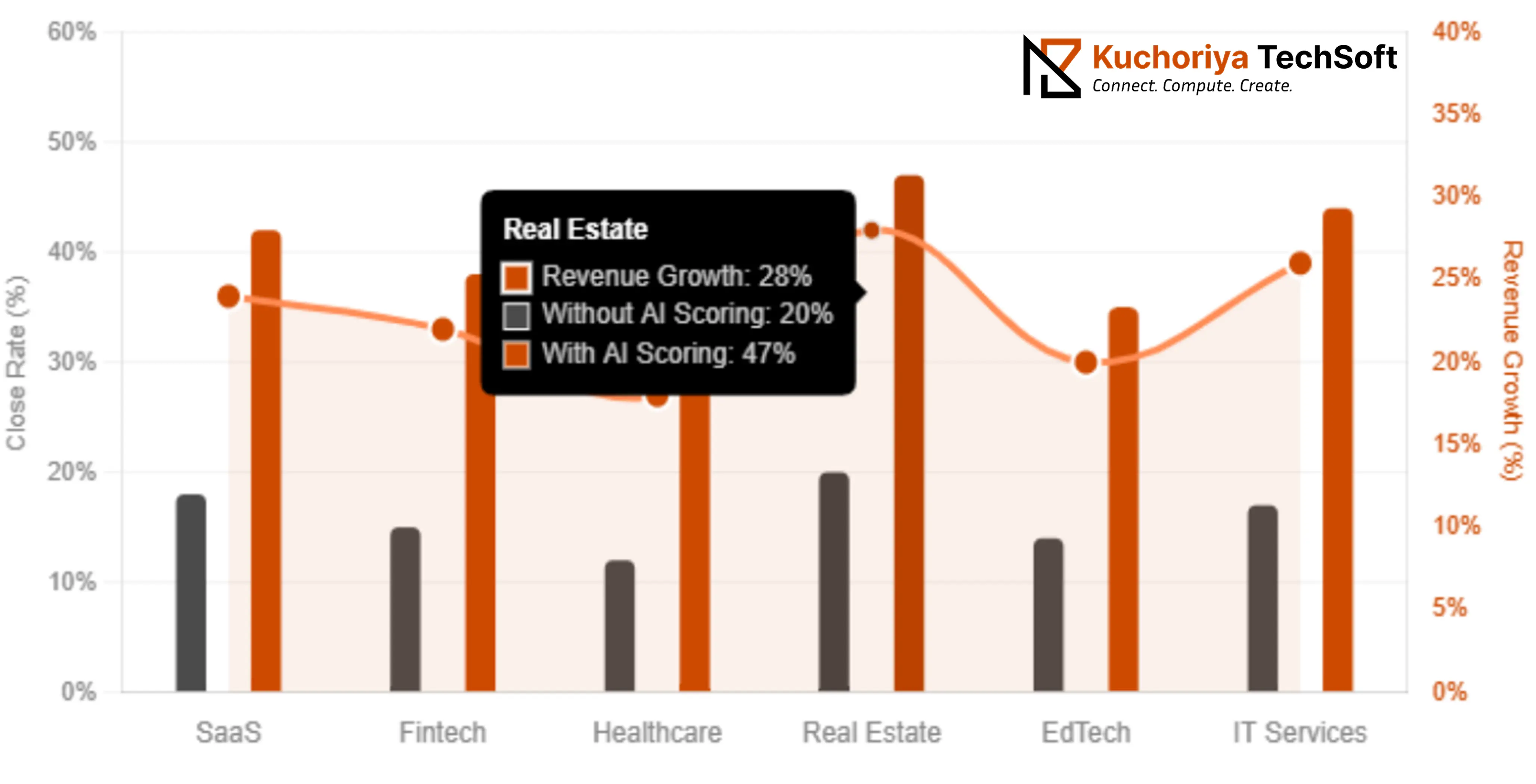
How Machine Learning Lead Qualification and Predictive Lead Scoring Actually Works
Reps spend more time sorting leads than closing them. Machine learning lead qualification fixes that by ranking every contact automatically based on real purchase signals, not assumptions.
Here is what runs in the background:
- Data ingestion: pulls from CRM history, website visits, email activity, and third-party buyer intent data simultaneously
- Pattern matching: compares current lead behavior against thousands of past won and lost deals
- Live scoring: updates the predictive lead scoring number in real time as behavior shifts, no manual input needed
- Decay detection: flags contacts going cold before reps waste more follow-up cycles on them
- CRM sync: pushes fresh scores directly into your pipeline so sales performance analytics always stay current
- Threshold alerts: notify reps the moment a lead hits a score that historically signals buying readiness
Qualification runs entirely in the background. Your team only sees who is ready.
Key Benefits of Predictive Lead Scoring for B2B Sales Teams
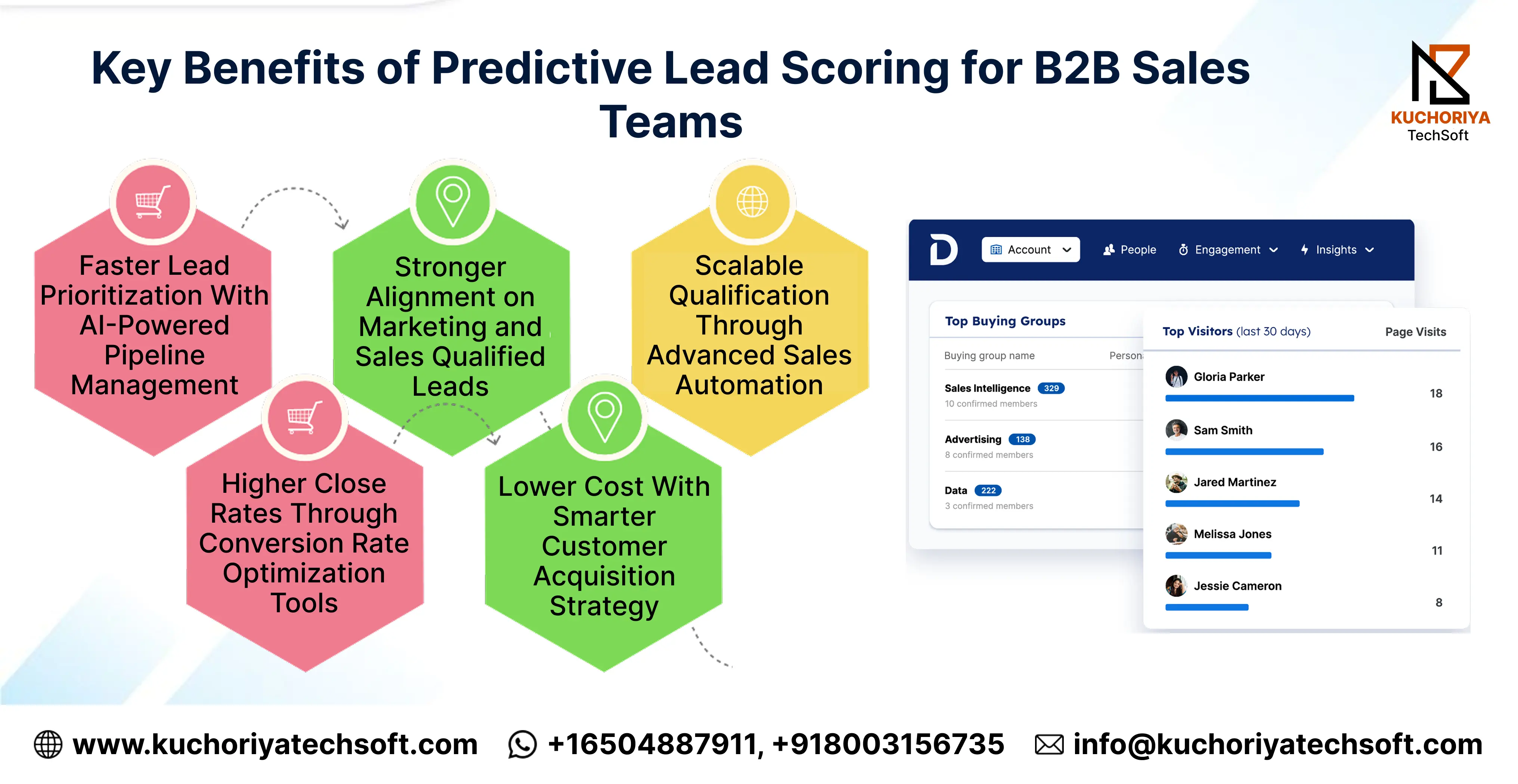
B2B sales teams do not lose deals because of bad products. They lose because reps focus on the wrong accounts at the wrong time. Predictive lead scoring for B2B sales fixes that by telling teams exactly where to spend their energy.
1. Faster Lead Prioritization With AI-Powered Pipeline Management
High-intent accounts rise to the top automatically. Reps stop debating who to call first and start working a ranked list built on real behavioral data, not gut feeling.
- Best AI-powered pipeline management tools rank leads by live purchase signals
- Reps using real-time lead prioritization software report up to 50% less time spent on manual qualification
- Automated ranking works across SaaS, fintech, healthcare, and enterprise IT pipelines equally
2. Higher Close Rates Through Conversion Rate Optimization Tools
When reps pursue only accounts showing genuine buying signals, close rates improve without adding headcount or budget.
- Conversion rate optimization tools built on scored pipelines consistently outperform rule-based systems
- Teams using intent-based lead scoring platforms see 30% higher close rates on average
- Better targeting means fewer wasted demos, shorter cycles, and cleaner revenue forecasts
3. Stronger Alignment on Marketing and Sales Qualified Leads
Shared scoring creates one common language between marketing and sales. No more handoff debates.
- Marketing qualified leads crossing thresholds trigger automatic sales notifications
- Sales qualified leads tracking systems eliminate manual review between teams
- Both departments operate from the same live data, not separate spreadsheets
4. Lower Cost With Smarter Customer Acquisition Strategy
Chasing low-intent leads burns budget fast. Tighter scoring reduces waste across every market.
- Customer acquisition strategy software built on AI scoring cuts outreach costs significantly
- Fewer wasted calls, emails, and demos on accounts never intending to buy
- ROI improves across USA, UAE, Canada, Australia, and Singapore pipelines without increasing spend
5. Scalable Qualification Through Advanced Sales Automation
Volume grows but accuracy does not drop. The system handles scale that no human team can match manually.
- Advanced sales automation platforms qualify ten thousand leads with the same precision as one hundred
- No additional headcount needed as pipeline size increases
- B2B sales forecasting tools stay accurate even as lead volume spikes across global markets
Best Dives: How AI Agents Are Transforming Software Development in 2026
Agentic AI vs Generative AI: AI Agents and Differences Explained

How Lead Scoring Software Drives Predictive Revenue Growth
Most sales teams track revenue after the fact. Lead scoring software for sales teams flips that by turning live pipeline data into forward-looking revenue signals your team can actually act on.
1. Accurate B2B Revenue Forecasting
- B2B revenue forecasting tools built on live scores give leadership numbers worth presenting in board meetings
- Score-weighted deal values produce far more reliable quarterly projections than stage-based guessing
- Predictive analytics for revenue generation users report up to 35% improvement in forecast accuracy
- Finance and sales finally work from the same pipeline picture
2. Pipeline Velocity and Revenue Growth Tracking
- Pipeline velocity tracking software spots bottlenecks before they quietly kill the quarter
- High-score accounts sitting idle get flagged for immediate follow-up
- Revenue growth optimization platforms use velocity data to push effort toward fastest-converting segments
- Deals stop stalling unnoticed inside bloated pipelines
3. Smarter Sales Cycle Acceleration
- Sales cycle acceleration software shortens average deal timelines by removing low-intent contacts early
- Reps enter conversations only when accounts are already showing active buying signals
- Shorter cycles mean more closed deals per quarter without increasing team size
4. Unified Scoring Across Industries and Global Markets
- Data-driven sales pipeline tools apply consistent logic across fintech, healthcare, real estate, and enterprise IT
- Scoring works equally well for teams operating across USA, UAE, Singapore, Canada, and Australia
- Demand generation software connected to scored pipelines keeps top-of-funnel quality high across every market
Top AI Lead Scoring Tools in 2026
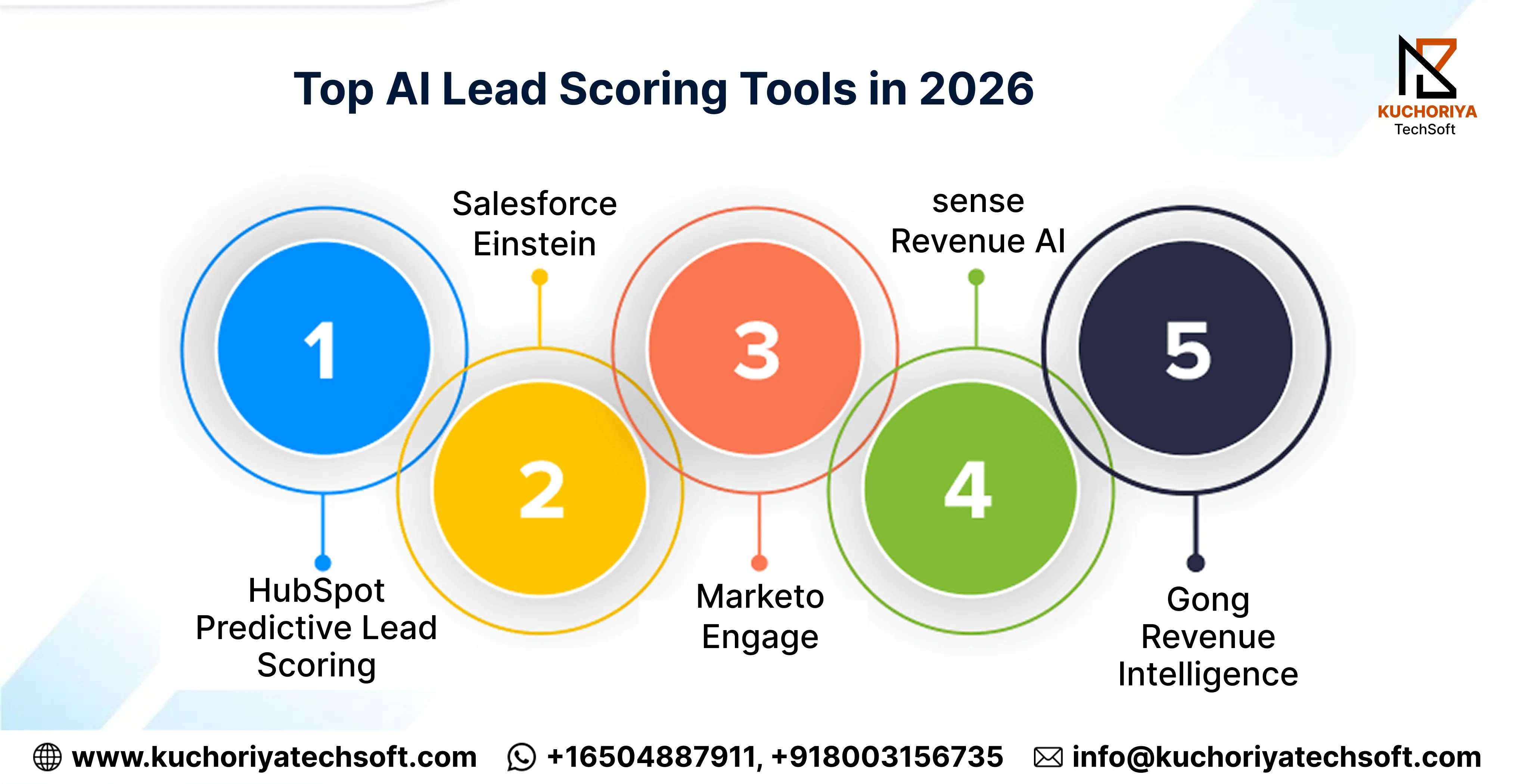
Not every platform suits every team. Stack compatibility, deal size, and sales motion all shape which tool actually delivers results. Here are the top picks for 2026.
1. Salesforce Einstein
- Native CRM-integrated scoring solution sitting directly inside existing Salesforce workflows
- Lead scores refresh automatically from CRM history and live behavioral signals
- Built for enterprise teams running full Salesforce ecosystems across USA and UAE
- Pairs directly with sales automation platforms without additional integration work
2. HubSpot Predictive Lead Scoring
- Trains its model on your own historical CRM conversion data, not generic benchmarks
- No manual rule setup needed to surface high-converting contacts
- Solid pick for inbound-heavy teams running automated lead qualification systems
- Plugs straight into marketing qualified leads and sales qualified leads pipelines
3. 6sense Revenue AI
- Built around buyer intent data platforms and account-level purchase signals
- Spots companies deep in research cycles before they contact any vendor
- Strong choice for outbound teams hunting enterprise accounts across Singapore, Hong Kong, and Canada
- Feeds revenue intelligence platform data directly into live account scores
4. Marketo Engage
- Mature, highly configurable lead nurturing automation platform with deep scoring logic
- High-scoring leads trigger follow-up sequences automatically without rep involvement
- Right fit for fintech, healthcare technology, and IT services sales motions
- Ties scoring outputs directly into account-based marketing tools
5. Gong Revenue Intelligence
- Builds scores from actual call and email engagement patterns, not just CRM fields
- Layers sales performance analytics software over real conversational data
- Teams focused on win rate optimization tools tied to rep behavior use this heavily
- Active across SaaS, edtech, logistics, and enterprise IT services pipelines globally
Revenue Intelligence and AI Sales Forecasting Together
AI sales forecasting alone gives you a number. Revenue intelligence platform data gives you the story behind it. Together they turn pipeline guessing into a process finance teams can actually rely on.
1. How AI Sales Forecasting Reads Scored Pipelines
- AI-driven sales forecasting tools weight each deal by its live score, not just its stage
- A pipeline full of 80-plus scored accounts produces a fundamentally different projection than one sitting at 40s and 50s
- Score-weighted forecasting catches sandbagging and inflated pipelines before they hit the board report
- B2B sales forecasting software built on scored data cuts forecast variance by up to 40%
2. Revenue Intelligence Fills the Gaps CRM Misses
- Revenue intelligence tools pull signals from calls, emails, and meetings that never make it into CRM fields manually
- Deals showing engagement drop-off get flagged weeks before the rep notices anything
- Teams using outbound sales intelligence platforms catch at-risk accounts before they go dark
- Full-funnel visibility means no surprise misses at quarter end
3. Rep Performance Patterns Inside Forecasting Models
- AI-driven sales forecasting tools learn which reps consistently close at certain score thresholds
- Projections adjust per rep based on historical conversion behavior, not blanket assumptions
- Sales engagement platforms feed activity data back into forecast models continuously
- Leadership gets rep-level revenue visibility without micromanaging pipeline reviews
4. Seasonal and Market Variable Adjustments
- Predictive analytics for revenue generation accounts for market shifts that compress or expand close rates
- Models recalibrate automatically when external patterns change across global markets
- Teams operating across Brazil, South Africa, Spain, and Israel benefit from region-adjusted forecasting logic
Related Insights: How CTO Consultants Help Businesses Adopt AI
How to Hire a LinkedIn Clone Development Company
Predictive Analytics for Revenue Generation Across Industries
Predictive analytics for revenue generation is not a single-industry solution. The same scoring logic that works for a SaaS pipeline works equally well for a healthcare technology firm or a logistics company chasing enterprise contracts.
1. SaaS and Software Companies
- SaaS lead scoring software tracks trial behavior, feature adoption, and upgrade intent signals
- Subscription revenue tracking tools identify expansion opportunities inside existing accounts
- Teams using SaaS pipeline management tools report significantly shorter trial-to-paid conversion cycles
2. Fintech and Banking
- Fintech customer acquisition tools score loan applicants, investment leads, and onboarding prospects simultaneously
- Credit risk assessment platforms layer financial behavior signals into standard lead scores
- High-value banking prospects get flagged before competitor outreach reaches them first
3. Healthcare and MedTech
- Healthcare CRM lead management systems score patient acquisition funnels and medical device prospects separately
- MedTech sales teams use medical lead management tools to prioritize hospital and clinic decision-makers
- Compliance-aware scoring keeps sensitive data handling within regulatory boundaries
4. Real Estate and PropTech
- Property lead scoring platforms rank buyers by budget signals, search behavior, and inquiry frequency
- Real estate CRM tools connect scored leads directly to agent workflows without manual sorting
- High-intent buyers surface weeks before they formally request a showing or consultation
5. IT Services and Managed Services
- IT services sales pipeline software scores prospects by tech stack compatibility and contract renewal windows
- MSP teams use managed services pipeline tools to identify accounts approaching infrastructure decision points
- Scoring works across USA, UAE, Australia, Singapore, and Hong Kong enterprise IT markets equally
6. Logistics and Supply Chain
- Freight sales automation tools score shipping prospects by contract size, route complexity, and renewal signals
- Logistics CRM platforms connect scored leads directly into dispatch and account management workflows
- Supply chain teams operating across Brazil, South Africa, and Spain use scoring to prioritize high-value carrier contracts
Businesses investing in AI lead scoring tools often operate within broader digital infrastructure. Whether you are building an EMR system development company solution for healthcare sales pipelines or deploying the best app delivery solution for secure cloud applications to support your revenue tech stack, scored pipelines perform best when the underlying systems are built for speed, security, and scale.
How to Choose the Right Lead Scoring Software for Your Sales Team
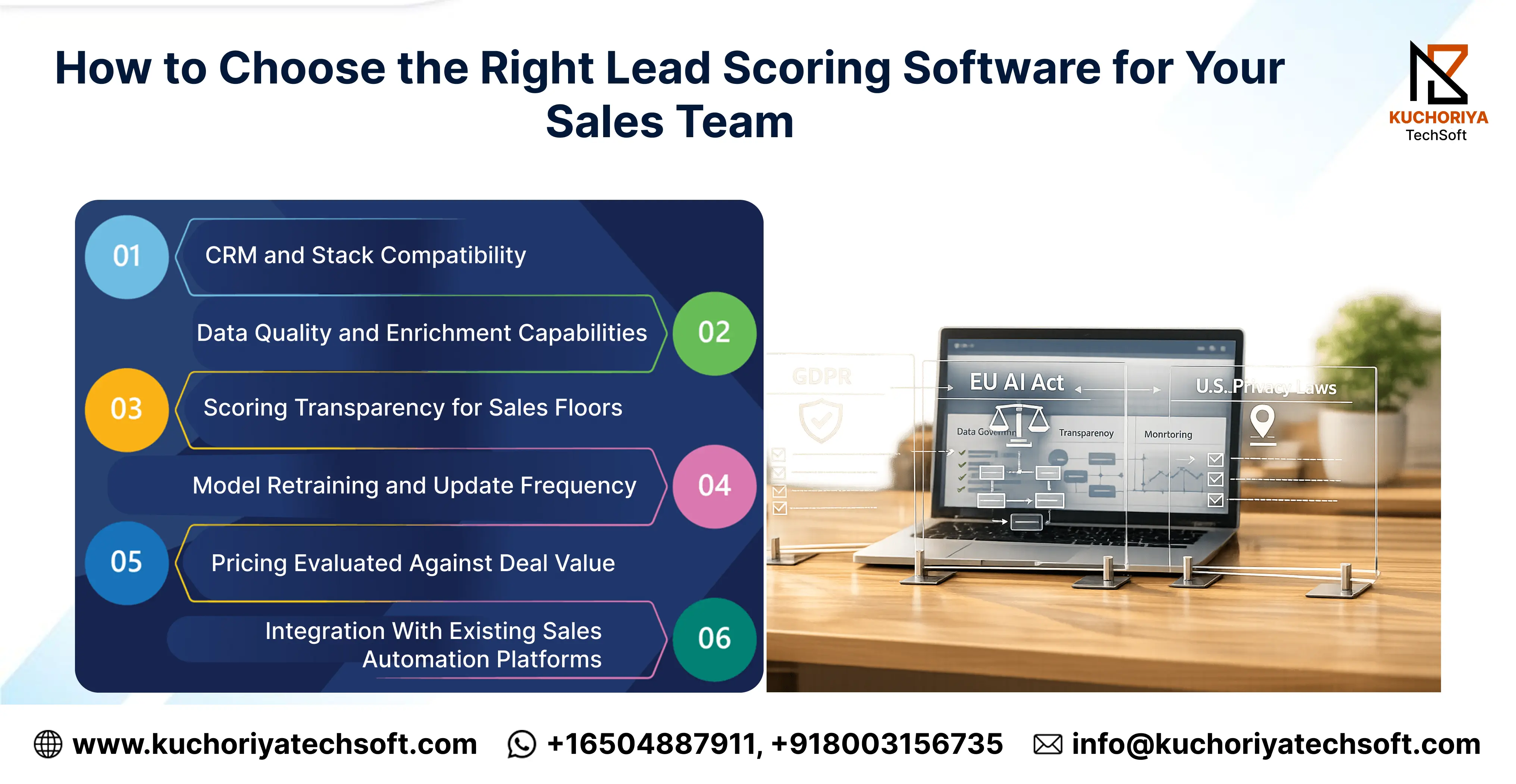
Picking the wrong platform wastes budget and kills adoption fast. Here is what actually matters when evaluating lead scoring software for sales teams before committing to any vendor.
1. CRM and Stack Compatibility
- CRM-integrated lead management tools must connect natively with existing workflows, not require a separate login
- Check whether scores surface inside the tools reps already use daily
- Kuchoriya TechSoft builds custom CRM-integrated scoring solutions that plug directly into your existing sales stack without disruption
2. Data Quality and Enrichment Capabilities
- Account intelligence platforms need clean enriched data to produce accurate scores
- Verify how each vendor handles incomplete or sparse CRM records before committing
- Poor data quality is the single biggest reason scoring models underperform in early deployment
3. Scoring Transparency for Sales Floors
- Reps who cannot see why a lead scored high ignore the model completely
- Intent-based prospecting tools that show top contributing signals build rep trust and adoption fast
- Transparent scoring logic drives consistent usage across sales teams in UAE, Canada, and Australia
4. Model Retraining and Update Frequency
- Buyer behavior shifts constantly and scoring models must keep pace
- Platforms retraining monthly outperform those updating only quarterly across every industry vertical
- Kuchoriya TechSoft develops custom predictive analytics for revenue generation with retraining cycles built around your specific market and deal patterns
5. Pricing Evaluated Against Deal Value
- Platform cost should always be measured against average contract value, not seat count alone
- Enterprise teams closing large contracts across Singapore, Hong Kong, Israel, and Brazil justify premium platforms easily
- Mid-market teams across Spain and South Africa often perform better with leaner purpose-built solutions from specialist development partners like Kuchoriya TechSoft
6. Integration With Existing Sales Automation Platforms
- Sales automation platforms that do not connect with your scoring tool create duplicate workflows and data gaps
- Confirm bi-directional sync between scoring outputs and your outreach sequences before finalizing any vendor
- Kuchoriya TechSoft integrates demand generation software and scoring platforms into unified pipelines for clients across USA, UK, and Australia
The Future of AI Lead Scoring Tools and Predictive Revenue Growth
AI lead scoring tools are no longer a future investment. Teams already using them are closing faster, forecasting better, and scaling without adding headcount. The gap between adopters and everyone else is only getting wider through 2026.
Businesses across SaaS, fintech, real estate, healthcare technology, logistics, and enterprise IT are already seeing what scored pipelines do to revenue predictability. Buying committee-level intelligence, sharper real-time buyer intent data signals, and macroeconomic-aware scoring models are where this technology heads next. The question is no longer whether it works. It is whether your team moves before your competitors do.
Kuchoriya TechSoft builds custom AI-powered pipeline management and scoring solutions tailored to your specific sales motion, industry vertical, and existing tech stack. From full revenue intelligence platform in USA deployments to CRM-integrated scoring builds, every solution is designed around your pipeline, not a generic template. We serve clients across USA, UK, UAE, Canada, Australia, Singapore, Brazil, South Africa, Spain, Hong Kong, and Israel.
Contact Kuchoriya TechSoft today to discuss a custom B2B sales forecasting software build that fits your revenue goals. Or join our Referral Partner Program and earn by connecting businesses that need automated lead qualification systems with a team that actually delivers them.

FAQs About AI Lead Scoring and B2B Sales Forecasting
Q. What are AI lead scoring tools?
A. Simply put, they rank your leads by how likely they are to buy. The system pulls data from emails, website visits, CRM records, and third-party buyer intent data sources, then spits out a number. Higher the score, closer the deal.
Q. How does predictive lead scoring sharpen B2B sales forecasting?
A. When every deal in your pipeline carries a score backed by real conversion history, your forecast stops being a guess. Predictive lead scoring replaces rep gut-feel probabilities with numbers that actually reflect what similar deals did in the past.
Q. Which industries get the most out of predictive analytics for revenue generation?
A. SaaS, fintech, healthcare tech, real estate, IT services, edtech, and logistics top the list. Basically any sector where sales cycles run long and multiple people sign off on a purchase.
Q. What separates marketing qualified leads from sales qualified leads in a scored pipeline?
A. Marketing qualified leads are warming up. They are clicking, reading, and downloading. Sales qualified leads have crossed a score threshold that historically means someone is close to a buying decision. The system flags that crossing automatically.
Q. How quickly does lead scoring software start making a difference?
A. Most teams notice cleaner prioritization within the first two to three months. Forecast accuracy takes a full sales cycle to sharpen. Either way, messy CRM data slows everything down so clean it before you deploy.
Q. Does buyer intent data genuinely move the needle on score accuracy?
A. It does. Without it, scoring only sees what happens on your own channels. Buyer intent data platforms show what prospects are researching everywhere else online. That context changes a borderline score into a clear signal worth acting on.