




What Is Generative AI and How Does It Work?
Generative AI works on a simple exchange, you give it a prompt, it gives you content. That content can be text, code, images, summaries, or translations depending on what the model was trained on. Behind every response sits a Large Language Model that scans the input, maps it against training data, and constructs the most relevant output it can produce.
Generative AI Applications cover marketing copy, code suggestions, contract summaries, and translated documents across industries. Adoption has grown fast because the setup is low and the output is immediately usable.
By 2026, over 80% of enterprises will have Generative AI Models running in active production, with global AI spending at $2.59 trillion, a 47% year-on-year increase tied to embedded GenAI rollouts and synthetic data pipelines. (Source)
Every interaction starts and ends with a prompt. No memory carries over, no action gets taken on the output, and no live system gets updated. That boundary is where Agentic AI Technology takes over.
What Is Agentic AI and Why Is It Different?
Agentic AI runs on goals, not prompts. You set the objective and it handles everything in between, breaking the task down, picking the right tools, and moving through each step without you managing the process manually.
Most AI tools stop once they give you an output. Autonomous AI Systems keep working. They stay active through the full workflow, hold context from one step to the next, and connect to the actual platforms where work gets done.
How it operates:
- Goal intake – receives an objective from a user or a connected platform
- Task breakdown – splits it into steps using an AI Agent Framework
- Autonomous Decision Making – acts at each step without waiting for manual approval
- Tool use – calls APIs, reads documents, queries databases, triggers external workflows
- Memory – holds context across the entire process so nothing resets mid-task
- Self-correction – identifies when a step fails and adjusts course independently
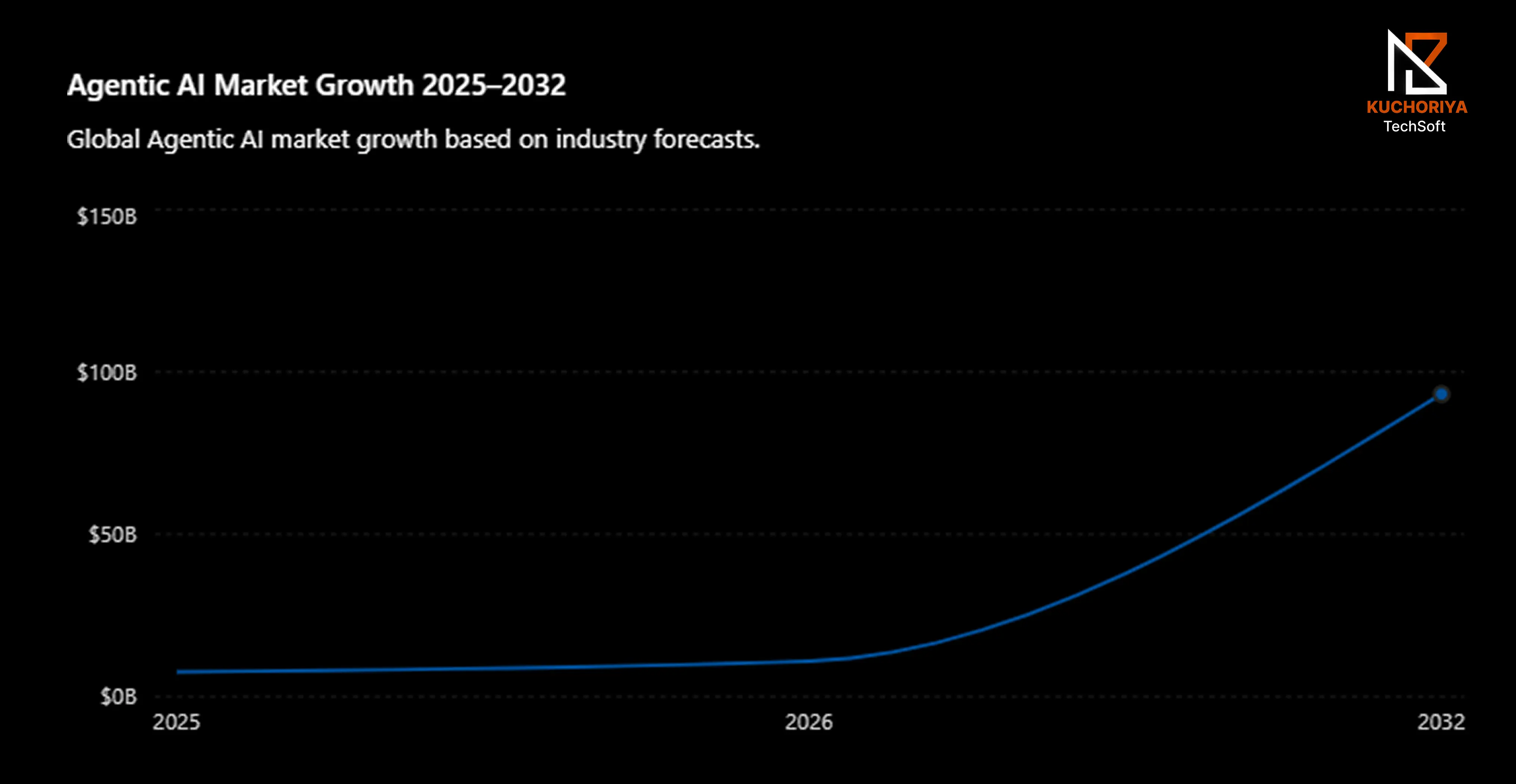
The Agentic AI market is valued at $10.86 billion in 2026, up from $7.55 billion in 2025, with Gartner projecting 40% of enterprise applications will have embedded task-specific agents by year-end, compared to under 5% in 2024.
Agentic AI vs Generative AI: Core Differences Explained
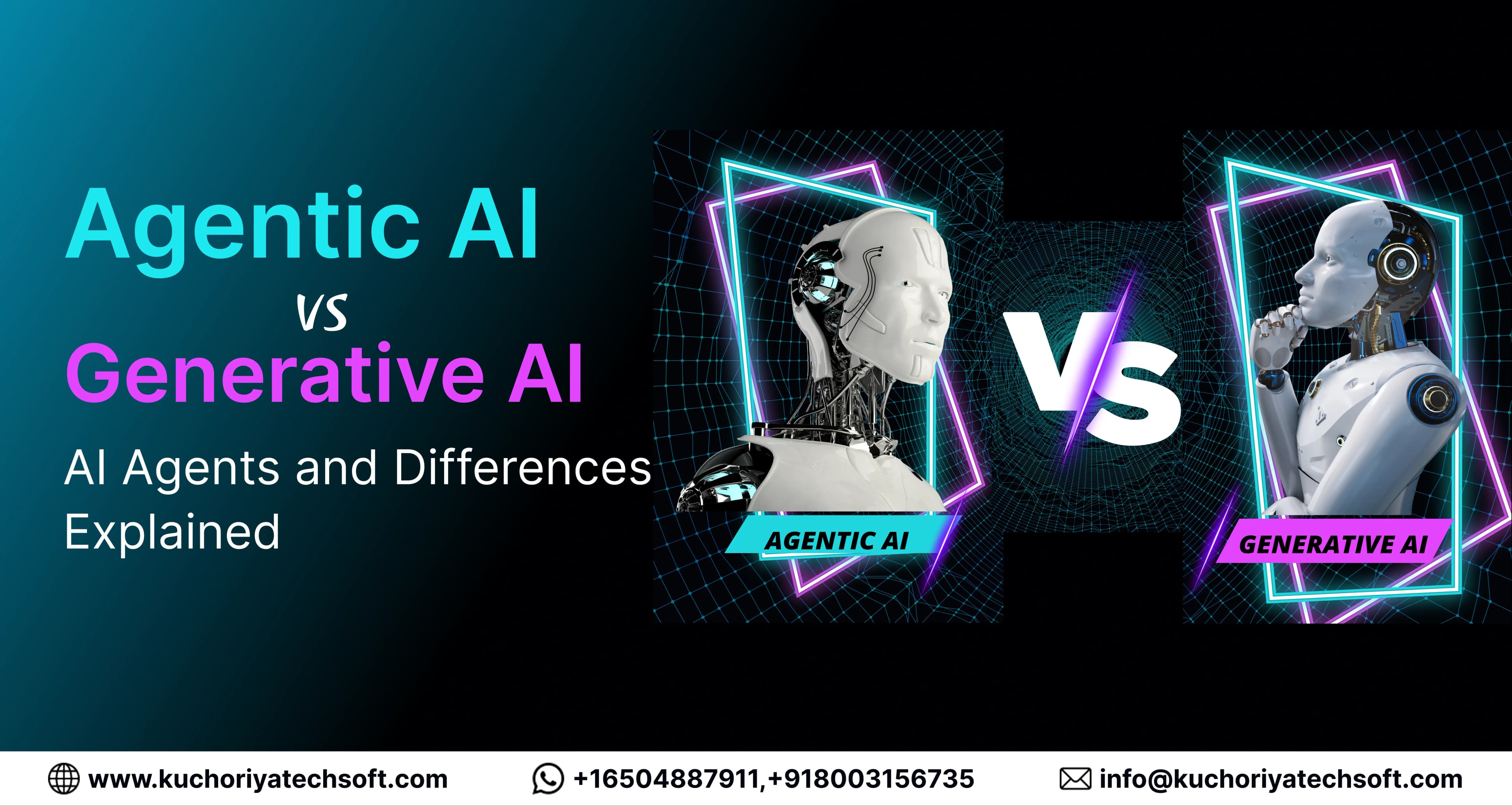
Both sit under the same AI umbrella but they are built for completely different jobs. The confusion comes from the fact that most Agentic AI for Business systems actually use a generative model under the hood. But using the same engine does not make them the same vehicle.
Agentic workflows show a 3x higher ROI compared to standard generative AI setups by automating end-to-end task execution rather than single-turn content generation.
Agentic AI was never meant to replace Generative AI Models – it builds on top of them. Most agentic systems rely on generative models for reasoning and communication while adding autonomous execution on top.
The distinction that matters for enterprise teams is simple. If the task ends with an output, generative AI handles it. If the task requires the output to trigger further actions across systems, that is where Intelligent Automation through agentic systems earns its place.
How Does Agentic AI Work: Goals, Memory and Autonomous Decision-Making
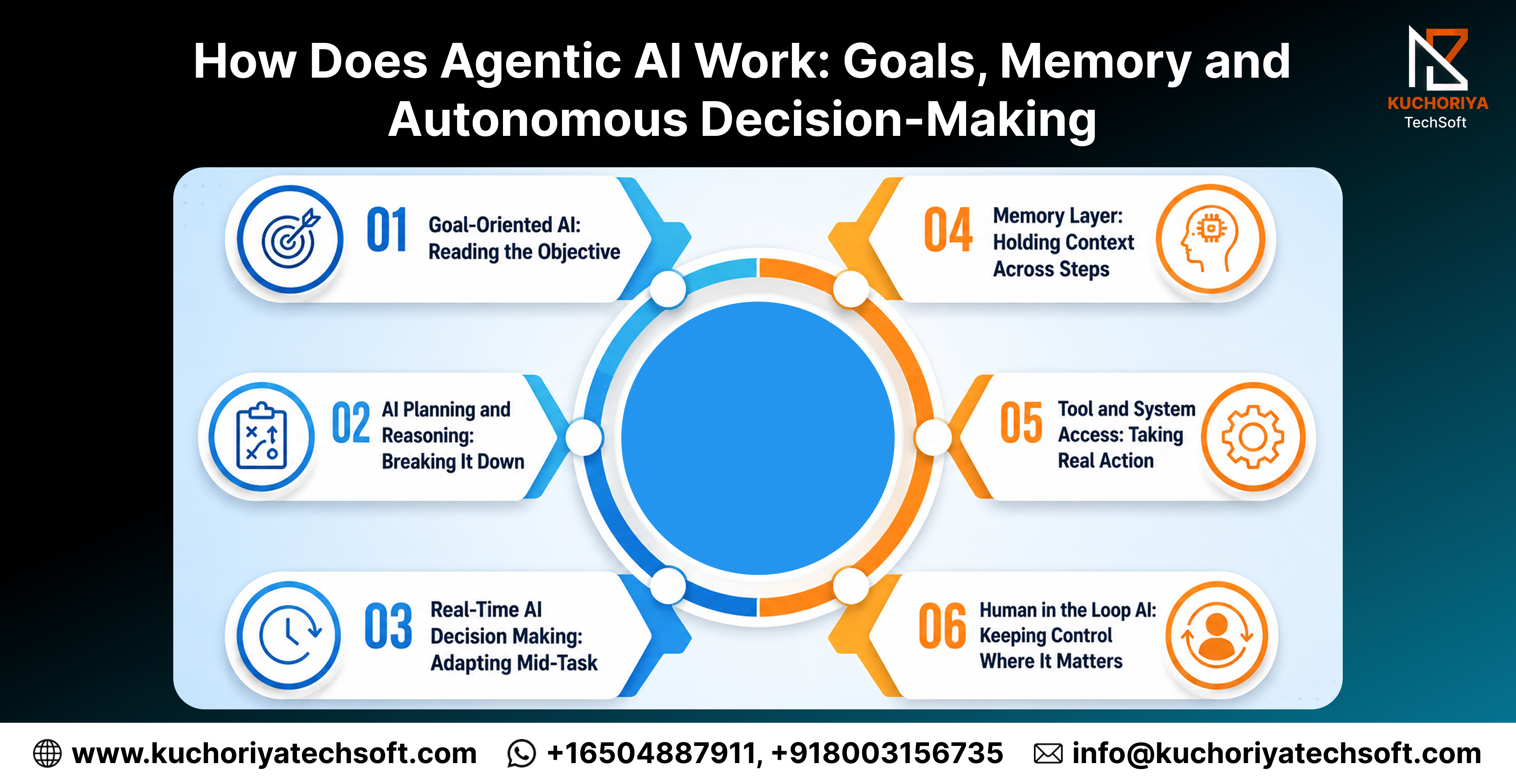
Understanding how Agentic AI Technology actually runs helps teams figure out where it fits. Every component has a defined role and the whole system moves together toward one outcome.
Goal-Oriented AI: Reading the Objective
You hand the system a goal, not a step-by-step brief. It works out what that involves and where to start without any further direction.
AI Planning and Reasoning: Breaking It Down
The agent takes that goal and splits it into tasks it can actually execute. It lines them up in the right order and checks what tools or systems each step will need before anything moves.
Real-Time AI Decision Making: Adapting Mid-Task
Every step gets evaluated on the spot. If something shifts mid-task, the agent picks a different route and keeps moving without waiting for instructions.
Memory Layer: Holding Context Across Steps
Agents track goals and progress across long AI Workflow Automation tasks. Past outcomes feed back into the process, sharpening Autonomous Decision Making at every stage.
Tool and System Access: Taking Real Action
The agent plugs into APIs, databases, and CRMs as part of AI Task Automation. It does not suggest what should happen next. It goes into the system and does it.
Human in the Loop AI: Keeping Control Where It Matters
Enterprise AI automation deployments build in review points at stages that carry real risk. Payments, contracts, compliance sign-offs – a human checks before the agent proceeds.
89% of enterprises plan to grow their AI budgets in 2026, with Agentic AI Platforms moving from conversation-based tools to systems that handle full workflows without handholding.
Must Read: How Generative AI Is Transforming Enterprise Software in 2026
How AI Agents Are Transforming Software Development in 2026

What Are AI Agents and How Do They Operate?
AI Agents are software built to chase a goal, not wait for the next prompt. Hand one a task and it maps the steps, grabs what it needs, and pushes through to completion on its own.
A chatbot tells you how to research competitors. An agent actually pulls the pages, compares pricing, spots the gaps, and hands you the report.
1. AI Agent Architecture: Every agent runs on perception, reasoning, memory, planning, and direct tool access – web search, APIs, code execution, and file systems all connected in one operational layer.
2. Multi-Agent Systems: Complex tasks get distributed across specialized agents, each handling its own domain and passing results forward, covering more ground faster than any single system could.
3. AI Orchestration: One agent pulls the data, another processes it, another formats the output. AI Orchestration keeps them coordinated and moving toward the same outcome without overlap or delay.
4. Compound AI Systems: Larger enterprise setups combine multiple models and tools into Compound AI Systems where each layer has a defined role and the whole architecture scales with the complexity of the work.
5. Adoption in 2026: 51% of companies have Autonomous AI Agents running in production, with adoption spreading well past the early enterprise pilot phase across every major industry.
Agentic AI Technology vs Generative AI Technology: A Technical Breakdown
Both run on Foundation Models for Agents and Large Language Models at the core. The technical split happens in what gets built on top of that foundation and how the system behaves once it has the output.
Generative models serve as the cognitive engine for agentic systems. The LLM reasons about goals and produces outputs at each workflow step, while the agentic framework handles execution, memory, and coordination across multiple systems.
LLM-Powered AI Agents: How the Stack Works: Agentic AI sits at the application layer, orchestrating everything below it. The LLM handles language and reasoning. The agent layer adds tool orchestration, multi-step planning, persistent memory, and AI Pipeline Automation to pursue goals without human input at each step.
Proactive AI vs Reactive AI: The Core Split: Generative AI runs the inference loop once to produce content. Agentic AI runs it repeatedly across a multi-step task, making far greater demands on the underlying model and infrastructure.
AI Autonomy Levels: Where Each Sits: Generative AI operates at level one – it responds. Agentic AI Technology operates at a higher autonomy level – it plans, acts, monitors, and corrects. The gap between those two levels is where most enterprise workflow complexity actually lives.
AI Agent Frameworks and Multi-Agent Systems in 2026
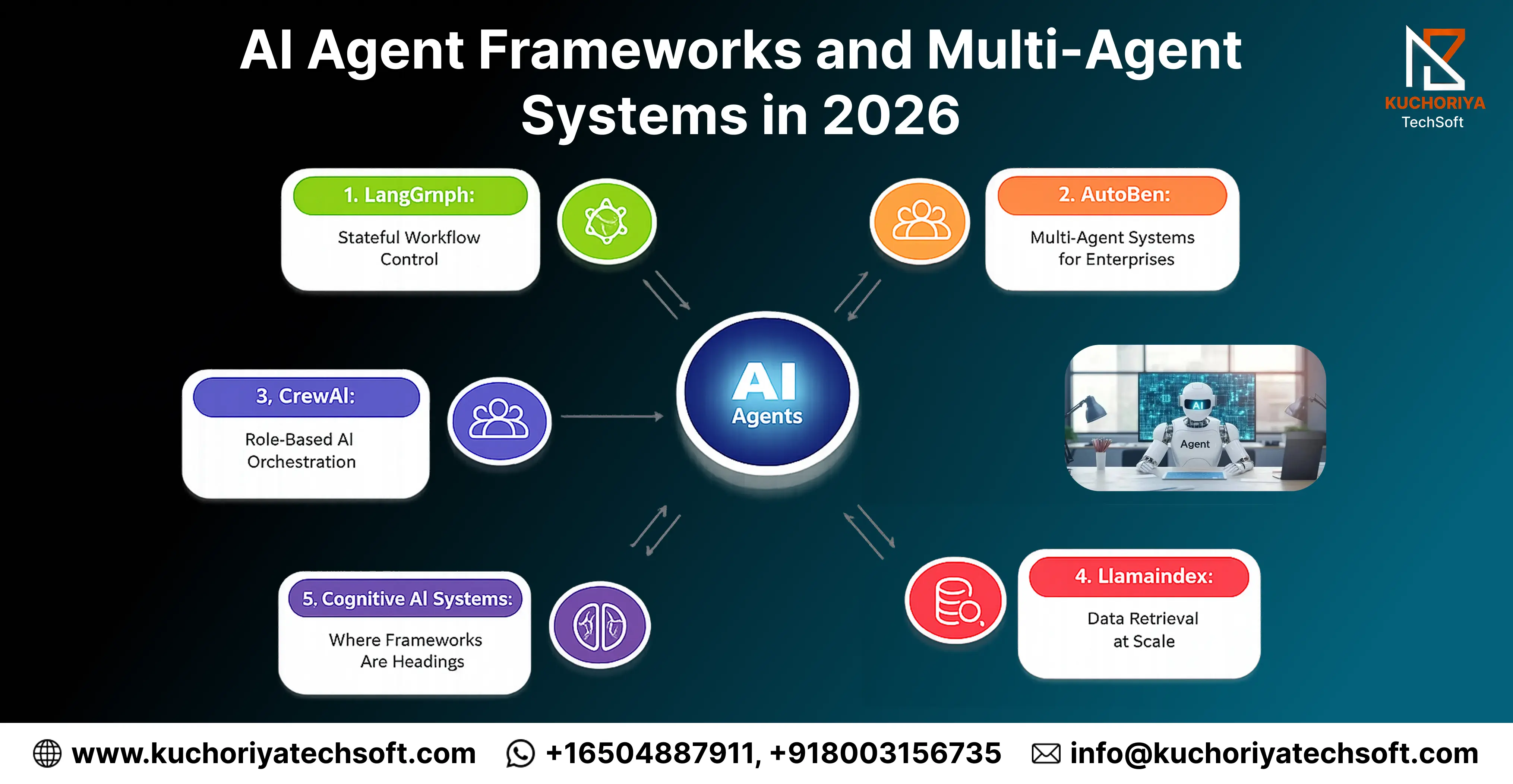
Picking the right AI Agent Framework decides how far an agentic deployment can actually scale. Each option is built for a different kind of work, and the wrong choice shows up fast in production.
1. LangGraph: Stateful Workflow Control
Best for complex enterprise workflows that need precise branching, retries, and human checkpoints. It processes over 15 billion traces for enterprise customers and sits as the default choice for production-grade deployments.
2. AutoGen: Multi-Agent Systems for Enterprises
Microsoft's framework handles setups where agents collaborate, debate, and pass work between each other. Strong fit for quality-sensitive workflows where thoroughness matters more than speed.
3. CrewAI: Role-Based AI Orchestration
Each agent gets a defined job title, goal, and context. Strong for business process automation where tasks map naturally to team structures and handoffs happen in sequence.
4. LlamaIndex: Data Retrieval at Scale
Built for deployments where agents pull from large internal knowledge bases. Works well when enterprise data retrieval is the main bottleneck slowing the workflow down.
5. Cognitive AI Systems: Where Frameworks Are Heading
The frameworks themselves are stabilizing. What separates them now is observability, governance, and integration depth inside real Cognitive AI Systems built for enterprise environments.
By 2028, 33% of enterprise software applications will carry agentic AI, up from under 1% in 2024, with healthcare, finance, and customer service moving fastest on AI Agent Deployment for enterprises.
Top Advantages of Agentic AI for Enterprise AI Solutions
Enterprise AI Solutions built on agentic systems are delivering returns that standard automation has never come close to. At Kuchoriya TechSoft, we have seen this shift firsthand – clients across the USA, UAE, Canada, and Australia are moving core workflows onto agentic infrastructure and measuring results within weeks.
Enterprises deploying agentic AI report an average ROI of 171%, with US enterprises averaging 192%, three times the return of traditional automation, including RPA and chatbots.
1. End-to-End AI Workflow Automation
Tasks that needed human handoffs at every stage now run without intervention. We build AI Automation Tools for clients in USA and UK that cut process time from days to hours across finance, HR, and operations.
2. Faster Autonomous Decision Making
IBM research shows multi-agent architecture reduces process handoffs by 45% and speeds up Autonomous Decision Making cycles threefold compared to standard workflow setups.
3. Intelligent Automation Without Proportional Cost
Initial agentic deployments deliver 3 to 5% annual productivity gains, while scaled Intelligent Automation systems can push enterprise growth up by 10% or more, according to McKinsey. Our clients scale output without scaling headcount.
4. AI Task Automation Across Time Zones
Kuchoriya TechSoft deploys agents for clients in Dubai, Toronto, Sydney, and Singapore that run round the clock without additional staffing. The system handles volume whether it is 9am in New York or midnight in Abu Dhabi.
5. Agentic AI for Business: Custom Deployments
Every deployment we build is scoped around the client's existing stack. Agentic AI for Business does not mean replacing systems, it means connecting them so work moves through without manual triggers between steps.
6. Enterprise AI Automation ROI Within Weeks
Organizations that start with three to five high-value use cases and measure cost per resolved interaction see payback in four to six weeks. That is the model Kuchoriya TechSoft follows for every Enterprise AI Automation rollout.
Which Industries Are Using Autonomous AI Systems Right Now?
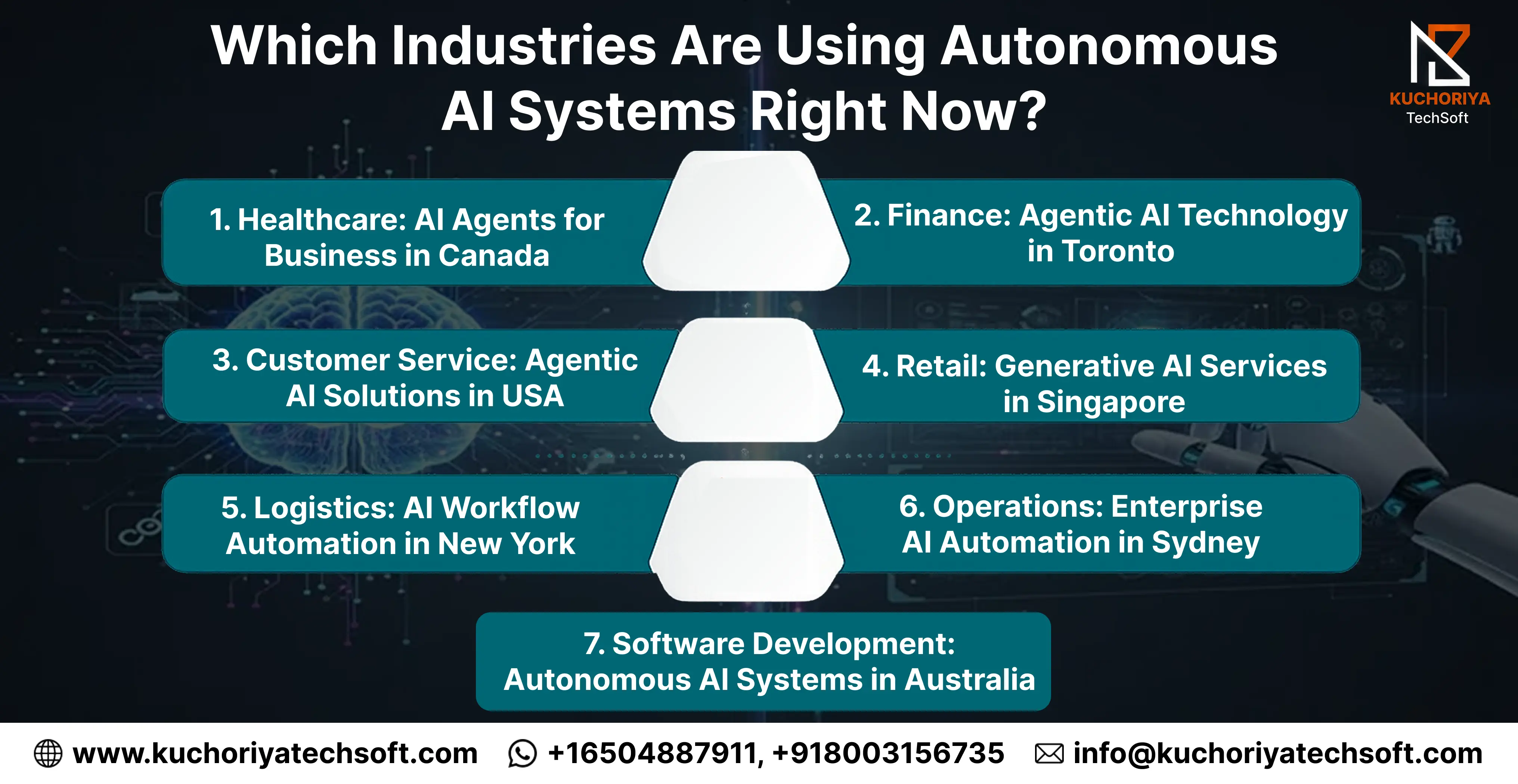
Agentic AI Use Cases are no longer pilot programs. Businesses across every major sector are running them live and tracking results against actual costs.
1. Healthcare: AI Agents for Business in Canada
Clinical teams use agents that pull records, generate documentation, handle billing codes, and route authorization requests without staff managing each step. Health networks across Canada and Australia are cutting administrative hours per clinician every week.
2. Finance: Agentic AI Technology in Toronto
Banks run agents across loan underwriting, AML monitoring, and fraud detection. Agentic AI Technology in Toronto and AI Agent Frameworks in Abu Dhabi process transaction data in real time and flag anomalies without analyst intervention.
3. Customer Service: Agentic AI Solutions in USA
By 2029, AI agents are expected to resolve 80% of common customer service issues without human help. Teams running Agentic AI Solutions in USA are already hitting 70 to 90% autonomous resolution rates in live deployments.
4. Retail: Generative AI Services in Singapore
Generative AI Services in Singapore handle localized content across multiple markets without expanding copy teams, while agentic layers manage pricing and inventory adjustments automatically.
5. Logistics: AI Workflow Automation in New York
AI Workflow Automation in New York logistics teams report measurable reductions in manual escalations across warehouse and order management without human input at each stage.
6. Software Development: Autonomous AI Systems in Australia
AI now generates 41% of all code globally. Autonomous AI Systems in Australia and UK development teams use agentic pipelines that debug, write tests, and open pull requests automatically. Kuchoriya TechSoft builds these pipelines integrated directly into existing CI/CD workflows.
7. Operations: Enterprise AI Automation in Sydney
Enterprise AI Automation in Sydney teams deploy agents across procurement, HR onboarding, and compliance reporting, replacing manual document flows with systems that run at full scale.
Related Reads: AI Statistics 2026 - Market Size, Adoption & Growth Trends
How Much Does It Cost to Build an AI App in 2026?
The Rise of AI Development Services and Machine Learning Solutions for Business in 2026
The Future of Autonomous AI and Intelligent Automation
AI is moving from a productivity tool to operational backbone. The businesses building on this now will be hardest to compete with in three years.
The global Agentic AI Platforms market is projected to reach $48.2 billion by 2030, with one third of enterprise software expected to include agentic capabilities by 2028.
LLM-Powered AI Agents: Getting Smarter
Agents are moving past single-task execution into cross-system coordination – one agent managing the full chain of data, decisions, actions, and reporting without human handoffs.
AI Pipeline Automation: Full Operations
29% of firms already run AI Pipeline Automation in production, 44% plan to adopt within a year, and 66% report higher productivity from current deployments.
Self-Directed AI Systems: Learning at Scale
Self-Directed AI Systems learn from each run, adjust approach, and improve output over time without retraining from scratch.
AI Autonomy Levels: The Competitive Gap
By 2030, up to 80% of enterprise processes could run without human involvement, with systems that self-heal and retrain in real time. The gap between AI Autonomy Levels is where the next decade of competitive advantage gets decided.
Governance: The Part Most Teams Miss
88% of organizations have experienced AI-related security incidents, yet only 22% treat agents as identity-bearing entities with formal access controls. Next-generation AI solutions that scale without governance built in create risk before they create value.
At Kuchoriya TechSoft, governance and access controls are part of the architecture from day one – not an afterthought.
Agentic AI vs Gen AI: What Should Your Business Choose?
The real answer is not either/or. Most enterprise teams seeing results in 2026 are running both but using each for the right job.
Generative AI answers questions. Agentic AI for Business gets things done. That one line captures the entire decision.
When Generative AI Technology Makes Sense:
The task ends with an output like a draft, a summary, a translated document, or a code suggestion. Your team needs a starting point, not a running system. Speed of content matters more than automated action.
When Agentic AI Platforms Make More Sense:
The output needs to trigger steps across live systems. The job involves multiple tools, approvals, or databases running in sequence. Conversational AI vs Agentic AI is the clearest split here. Conversation closes the loop. Autonomous AI Agents keep it running until the work is actually done.
What the Numbers Show:
43% of organizations are dedicating the majority of their AI spending to agentic capabilities, recognizing that autonomous execution drives stronger returns than content generation alone.
50% of enterprises using Generative AI will deploy Autonomous AI Agents by 2027, up from 25% in 2025, and 89% of CIOs already consider agent-based AI a strategic priority focused on automation, decision making, and Enterprise AI Automation.
88% of early agentic AI adopters reported positive ROI, compared to 74% of organizations using Generative AI Models more broadly.
At Kuchoriya TechSoft, we help enterprise clients across USA, UAE, UK, Canada, and Australia identify exactly where each fits in their stack and build the right AI Workflow Automation architecture around it, not a generic roadmap but one scoped to how their business actually operates.
Conclusion: Build Smarter With the Right AI Strategy in 2026
Generative AI Models handle the output. Autonomous AI Systems handle everything after it.
The businesses pulling ahead are not picking one over the other. They are using both, in the right place, for the right job.
If your AI setup still stops at content generation, the most valuable part of the workflow is running without intelligence. Enterprise AI Automation built on agentic infrastructure is where the real competitive gap is being created right now.
Agentic AI for Business does not replace what your team uses. It connects it, runs it, and scales it without the manual handoffs slowing everything down.
At Kuchoriya TechSoft, we build Agentic AI Platforms and Goal-Oriented AI solutions for clients across USA, UAE, UK, Canada, and Australia, scoped around how your business actually operates.
Ready to move from content generation to full AI Workflow Automation?
Contact Us Today and let's build it together.
Are you an agency or consultant working with enterprise clients? Join our Referral Partner Program and earn by connecting businesses with the right Enterprise AI Solutions.
FAQs: Agentic AI vs Generative AI
Q. What is the main difference between Agentic AI and Generative AI?
A. Think of it this way. You ask Generative AI Models something and it gives you an answer. Done. Agentic AI Technology works differently. You hand it a goal and it takes over from there, breaks it down, connects to whatever it needs, and gets it finished. You are not involved at every step. That is the actual difference.
Q. What are AI Agents and how do they work?
A. A chatbot waits for your next message. AI Agents do not. Give one a task and it starts moving. It figures out what steps are needed, pulls the right tools, and works through to the end without checking in at every stage. Think less assistant, more autonomous teammate.
Which industries are using Agentic AI Use Cases in production?
A. · Healthcare: clinical notes, billing codes, authorization routing
· Finance: fraud detection, loan underwriting, AML monitoring
· eCommerce: pricing, inventory management, recommendations
· Logistics: route planning, warehouse coordination
· SaaS: churn prediction, onboarding flows, feature usage tracking
Q. Is Agentic AI for Business ready for enterprise deployment?
A. Honestly, the question most teams should be asking is why they have not started yet. 79% of businesses are already running Autonomous AI Agents in daily operations and 40% of enterprise applications will include task-specific agents by the end of 2026. The early mover window is still open but it is closing.
Q. What separates Conversational AI vs Agentic AI?
A. Conversational AI answers your question and stops. Goal-Oriented AI does not stop there. It takes that answer, connects to the right system, triggers the next step, and keeps running until the actual job is done. One ends at the response. The other starts there.
Q. How does Enterprise AI Automation deliver stronger ROI than standard tools?
A. Old automation handles one task in one place and breaks the moment something changes. AI Pipeline Automation built on agentic systems runs across tools, adapts mid-task, and completes full workflows without someone manually pushing things forward at each stage. 88% of early adopters reported positive ROI versus 74% running standard Generative AI applications. The gap comes from removing the handoffs, not just the tasks.