Ask any founder who has built a property app and you’ll hear the same story: the first version looked great and the second one is where the money went. Picking a real estate app development company is the step that decides which story you end up with. Here’s how to choose a real estate app development partner without paying for someone else’s learning curve.
Why the Best Real Estate App Development Partner Matters
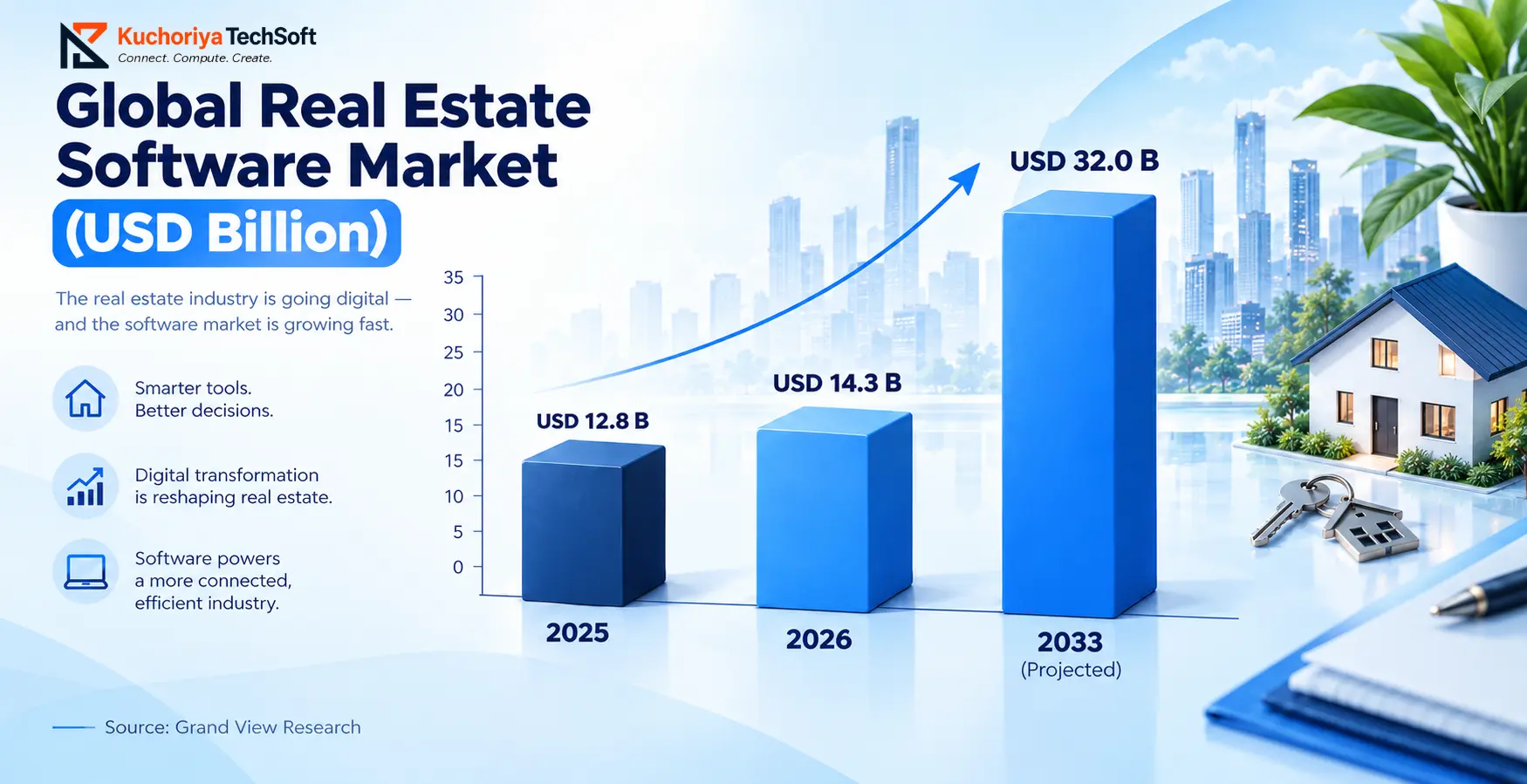
Money is pouring into this space. The PropTech market is estimated at USD 50.1 billion in 2026 and is projected to reach USD 115.0 billion by 2033. Real estate software alone is estimated at USD 14.3 billion this year, growing at a 12.2% CAGR toward 2033. More money means more competitors, and buyers have plenty of apps to choose from. (Source)
They’re also searching on their phones. NAR’s 2025 Profile of Home Buyers and Sellers says 52% of buyers found their home online and 70% used a mobile or tablet device while searching. If your app lags, that buyer is gone in seconds. (Source)
So what is the best way to choose a real estate app development partner? I’d send the same one-page brief to three teams and read the replies. A team that has built property apps will ask where your listings come from and who answers the leads. A team that hasn’t will ask about colors.
A leading real estate app development company should be able to open a live app on a call and let you tap around, bugs included.
Plenty of founders outsource real estate app development to keep costs down, which is fine. Just get three things in writing: who runs your project, how often you see a demo, and that the code is yours.
On AI development services for real estate, I’d say don’t pay for anything until you’ve seen one feature working on real listings, like price estimates.
And a real estate app development partner in the USA should already know MLS data and state privacy rules, because you shouldn’t be funding that research.
What Real Estate Industry Expertise Should a Partner Have?
People browse on apps and still end up calling someone. NAR’s latest Profile of Home Buyers and Sellers shows 38% of buyers used virtual tours, yet 88% bought through an agent or broker. Whoever builds your product needs to understand both sides, and this is where I’d test them.
How to Verify a Real Estate App Development Company’s Portfolio

A real estate app development portfolio only counts if the apps are live and you can test them yourself. Here are five quick checks.
1. Test the Basics Yourself
Property listing app development and real estate marketplace development are where most apps break. Open a live app, search a zip code, save a listing, and reopen it. Check the agent side too, not just the buyer screens.
2. Don’t Take the Homepage at Its Word
Anyone can write top mobile app development company for real estate under their logo. Ask for app store links and launch dates instead. And if you plan to hire real estate mobile app developers, find out if the people who built those apps are still at the company. A strong portfolio from a team that has left won’t help you.
3. Look for Depth in Search and Rentals
Apartments.com rental search platform development covered clear-out, primarily based seek, digital excursions, lease packages, and tenant screening. Bayut property search platform development included AI-powered search and 360° ground plans. Whoever you rent must display work with that an awful lot intensity.
4. Try the Heavy Features on a Bad Connection
Virtual tours and 360-degree floor plans for property apps demo well on office Wi-Fi and badly on a weak signal, so open one on mobile data. Then ask about online rent applications and tenant screening features: where do the applicant’s documents end up, and who can see them?
5. Ask About Your Market
If you’re building in the Southeast, look for a real estate software partner in Florida who can show local work or explain Florida’s rental rules.
What Technical Skills Should Real Estate App Developers Have?
How Do I Judge a Team Before Signing?
How to evaluate a real estate app development company on technical talent: ask them to stroll you via one stay venture and inform you what went incorrect along the manner. Teams with real experience have a tale ready.
What Tools Should They Use?
Ask about their real estate app technology stack and why each piece was chosen for your case. A list of tool names isn’t an answer.
One Codebase or Two?
Cross-platform real estate app development keeps cost down when you need iPhone and Android together, and most listing apps work fine this way. The two names you’ll hear most are React Native real estate app development and Flutter real estate app development. Ask which they’d pick for your app and why. “We do both” tells you nothing, but a clear opinion with a reason does.
Does Native Still Matter?
Sometimes. If your users lean heavily one way, Android app development for real estate and iOS app development for property apps are worth doing on their own. Try their apps on an older Android phone and a recent iPhone.
Can They Handle Maps?
Real estate map and geolocation integration is what buyers touch most, so test it. Draw a search area, zoom in and out, and watch how fast the pins load.
Will People Find It Easy to Use?
Real estate app UI/UX design shows in small things, like whether saving a search takes two taps or six.
Do They Know AI?
AI-powered real estate software development should be a working feature, like price estimates or listing suggestions. Ask to see it running on real listings.
Scalable Real Estate App Architecture, Security, and Integrations
Listings, leads, and bills all run via the same app, and these are the alternatives that price maximum to undo later. Ask approximately every one before you signal.
Transparent Development Process, Communication, and Post-Launch Support
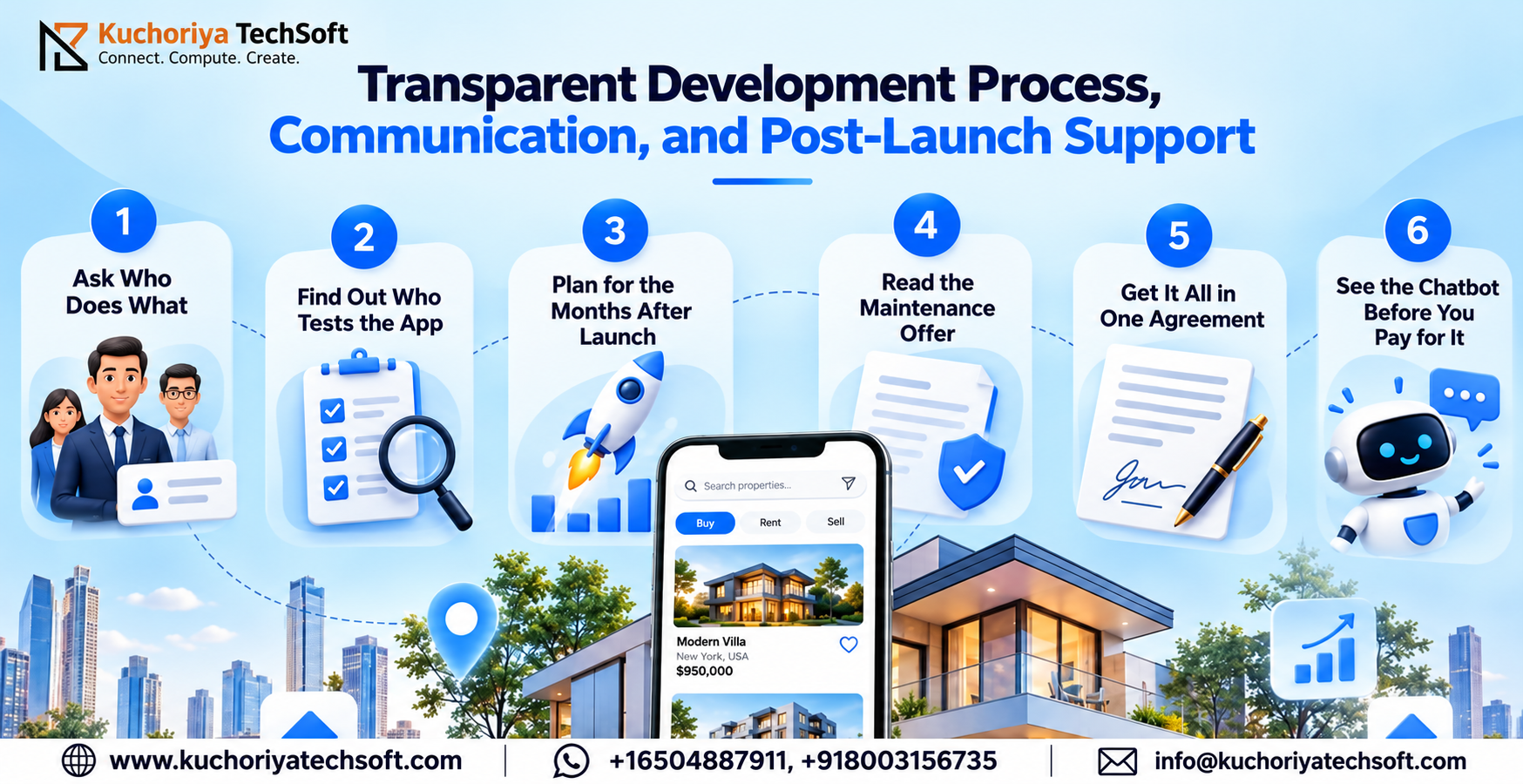
App trouble doesn’t start with bad code. It starts when nobody knows who’s responsible for what, and nobody answers once the app is live. Sort these out before you sign.
1. Ask Who Does What, and Get Names
A full-cycle real estate software development company should be able to say who handles design, who handles the backend, and who tests. “Our team” isn’t an answer. Same goes for end-to-end real estate app development services: ask what’s left out of the quote.
2. Find Out Who Tests the App
Most bugs get found by someone who didn’t write the code. So when a company pitches real estate app QA and testing services, ask who that person is. If it’s the same developer, you’re paying them to check their own homework.
3. Plan for the Months After Launch
Why does post-launch support matter for real estate apps? Because they break quietly. A listing feed changes one field, half your homes lose their photos, and you hear about it from an angry agent three weeks later.
4. Read the Maintenance Offer Line by Line
Get real estate app maintenance and support in writing before you pay: what’s covered, what’s extra. Then ask how mobile app maintenance services for property apps work on a Saturday night, since that’s when buyers are browsing.
5. Get It All in One Agreement
A post-launch maintenance agreement doesn’t need to be long. It needs reply times, the monthly fee, and what counts as a bug. That last part matters most, because “small tweaks” have a way of turning into invoices.
6. See the Chatbot Before You Pay for It
Skip the demo video and ask to try a live AI chatbot development for a real estate apps project. Throw in a trick question, like a home that sold last week. If it answers wrong, find out who hears about it.
What a Real Estate App Development Proposal Should Include
A proposal shows how a team thinks before any code exists. What’s missing from it usually costs more than what’s written.
Numbers You Can Pull Apart
A proper real estate app development project estimate splits the cost by feature, so you can see what map search costs next to the agent dashboard. One lump sum means they haven’t scoped it yet. Ask what happens to the price if you change something halfway through.
Terms That Protect You
Before you sign, read what a real estate app development contract should cover: who owns the source code, what happens when a deadline slips, and how either side can walk away. If the code is only “licensed” to you, find out why.
A Fair Way to Compare Quotes
How should a startup compare real estate app development vendors? Send the same brief to each one and line the answers up side by side: timeline, team size, and what’s left out. The cheap quote often skips testing or design. For startup app development for proptech founders, pick the team that says “launch with three features, not twelve.” One that agrees to everything in the first meeting isn’t guarding your budget.
Ways to Staff the Project
Not every assignment desires a fully outsourced construct. IT staff augmentation services for proptech companies let you add developers on your own team, and hire offshore developers for property apps works best with time zones, day-to-day calls, and who manages them are settled first. If your users or compliance sit in Canada, a proptech development partner in Ontario can speak to local privacy law, so ask for Ontario work.
Industry Insights: Advanced Real Estate App Development: AI, Tech Stack & Growth Strategies (2026)
Top 10 Real Estate App Development Companies in 2026
Client Testimonials and References: How to Verify Credibility
Anyone can write a glowing quote for a website, so a testimonial on its own doesn’t prove much. What counts is whether the client behind it will talk to you. Here’s how I’d check, from first look to final decision.
Before You Ever Call
Start with their real estate app development case studies and read them with a doubtful eye. A solid one names the client’s problem, how long it took, and a result you can measure. If it only says “improved user experience,” it’s marketing copy.
Our AI-powered real estate matching platform case study shows the level of detail to expect: a USA client, a 20-member team, 10 months, and 45% better matching accuracy. Ask any company you’re considering for something similar. And if they claim an AI recommendation engine for property apps, have them open it on real listings during the call, not play a recording.
While You’re Comparing
When you compare real estate app development companies, price is the least useful column. Put their references side by side instead. A reliable real estate software development company won’t flinch when you ask for two or three client contacts, and one of them should come from a project that went badly. How they dealt with that tells you more than a clean success story.
When You Make the Calls
How can businesses verify a software development company’s claims? Open the app store links they give you and look at when the reviews were written. Then get the names of the developers behind those apps. When you speak to the client, ask if those same people actually did the work, because teams change.
One more thing before you sign: what evidence should I request before hiring a real estate app development company? Three items cover most of it. Live app links with launch dates, a sample sprint report, and one honest story about a missed deadline. If you’re in Sydney or elsewhere in NSW, a real estate software development partner in Australia with a local office makes this easier, since you can meet the team and the references in person.
How to Identify Red Flags When Hiring App Developers

Plenty of founders sign with an agency that sounded perfect on the first call. The trouble shows up later in small things, like slow replies and fuzzy answers.
1. They Say Yes to Everything
Ask yourself what are the warning signs of an unreliable development partner, and a yes-to-everything attitude tops my list. A good team will tell you a feature isn’t worth building yet, and that honesty saves you money.
2. They Can’t Show Anyone Who Trusts Them
A trusted real estate app development partner has clients who’ll speak for them on a call. If every reference is “under NDA” and no one is reachable, treat that as a no.
3. They Talk Property but Show Generic Work
Plenty of real estate app developers have only built food delivery or booking apps. Ask what listing, search, or lead feature they’ve shipped, and watch how long the answer takes.
4. Scope Is Left Fuzzy
When a full-service software development business sends one lump number, ask where design, coding, testing, and release went. Whatever is missing tends to arrive later as an extra charge. The same goes for real estate app development services quoted as a single line with no detail.
5. They Disappear Between Meetings
Pay attention to how long they take to answer before you’ve paid them a cent, because it rarely gets better afterwards. If you plan to hire real estate app developers in New South Wales, ask whether someone will actually be online during your working day. A friendly team that’s asleep when you need a fix doesn’t help much.
Questions to Ask Before Hiring Real Estate App Developers
A few good questions in the first meeting save you months later. Bring these, and notice how they answer, not just what they say.
Conclusion: Pick a Real Estate App Development Partner You Can Trust
By now the pattern should be clear: the best choice is rarely the loudest pitch. It’s the team that let you test their apps, gave you client numbers, and answered the awkward questions straight. When you hire real estate app developers, your listings, leads, and users’ data go into their hands, so a slower, careful decision usually pays off.
Any real estate software development company worth hiring won’t mind you checking all this. Some projects need more than a standard app, and custom real estate app development is how you get search, agent tools, and payments that fit your market, not someone else’s template. If your own team has no technical lead, CTO services for proptech product teams can cover that while the product takes shape.
Bigger firms usually need more than one app. Custom software development for real estate companies can bring CRMs, portals, and back-office tools under one plan. And for teams in the Gulf, a real estate software partner in Dubai with a local office makes meetings and reference checks a lot simpler.
At Kuchoriya Techsoft, we build property apps for clients in more than 50 countries. Tell our team what you’re planning, and we’ll help you map out the next step.
FAQs on Choosing a Real Estate Mobile App Development Company
Q. How do I know if a real estate app developer is reliable?
A. Try the apps they’ve built, and phone two of their clients. Reliable teams are fine with both. They’ll also tell you when an idea of yours isn’t worth building yet, which is a good sign.
Q. Why does real estate industry experience matter in app development?
A. Listing feeds, MLS rules, and lead routing all have quirks that only show up once you’ve built a few property apps. A team new to them will learn on your budget, and you’ll see it in the bill.
Q. Which factors matter most when selecting a real estate app developer?
A. Proof of past work, a written scope, and who looks after the app after launch. Price comes after those. A cheap quote with gaps in it usually ends up costing more.
Q. Can I get a real estate app development consultation before I commit?
A. Yes, and I’d push for one. A first call is free of risk. You explain the idea, ask about similar projects, and see how they think, all before any money changes hands.
Q. Where do I find people to hire AI developers for real estate platforms?
A. Look for teams who can show an AI feature already running on real listings, like price estimates or property suggestions. Ask what changed for that client once it went live.