What Is Hospital Management Software (HMS)?
Picture a hospital where no one is hunting for a missing file, chasing a nurse for updates, or waiting on a fax machine. That's the shift hospital management software development is bringing to healthcare, pulling patient records, appointments, and billing into one system that actually talks to itself.
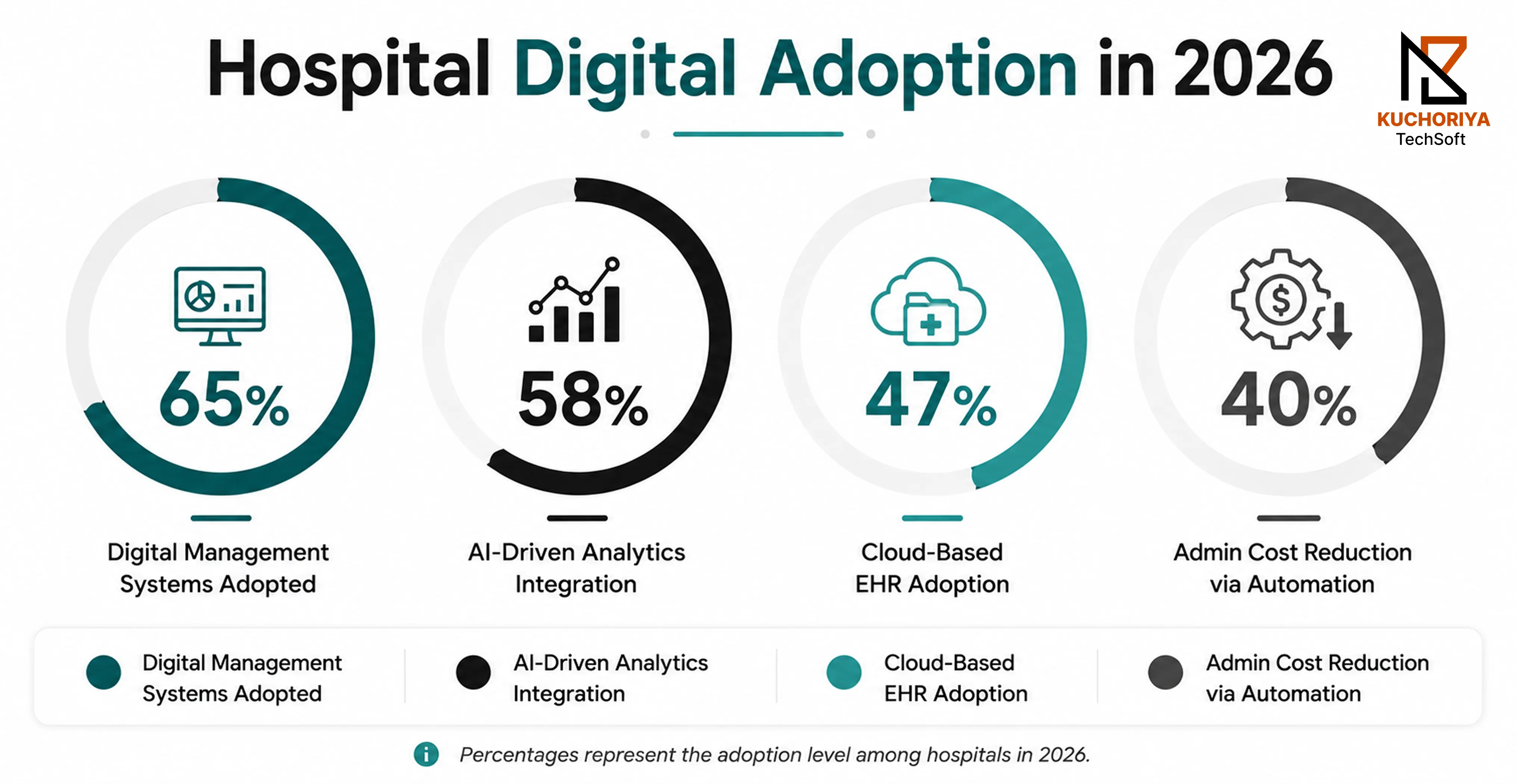
And it's happening fast. Over 65% of hospitals already run some form of digital system, and 58% are letting AI-driven analytics guide daily decisions. Cloud-based EHR adoption is catching up too, near 47%, while hospitals using automation are trimming admin costs by up to 40%.
Ask a hospital IT team what powers this, and they'll point to a hospital information management system, the backbone that keeps patient records, clinical notes, and financial details from ever going missing. Pair it with patient management software, and suddenly registration, appointments, and follow-ups stop feeling like separate battles.
None of it works without solid hospital information system development underneath, quietly syncing every department in real time. And the newest piece of the puzzle? Machine learning in healthcare, catching patient risks before they become emergencies and stopping small errors before they snowball.
Why Do Modern Hospitals Need Hospital Management Software?
Every hospital that's still running on spreadsheets and sticky notes is losing time it can't get back, and often losing patients' trust along with it. Here's what changes once healthcare management software development takes over the daily grind:
- Healthcare workflow automation wipes out the repetitive tasks that eat up a nurse's shift, from manual entry to chasing down approvals, so staff get their time back for actual patient care
- A solid hospital administration software setup means no more digging through three different systems just to confirm a bed is free or a bill is settled
- Healthcare data security stops being an afterthought and becomes part of how the system is built, keeping patient records safe from the breaches making headlines every year
- Working with a proven HMS development company means the software actually fits how the hospital runs, instead of forcing staff to adjust their entire workflow around clunky software
Skip this shift, and hospitals aren't just falling behind on technology. They're falling behind on the one thing patients actually notice: how fast and how well they're cared for.
Key Features of Hospital Management Software
A hospital system is only as good as the features running underneath it. Here's what actually makes a difference on the ground.
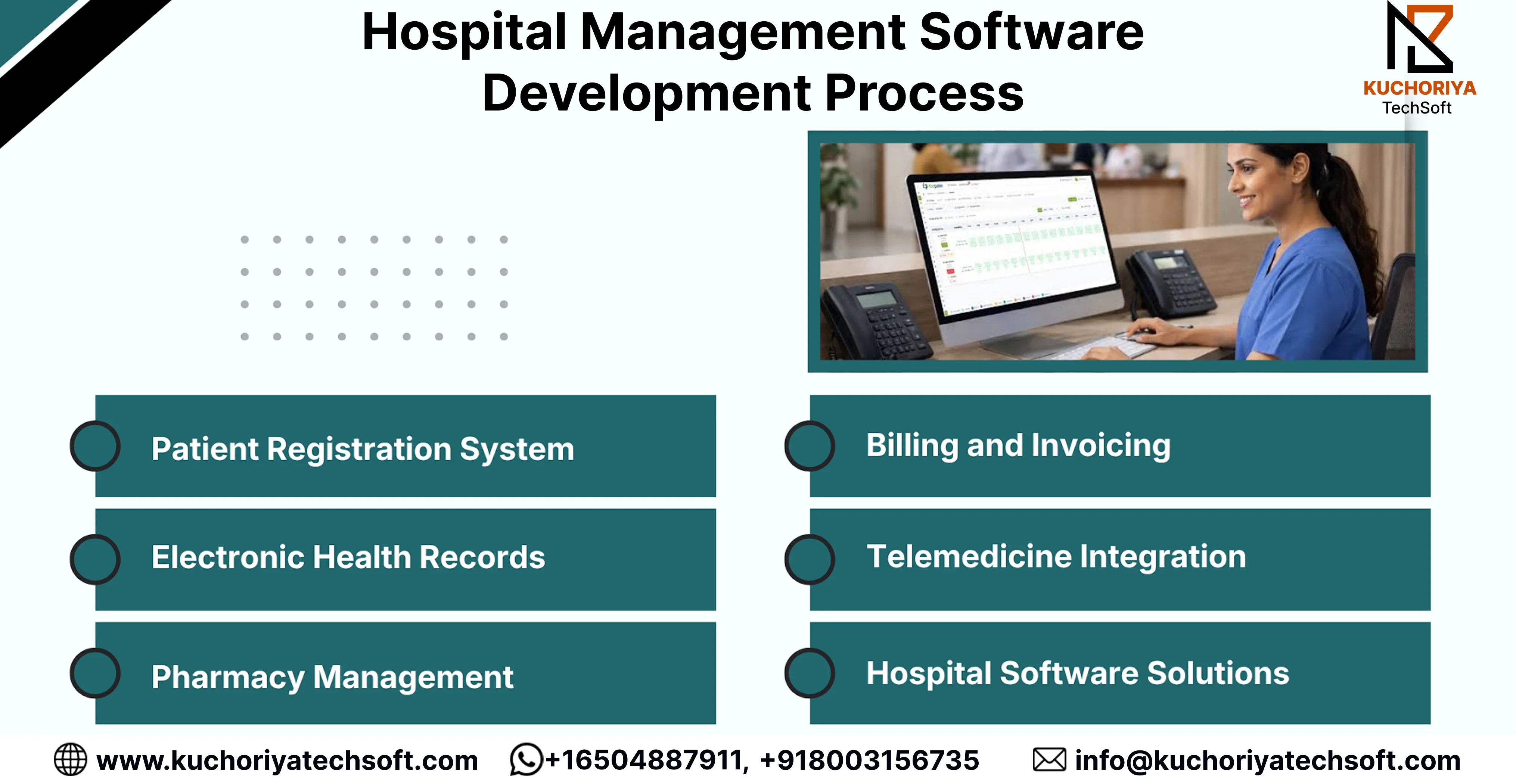
1. Patient Registration System
Long queues at the front desk become a thing of the past. New patients get checked in within minutes through simple healthcare app development, and returning ones have their entire history pulled up before they even sit down.
2. Electronic Health Records
Every diagnosis, prescription, and lab result lives in one searchable file. Most hospitals build this around EMR software integration, while EHR system integration goes a step further, following the patient across every provider they've ever seen.
3. Pharmacy Management
Stock levels get tracked automatically, expiring medicines get flagged before it's too late, and the manual slip-ups that come with hand-filled prescriptions quietly disappear.
4. Billing and Invoicing
Nobody enjoys a billing dispute. This is where RCM software solutions earn their keep, catching errors early and making sure claims don't sit unpaid for weeks.
5. Telemedicine Integration
Patients who can't make it in person still get seen. Telemedicine software development connects them to specialists without the long wait for an in-person slot.
6. Hospital Software Solutions
All of this comes together as one connected system, built to run a hospital end to end instead of patching gaps with five different tools.
Latest Insights: AI in Telemedicine: Benefits, Use Cases & Future Trends
Types of Hospital Management Software Solutions
Not every hospital runs the same way, so not every system should look the same either. Here's how these solutions usually break down.
1. Custom Hospital Management Software
Some hospitals outgrow off-the-shelf tools fast. Building around custom hospital management software development means every module, from patient intake to billing, is shaped around how that specific hospital actually functions.
2. Enterprise Hospital Management Software
Large hospital chains need something that scales across multiple locations without falling apart. Enterprise hospital software solutions handle that load, keeping every branch connected to the same real-time data.
3. Cloud Hospital Software
No more server rooms or IT teams patching outages at 2 AM. Cloud-based hospital software keeps everything accessible from anywhere, with updates rolling out without disrupting daily operations.
4. Clinic Management Software
Smaller practices don't need the weight of a full hospital system. Clinic management software solutions trim things down to what a single clinic actually uses, without the extra clutter.
5. Hospital ERP Software
Behind the scenes, hospital ERP software integration ties inventory, staffing, and finances into one system, so nothing runs on guesswork or outdated spreadsheets.
Benefits of Hospital Management Software Development
Switching to a connected system isn't just about convenience. It changes what a hospital can actually deliver to the people walking through its doors. Here's what shifts once it's in place:
- Investing in healthcare software solutions means fewer bottlenecks between departments, so patients spend less time waiting and more time actually being treated
- The right healthcare IT solutions cut down on the paperwork and manual double-checks that used to eat up hours of every staff member's day
- Hospital digital transformation replaces outdated, disconnected processes with a system that scales without hospitals having to constantly put out fires
- With smart hospital management in place, beds, staff, and equipment get allocated based on actual demand, not rough estimates or leftover habits
- Layering in healthcare AI solutions helps hospitals catch risks earlier and make faster calls in moments where every minute actually counts
At the end of the day, none of this is about chasing new technology for its own sake. It's about hospitals finally running the way patients assumed they always did.
Hospital Management Software Development Process
Ask five different hospitals how they built their system, and you'll get five slightly different answers. Still, most projects move through the same rough stages before going live.
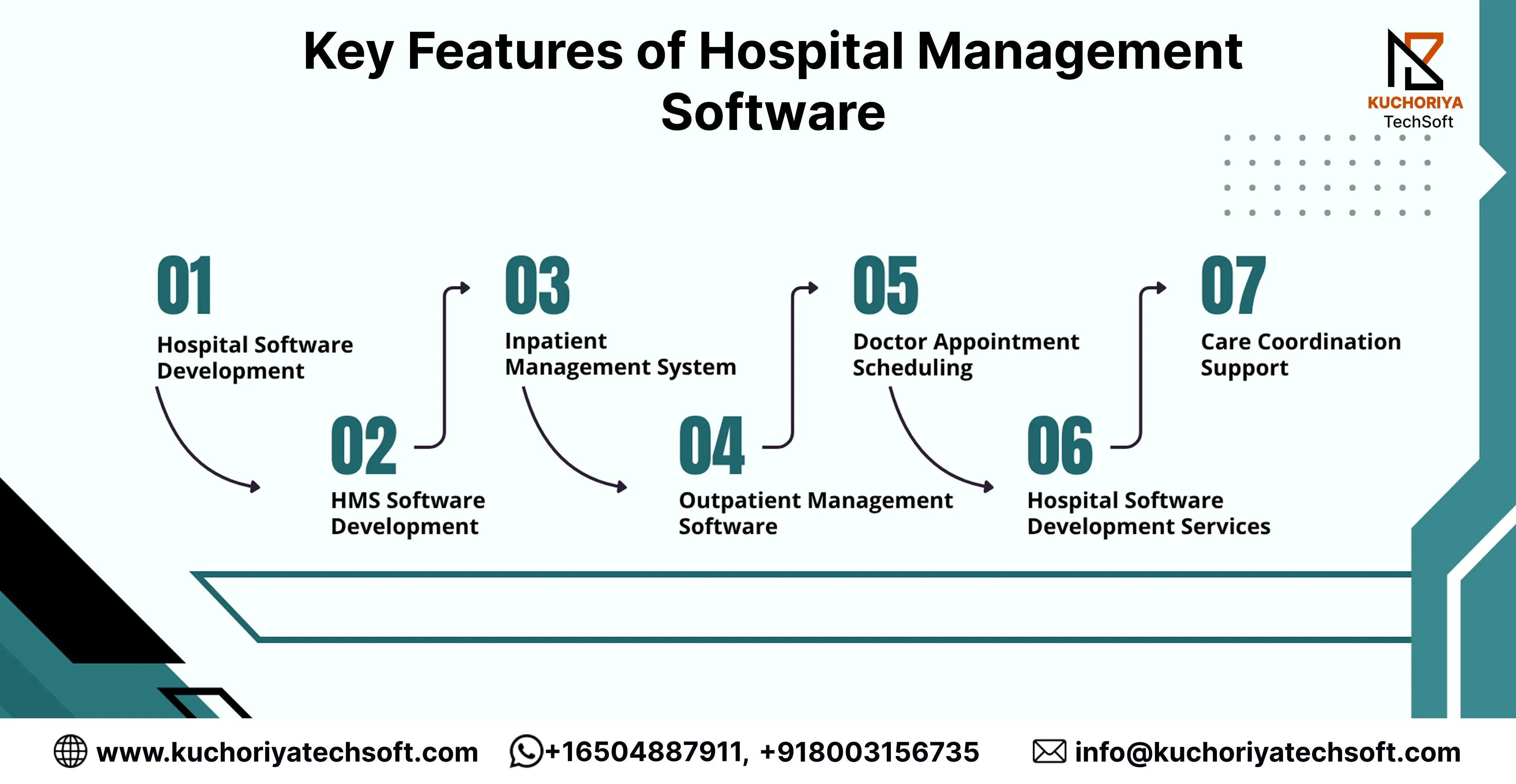
Step 1: Hospital Software Development
Every project starts with mapping how the hospital actually runs, using clinical workflow software solutions, before a single line of code gets written.
Step 2: HMS Software Development
End-to-end HMS software development moves in parallel tracks, with records, billing, and scheduling tested together before launch.
Step 3: Inpatient Management System
A dedicated inpatient management system tracks bed assignments and care plans, tying into hospital operations software so nothing gets missed during shift changes.
Step 4: Outpatient Management Software
Same-day patients don't need the same steps as someone staying overnight. Check-in, consultation, and discharge move through cloud-based outpatient management software in a single, quicker pass.
Step 5: Doctor Appointment Scheduling
The phone stops ringing off the hook for booking changes once automated doctor appointment scheduling takes that job over, and double bookings mostly disappear with it.
Step 6: Hospital Software Development Services
Ongoing hospital software development services cover support, updates, and fixes, so the system keeps working as needs shift.
Step 7: Care Coordination Support
Doctors, nurses, and specialists stop working off separate notes once integrated care coordination software connects them, so patients aren't repeating their history at every step.
Best Technology Stack for Hospital Management Software Development
The right features mean nothing if the technology behind them can't talk to other systems. Here's what actually holds a hospital's tech stack together.
Core Technology Stack
Most hospital platforms rely on React or Angular to get ahead, Node.Js or .NET behind, and PostgreSQL or MongoDB to deal with sensitive personal data storage. Hosting sits on AWS or Azure in most cases, due to the fact that it is not always worth keeping an internal server anymore.
Integration Layer
- HL7 integration solutions let different healthcare systems exchange patient data in a shared format, so nothing gets lost moving between departments or facilities
- FHIR integration services handle that same exchange in a faster, more modern way, which is why most new builds lean on it
- EMR integration solutions connect internal records to the rest of the software, so a doctor's notes update everywhere they need to
- With EHR integration services, a patient's history follows them across every provider they've seen, not just the hospital in front of them
- IoT healthcare integration pulls data from connected monitors and wearables straight into a patient's file, without anyone typing it in manually
- Medical practice management software pulls scheduling, records, and compliance into one system, instead of five separate tools doing the same job badly
Get this layer wrong, and even the best-looking hospital software ends up cut off, unable to share data with the labs, pharmacies, and specialists it's supposed to work with.
AI Trends Shaping Hospital Management Software in 2026
AI isn't a future add-on for hospitals anymore. It's already changing how systems get built and how patients get treated. Here's where that shift stands right now.
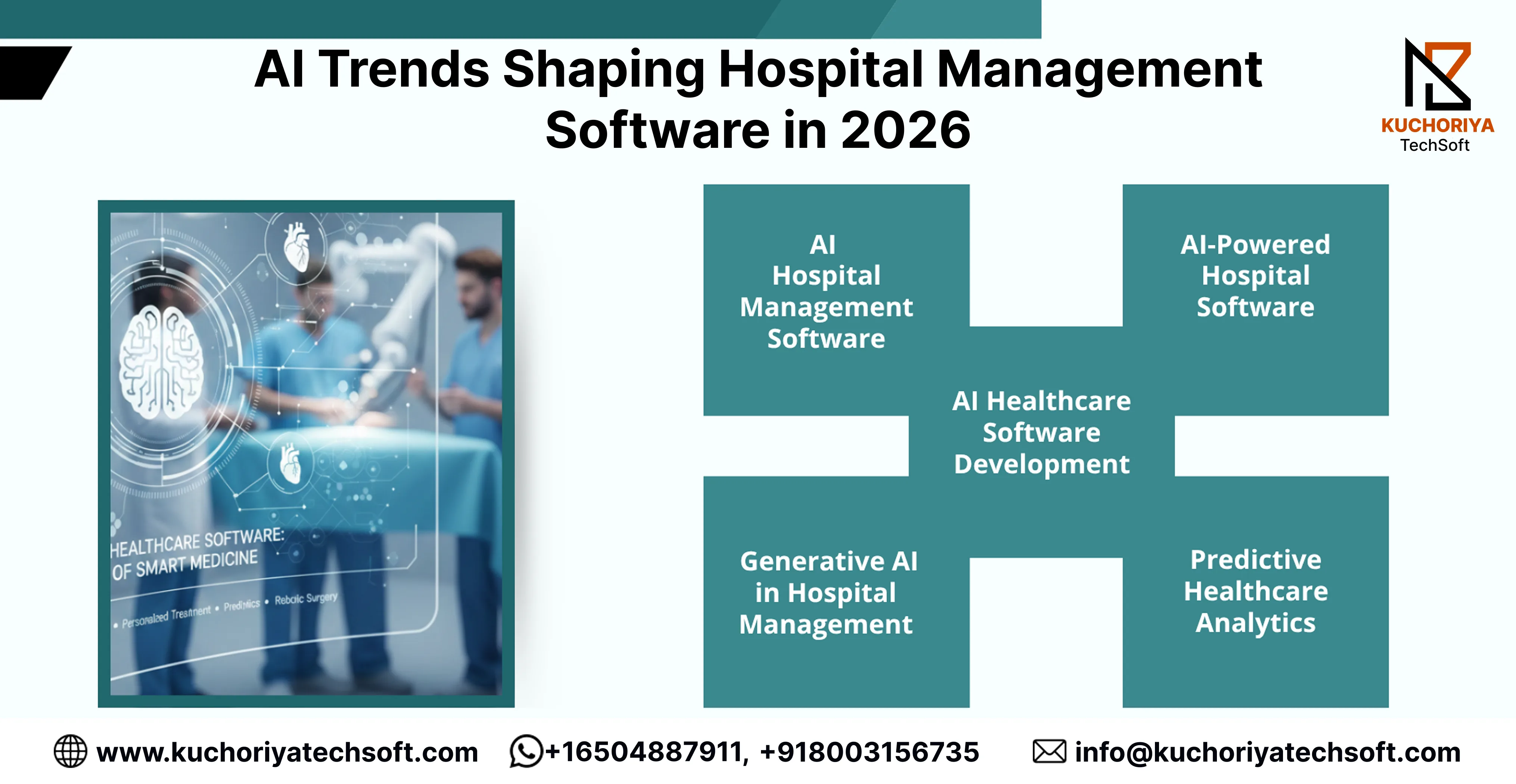
1. AI Hospital Management Software
Staffing and resource planning are no longer handled purely by spreadsheets or gut calls. Intelligent healthcare automation now shifts these decisions in real time, based on how busy a department actually gets that day.
2. AI-Powered Hospital Software
These systems now flag issues before staff even notice them, using real-time healthcare data analytics to catch supply shortages or unusual patient flow patterns early.
3. AI Healthcare Software Development
Development teams have moved past basic chatbots and reminder alerts. What they're building now runs on machine learning healthcare models that get sharper the longer a hospital uses them.
4. Generative AI in Hospital Management
Discharge summaries and internal documentation increasingly get a first draft done through AI-powered clinical documentation, cutting the hours staff used to spend writing the same notes over and over.
5. Predictive Healthcare Analytics
Hospitals get a head start using AI-driven patient risk prediction, spotting patterns that hint at readmission risk or a department's likely patient surge before either one actually hits.
Hospital Management Software Development Cost in the USA & Canada
Cost is usually the first question and the hardest one to pin down, since it depends entirely on what a hospital actually needs built. Here's what shapes the number:
- Projects built through hospital management software development USA teams typically cost more upfront, mainly due to higher developer rates and stricter HIPAA-driven compliance work
- Hospital management software development Canada projects often land in a similar range, though PIPEDA compliance and regional healthcare regulations shift the scope slightly
- A hospital management software development company in California usually charges at the higher end, given the state's cost of living and its concentration of specialized healthcare tech talent
- Hospital software development in Texas tends to run more budget-friendly by comparison, without much of a quality tradeoff, since the talent pool there has grown fast in recent years
- The final hospital management software development cost always comes down to feature count, integrations needed, and whether the build is custom or template-based
- Hospitals researching how to build hospital management software usually start with an MVP first, testing core modules before scaling into a full enterprise system
Estimated Cost Breakdown
Costs vary based on team location, feature complexity, and compliance requirements. These figures are general industry estimates, not fixed quotes.
HIPAA & PIPEDA Compliance Requirements for Hospital Management Software
No hospital wants to find out about a compliance gap after something has already gone wrong. Getting this right from the first day of development saves a lot of trouble down the line.
- HIPAA-compliant hospital software keeps patient data locked down through encryption and strict access rules, a legal requirement for any US hospital handling health records
- Hospital management software development in Toronto works around PIPEDA from the start, since Canada treats patient consent and data handling differently than US law
- Hospital software development in Vancouver follows that same PIPEDA framework, though provincial health information rules shift a few specifics depending on where the hospital sits
- An intelligent hospital management system catches compliance issues while they're happening, not months later during an audit when it's already too late
- Smart hospital technology increasingly gets compliance built into the infrastructure itself, so hospitals stop relying on staff remembering a checklist
Core Compliance Protocols
- End-to-end data encryption covers information both in transit and at rest
- Role-based access control systems make sure staff only see what their job actually requires
- Automated audit logging tracks every record access or edit without manual tracking
- PIPEDA-compliant consent management keeps a running record of what patients have agreed to, updated the moment anything changes
- Third-party security audits bring in outside eyes to catch weak spots that internal teams might miss simply from being too close to the system
- HIPAA-compliant data agreements get signed with every vendor or tool connected to the platform, so accountability doesn't get lost between parties
- A breach notification protocol sits ready in advance, so if something does go wrong, the right people hear about it within the legally required window instead of after the fact
Why Choose Kuchoriya TechSoft for Hospital Management Software Development
Plenty of teams can write code. Fewer actually understand what a hospital needs before writing a single line of it, and that difference shows up in the final product.
- As a hospital software development company, the process starts with understanding real hospital workflows, not just translating a feature list into screens
- Working with a custom hospital software development company means the system gets built around how a hospital actually operates, instead of forcing staff to adapt to rigid, pre-built software
- Beyond hospitals, experience as a broader healthcare software development company covers clinics, diagnostic centers, and telehealth platforms, giving a wider view of how healthcare technology connects
- Choosing a dependable hospital software provider means ongoing support doesn't disappear after launch, since most real problems tend to show up after a system goes live, not before
- As a hospital software development company USA hospitals trust, the focus stays on HIPAA compliance, secure integrations, and systems built to handle real patient loads from day one
Conclusion: Build a Future-Ready Hospital Management Software Solution
A future-ready hospital runs on hospital management system development that connects patient care, staffing, and compliance into one working system, not scattered tools patched together over time.
That means AI appointment scheduling that actually cuts no-shows, a patient portal patients use without calling the front desk, and laboratory management that gets results back faster. Individually these help. Together, they're what separates a hospital that runs smoothly from one that's constantly catching up.
Kuchoriya TechSoft has built and delivered hospital software for providers across the USA and Canada, including hospitals working with an HMS development company Canada teams trust for HIPAA and PIPEDA-compliant builds. For hospitals not sure where to start, Virtual CTO services are available to map out the right approach before any development begins, no commitment required.
Ready to move forward? Book a free consultation and get a working roadmap within days, not weeks. Already working with a healthcare provider who needs this too? Ask about the Referral Partner Program.

Frequently Asked Questions About Hospital Management Software Development
Q. How much does it cost to hire hospital software developers?
A. Anywhere from $40,000 to $300,000+, depending on scope and integrations. Want an exact number for your project? A free consultation gets you there faster than guessing.
Q. Can hospital management software include radiology management?
A. Yes. Imaging requests, scan scheduling, report delivery, all of it connects straight back to the patient's file through radiology management tools.
Q. What is a bed management system, and does every hospital need one?
A. It's a live view of which beds are open, right now, across every department. Not every hospital needs one on day one, but any place dealing with high occupancy will feel the difference fast once a proper bed management system is in place.
Q. Does hospital management software support e-prescription?
A. In most builds, yes. E-prescriptions send the script straight to the pharmacy, no handwriting, no faxing, and no waiting around for a callback.
Q. What can a healthcare dashboard actually show hospital administrators?
A. Occupancy. Staff load. Revenue. Patient flow. A good healthcare dashboard puts all four on one screen instead of five separate reports someone has to stitch together by hand.
Q. How long does it take to build and launch a hospital management system?
A. Three months for a basic build. Closer to a year if you're going enterprise with AI features and multiple locations. Get in touch, and we'll map out a timeline that matches what you're actually building.