Why Doctolib Is The Benchmark For Digital Healthcare Platforms
Most people chasing Doctor appointment platform success factors start looking in the wrong place, screenshotting clean interfaces instead of digging into the decisions that actually made the thing work. Doctolib comes up first in almost every one of these conversations, and there's a real reason for that.
The numbers back it up too. Doctolib now works with over 500,000 healthcare professionals across Europe, 120,000 of them in Germany alone, and it grew from a simple booking tool founded in Paris in 2013 into the most valuable startup to come out of France by 2022. (Source)
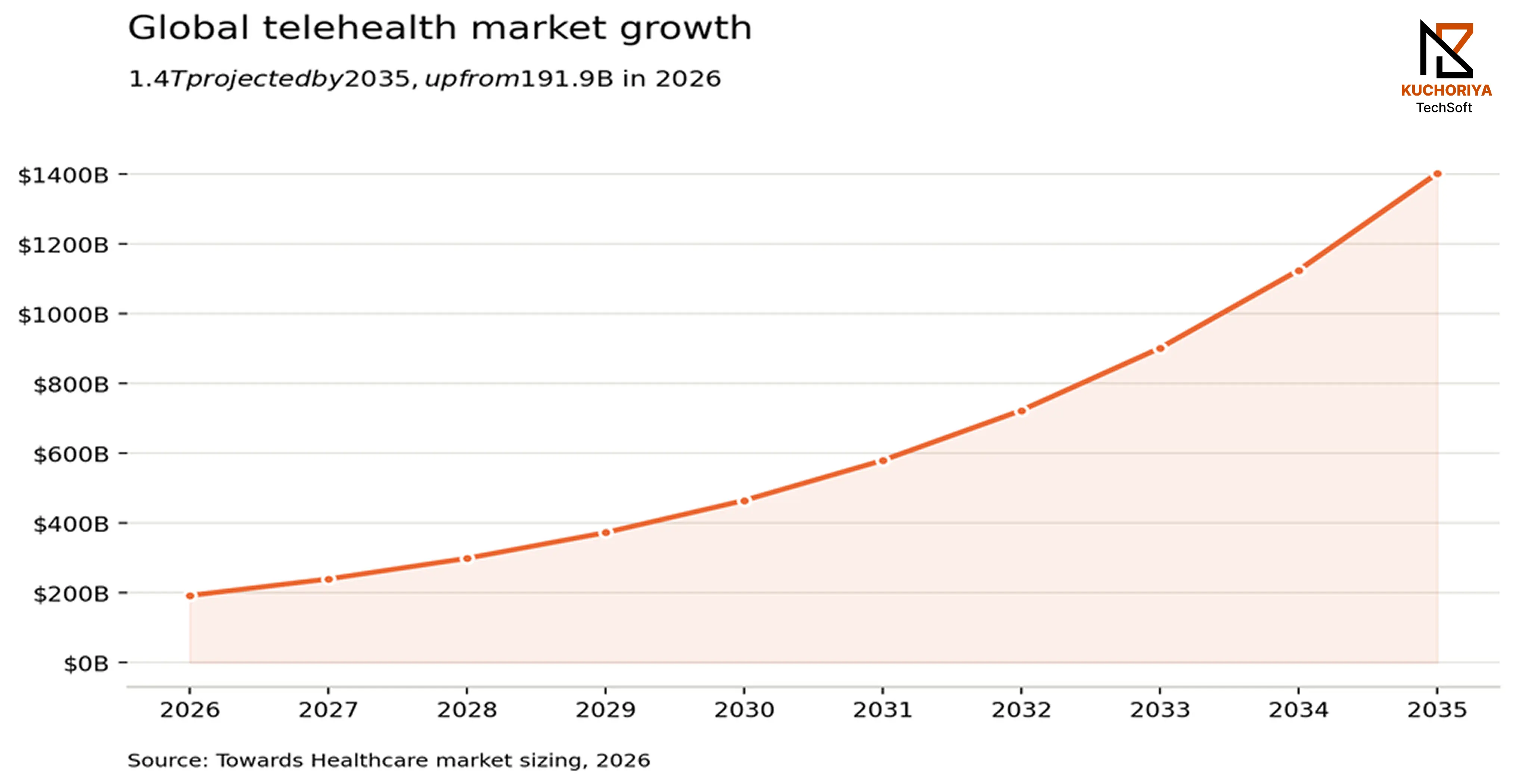
That growth isn't happening in a vacuum either. The global telehealth market is set to cross $191.88 billion in 2026, on its way toward a trillion dollars within the decade. This piece digs into what makes Doctolib successful, past the surface features, so the lessons actually transfer to a different build. (Source)
The Core Problem Doctolib Solved For Patients And Clinics
Nobody misses the old way. Call the clinic, sit on hold, cross your fingers the only open slot doesn't clash with work.
- 14.3% of US physicians offered telehealth in 2018. By 2022 that number hit 74%, patients just stopped tolerating the phone routine.
- A working healthcare appointment app success strategy kills booking friction first. Everything else is secondary.
- Clinics running old systems bleed people mid-booking constantly, and patient churn in healthcare apps hides in the numbers until someone finally checks revenue.
- Doctolib chased that drop-off rate hard, before touching anything else.
- Digital booking went mainstream fast. Anyone still stuck on manual scheduling lost patients to whoever moved first.
Key Features Behind Doctolib's Success
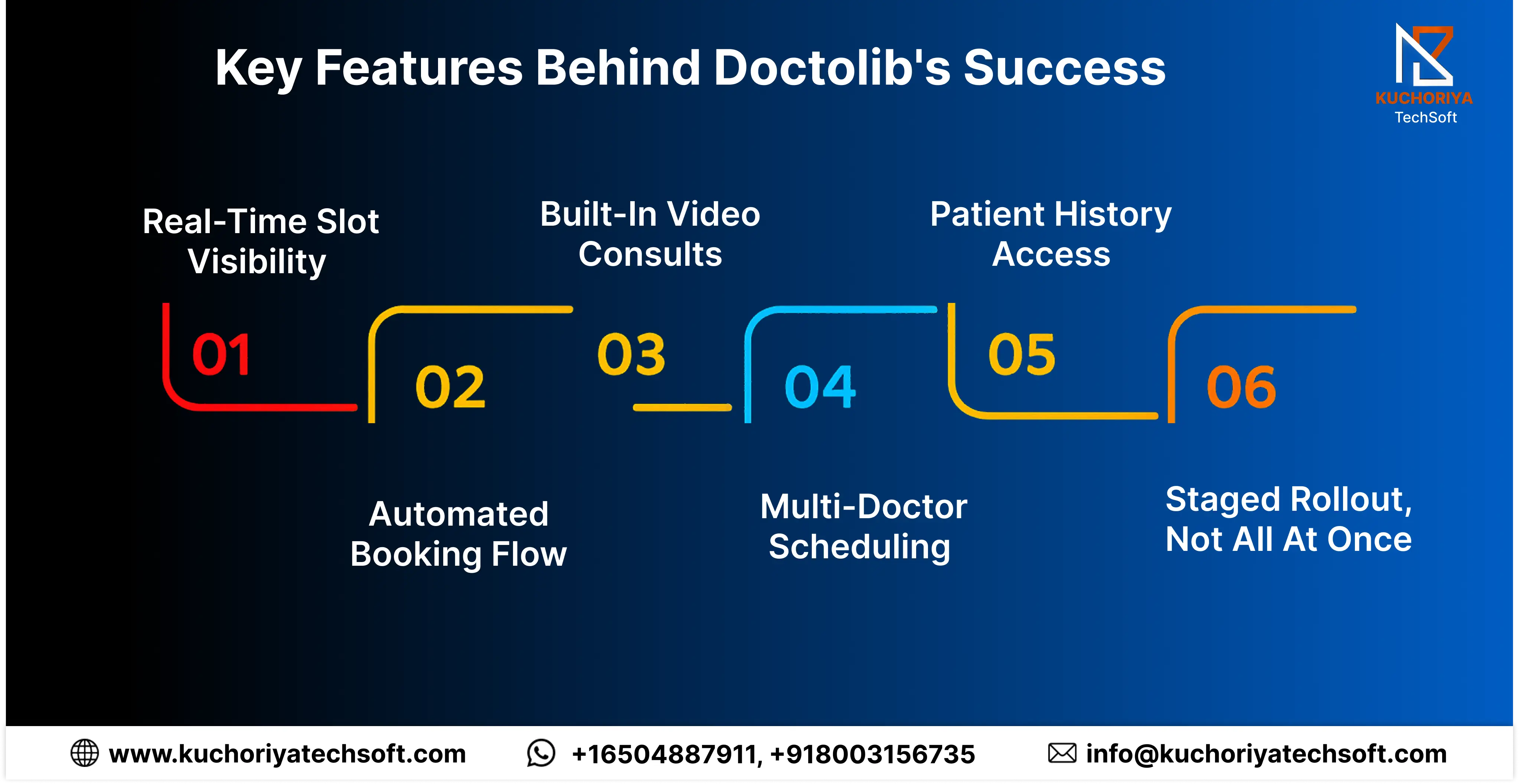
A booking button alone never kept 500,000 professionals paying every month. The features underneath it did the real work.
1. Real-Time Slot Visibility
Patients see exactly what's open instead of waiting on a callback that may never come. No guesswork, no back and forth.
2. Automated Booking Flow
Solid doctor appointment app key features cover reminders, waitlists, and confirmations that cut no-shows without extra staff effort.
3. Built-In Video Consults
Strong teleconsultation platform features let doctors run visits without patients installing anything extra on their end.
4. Multi-Doctor Scheduling
Doctor availability management features stop double-booking chaos across clinics running several practitioners at once.
5. Patient History Access
Doctors see past visits and notes before the call starts, no digging through separate files or folders.
6. Staged Rollout, Not All At Once
Doctolib added each piece in order of what cut patient drop-off first, everything else came later.
Why Patient Trust Matters More Than Just Features
Every feature in the world means nothing if patients don't trust the app with their health info. Trust is what actually gets someone to finish booking instead of closing the tab.
- Patient trust in digital health platforms doesn't happen overnight. It's built through small stuff, accurate doctor profiles, honest wait times, not big marketing promises.
- People bail before they even see what the platform does. Solid healthcare app trust signals show up as visible security badges, data policies written in plain language, doctor credentials sitting right up front, not buried three menus deep.
- Most healthcare apps lose people right after download. A clean healthcare app onboarding experience is what stops that bleed.
- Doctolib kept onboarding dead simple on purpose. Even elderly patients booked without needing help from anyone, and that alone did more for trust than any badge could.
- Word of mouth still wins over in-app messaging every single time. One bad experience passed along to a friend erases weeks of careful design work in a single conversation.
The Role Of Compliance In Doctolib's Growth Across Europe
Healthcare data mistakes don't get patched later, they end up in headlines. Doctolib treated compliance as day-one infrastructure, not a checkbox before launch.
- GDPR compliance: Not optional paperwork here. GDPR in European healthcare apps is what let Doctolib expand into Germany and Italy without rebuilding data handling from scratch each time.
- Security certifications: ISO 27001 and ISO 27701 aren't just badges sitting on a website. They're what actually convinced hospital administrators to sign contracts.
- Privacy by design: Healthcare data privacy standards get baked into product decisions early. Encryption, access controls, audit logs, none of it gets bolted on after launch.
- No data monetization: Patient data doesn't get sold off to third parties, period. That single call probably did more for building trust in digital health platforms than any ad campaign ever could.
- Country-specific flexibility: Rules shift once you cross from France into Germany or Italy. Compliance had to bend per country, one fixed template just wasn't going to cut it.
- Ongoing audits: Launch day isn't the finish line here. Reviews keep running so the platform stays aligned as regulations move year to year.
How AI Fits Into Modern Doctor Appointment Platforms
Physician AI use went from 38% to 66% in a year, flat out. Fitness apps run similar models too, but an AI in healthcare appointment platforms build carries way more compliance baggage than anything fitness-related.
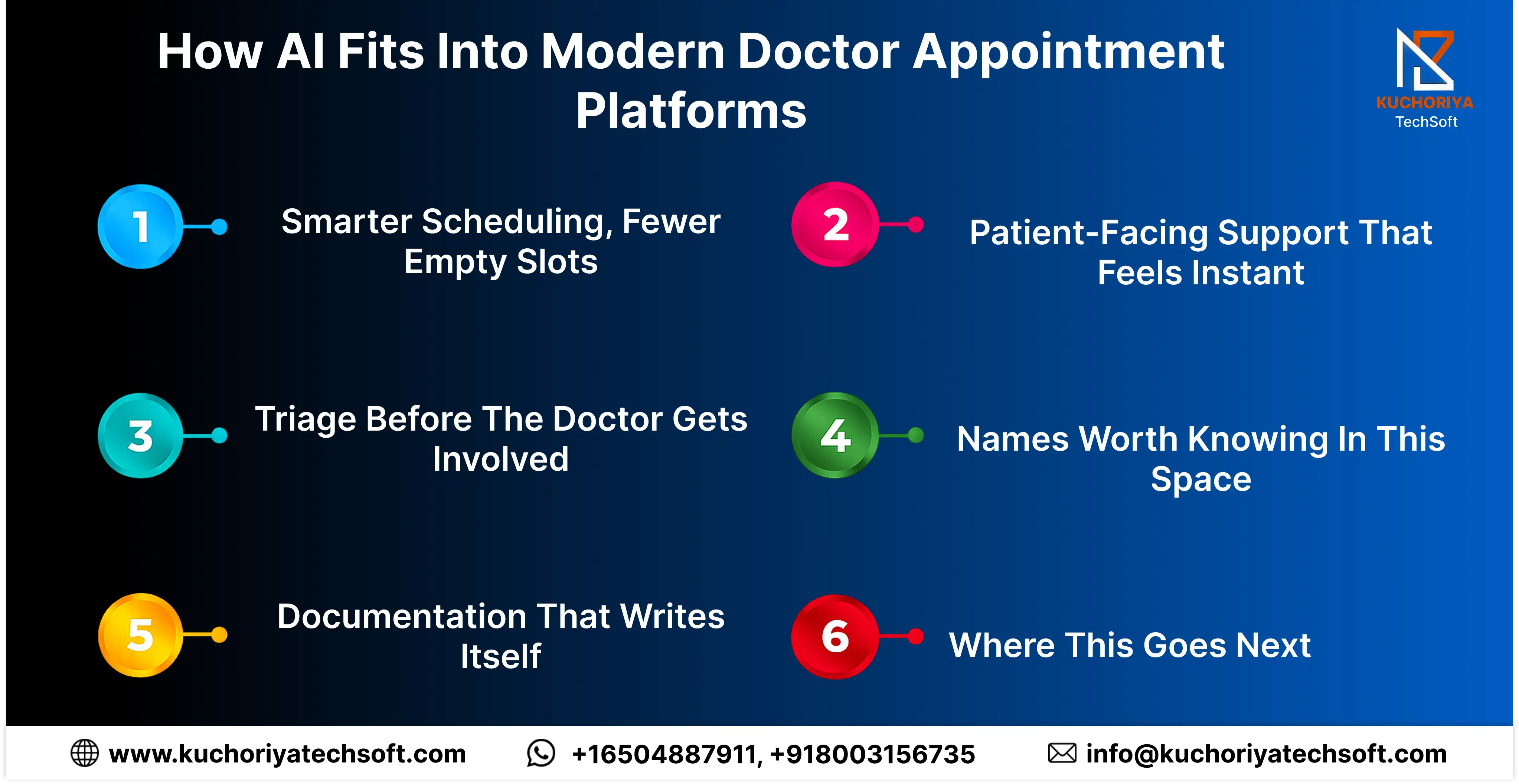
1. Smarter Scheduling, Fewer Empty Slots
Mid and South Essex NHS ran a pilot, no-shows dropped 30% in six months. AI in patient scheduling optimization stopped being optional a while back.
2. Triage Before The Doctor Gets Involved
One Southwest US provider slashed call wait times by 63% with an AI triage setup, patient satisfaction hit 89%. That's the role of AI in Doctolib-style apps worth actually paying attention to.
3. Documentation That Writes Itself
Abridge, Ambience Healthcare, entire companies got built just around this problem: recording doctor-patient chats and spitting out structured notes on their own. 68% of health systems run some version already.
4. Patient-Facing Support That Feels Instant
AI-powered patient experience in healthcare apps means chatbots fielding pre-visit questions, symptom checkers pointing people toward the right care level, no callback required.
5. Names Worth Knowing In This Space
Tempus, OpenEvidence, Hippocratic AI own the clinical side. Notable and Innovaccer run the scheduling and admin layer, which is exactly where a doctor appointment platform lives.
6. Where This Goes Next
Referral letters, one-click summaries, conversational triage deciding whether a visit even needs a doctor, generative AI is creeping into all of it. Most manual paperwork clinics still do by hand won't survive the next few years.
Doctolib Versus Other Platforms Like Zocdoc And Practo
Same booking problem, three very different routes to solving it. Here's how the Doctolib market strategy stacks up against its biggest rivals.
In a straight Doctolib vs Zocdoc comparison, geography decides more than features do. Same goes for Doctolib vs Practo comparison, Practo went wide across services while Doctolib stayed narrow and deep in Europe. None of them won by being the cheapest, they won by owning one region or one gap first.
Lessons Healthcare Startups Can Take From Doctolib's Model
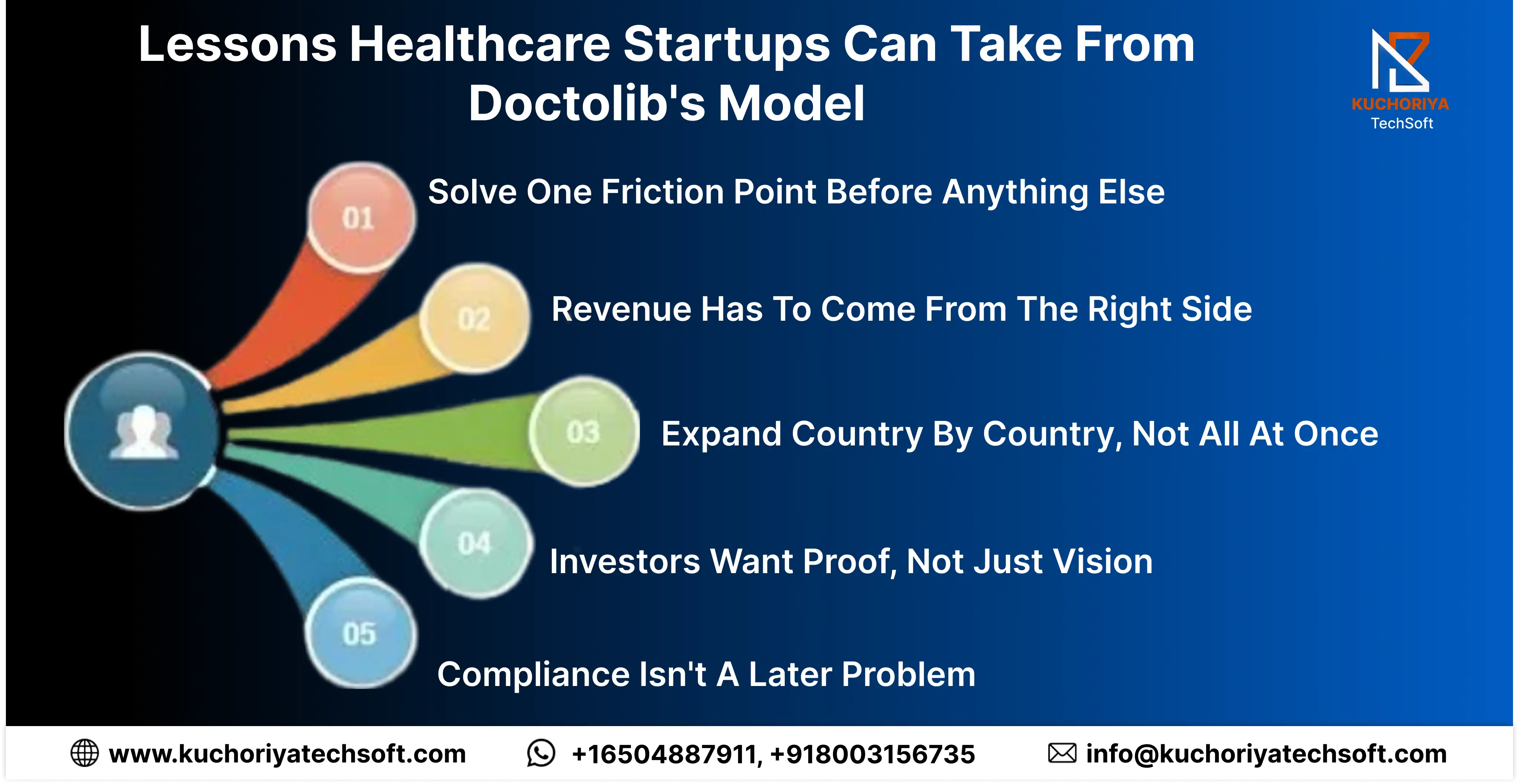
Doctolib went from 50 doctors on launch day to the most valuable startup in France within nine years. That climb offers real healthcare startup lessons from Doctolib, not just a founding story to admire.
1. Solve One Friction Point Before Anything Else
Doctolib fixed booking friction first, nothing else. Most of the what healthcare startups can learn from Doctolib advice boils down to this single move, resist adding features until the core problem is actually solved.
2. Revenue Has To Come From The Right Side
Doctors pay, patients don't. That single decision shaped every healthcare app founder insights worth repeating, because charging the side with budget kept adoption friction near zero for the side that mattered most for growth.
3. Expand Country By Country, Not All At Once
France first, then Germany, then Italy, each with its own regulatory shape. This kind of staged rollout is one of the clearer digital health entrepreneurship lessons buried in Doctolib's history.
4. Investors Want Proof, Not Just Vision
€815M raised across ten funding rounds didn't happen on a pitch deck alone. Healthcare app investor expectations in this space center on retention numbers and provider payback periods, not user counts alone.
5. Compliance Isn't A Later Problem
GDPR and country-specific data rules were built in from day one, not bolted on before the funding roundtable. Startups that treat compliance as an afterthought often pay for it in slower agency sales cycles.
What It Actually Takes To Build A Platform Like This
Every founder asking about cost to build a doctor appointment app really wants one number, but the honest answer depends on what's actually in scope. A basic MVP and a full multi-clinic system with AI aren't remotely the same project.
- Healthcare app development investment scales with features, not ambition alone, video consults, compliance work, and AI triage each add real engineering time.
- Budgeting for a telemedicine platform works better as a range than a fixed number, most founders underestimate compliance and testing costs specifically.
- Hiring the right healthcare app development team matters more than picking cheap. Teams without prior healthcare experience often burn budget relearning HIPAA and GDPR basics mid-project.
- Choosing a healthcare app development partner comes down to proof, not promises, ask for platforms they've shipped, not just a feature list they claim to support.
- Staged builds cost less upfront. Launching with core booking and video consults, then adding AI and multi-clinic support later, spreads the investment instead of front-loading it all.
Where Doctor Appointment Platforms Are Headed In 2026
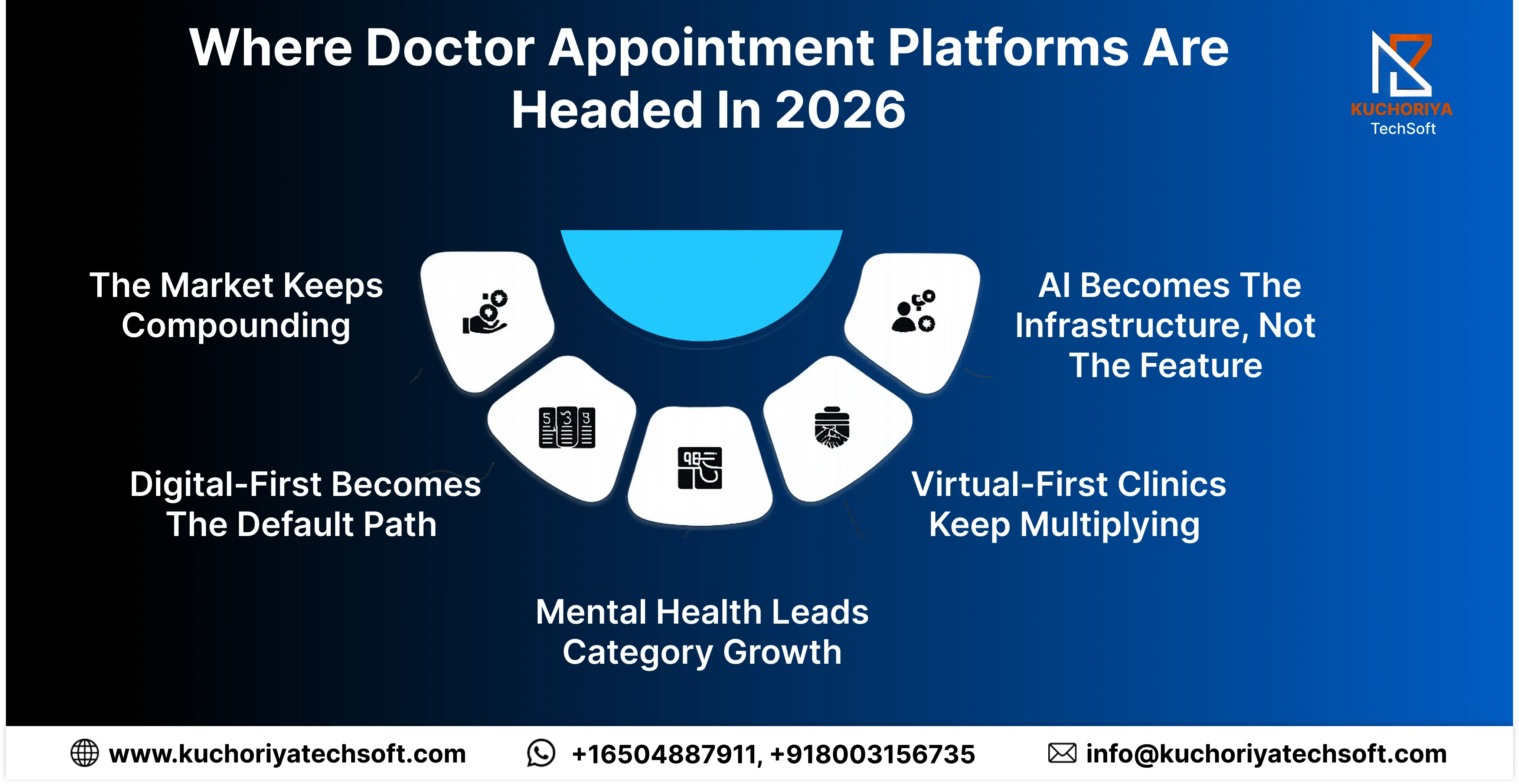
The future of doctor appointment platforms isn't a guess anymore; the data already points one way. Growth is locked in for at least another decade.
1. The Market Keeps Compounding
$191.88 billion this year, crossing $1.4 trillion by 2035. Telehealth industry growth 2026 isn't a bubble, it's just the new floor.
2. Digital-First Becomes The Default Path
Physician AI adoption went from 38% to 66% in one year flat. Digital health trends 2026 show manual scheduling turning into the exception fast.
3. Mental Health Leads Category Growth
Mental health already makes up nearly 69% of all US telehealth claim lines. The healthcare app market outlook for 2026 tilts hard toward specialty virtual care, not generic booking.
4. Virtual-First Clinics Keep Multiplying
The rise of virtual healthcare platforms shows up in the numbers too, North America alone holds over 45% of global telehealth share, new entrants launching monthly.
5. Growth Didn't Slow After The Pandemic Ended
Post-pandemic telehealth growth held steady instead of collapsing back. Physician adoption barely dipped, patients just kept booking video visits on their own.
6. AI Becomes The Infrastructure, Not The Feature
Scheduling, triage, documentation, all of it likely runs on AI by default within a few years. Platforms treating AI as a bolt-on today probably fall behind the ones built around it now.
Why Kuchoriya TechSoft Is The Right Partner For This Build
Anyone can promise a platform. What matters is whether the team can handle where healthcare tech is actually heading, not just where it sits today.
1. Global Build Experience, Not Just One Market
A UK rollout works differently than a Singapore clinic network, and both differ from a pan-European compliance setup. Building a healthcare app like Doctolib means adapting the core platform to each region instead of forcing one template everywhere.
2. Booking Flows People Actually Finish
Most platforms lose patients at the booking screen, not after. Real appointment scheduling UX best practices turn a five-step form into a two-tap confirmation, and that alone moves conversion numbers.
3. Security Built In, Not Bolted On
Every build treats patient data security in health apps as a starting requirement, encryption, access controls, audit trails from day one, no matter which country launches first.
4. Tracking Where Regional Markets Are Moving
Healthcare app trends UK show growing demand for NHS-adjacent booking tools, while digital health platform growth Europe keeps pushing GDPR-first architecture as the baseline, not an add-on.
5. Built For Markets Still Scaling Fast
Digital health adoption Singapore is accelerating quickly, and platforms launching there need the same flexibility as ones built for UK or European rollouts, room to expand without a rebuild.
6. Ready For Where AI Is Headed
Scheduling, triage, and documentation are moving toward AI-first by default. Every platform gets built with room to add these capabilities later, not bolted on once the market demands it.
Conclusion – Turning These Lessons Into Your Own Platform
Doctolib business model explained simply, solve one real problem first, charge the side with budget, treat compliance as infrastructure, not paperwork added later.
The successful doctor booking platform features covered here, real-time booking, video consults, AI triage, never launched all at once. Each one followed patient drop-off data, not guesswork.
The real lessons from Doctolib's expansion apply beyond healthcare too. Go deep in one region before spreading thin, build trust through small consistent things, let compliance shape the product early.
Other European healthcare platform success stories follow the same pattern, different specialties, same friction-first thinking. Whether it's a Doctolib clone, a Zocdoc-style build, or something for UK, Europe, or Singapore, the playbook stays the same.
Contact us today to start scoping your platform, and ask about our referral partner program if you're bringing other healthcare founders along for the build.

Frequently Asked Questions About Building A Platform Like Doctolib
Q. What's the real story behind Doctolib's growth?
A. Fifty doctors signed up at launch. A decade later, over 500,000 professionals pay to use it monthly. That's the entire Doctolib growth story in one line, fix booking friction first, add everything else later.
Q. How did Doctolib scale across so many countries?
A. France first, then Germany, then Italy, one country at a time. How Doctolib scaled across Europe worked because compliance got rebuilt for each market instead of forcing one rulebook everywhere.
Q. Is the US market different from Europe for this kind of app?
A. The doctor appointment app market USA runs on different players like Zocdoc, but the same core problem, phone-based booking friction, still holds true everywhere including UAE, where telemedicine adoption in the UAE keeps climbing fast.
Q. What about markets like Australia and Canada
A. The healthcare app market in Australia and the healthcare app market in Canada both show steady telehealth growth, smaller than the US but following the same adoption curve a few years behind.
Q. What actually helps a platform scale without breaking?
A. The biggest healthcare platform scalability lessons are simple: build modular from day one and never let one region's rules block another region's rollout.
Q. How do you know if a platform will actually work in a given market?
A. Real telemedicine platform market fit shows up in booking completion rates, not download numbers. Strong healthcare app user retention strategies and a healthy doctor appointment app adoption rate matter more than launch-day hype.