Why AI Is Becoming Essential in Modern Healthcare
AI in EHR/EMR software development is catching on fast, and the reason isn't hard to see. Most hospitals haven't actually left the paperwork era behind, they've just moved it onto a screen. Doctors still spend a chunk of every shift updating charts, hunting through old records, and clearing administrative tasks that have nothing to do with treating the person in front of them.
Patient volumes keep climbing, and that manual load doesn't shrink on its own. Somewhere in the last few years, artificial intelligence stopped being a side experiment and started actually solving this. It organizes records, drafts documentation, spots patterns in a chart a rushed clinician might miss, and gets relevant patient history in front of a doctor faster. Nobody's getting replaced here. The point is fewer hours lost to busywork, more of them spent on actual care.
Recordkeeping alone doesn't cut it anymore either. Providers want EHR and EMR platforms that tighten up daily operations and move the needle on patient outcomes, not just store data more neatly than a filing cabinet did. That shift is exactly what's pulling AI-powered EHR/EMR software into the center of how healthcare organizations are rebuilding their systems for what comes next.
What Is AI in EHR/EMR Software Development?
AI in EHR/EMR software development" means building AI directly into how patient records get created, read, and used. Not bolted on as an add-on. Baked into the workflow itself.
Think ambient listening during a patient visit. The system captures the conversation and drafts the clinical note before the doctor even opens the chart. That's AI EHR Software in practice, not theory.
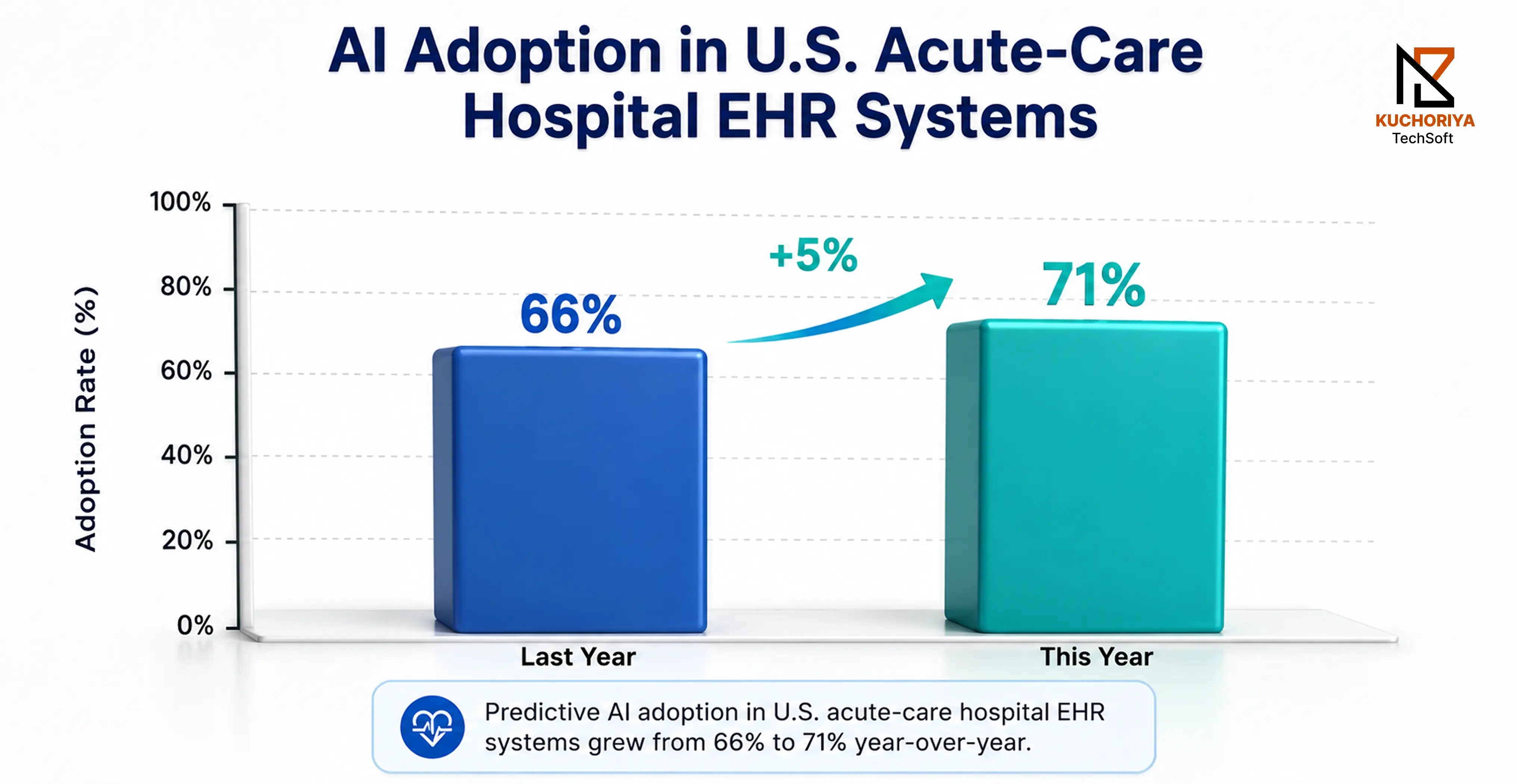
The shift is already well underway. Nearly two-thirds of US hospitals running Epic EHRs have turned on ambient AI documentation tools. Predictive AI now sits inside 71% of U.S. acute-care hospital EHR systems, up from 66% just a year earlier. Fast growth, and no sign of slowing.
AI EMR Software does something similar on the records side. Risk factors get tagged. Gaps in history get flagged. Details a rushed clinician might skip get pulled up automatically. Add AI in Electronic Health Records and AI in Electronic Medical Records to the mix, and what used to be a flat database starts acting more like a second set of eyes on the floor.
Challenges of Traditional EHR/EMR Systems
Before AI enters the picture, it helps to see what it's actually fixing. Most legacy EMR software wasn't built for the pace healthcare runs at today.
Here's where traditional EHR systems keep falling short:
- Manual Documentation Overload; manual EHR documentation chews through appointment time that should go to the patient, not the keyboard.
- Disconnected Patient Data; records get trapped inside one department thanks to EHR data silos, so a specialist often has no idea what another team already found.
- Slow System Interoperability; labs, pharmacies, and insurers still run into EHR interoperability challenges that force delays or duplicate entries nobody has time for.
- Rising Clinician Burnout; a lot of clinician burnout EHR cases trace back to the same root cause, hours lost to repetitive data entry that shouldn't need a human at all.
- Outdated Software Architecture; outdated EMR software starts creaking as patient volumes grow, and the workarounds to keep it running get more expensive every year.
- Limited Real-Time Insights; most systems still just store data. Basic EHR system limitations mean nothing gets flagged, nothing gets predicted, it just sits there until someone goes looking.
Key Benefits of AI in EHR/EMR Software
Hospitals aren't adopting AI Healthcare Software Development for novelty. They're doing it because the returns show up fast, in charts, in billing, in patient outcomes.
Here's where the impact actually lands:
- Faster Charting, Less Burnout. Physicians using AI-assisted notes report 40-45% less time on documentation. That's hours back every week, not minutes.
- Fewer Errors Slipping Through. Intelligent EHR Systems cross-check entries against patient history, catching mismatched dosages or missed allergies before they become a problem.
- Smarter Data, Not Just More Data. Healthcare Data Analytics built into the record turns years of scattered visits into patterns a clinician can actually act on.
- Smoother Handoffs. Better Clinical Workflow means less time chasing down charts between departments and more time on the patient in front of you.
- Records That Stay Current. Patient Data Management improves when updates happen automatically instead of waiting on manual entry.
The real Benefits of AI in EHR/EMR Software aren't abstract. They show up in shorter shifts, fewer mistakes, and records that actually keep pace with care.
Top AI Features in Modern EHR/EMR Systems
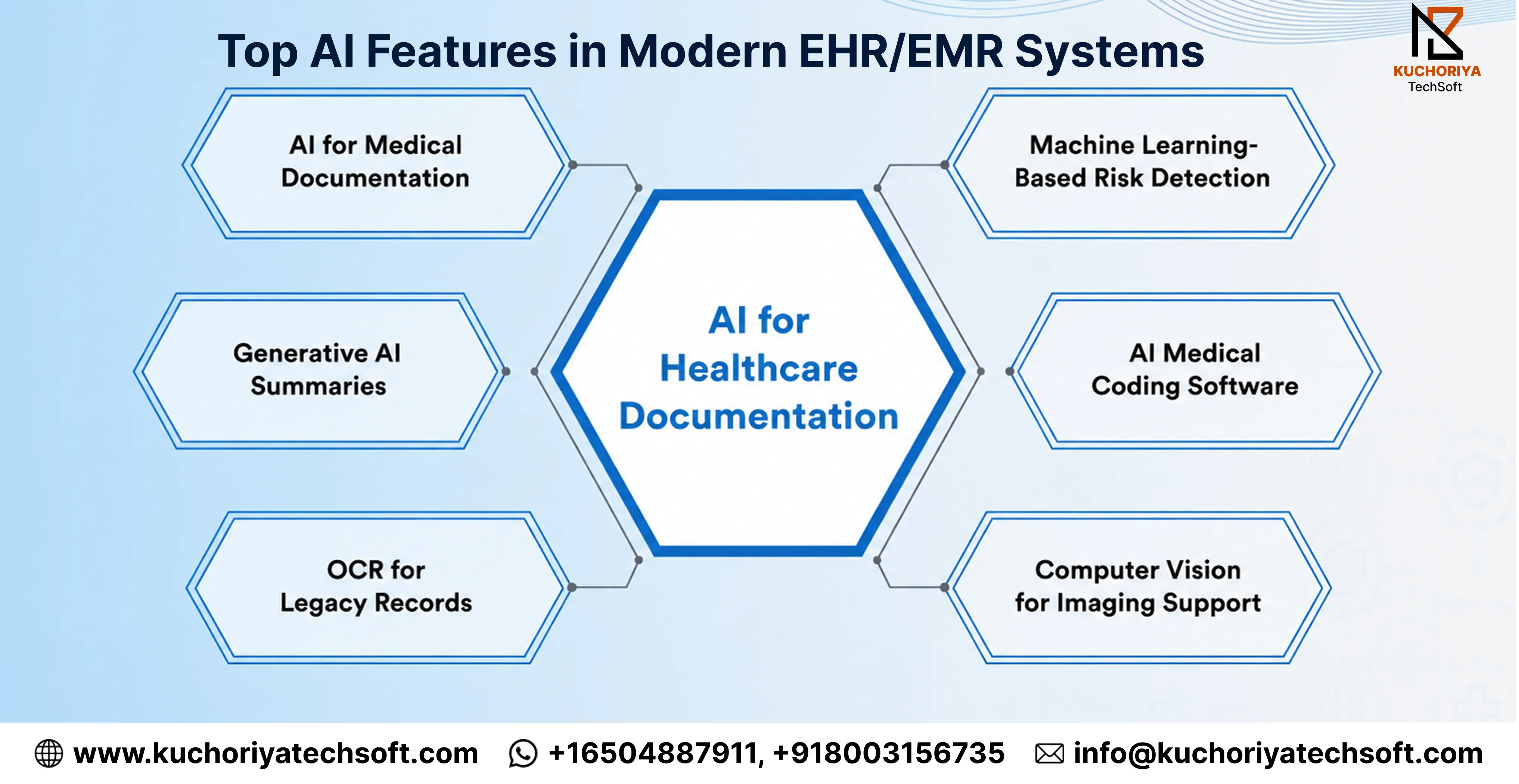
AI-powered EHR systems aren't one feature bolted onto old software. They're a stack of tools working together, each solving a specific bottleneck clinicians deal with daily. So what are the top AI features in EHR systems actually doing on the ground?
1. AI for Medical Documentation
NLP and voice recognition in healthcare pick up spoken notes and turn them into structured records on the spot. No more typing after hours. The note's basically done by the time the doctor walks out of the room.
2. Machine Learning-Based Risk Detection
Machine Learning digs through patient history looking for patterns a busy clinician might not catch. Early warning signs get flagged before they turn into an actual problem.
3. Generative AI Summaries
Generative AI condenses years of scattered visits into a readable summary, saving clinicians from scrolling through pages of old charts before every appointment.
4. AI Medical Coding Software
Billing codes get generated automatically from the visit notes, cutting down manual entry errors that usually delay claims and reimbursements.
5. OCR for Legacy Records
OCR digitizes old paper charts and scanned documents, pulling them into the same searchable system as newer digital records.
6. Computer Vision for Imaging Support
Computer Vision catches anomalies in scans that a tired eye might skip past. Radiologists still make the final call, but now they're getting a second opinion before they sign off.
AI-powered EMR Solutions that pull all six of these together aren't just digital filing anymore. They're doing real work alongside the care team.

Real-World AI Use Cases in EHR/EMR Software
Features sound impressive on a slide. The real test is what happens on the floor, during an actual shift. Here's where AI use cases in EHR Software actually earn their keep:
- Faster Diagnosis Support. AI clinical decision support surfaces relevant history and lab trends the moment a chart opens. One less thing to dig for during a ten-minute visit.
- Smarter Record Management. With AI patient record management, files stay current across departments without anyone chasing updates. A specialist isn't reading notes from three shifts ago.
- Catching Risk Before It Escalates. Predictive analytics picks out patients heading toward readmission before it's obvious. That's a real head start, not just a warning after the fact.
- Cleaner Billing Cycles. Medical coding now pulls straight from the clinical note itself. Fewer emails between coders and physicians, fewer stuck claims.
- Automated Routine Tasks. Healthcare automation covers reminders, prior authorizations, follow-up scheduling. The kind of work nobody misses once it's off their plate.
- Pattern Recognition at Scale. Machine learning in healthcare and generative AI in healthcare sift through population-level data together, catching trends that would never show up chart by chart.
Layer in predictive healthcare analytics, and hospitals stop firefighting. They start spotting the fire before it starts.
Must Read: Top 10 Best Custom EHR & EMR Software Development Companies in 2026
How to Choose the Best Custom EHR & EMR Software Development Company
Cost & Technology Stack for AI EHR/EMR Development
Two questions come up in almost every client call: what's it built with, and what's it going to cost. Both depend on the same thing, how deep the AI actually goes, and how smooth the EHR integration or EMR integration needs to be with existing hospital systems.
Tech Stack Behind AI-Powered EHR/EMR Systems
Systems like HealthPractice lean heavily on this mobile layer, giving clinicians schedules and records on the go. Others, like Praxis EMR, build the intelligence layer around an adaptive EMR software model that reshapes itself to how a practice actually works, instead of forcing rigid templates on every clinician.
AI EHR/EMR Software Development Cost
A basic build with just documentation AI stays on the lower end. Add predictive models, generative summaries, and EMR integration across departments, and the number climbs fast. Platforms like eClinicalWorks show what full-scale looks like, combining cloud EHR platform infrastructure, EHR interoperability, and revenue cycle EHR tools into a single system used across thousands of practices. Most vendors price by phase too, since compliance testing alone can take as long as writing the actual code.
Security & Compliance in AI EHR/EMR Systems
AI in patient records only works if the data stays locked down. One breach wipes out every efficiency gain the system was built for.
Here's what actually keeps an AI-powered EHR/EMR system safe:
- HIPAA-Compliant by Design; every US-based build runs on HIPAA compliance at its core. Encrypted data, logged access, and an audit trail behind each AI feature that touches a record.
- GDPR for Global Reach; providers working outside the US need GDPR compliance too. Consent rules and data-retention windows aren't the same from one region to the next.
- Seamless Yet Secure Integration; HL7 integration and FHIR standards connect labs, pharmacies, and insurance platforms to the system. Each connection is also a potential weak spot, so it gets protected like one.
- Layered Data Protection; role-based access, real-time anomaly detection, encrypted API gateways, that's just baseline healthcare data security now, not a premium add-on.
- Privacy Built In, Not Bolted On; medical data security and data privacy in healthcare software get decided at the architecture stage, long before launch day.
Healthcare interoperability and airtight security aren't opposites. Get both right, and the system earns trust from regulators and patients at the same time.
Future Trends in AI-Powered EHR/EMR Software
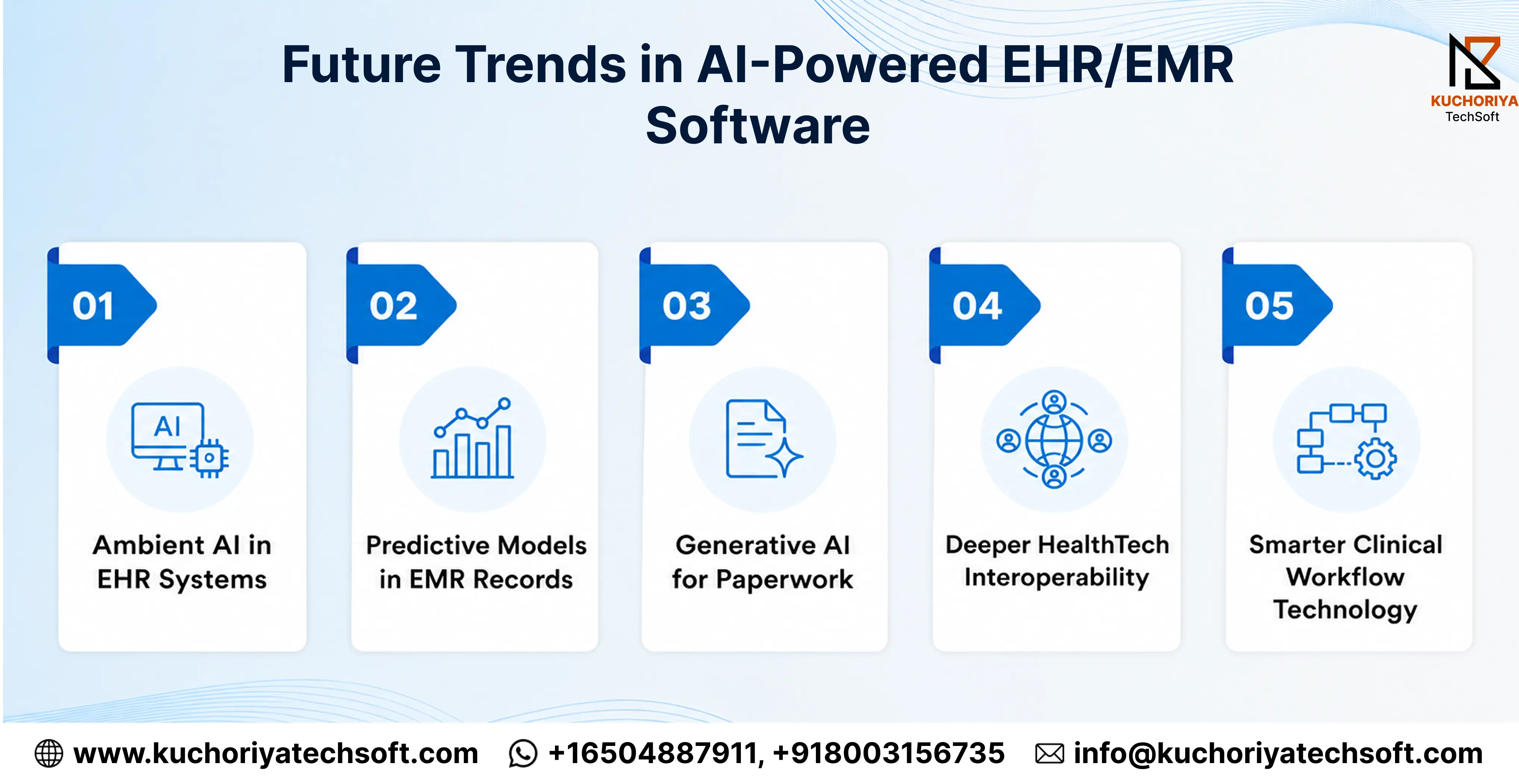
Intelligent healthcare systems aren't slowing down anytime soon. Here's where AI in healthcare takes EHR and EMR platforms next.
1. Ambient AI in EHR Systems
Ambient listening tools, already running in a majority of Epic-based hospitals, are heading toward becoming a default feature in every EHR platform, not just the ones that can afford custom builds.
2. Predictive Models in EMR Records
Medical AI used to just raise an alert after something went wrong. Now it's starting to catch trouble inside EMR charts weeks before symptoms show up, which changes the whole point of reading a chart.
3. Generative AI for Paperwork
Discharge summaries, referral letters, prior authorization forms, generative tools are taking over the repetitive writing that used to eat into a clinician's day.
4. Deeper HealthTech Interoperability
Getting an EHR to talk to another EHR used to be the whole challenge. Now HealthTech vendors are chasing something bigger, wearables, home monitors, pharmacy networks, all feeding into the same record without a manual step in between.
5. Smarter Clinical Workflow Technology
Speed used to be the only metric that mattered. Clinical workflow technology is shifting toward something harder, figuring out what actually needs attention first, not just clearing the queue faster.
So, how does AI improve EHR systems going forward? Less manual entry, earlier warnings, and platforms that adjust to the clinician instead of the other way around. That's the direction digital health is heading, and EMR systems are following right behind it.
Deep Dive: How to Build and Optimize EHR Software for Modern Healthcare: A Complete Guide
Custom EHR & EMR Software Development Services: Complete 2026 Guide for Healthcare Providers
Why Choose Kuchoriya TechSoft for AI EHR/EMR Software Development
At this point, you're not deciding whether AI belongs in your EHR/EMR system. You're deciding who builds it right. Here's why teams pick Kuchoriya TechSoft for that job.
- One Team, Full-Service Delivery; as a healthcare software development company, we don't hand off pieces of the build to different vendors. One team handles the entire EHR software development company scope, from architecture to compliance testing.
- Real EMR Experience, Not Just Theory; as an EMR software development company, we've built everything from intelligent EMR systems to EMR automation for clinics handling high patient volumes daily.
- Software Built Around Your Workflow; every engagement is custom healthcare software development, shaped around how your practice actually runs, not a generic package with your logo on it.
- AI Development That Ships, Not Just Demos; our AI development services cover real production work, AI-enabled EMR workflow automation, ambient documentation, and telehealth-integrated EHR builds that connect virtual visits straight into the patient record.
- Mobile Access Built In From Day One; EHR mobile app development is standard in our builds, not an afterthought bolted on after launch.
- Compliance-First Delivery Across Regions: we've delivered AI EHR software development USA projects for US-based practices and healthcare software development UAE engagements for providers across the Gulf, with the same compliance rigor on both sides.
If you're looking for an EHR software development company USA healthcare providers actually trust with sensitive patient data, this is the point to start a conversation, not just bookmark a blog post.|
Conclusion: The Future of AI in EHR/EMR Software Development
EHR software development and EMR software development aren't standing still, and neither should the systems your team relies on every shift. As healthcare IT keeps shifting, the providers who move early on AI-ready health information systems are the ones setting the pace for the rest of the medical software industry.
This isn't limited to hospitals either. Hospital management software development and telemedicine app development like Teladoc are following the same AI-first direction, and the cost question, how much does it actually take to build an AI-powered EHR system, comes down to scope more than guesswork.
Kuchoriya TechSoft builds AI EHR/EMR systems for providers across the US, and delivers the same compliance-first approach for AI healthcare software UK clients, EMR software development Canada projects, and AI EMR solutions Dubai engagements. We also run a Referral Partner Program for agencies and consultants who want to bring healthcare clients our way, along with Fractional CTO and Virtual CTO support for teams that need senior technical guidance without hiring full-time.
Looking to build an AI-enabled EHR/EMR solution? Reach out to our team or message us directly on WhatsApp, and we'll walk you through what a system built for your practice actually looks like.
Frequently Asked Questions
Q. What is AI in EHR/EMR software?
A. It's AI built directly into how patient records get created and used, not added on top. Think ambient documentation, automated risk flags, and records that update themselves instead of waiting on manual entry.
Q. How does AI improve EHR systems?
A. It takes a lot of the manual work out of the day. A note gets drafted while the doctor's still talking to the patient. Clinical decision support pulls up relevant history without anyone digging for it. Coding happens on its own instead of getting typed in after the fact.
Q. What are the benefits of AI in electronic health records?
A. Less time on documentation, fewer missed details in a patient's history, and healthcare data analytics that actually turns years of visits into something a clinician can use, not just store.
Q. Is AI used in EMR software?
A. Yes, and it's growing fast. Predictive models, ambient scribing, and automated coding are already running inside a majority of EMR platforms at large health systems.
Q. What are the top AI features in EHR systems?
A. Voice-based documentation, machine learning risk detection, generative summaries, automated medical coding, and OCR for digitizing old paper charts. Most modern builds combine several of these rather than just one.
Q. How much does it cost to build an AI-powered EHR system?
A. Depends on scope, mostly. A basic build with documentation AI stays on the lower end. Add predictive models, automation, and patient data management across departments, and the price climbs with it.