





Healthcare Industry in Pennsylvania: 2026-2027 Market Overview
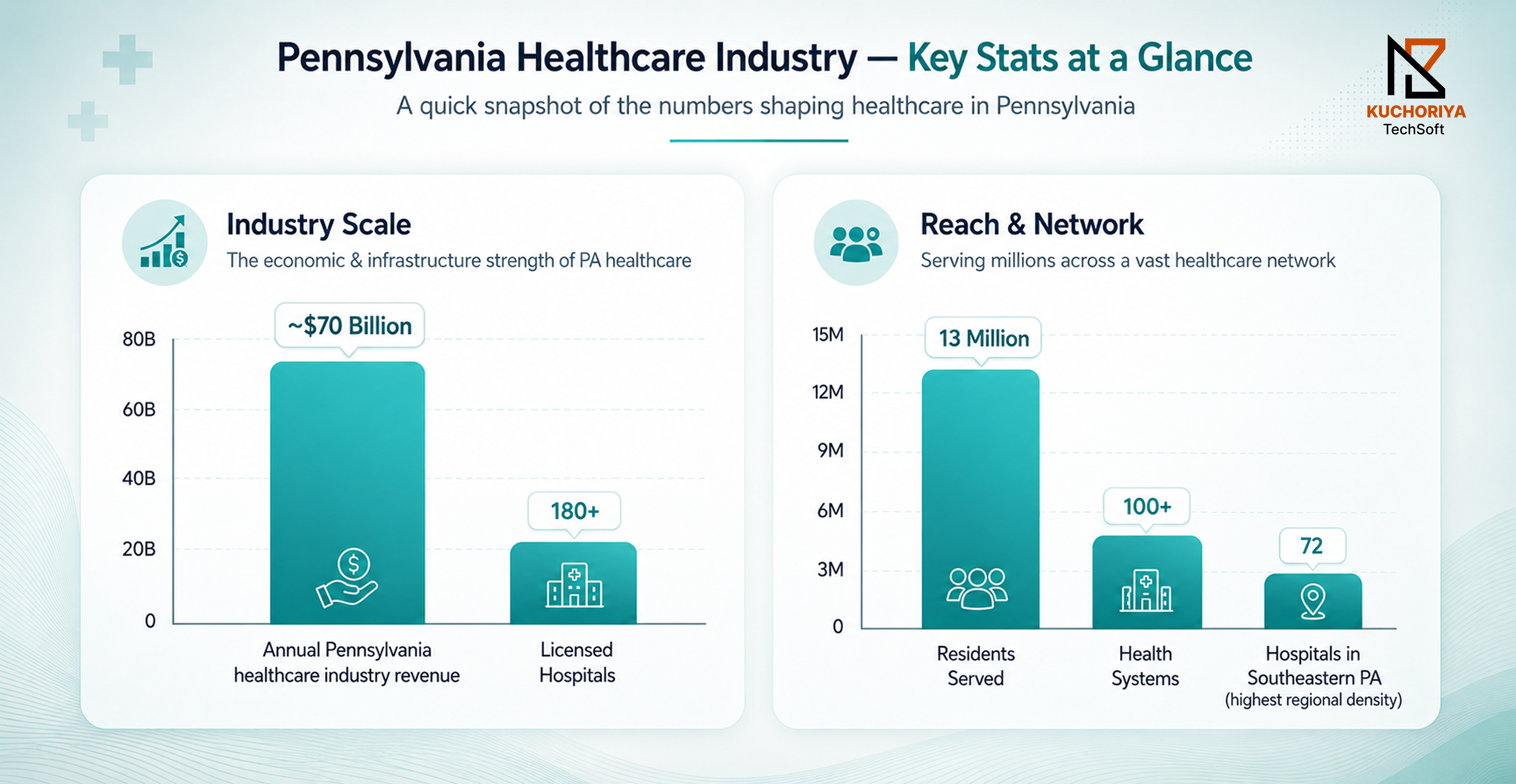
What does it take to run a hospital system worth nearly $70 billion a year? In Pennsylvania, the answer is over 180 licensed hospitals and 100+ health systems working across 67 counties, all trying to keep pace with a healthcare industry in Pennsylvania that is growing faster than it can build new facilities.
The Pennsylvania healthcare industry serves close to 13 million residents, yet hospital density here trails the national average, roughly one hospital per 34,500 people compared to 23,500 nationally. Despite that gap, the Pennsylvania healthcare market keeps expanding, with employment climbing faster than the number of new locations, a clear sign of consolidation rather than new construction. (Source)
Southeastern Pennsylvania alone accounts for 72 hospitals, the highest concentration in the state, pulling investment and attention toward that corridor first. Early Pennsylvania healthcare industry report 2026 figures and Pennsylvania healthcare statistics 2027 projections agree on one thing: demand is outrunning infrastructure, a pattern showing up across every Pennsylvania healthcare trends 2026 and Pennsylvania healthcare trends 2027 read on the Pennsylvania healthcare industry outlook 2026-2027.
Why Is the Healthcare Industry Growing in Pennsylvania?
Since 2005, more than 180 rural hospitals across the US have closed their doors for good. Pennsylvania's healthcare sector, though, keeps adding jobs and revenue instead of shrinking. So what is actually behind why healthcare is growing here when so many other states are losing ground?
- Hospitals are hiring faster than new facilities are opening, and that gap alone explains a big part of the current healthcare industry growth.
- National healthcare market trends 2026-2027 point to a market crossing $5 trillion, and Pennsylvania is grabbing a bigger slice of that every year.
- Insurers and hospitals are both leaning harder into value-based care, partly because healthcare cost trends keep climbing and fee-for-service billing cannot keep up.
- Over half the state's Medicare population, 53 percent, has already switched to Medicare Advantage trends, and that number is still rising.
- Rural counties are the exception to this growth story, where healthcare access in rural areas still means long drives for maternal care or emergency treatment.
- Put together, this is what most people mean when they talk about emerging healthcare trends in Pennsylvania right now.
How Is Pennsylvania's Aging Population Changing Healthcare Demand?
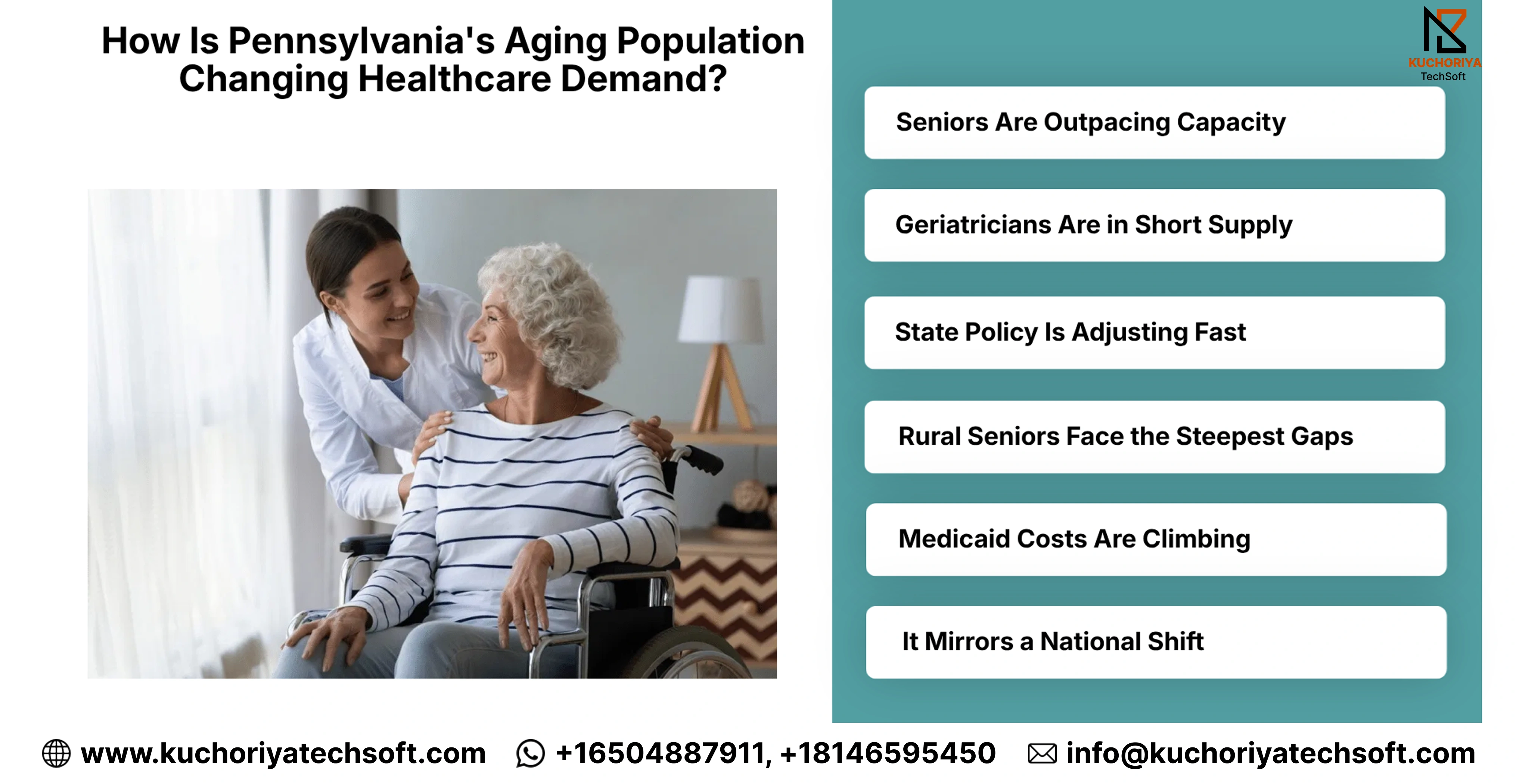
One in four Pennsylvanians is already past 60, and by 2030 that number climbs to one in three. That shift alone is reshaping the aging population in Pennsylvania, from hospital staffing to how care gets delivered at home.
1. Seniors Are Outpacing Capacity
Pennsylvania is home to 3.4 million older adults, the fifth-highest total in the country, pushing Pennsylvania senior healthcare systems to expand faster than they were built for.
2. Geriatricians Are in Short Supply
In the Pittsburgh region alone, one in five residents is now over 65, and the shortage of geriatric doctors is straining elderly healthcare providers in Pennsylvania.
3. State Policy Is Adjusting Fast
Governor Shapiro's ten-year roadmap, Aging Our Way PA, is one of the clearest Pennsylvania senior care trends aimed directly at this shift.
4. Rural Seniors Face the Steepest Gaps
Rural residents see a 40 percent higher preventable hospitalization rate than urban areas, exposing how uneven aging population healthcare trends are across the state.
5. Medicaid Costs Are Climbing
Pennsylvania's budget forecasts already point to rising Medicaid spending tied to its older population, a direct look at how an aging population is impacting healthcare.
6. It Mirrors a National Shift
With 61 million Americans now 65 or older, Pennsylvania reflects the broader aging population impact on US healthcare systems, and it is turning to chronic disease management technology and population health management tools to keep pace.
Telemedicine and Digital Health Trends in Pennsylvania
76.4 percent of Pennsylvania hospitals now offer telehealth, ranking the state eighth in the nation. What started as a pandemic workaround for telemedicine in Pennsylvania has quietly become standard practice at most hospitals across the state.
- The Pennsylvania telehealth market got real legal backing in 2026, when Act 42 forced insurers to pay for telemedicine visits at the same rate as in-person care.
- Telehealth trends in Pennsylvania show hospitals concentrated in the Midwest and Northeast leading adoption nationally, and Pennsylvania sits right in that top tier.
- Nationally, telemedicine growth trends point to 25 to 30 percent of all US medical visits happening remotely by the end of 2026.
- Telemedicine trends in 2026 are being shaped almost entirely by regulation now, not by technology gaps or patient demand.
- Telemedicine adoption trends in the United States vary wildly by state, from over 80 percent in top-performing states down to barely 32 percent in the lowest.
- Virtual care adoption keeps climbing as more patients ask whether telehealth is growing fast enough to meet their needs, and increasingly the answer is yes.
- Digital health Pennsylvania providers are pairing this shift with digital health trends 2026-2027 like AI triage and advanced telehealth platform development to handle rising patient volumes without adding as much physical infrastructure.
How Is AI Transforming Healthcare in Pennsylvania?
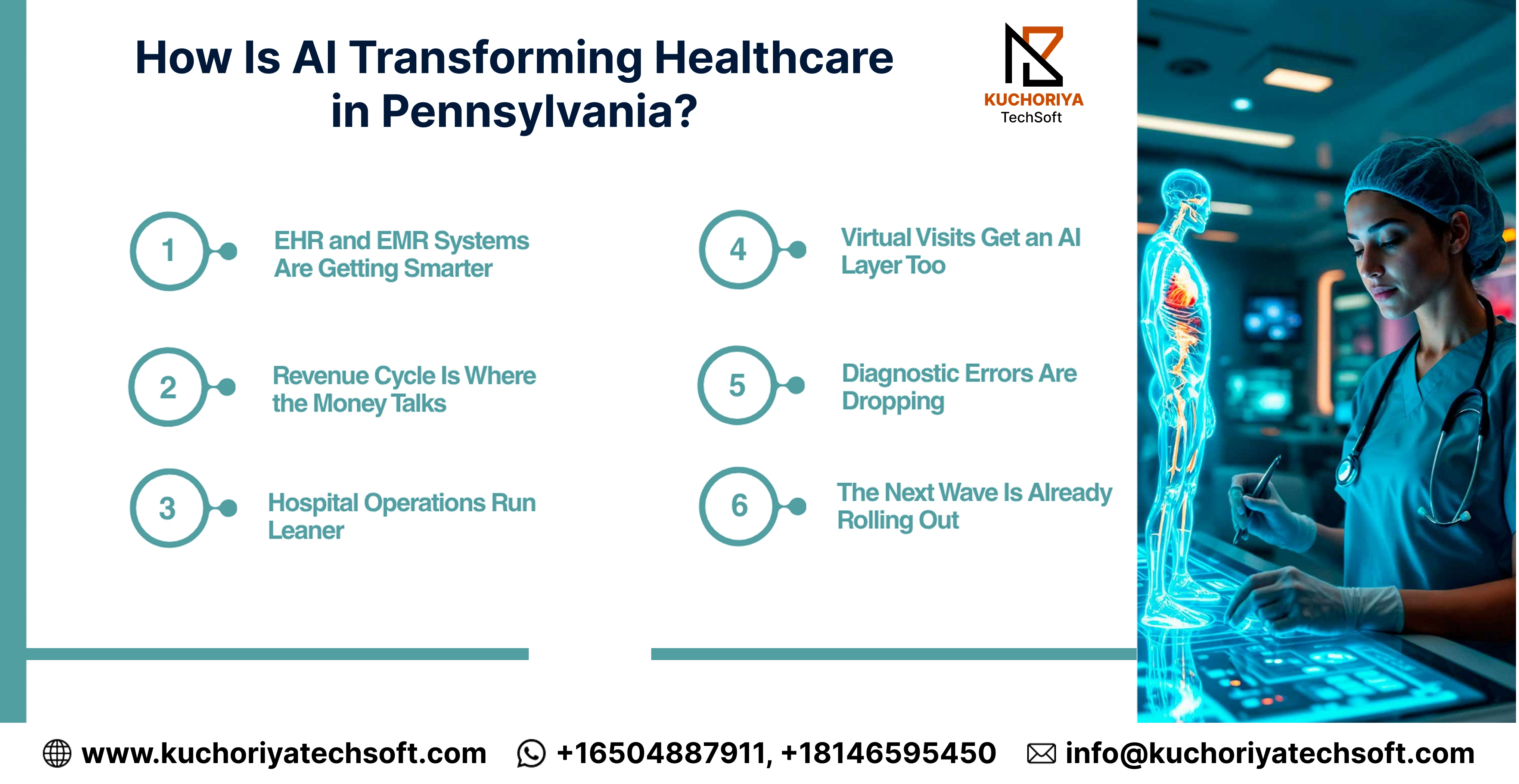
81 percent of US physicians now use AI professionally, up from just 38 percent three years ago. That kind of jump is exactly why AI in healthcare has stopped being a pilot project and become standard practice at most hospitals.
1. EHR and EMR Systems Are Getting Smarter
71 percent of acute care hospitals now run predictive AI in EHR and AI in EMR platforms flags drug interactions and abnormal trends the moment data is entered, not hours later.
2. Revenue Cycle Is Where the Money Talks
AI in RCM delivers ROI within 12 to 24 months, and 80 percent of health systems are already piloting or running it for billing and collections.
3. Hospital Operations Run Leaner
A 300-bed hospital using AI in hospital management for scheduling and documentation saves close to $1.8 million a year.
4. Virtual Visits Get an AI Layer Too
AI in telemedicine is powering triage and follow-up tools, helping virtual visits catch issues that used to need an in-person exam.
5. Diagnostic Errors Are Dropping
Hospitals using AI healthcare solutions for imaging report a 42 percent drop in diagnostic errors, while AI-powered healthcare technology for clinical notes has cut charting time by 40 to 45 percent.
6. The Next Wave Is Already Rolling Out
AI-powered EHR systems, AI-powered RCM software, AI-powered telemedicine solutions, and AI-powered hospital management software are the fastest-growing categories right now, marking the early stage of AI in digital healthcare transformation across the industry.

Biotechnology, Life Sciences, and Healthcare Innovation in Pennsylvania
Johnson & Johnson is building a $1 billion cell therapy plant in Montgomery County, and Eli Lilly is putting $3.5 billion into a Lehigh Valley manufacturing site. Money like that does not show up by chance, and it says plenty about where the biotech industry in Pennsylvania stands right now.
- Over 100,000 people already work in life sciences in Pennsylvania, and a new $125 million state fund is trying to close the gap with older hubs like Boston and San Francisco.
- GSK just committed up to $800 million to expand its Lancaster County site alone, one of several deals pushing biotechnology investments to a new high this year.
- Venture capital has gotten tighter for early-stage companies lately, which is exactly why state-backed programs like Innovate in PA 2.0 are showing up now among the state's biotech investment trends.
- Nearly 40 percent of Life Sciences Pennsylvania's member companies run with 10 employees or fewer, part of why healthcare startups here now number in the hundreds.
- Over 10,700 new life sciences patents came out of the state in the past five years alone, the fourth-highest total in the country and a sign of how far healthcare innovation has come.
- Philadelphia and Pittsburgh are pulling in more than lab talent too, with top digital health companies increasingly setting up in the same corridors driving this biotech surge.
Healthcare Technology and Digital Transformation Trends for 2026-2027
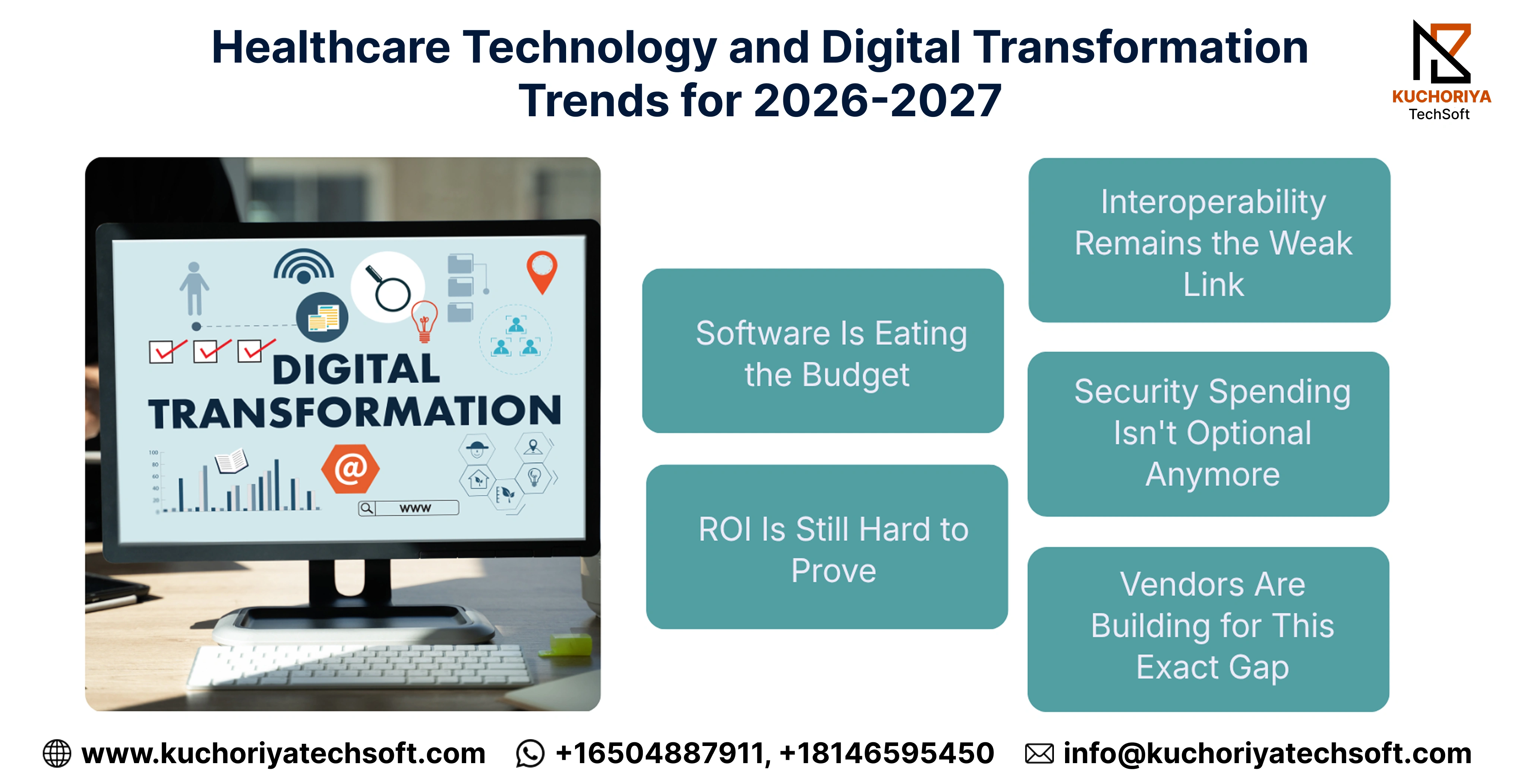
The global digital transformation in the healthcare market is set to jump from $98.5 billion in 2026 to $381.5 billion by 2036. Numbers like that show why healthcare technology Pennsylvania providers can no longer treat IT upgrades as optional.
1. Software Is Eating the Budget
Software now claims about 75 percent of digital health spending, as SaaS-based EHR and AI diagnostics tools replace one-time hardware buys, a core part of current healthcare technology trends.
2. ROI Is Still Hard to Prove
76 percent of hospital CFOs admit they cannot clearly measure returns on recent IT spending, pushing many toward structured healthcare digital transformation solutions with built-in reporting.
3. Interoperability Remains the Weak Link
Only 30 percent of organizations report full interoperability despite most having some data exchange in place, a gap healthcare technology services are increasingly built to close.
4. Security Spending Isn't Optional Anymore
With average breach costs nearing $7.4 million, cybersecurity is now a fixed line item inside most healthcare IT solutions budgets.
5. Vendors Are Building for This Exact Gap
From digital healthcare solutions to full digital health transformation in hospitals, vendors now package healthcare technology solutions for hospitals and custom healthcare software development specifically to fix the ROI and interoperability problems dragging this shift down.
Pennsylvania Healthcare Workforce Challenges and Technology Solutions
Picture every seat in Philadelphia's Wells Fargo Center empty, all 20,000-plus of them. That is roughly the size of the nursing gap Pennsylvania is staring down right now, and it says more about the state's healthcare workforce shortage than any report could.
Key Healthcare Challenges and Problem-Solving Technologies for 2026-2027
One in three hospitals now report bad debt above $10 million, a number that shows why records and billing software have stopped being back-office tools and become survival tools.
1. Records Remain the Foundation
EHR software and EMR software, together known as electronic health records software, remain the backbone every other system connects to, and EHR/EMR adoption trends show most hospitals now running some form of it.
2. Hospitals Want More From Core Systems
Buyers are no longer satisfied with basic features, pushing vendors toward the best hospital management software built for real-time data instead of static records.
3. Legacy Platforms Are Fading Out
Older systems are giving way to a modern hospital management system that connects billing, scheduling, and clinical records in one place instead of three separate tools.
4. Growth Is Reshaping Buying Decisions
Rising patient volumes are driving clear hospital management software trends for 2026, with cloud-based and AI-assisted platforms leading new purchases.
5. Demand Keeps Outpacing Supply
As patient numbers climb faster than staffing can keep up, more facilities are adopting hospital management software for growing healthcare demand just to stay functional day to day.
6. Billing Is Now a Boardroom Issue
With 74 percent of hospitals already using some billing automation, revenue cycle management software has moved from a finance department tool to a topic CFOs report on directly.
7. Automation Is Still the Gap
Only 17 percent of medical groups have automated most of their billing workflow, leaving real room for the top RCM software solutions built specifically to close that gap.
Opportunities for Healthcare Businesses and Technology Companies in Pennsylvania
Philadelphia and Pittsburgh have each landed in national healthcare tech assessments this 12 months, with dozens of companies building everything from AI diagnostics to pharmacy automation right here within the state. That kind of interesting factor is significant openings for any person interested.
How Healthcare Technology Companies Can Support Pennsylvania's Healthcare Growth
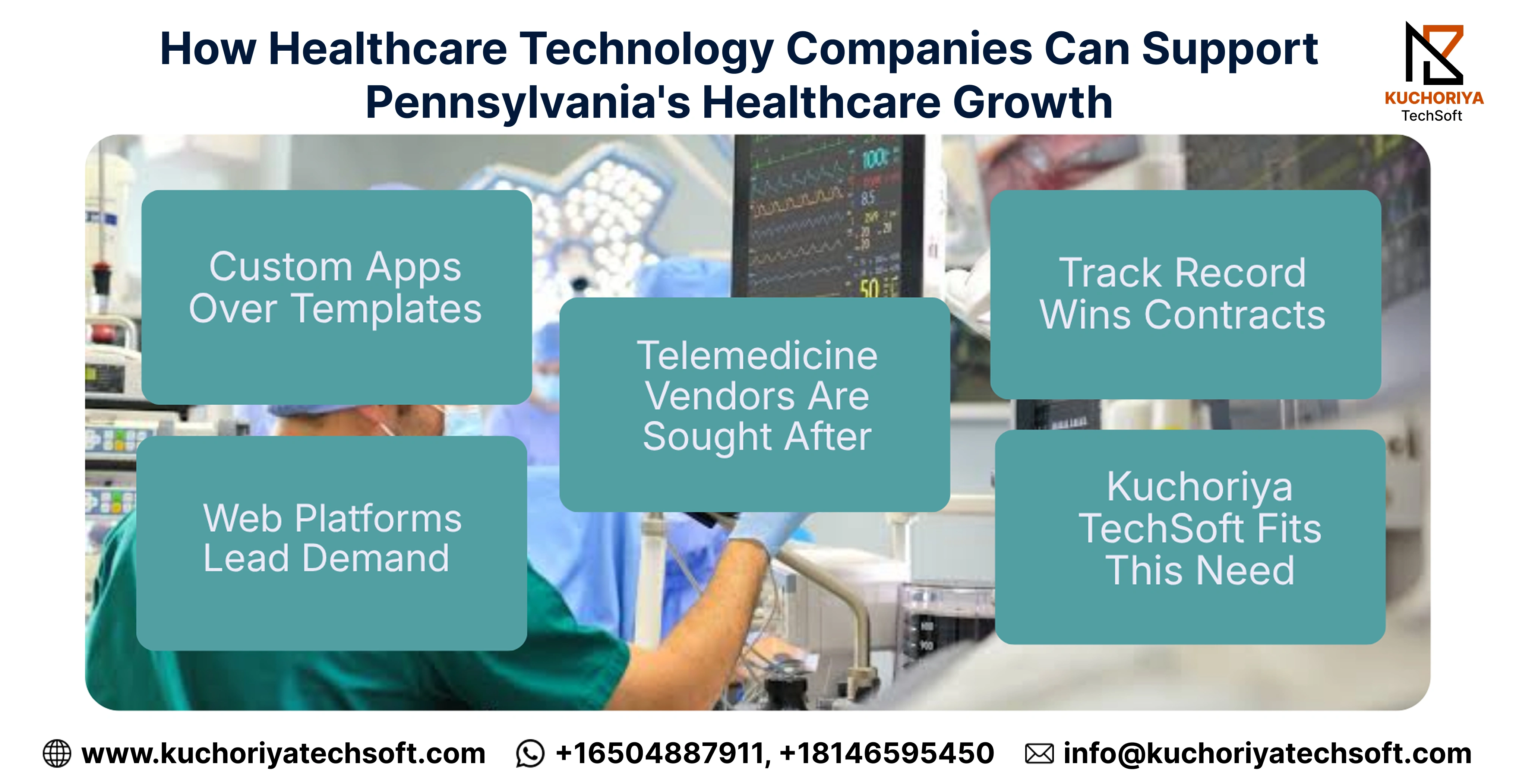
Every trend covered so far, aging patients, stretched staff, rising telehealth demand, points to one thing: Pennsylvania's healthcare system needs partners who build fast and build right.
1. Custom Apps Over Templates
A leading healthcare app development company now gets picked over generic software, especially healthcare app development Pennsylvania partners who know state regulations.
2. Web Platforms Lead Demand
Patient portals and provider dashboards run through healthcare web application development, one of the most requested services right now.
3. Telemedicine Vendors Are Sought After
Hospitals want a leading telemedicine software development company for secure platforms, with custom telemedicine app development adding features like specialty triage.
4. Track Record Wins Contracts
Health systems favor a top healthcare software development company with proven delivery over unfamiliar names.
5. Kuchoriya TechSoft Fits This Need
Kuchoriya TechSoft builds custom healthcare software solutions, from telemedicine solutions for hospitals to digital health solutions for healthcare providers, matching exactly what this blog has covered.
Future of Healthcare in Pennsylvania: Trends to Watch Through 2027
Nearly 30 percent of US medical visits are expected to happen remotely by the end of 2026, and Pennsylvania looks set to stay ahead of that curve. A few things are shaping the future of healthcare in 2027 across the state.
- Remote patient monitoring is quietly becoming the norm, letting a single provider keep an eye on far more patients without adding a single bed
- Virtual care adoption isn't slowing down either, especially now that insurers have locked in permanent telehealth reimbursement
- AI-assisted diagnostics are moving out of pilot programs and into everyday use, one of the clearer digital health trends 2027 to watch
- Money is following software, not hardware, one of the steadier healthcare technology trends shaping new spending
- Billing and scheduling are next in line for AI, part of the broader wave of healthcare innovation rolling through hospitals
- Smaller and mid-size hospitals are increasingly turning to outside vendors instead of building this in-house, one of several emerging healthcare trends worth tracking
Taken together, this is roughly what healthcare industry growth 2026-2027 looks like on the ground, and it's a fair answer to what is the future of healthcare for a state still working to close the gap between demand and capacity.
Conclusion: The Future of Pennsylvania's Healthcare Industry
Pennsylvania's healthcare story isn't slowing down anytime soon. Between an aging population, a telehealth market that's already outpacing most of the country, and hospitals racing to modernize faster than budgets usually allow, the Pennsylvania healthcare industry outlook 2026-2027 points toward one clear direction: technology stops being optional and becomes the thing that decides who keeps up and who falls behind.
The Pennsylvania healthcare trends covered here, from AI adoption to workforce shortages to biotech investment, all circle back to the same need for partners who can move as fast as the demand does. That's where healthcare technology providers in Pennsylvania come in, building the platforms hospitals and clinics need without the long timelines legacy vendors are known for.
For organizations that don't have the in-house bandwidth to lead this shift, fractional CTO services can help set the technical direction without the cost of a full-time hire. And for partners already working alongside healthcare organizations, a referral partner program is worth a look too.
Whatever stage your organization is at with healthcare digital transformation, it helps to have the right technology partner to talk it through with. Contact Kuchoriya TechSoft to get started.

FAQs About Pennsylvania's Healthcare Industry
Q. What are the major healthcare industry trends in Pennsylvania for 2026-2027?
A. Telehealth's basically expected now, not a bonus. Add in AI creeping into EHR and billing systems, more seniors needing care, and steady biotech investment, and that's the shape of it.
Q. Why is Pennsylvania's healthcare market growing?
A. Hospitals are hiring quicker than they're building. Combine that with insurers and providers both moving toward value-based care, and the whole market keeps expanding.
Q. How is the aging population affecting healthcare demand in Pennsylvania?
A. A quarter of the state is already over 60. That's straining senior care, chronic disease programs, and geriatric services faster than staffing can catch up.
Q. How fast is telemedicine growing in Pennsylvania?
A. More than three out of four hospitals already offer it. A recent law forcing insurers to pay the same for virtual visits as in-person ones is pushing it further still.
Q. What role does AI play in Pennsylvania healthcare?
A. It's in EHR systems, billing, hospital scheduling, diagnostics, pretty much everywhere at this point. Most physicians in the state are using some form of it already.
Q. What are the biggest challenges facing Pennsylvania healthcare providers?
A. Not enough staff, rural areas struggling to get access, billing still done half by hand, and systems that don't share data the way they should.